


Disclosure: Twofold Health publishes this comparison and is included in the ranking. Tools were last reviewed in June 2026, and we flag where a competitor is the better fit.
Why Trust This List?
Instead of marketing copy, we scoured r/therapists, r/medicine and other professional sub‑reddits published within the last 12 months. Every pick below includes an unedited quote and a link to the original thread so you can verify the feedback yourself.
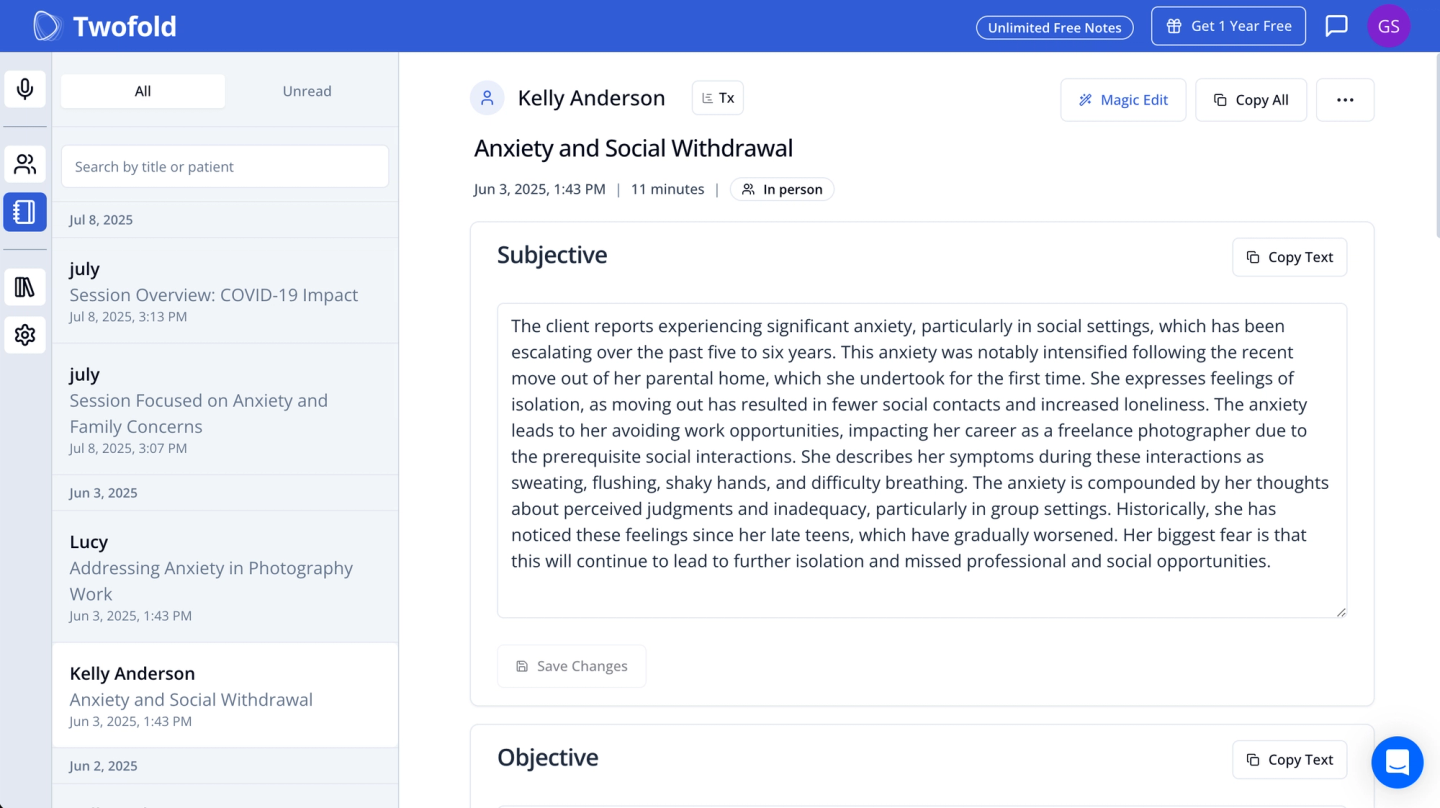
1. Twofold Health: Fast, Template-Ready AI Scribe For Therapists
One review mentions that:
"After evaluating 7 different vendors, we ended up going with Twofold. It ticked off most of the boxes, and we were super happy with their support team."
Another Reddit user shared their experience:
"Twofold was less than half the price of Freed and lets you build your own note templates—huge for mental-health workflow." – u/Throwaway-PsyD
Another user shared that:
"Accuracy was very good...customized note templates for specific needs." – u/PGY2-MD
- Pros
- Built for behavioral-health SOAP/GIRP/DAP formats.
- Note turnaround ≈ 20 seconds.
- HIPAA-compliant with BAA; no per-minute audio fees.
- No hallucinations or clunky spelling
- Works across devices
- Great customer support
- Cons
- Lacks the option to email patient letters directly.
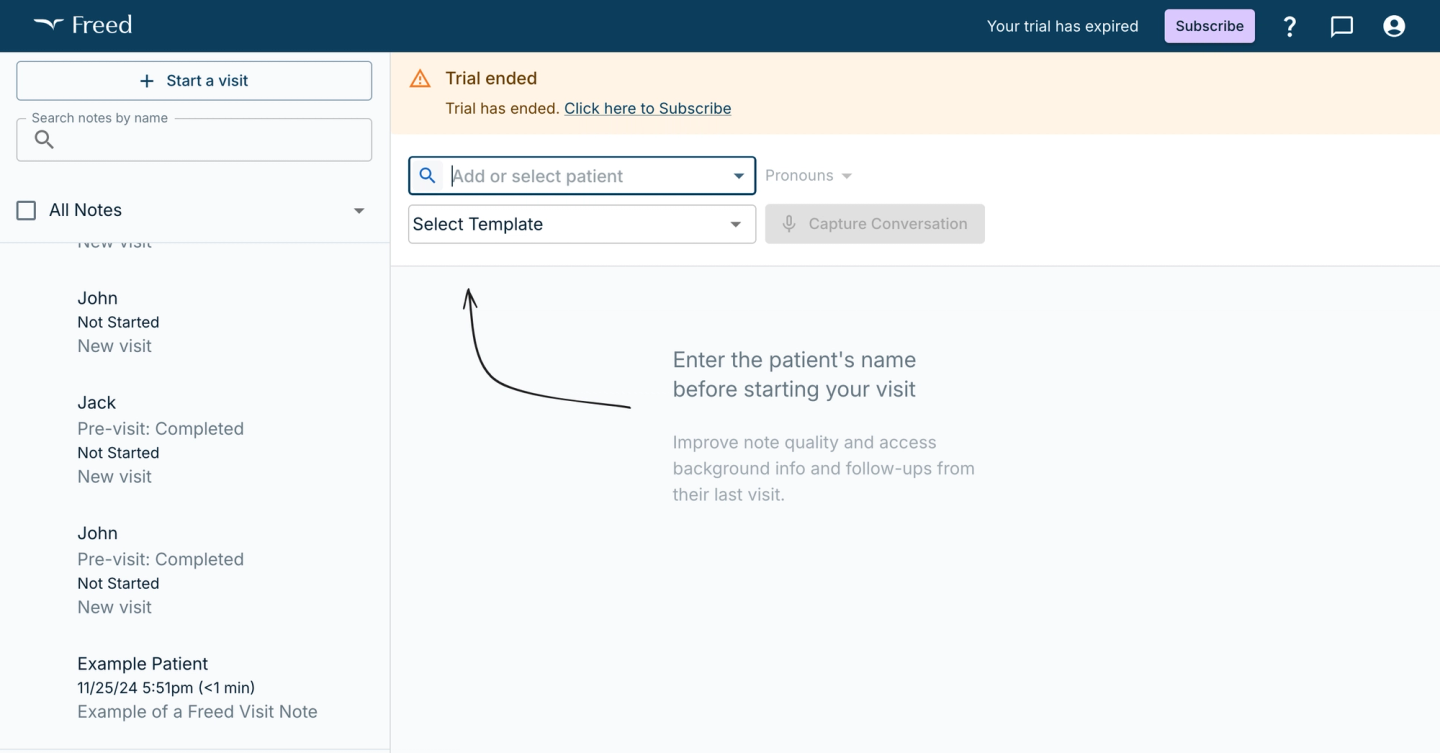
2. Freed AI: Good Narrative AI Progress Notes
One user mentions:
"Holy cannoli, it's real. Transcribes directly into paragraph form, handles follow-up questions, HIPAA-compliant with a BAA." – u/Snoo-Therapy90
- Pros:
- HIPAA-compliant; signs BAAs on paid plans.
- Works across devices; Integration with Zoom.
- Cons:
- Does not support heaphones for telehealth.
- Pricing — Freed restructured its plans in 2026. Solo clinicians see Starter at $39/month (capped at 40 notes per month), Core at $79/month (unlimited notes), and Premier at $119/month, or $104/month billed annually, which adds CPT/ICD-10 coding and EHR push. Verified 28 July 2026.
- Cheapest features are capped on the free tier.
- Best accuracy is achieved with single-speaker audio; multi-speaker group sessions may need extra edits.
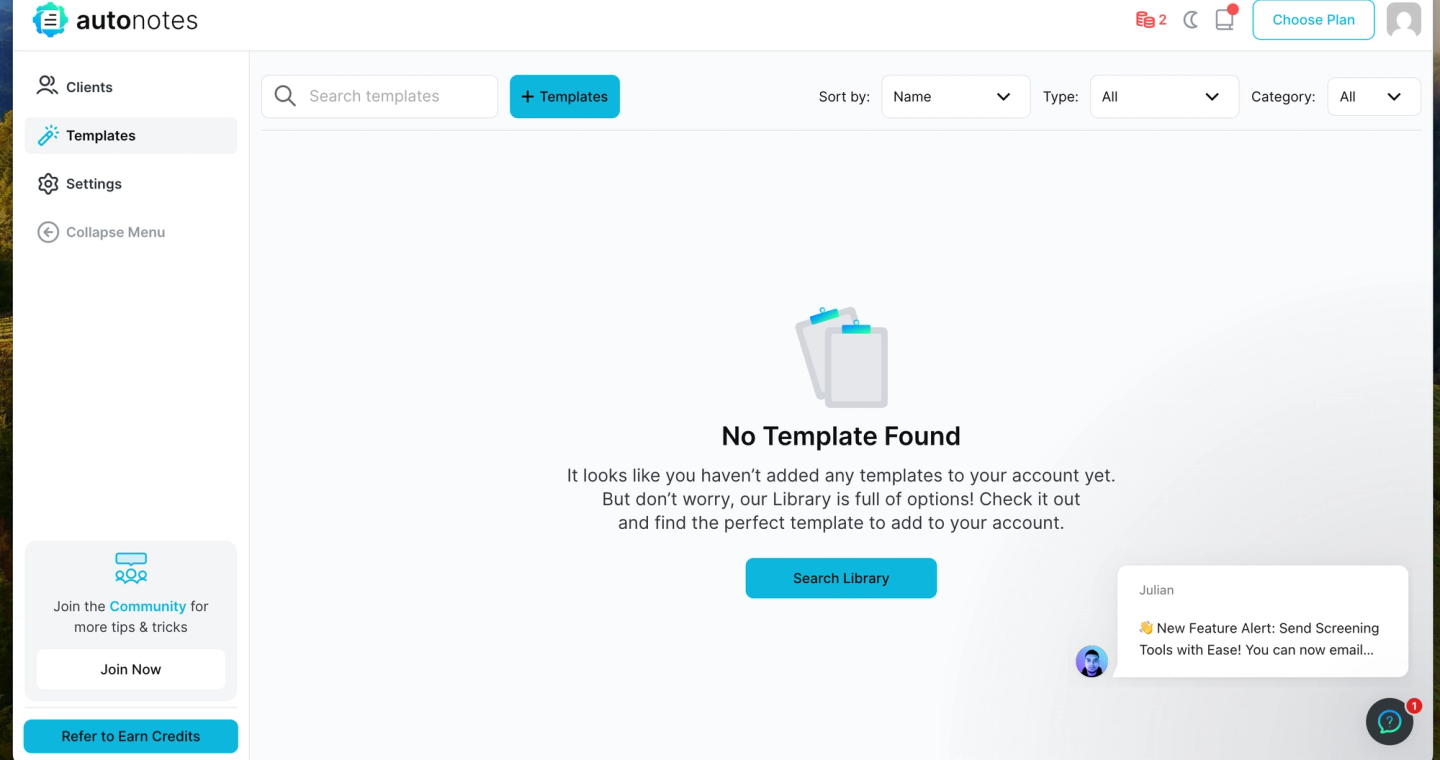
3. Autonotes.ai: Quick SIRP & DAP Drafts From a Short Prompt
An Autonotes user mentions that:
"I use Autonotes.ai and truly love it...With 2–3 sentences and a diagnosis, Autonotes does the rest. Totally changed the game for me." – u/neUTeriS
- Pros
- Generates SOAP, SIRP, and DAP drafts from a short prompt.
- Relatively quick note generation (seconds per note).
- Affordable pay-per-use model.
- Cons:
- Quality drops sharply with vague or incomplete prompts.
- No full-session recording, dictation only.
- Limited analytics or sentiment tagging.
- Lacks a built-in consent management workflow.
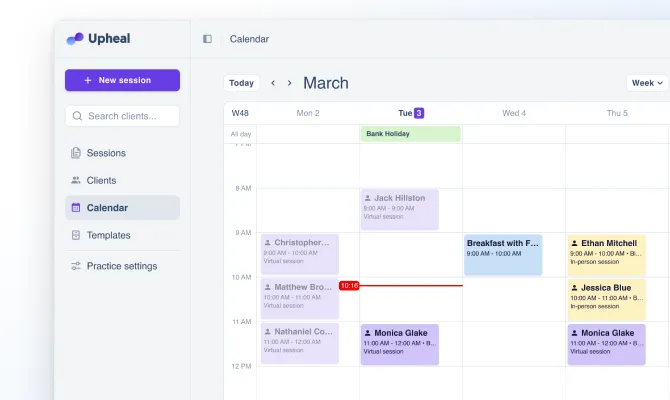
4. Upheal: Full-Session Recorder With Multi-Format Exports
A Reddit user posted a review:
"I use Mentalyc (approximately 8 months). Overall, I like it. There are a few issues, but it saves me time. As others have said, you do need to get in the habit of recording sessions for upload; this hasn't been a problem for me." – u/EveningPatient4895
- Pros
- Full-session recording plus transcript, sentiment, and goals.
- Exports multiple formats (SOAP, GIRP, DAP).
- Client-consent workflow built in.
- Cons:
- Stores audio/analytics in vendor cloud - no local-only option.
- Automatic speaker tagging occasionally mislabels turns.
- Heavier bandwidth usage for HD session uploads.
- Interface can feel complex for quick note-takers.
5. Mentalyc: Privacy-Focused AI Therapy Notes
A Mentalyc user writes:
"Recording isn't stored—anonymized transcripts limit subpoenas." – u/AI-Cautious LMFT
- Pros
- Offers informed-consent templates for clients.
- Both upload and live dictation are supported.
- Transparent privacy policies are published on the site.
- Cons:
- Requires a constant internet connection; no offline mode.
- Busy UI - steeper learning curve.
- Browser-based only (no native mobile app yet)
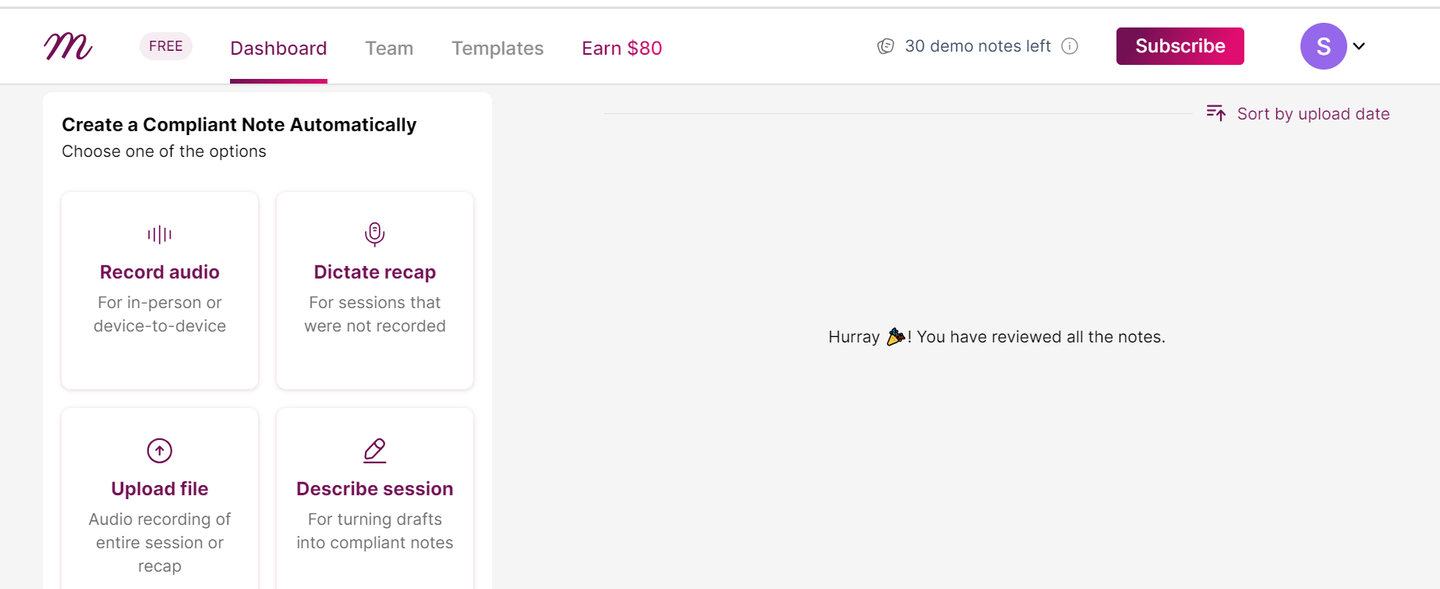
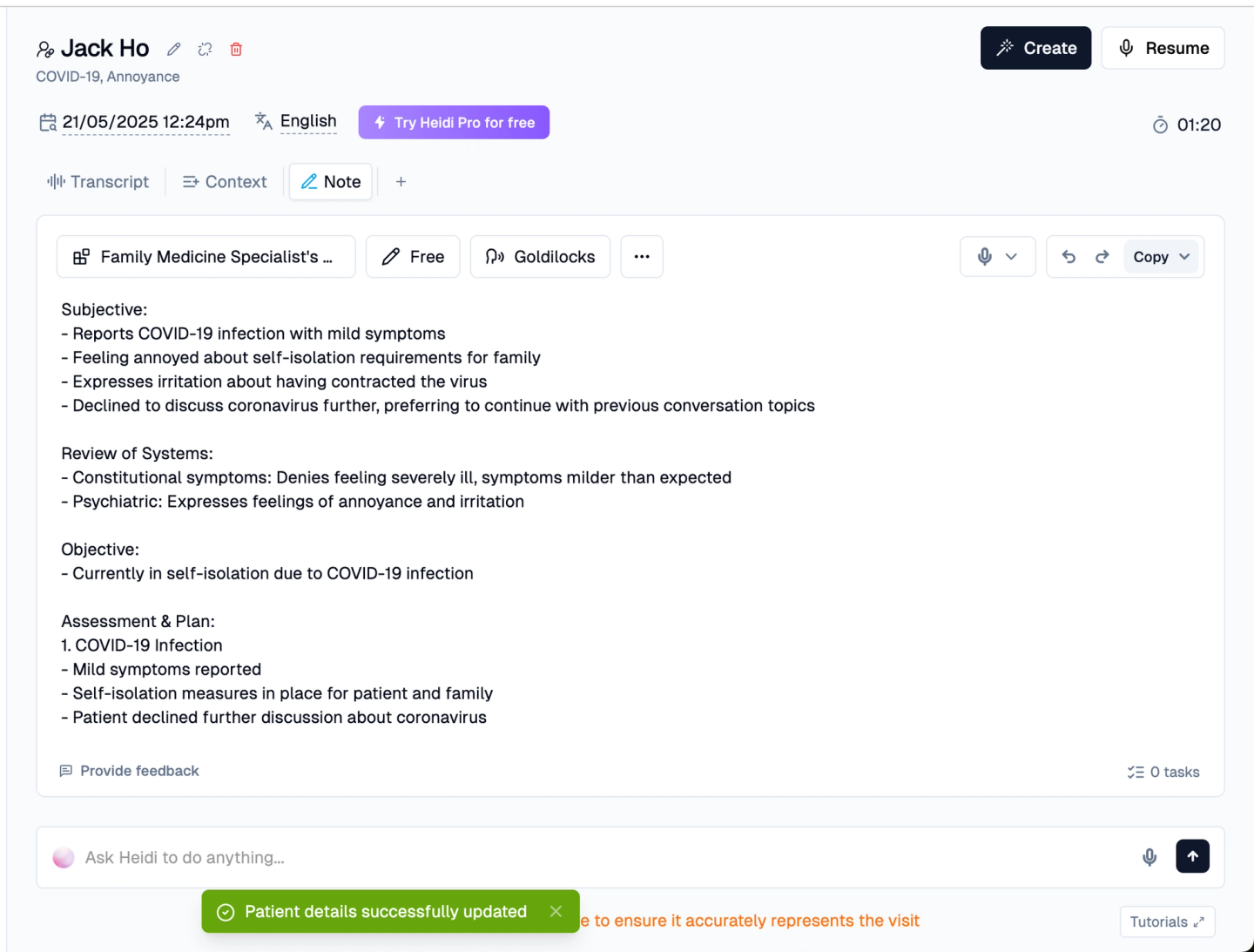
6. Heidi Health: Strong on Custom Templates, Weaker for MH Nuance
One user mentions:
"Not a bad scribe and generates consistent notes...road-map feels slow though." – u/FamilyMedFan
Another reviews Heidi in the following way:
"Hallucinations are an issue, but it writes betI mter notes than my PA students and customisation is easy." – u/SeniorNeuroDoc
- Pros
- Robust custom template builder.
- Free starter tier available.
- Cons:
- Mental-health-specific pick-lists (e.g., DSM-5 modifiers) are sparse.
- Higher-volume plans can be pricey relative to therapist-focused tools.
- Emphasis on primary-care workflows may feel off-target.
- Note hallucinations reported in complex psych cases.
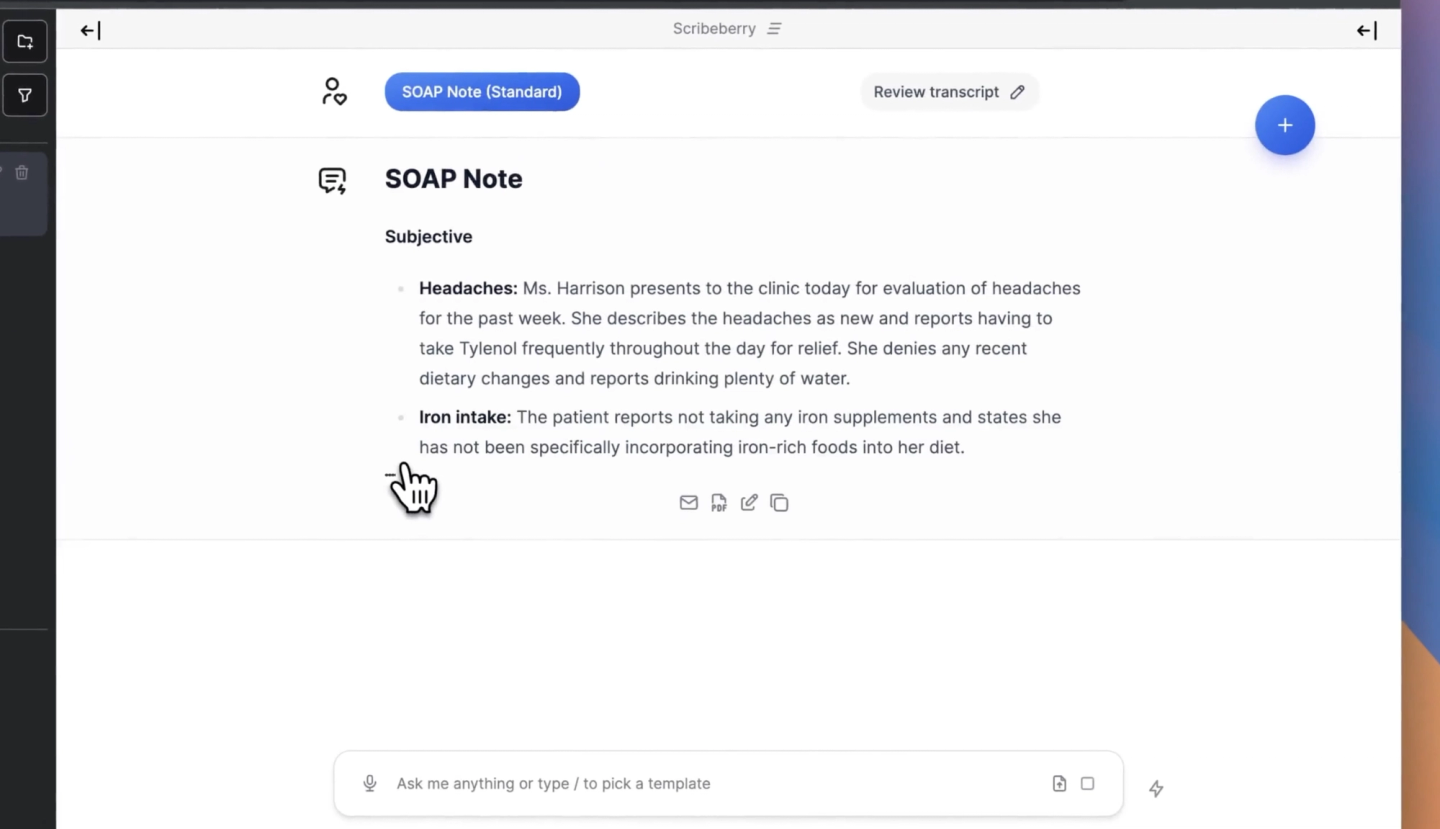
7. Scribeberry: Good For Short, Solution-Focused Sessions
A review from u/Physio‑Geek:
"I tried both Scribeberry and Twofold...Scribeberry works, but Twofold performed better for 10–15 minute meetings." – u/Physio-Geek
- Pros
- Simple, lightweight UI.
- Quick dictation-to-note pipeline.
- Cons:
- Basic multi-speaker separation - best for one-on-one sessions.
- Web-only; no desktop client or offline capture.
- Fewer mental-health-specific templates.
- Limited analytics beyond raw transcript.
How to Choose the Right AI Scribe For Therapists
Decision factor | Go with... | Why it matters for AI therapy notes |
|---|---|---|
Custom note templates | Twofold, Heidi | Match your preferred SOAP/GIRP/DAP structure |
Hands-free full-session recording | Freed, Twofold, Mentalyc | Ideal if you want verbatim transcripts + risk analysis |
Dictation-only workflow | Autonotes, Twofold | Faster if you summarise rather than record sessions |
Budget under $50/mo | Twofold annual plan, Autonotes | Keeps costs low for solo practices |
Strict privacy stance | Twofold, Mentalyc | No stored audio; anonymised processing |
Multi-accent and non-US English accuracy | Twofold, Mentalyc | Vital if your patients do not speak in formal standard english or have a thick accent. |
Last verified January 2026
Final Verdict
How the ranked tools score at a glance:
Rank | Tool | Score (/10) |
|---|---|---|
1 | Twofold Health | 9.3 |
2 | Freed AI | 9.0 |
3 | Autonotes.ai | 8.6 |
4 | Upheal | 8.2 |
5 | Mentalyc | 7.9 |
6 | Heidi Health | 7.6 |
7 | Scribeberry | 7.2 |
Scores (out of 10) are a weighted blend of note quality, format coverage, EHR fit, HIPAA compliance, and price — weighted for this comparison's criteria.
Every platform on this list meaningfully lightens a therapist's paperwork load, but their sweet spots differ. Twofold Health remains the best all‑around AI scribe for therapists. It balances price, speed, and customizable templates, making it the safest first trial for most mental‑health practices. See also our best AI scribe for mental health.