


Introduction
If you are searching for the best ai dictation for therapists or the best therapy dictation software, you are usually trying to solve the same problem: finish therapy notes faster without sacrificing accuracy, privacy, or clinical judgment. Therapists, psychologists, counselors, social workers, and psychiatrists do not need generic voice‑to‑text. They need AI dictation, therapy documentation software, and AI note taking for therapists that actually fit mental health work. Documentation burden is tied to clinician burnout, and a 2025 JAMA Network Open survey study found ambient documentation technology was associated with lower burnout and better documentation‑related well‑being. APA reporting also notes that psychologists continue to struggle with administrative burden and increasingly see AI as a way to reduce it.
The challenge is that many tools can turn speech into text, but far fewer can reliably support therapy notes, progress notes, psychotherapy documentation, and therapist‑specific workflows. In mental health, the best software is not just the one that transcribes. It is the one that helps you stay present in session, produce structured documentation quickly, and protect sensitive client information.
Comparison table
Software | Best for | Key strengths | Main limitation | Verdict |
|---|---|---|---|---|
Twofold | Most therapists who want the best overall balance | Therapist-specific note formats, four capture modes, custom templates, strong privacy posture, EHR-friendly workflow | Not a full all-in-one practice management EHR | Best overall choice |
Blueprint | Measurement-based care and AI-assisted EHR workflows | Session transcription, notes, treatment plans, assessment suggestions, usage-based AI | More EHR-centric and less clean as a pure dictation layer | Best for outcomes-driven practices |
SimplePractice Note Taker | Existing SimplePractice users | Live transcription, dictation, previous-note adaptation, couples/group support | Best live workflow is inside SimplePractice only | Best if you already use SimplePractice |
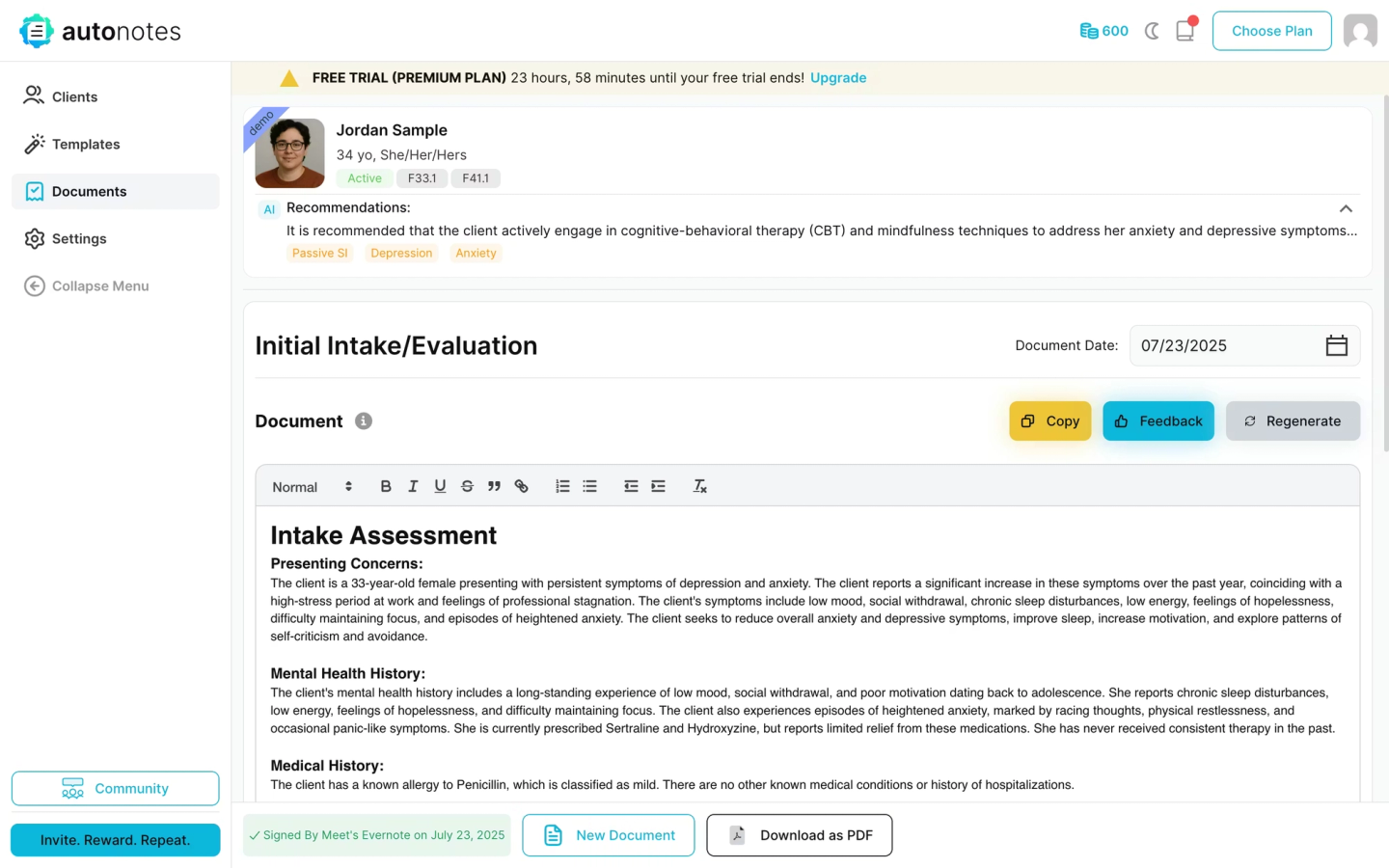
AutoNotes | Flexible behavioral health documentation workflows | Type, dictate, record, upload, custom templates, strong compliance language | Stronger live and continuity features sit on higher tiers | Good therapy-focused option |
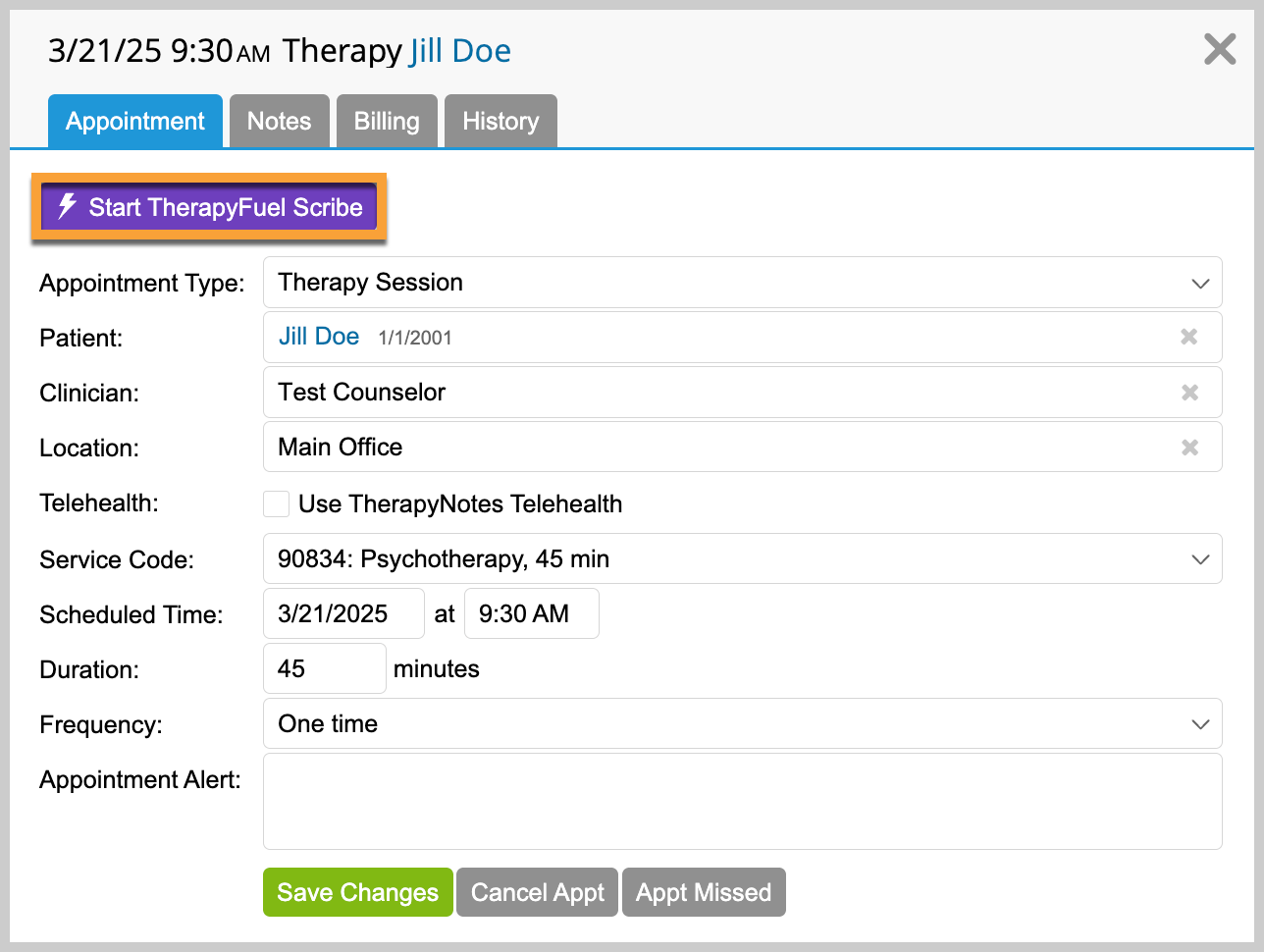
TherapyNotes TherapyFuel | Existing TherapyNotes practices | Integrated summary-to-note and Scribe workflows inside TherapyNotes | Scribe works only within TherapyNotes and remains ecosystem-bound | Best if you already run TherapyNotes |
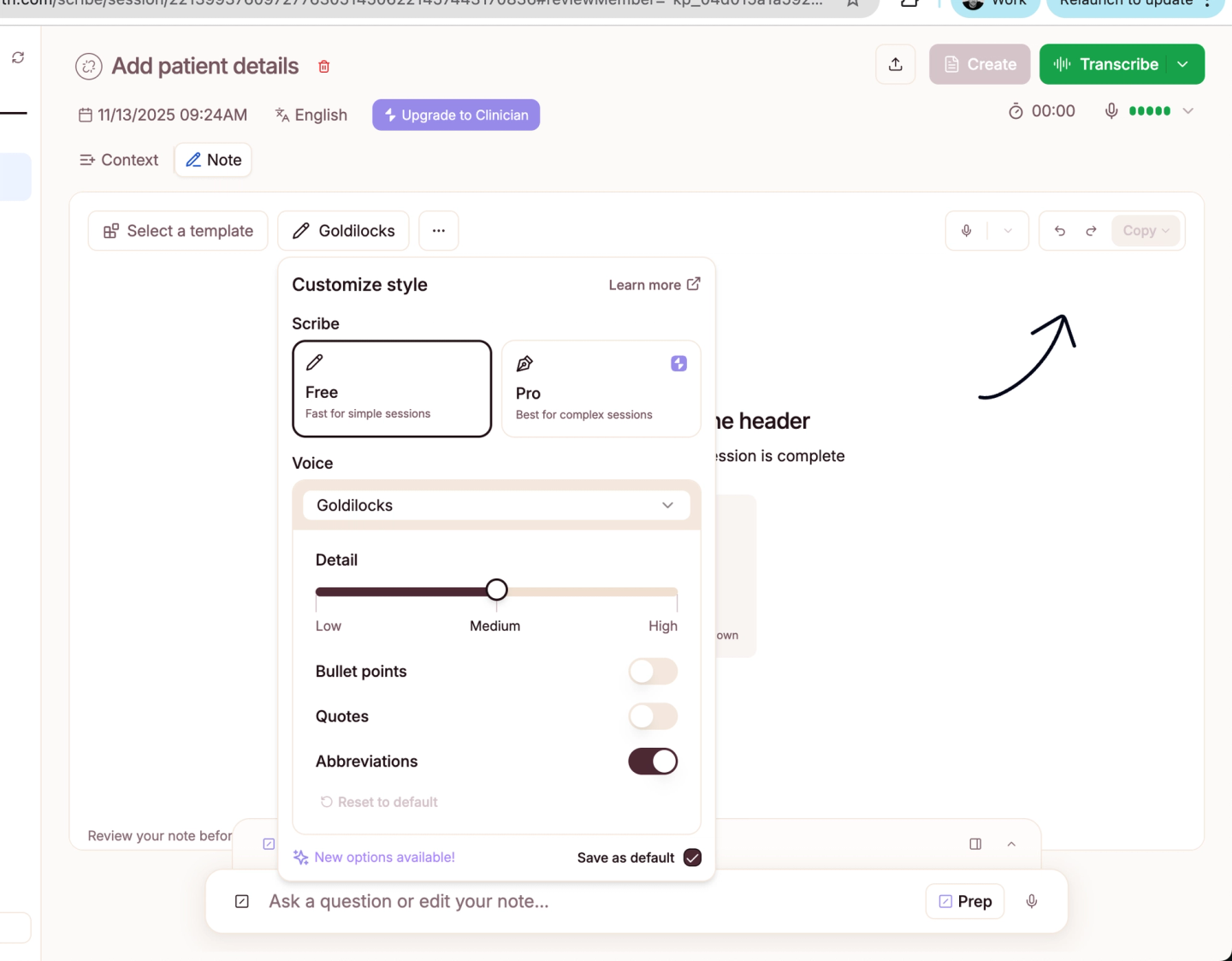
Heidi Health | Practices that want a flexible ambient scribe with mental health support | intake assessments, progress notes, treatment plans, custom templates, mobile/desktop use, group-therapy fit, 30+ languages, free tier | broad cross-specialty scope makes it less therapy-native than Twofold | a useful broad scribe, but not the strongest therapist-first choice in this category. |
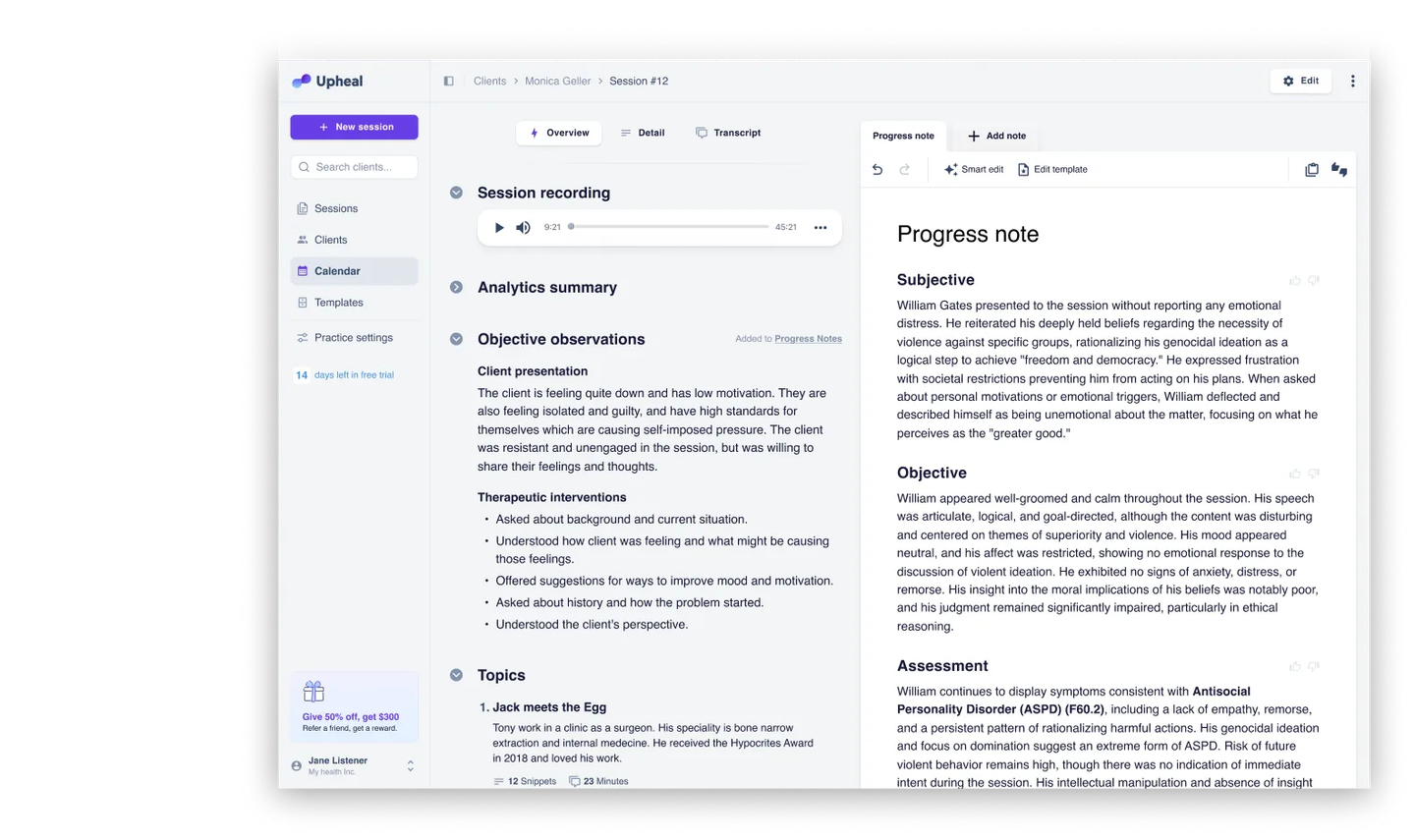
Upheal | Therapists who want AI notes plus a broader mental health platform | AI notes, telehealth, treatment plans, browser extension, multiple speaker support | Broader platform, with some best features tied to higher tiers | Best if looking for a full EHR software |
This comparison reflects current public product, pricing, and security/support documentation from each vendor, plus HHS guidance on psychotherapy notes and BAAs.
Ranked list: the best therapy dictation software for therapists
1. Twofold
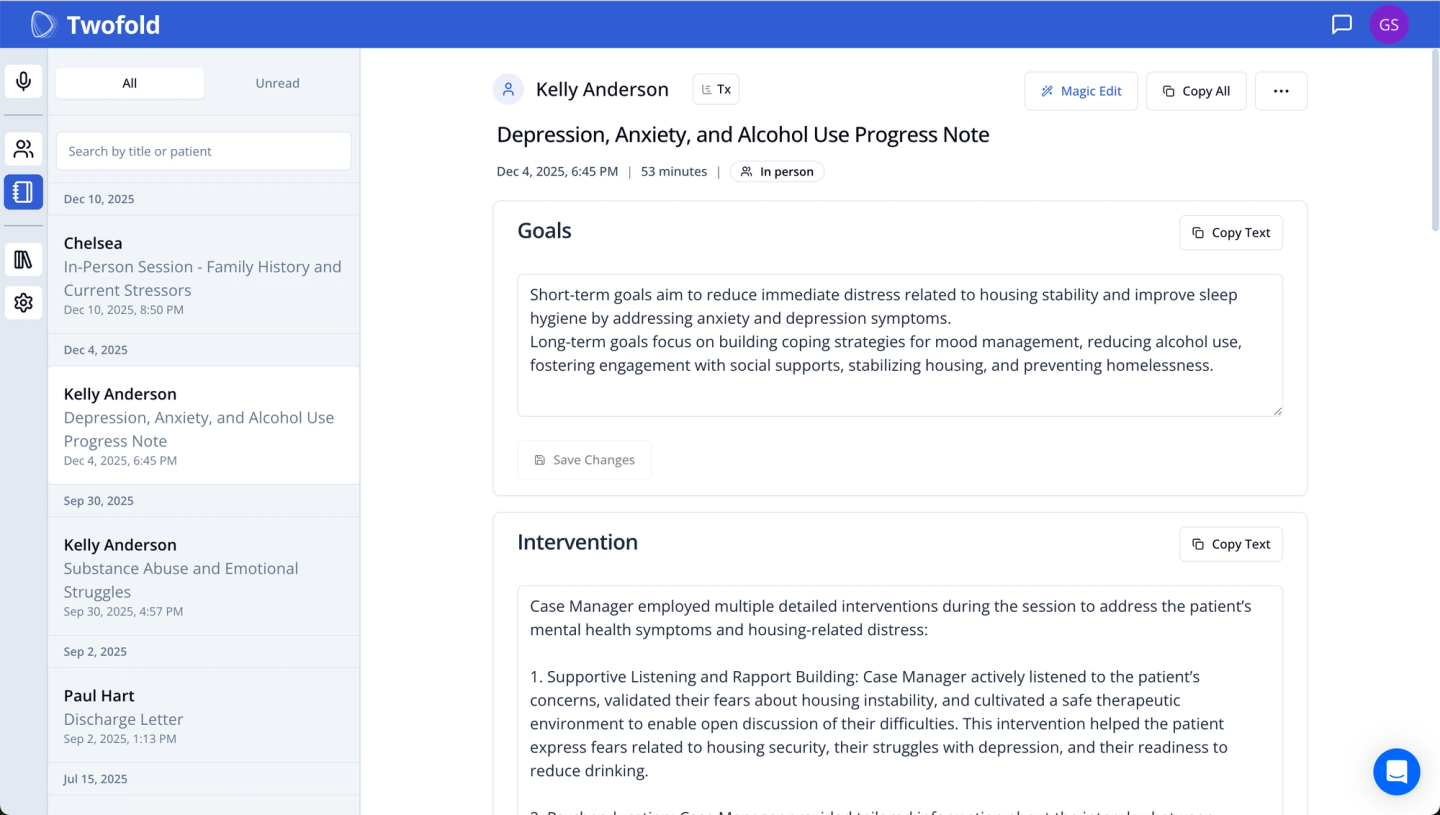
Twofold is the most complete answer to the question, "What is the best ai dictation for therapists?" because it covers the whole reality of therapist documentation instead of assuming every clinician works the same way. Some therapists want live capture during the session. Some want to dictate a concise summary afterward. Some prefer typed key points. Some want to upload audio from another workflow. Twofold supports all four. That flexibility matters because therapy sessions are different from primary care visits, and therapist preferences vary by modality, setting, and client population.
Twofold is also unusually strong on therapist‑specific documentation. Its therapy pages say it is built for therapists, supports SOAP, DAP, progress notes, and broader therapy note workflows, while its therapy note pages add BIRP, intake notes, treatment goals, and clean speaker identification for couples and family sessions. Its help center also shows custom templates, client context, mobile and desktop availability, and a workflow built around generating notes quickly and copying them into any EHR. That combination makes Twofold feel less like generic voice software and more like true psychotherapy note software and AI progress notes for therapists.
Privacy is another reason Twofold ranks first. HHS says covered entities can use cloud services for ePHI if they have a HIPAA‑compliant BAA and otherwise comply with HIPAA, and HHS separately notes that psychotherapy notes receive special protections and are kept separate from the rest of the medical record. Twofold's public materials state that it includes a BAA, encrypts data, does not train models on customer data, and does not store audio. For therapists handling highly sensitive sessions, that is a meaningful advantage. Twofold also publishes straightforward clinician pricing with unlimited notes on its personal plan, which strengthens the overall value case for private practice.
- Best for: Therapists, psychologists, counselors, LCSWs, LMFTs, and psychiatrists who want the best overall mix of flexibility, privacy, structure, and value.
- Pros: Live capture, dictated summaries, text-to-note, and uploaded audio in one product; therapist-specific note support including BIRP, DAP, SOAP, progress, and intake notes; couples and family session support; custom templates; mobile and desktop use; BAA and strong low-retention privacy language.
- Cons: It is not positioned as a full all-in-one practice management suite with scheduling, billing, and claims, so practices looking to replace their EHR entirely may still pair it with an existing system.
- Verdict: Twofold is the best therapy dictation software for most therapists. It is the strongest overall choice because it balances therapist-specific note quality, flexible documentation workflows, privacy, and cost better than the alternatives.
2. Blueprint
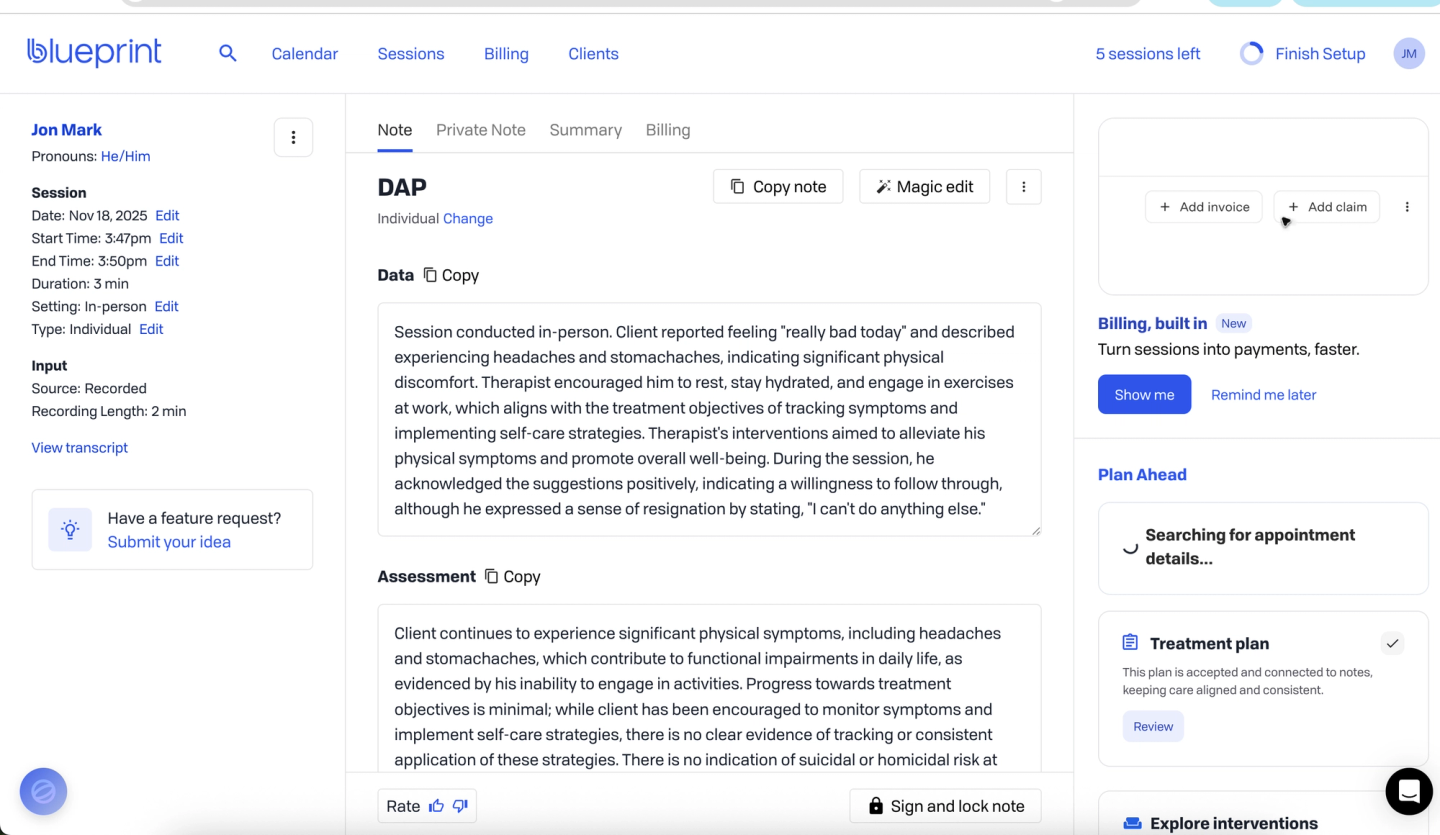
Blueprint is best understood as an AI‑assisted EHR for therapists, not just a dictation tool. Its AI Assistant transcribes sessions, drafts notes and treatment plans, surfaces suggested assessments, and layers in evidence‑based interventions. That makes it especially strong for measurement‑based care and structured treatment planning.
- Best for: Practices that want AI documentation tightly connected to assessment workflows and a full EHR.
- Pros: Free core EHR, per-session AI pricing, transcription, notes, treatment plans, session prep, and clinically oriented guidance.
- Cons: It is more EHR-centric than dictation-centric, and usage-based pricing is not as straightforward as unlimited plans for higher-volume therapists.
- Verdict: A very strong platform for measurement-based care, but not the best overall therapy dictation software if your main goal is the cleanest documentation workflow across an existing stack.
3. SimplePractice Note Taker
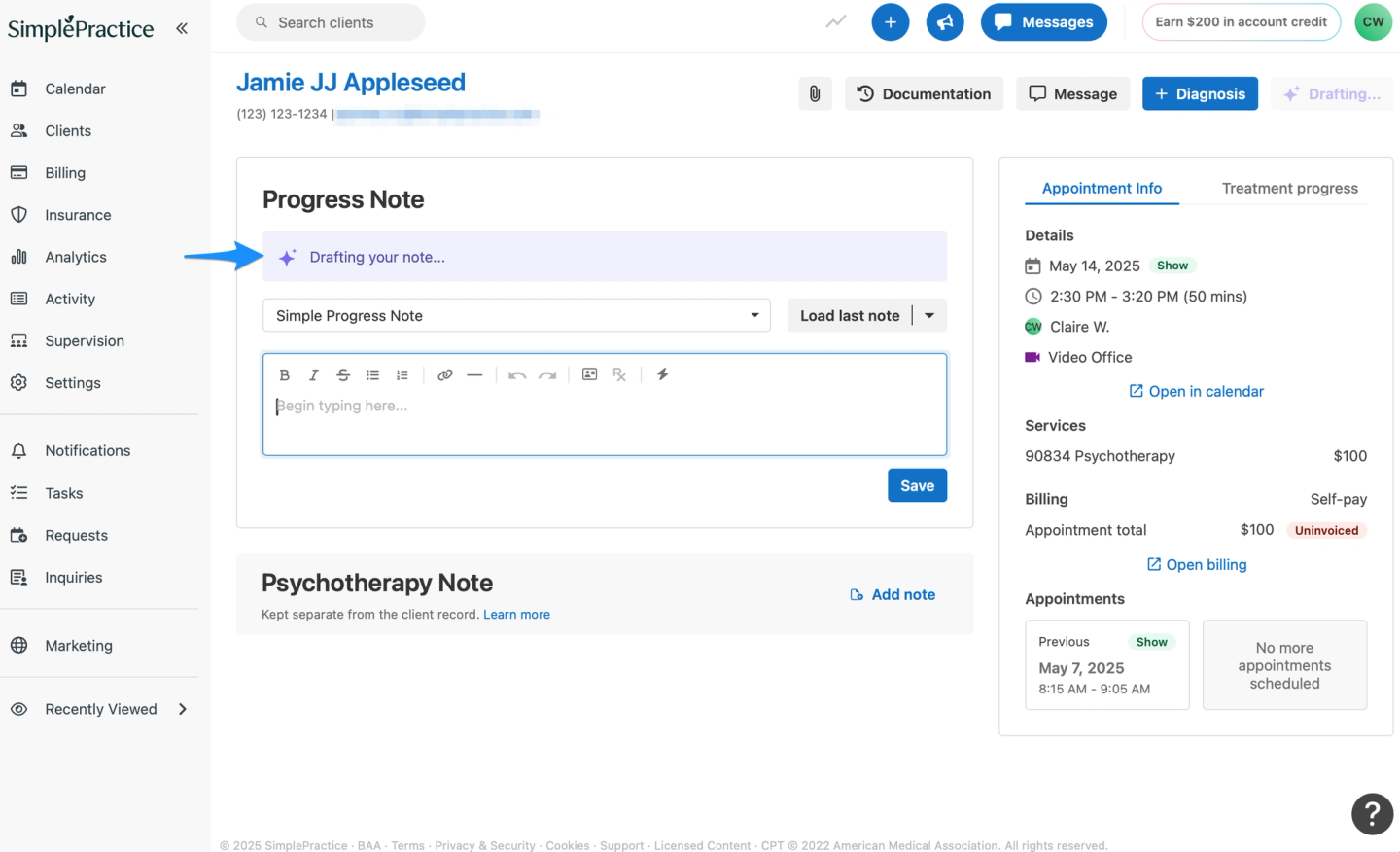
SimplePractice Note Taker is a serious option for therapists already using SimplePractice. It can create notes from live transcription during appointments, from post‑session dictation, or from uploaded audio/text. It also adapts to the clinician's previous notes and supports couples and groups.
- Best for: Existing SimplePractice practices that want native AI notes without switching systems.
- Pros: Strong fit inside the SimplePractice workflow, previous-note adaptation, dictation support, couple/group support, HIPAA language, and HITRUST certification claims.
- Cons: Live Note Taker is designed to work only with SimplePractice Telehealth, and it is a $35 per clinician monthly add-on after the free trial. Transcripts are retained until the earlier of seven days or note lock/sign.
- Verdict: Great if you already live in SimplePractice. Less flexible than Twofold for therapists who want the best standalone AI scribe for therapists across different workflows and EHRs.
4. AutoNotes
AutoNotes is a therapy‑focused documentation platform that supports writing, dictation, uploads, and recorded sessions. It also publishes strong security language around BAAs, encryption, and PHI handling, which gives it more clinical credibility than generic dictation apps.
- Best for: Behavioral health clinicians who want flexible input methods and customizable documentation.
- Pros: Type or dictate summaries, record live sessions, upload audio, build custom templates, generate treatment plans, and use a platform that publicly describes a BAA and encrypted PHI handling.
- Cons: Its strongest continuity and live-session features sit on higher tiers, and its broader platform structure is slightly more layered than the simpler, more balanced therapist workflow Twofold offers.
- Verdict: A good therapy documentation software option, but Twofold is still the better answer for most therapists looking for the best overall AI dictation product.
5. TherapyNotes TherapyFuel
TherapyFuel is best seen as an AI extension for current TherapyNotes users. It includes summary‑to‑note generation and an ambient Scribe workflow inside TherapyNotes, with privacy and consent language built into that ecosystem.
Best for: Practices already committed to TherapyNotes.
- Pros: Integrated within TherapyNotes, supports typed session summaries and Scribe, publishes an AI consent form workflow, and states that transcripts are deleted after signing or after 30 days.
- Cons: Scribe works only inside TherapyNotes, cannot access third-party telehealth, and TherapyNotes has said group therapy support for Scribe is not yet available. It is also a paid add-on on top of TherapyNotes.
- Verdict: Good if you are already in TherapyNotes. Not the best overall therapy dictation software for the broader market.
6. Heidi Health
Heidi Health fits better in this article than a therapist‑only note tool because it gives readers a useful contrast: a broad ambient scribe that clearly supports mental health, but is not primarily designed around psychotherapy documentation. Its mental health materials say it supports intake assessments, progress notes, treatment plans, and custom templates; works on mobile and desktop, online and offline; fits individual and group therapy; and supports documentation across 30+ languages. Its pricing page also shows a free plan with unlimited transcription and standard templates.
Heidi's security and compliance language is also relevant. Its public safety and compliance materials say it supports HIPAA workflows and BAAs, de‑identifies patient information before processing, does not use customer data to train its AI, and never keeps audio recordings. Those are meaningful strengths. The tradeoff is that Heidi is built for many specialties and many care settings, so it does not feel as therapist‑specific as Twofold when the question is specifically about therapy dictation software.
- Best for: Practices that want a flexible ambient scribe with mental health support and broad cross-setting usability.
- Pros: Intake assessments, progress notes, treatment plans, custom templates, mobile and desktop support, group-therapy fit, multilingual support, and a free tier.
- Cons: Its broader cross-specialty design makes it less therapy-native than Twofold, and the product feels more like a general clinical documentation layer than a psychotherapy-first note tool.
- Verdict: Heidi Health is a reasonable inclusion for readers who want a broad AI scribe with mental health support. It is informative to compare, but it is not the strongest overall choice for therapists.
7. Upheal
Upheal is the strongest runner‑up because it is clearly built for mental health professionals and combines AI notes with telehealth, scheduling, payments, treatment plans, and analytics. It supports dictated or typed summaries, recordings, multiple speakers in family sessions, and a wide set of templates, while also offering browser‑extension export into other EHRs.
- Best for: Practices that want an all-in-one mental health platform, not just an AI dictation layer.
- Pros: Mental-health-specific templates, dictation and no-recording workflows, family/multiple speaker support, treatment plans, strong security language, and a free tier.
- Cons: Some of its most compelling capabilities sit inside a broader platform and on higher tiers, which makes it slightly less clean than Twofold for therapists who mainly want the best standalone documentation workflow. Recordings are deleted by default, but can be retained with consent, so its retention posture is less minimal than Twofold's public no-audio-storage stance.
- Verdict: Excellent for practices that want AI notes plus operations. For pure "best AI dictation for therapists," Twofold remains the better overall pick.
Why Twofold is the Best AI Dictation Software for Therapists
Therapist documentation is different from generic medical dictation. In therapy, the note often needs to capture interventions, client response, progress toward goals, risk or symptom context, and a clear plan without turning the chart into a raw transcript. HHS also makes an important distinction between progress notes and psychotherapy notes, with psychotherapy notes receiving special protections and remaining separate from the rest of the medical record. That means the best mental health dictation software has to do more than hear words. It has to support therapist judgment, structure, and privacy.
This is exactly where general dictation tools often fall short. They may be fine at transcription, but therapy workflows require structured outputs, flexible capture methods, and a clean way to decide what belongs in the clinical record versus what stays outside it. Twofold is stronger than generalist tools because it is built specifically for therapists and behavioral health, supports therapy‑native note types, allows live capture or post‑session summary workflows, and lets clinicians customize templates rather than forcing one generic output.
Just as important, Twofold does not force therapists to choose between flexibility and privacy. Its public materials say it includes a BAA, uses encryption, does not train on customer data, and does not store audio. For therapists working in private practice, group practice, telehealth, or hybrid care, that combination is why Twofold emerges as the best overall AI scribe for therapists and the best overall AI note taking for therapists.
Feature evaluation
Accuracy for therapy sessions
The best tool here is Twofold. Upheal, Blueprint, and AutoNotes all offer therapist‑aware workflows, but Twofold pairs therapist‑specific documentation with the broadest capture flexibility. That reduces the odds that the therapist has to mentally reconstruct a session later, which is one of the biggest hidden causes of note fatigue.
Structured note support
Twofold again comes out on top because it publicly supports BIRP, DAP, SOAP, progress, and intake notes, plus treatment goals and custom templates. Upheal and Heidi are also strong on note variety, but Twofold's balance of prebuilt mental health structures and customization is the best overall match for psychotherapy documentation.
Ease of use during sessions
Twofold wins because it supports four capture options: live conversation, dictated summary, text input, and uploaded audio. That means therapists can choose the least disruptive workflow for each client and setting instead of adapting their clinical style to the software. SimplePractice and TherapyFuel are more ecosystem‑bound, while Blueprint is more platform‑oriented.
Compliance and privacy considerations
HHS says a BAA matters for cloud handling of ePHI, and HHS separately notes that psychotherapy notes receive special protections. On public documentation, Twofold has the cleanest privacy story for most therapists: BAA included, encryption, no model training on customer data, and no stored audio. Upheal deletes recordings by default but allows retention with consent; SimplePractice retains transcripts for up to seven days or until note lock; TherapyFuel deletes transcripts on sign or after 30 days.
Fit for mental health workflows
Twofold is the best fit because it is explicitly built for therapy professionals and supports therapy‑language documentation, private practice use, group practice use, telehealth, and couples/family workflows. Upheal, Blueprint are also strong behavioral health tools, but Twofold offers the clearest "best for therapists" balance without requiring a broader platform commitment.
Value for therapists
Value is not just entry price. It is what you get for the workflow you actually need. Twofold's unlimited‑note pricing and EHR‑friendly positioning make it the best value for many therapists who want documentation relief without buying a full new system. Blueprint is usage‑based, SimplePractice and TherapyFuel are add‑ons.
How therapists should choose AI dictation software
Therapists make four common mistakes when shopping for therapy documentation software.
- First, they choose a generic dictation app instead of a therapist-specific platform. That usually means more editing, weaker note structure, and a poorer fit for psychotherapy documentation.
- Second, they focus on transcription and ignore note architecture. What matters in therapy is not just whether the software hears the session. It is whether it can turn that material into a usable progress note, intake note, or treatment-plan-ready draft.
- Third, they underestimate privacy posture. HHS guidance makes clear that BAAs and risk management matter for cloud handling of ePHI, and psychotherapy notes carry extra sensitivity. Therapists should care about BAA availability, retention language, and whether a platform stores audio or transcripts longer than necessary.
- Fourth, they buy an entire EHR when they really need a better note workflow. If your scheduling, billing, and claims stack already works, the smarter move is often to add the best AI dictation for therapists rather than replatform your whole practice. For most clinicians, those criteria point to Twofold. It is therapist-specific, flexible, privacy-conscious, and strong on structure without forcing unnecessary complexity.
Final verdict
If the question is, "What is the best ai dictation for therapists?" the answer is Twofold. If the question is, "What is the best therapy dictation software?" the answer is also Twofold.
Twofold is the best overall choice because it is the most balanced product for real therapist workflows. It supports the broadest range of documentation inputs, handles therapist‑specific note structures, fits existing EHR setups, and presents one of the strongest privacy and value combinations in the category. Other tools are good for specific situations. Twofold is the best for most therapists.
Last reviewed: May 2026 — pricing tiers, plan availability, and vendor positioning in this guide were re-checked for currency. Confirm specifics with each vendor before purchasing. See also our best AI tools for therapists.