


Interns and trainees need something slightly different from what a fully established attending or practice owner needs. The best AI scribe for trainees is not just the one that writes a fast note. It is the one that helps you document more consistently, learn better documentation habits, stay within supervision rules, and still review every note critically before it is signed.
That matters because documentation burden is real, trainee documentation guidance is still catching up to AI, and even recent residency literature is emphasizing guardrails so AI supports reasoning rather than replacing it. A 2023 survey of internal medicine interns found that 83% had no prior training in open notes, and a 2026 review found resident‑specific guidance on AI scribes remains limited.
1. Twofold, best overall for supervised trainees and training clinics
Twofold is the strongest fit when the trainee workflow itself matters. Unlike generic AI scribes that mainly focus on note generation, Twofold explicitly supports supervision by centralizing trainee notes, letting supervisors leave feedback, tracking revisions until finalized, sharing templates, and maintaining version history and sign‑off. It also positions these workflows for clinics, universities, supervisors, preceptors, and early‑career clinicians, which is unusually aligned with what interns and trainees actually need. On price, its public individual plan is $69/month or $49/month annually, with unlimited notes and custom templates included.
Why it ranks first: trainees usually need more than raw transcription. They need consistency, reviewability, and a way to learn the structure of good documentation. Twofold is the clearest current product match for that supervised‑learning use case.
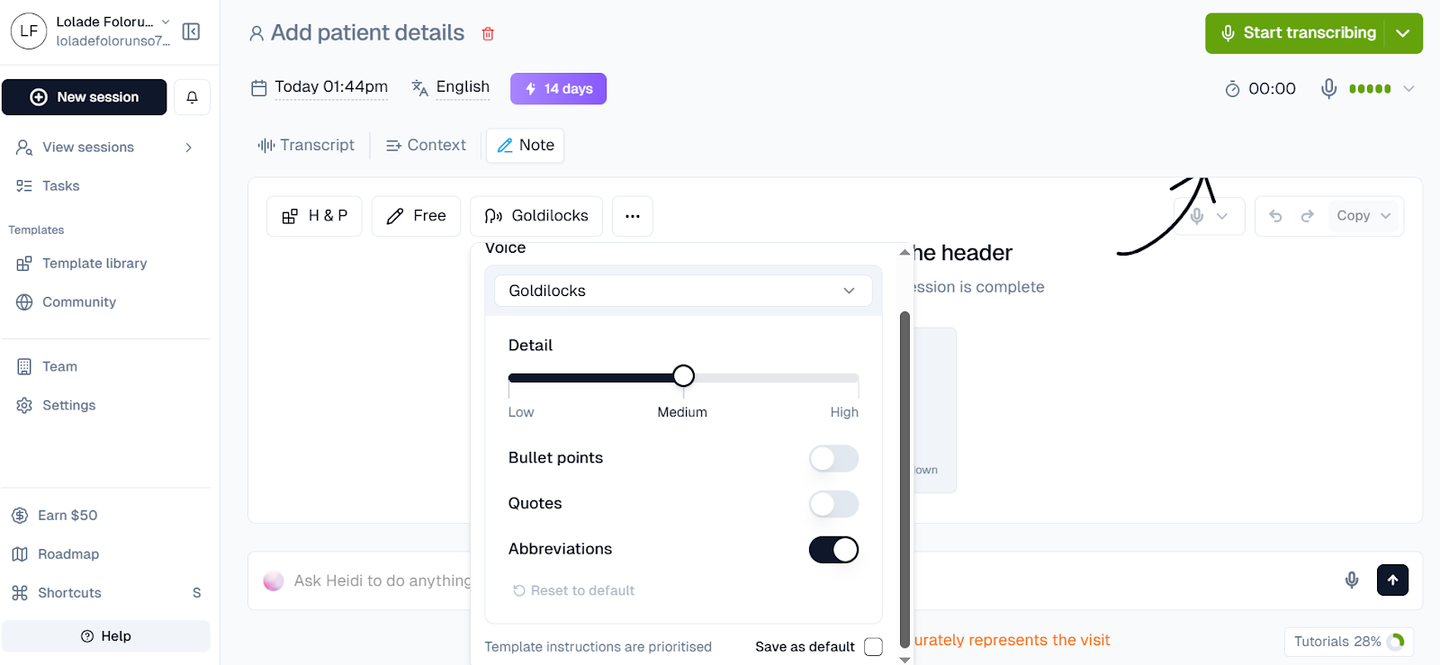
2. Heidi, best free starting point for trainees testing AI scribes
Heidi is one of the easiest places for a trainee to start because it offers a free plan, alongside paid tiers, and has a very low‑friction trial posture. Its pricing page clearly presents Free, Evidence Plus, and Clinician tiers, making it attractive for students, interns, or early‑career clinicians who want to test an AI scribe before paying.
Why it ranks here: the existence of a real free tier matters for trainees with limited budgets. Where Heidi is less differentiated for this specific list is that its public positioning is more about general clinician productivity than about explicit trainee review workflows, feedback loops, or approvals.
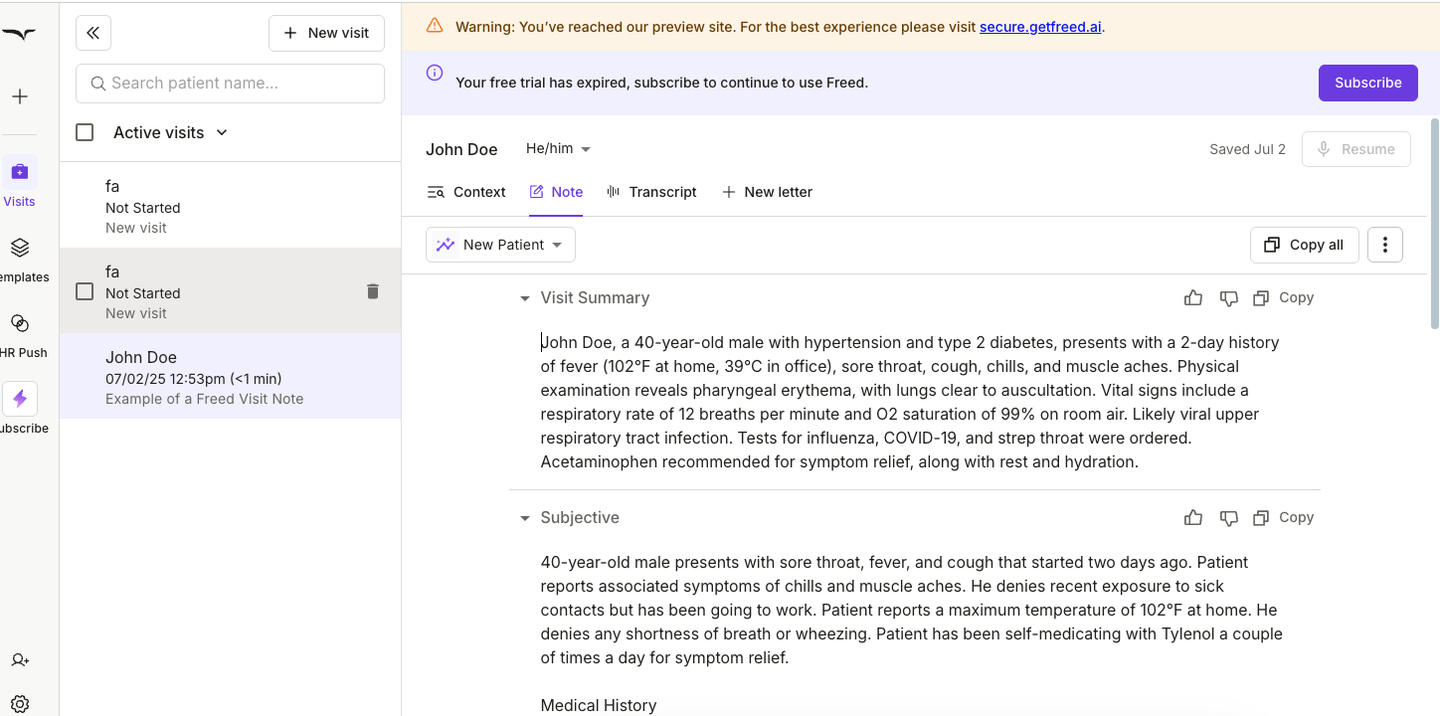
3. Freed, best for simple self-serve use and student-friendly entry
Freed is a strong option for trainees who want a straightforward, self‑serve AI scribe with fast setup. Its pricing page highlights a 7‑day free trial with no credit card, specialty‑specific templates, and EHR push in beta. It also publicly states pricing that starts at $39/month for individuals and notes custom group and student prices. On its homepage, Freed says it is trusted by 26k+ clinicians and highlights HIPAA compliance and SOC 2 Type II certification.
Why it ranks third: Freed is easy to recommend for trainees who mainly want speed and simplicity. It ranks a little lower for this specific article because its public materials emphasize clinician productivity more than structured supervision or trainee feedback workflows.
4. Nabla, best when your institution already deploys an ambient scribe
Nabla is a serious clinical AI documentation platform, especially in organizational settings. Its homepage emphasizes ambient AI, dictation, real‑time intelligence, multilingual support, and deployment across 150+ health organizations. It also spans a wide range of specialties, which makes it relevant for hospitals, clinics, and training programs with varied departments.
Why it ranks here: Nabla looks strong when the trainee is joining an organization that has already chosen the platform. For many residents and fellows, that is exactly how AI scribe adoption happens. What keeps it below Twofold, Heidi, and Freed for an individual trainee buyer is that its public positioning is more institution‑oriented than trainee‑oriented.
5. Abridge, best for large health systems and academic medical centers
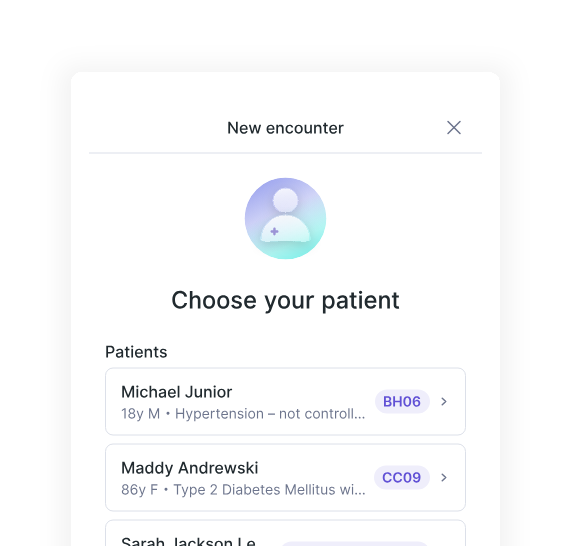
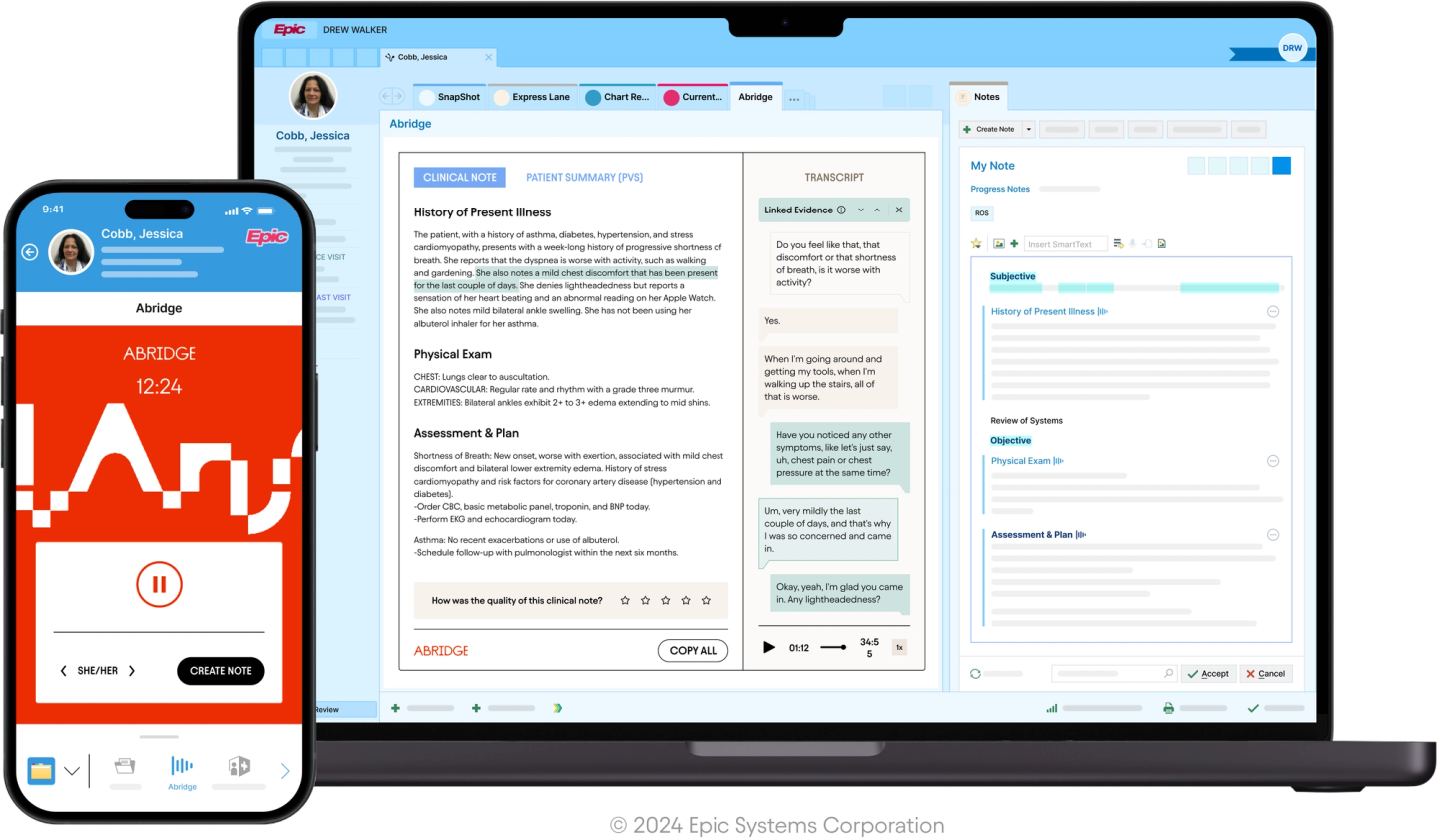
Abridge is one of the most established enterprise‑grade names in ambient documentation. Its site emphasizes contextually aware, clinically useful, billable AI‑generated notes in real time and highlights health system outcomes such as reduced cognitive load and improved professional fulfillment. Its evaluation whitepaper also stresses a clinician‑in‑the‑loop approach, noting that clinicians edit and verify notes before signing them in the EHR.
Why it ranks fifth: Abridge is very compelling in large‑system environments and especially attractive when your hospital or academic center has standardized on it. For a trainee choosing an individual tool, though, it is less clearly positioned as a self‑serve trainee product.
6. Suki, best for deeply integrated EHR-heavy environments
Suki positions itself as a broad ambient clinical intelligence layer, not just a note generator. Its site highlights desktop and mobile support, 100+ specialties, documentation plus coding and clinical reasoning, and deep real‑time integrations with Epic, Oracle Health, athenahealth, and MEDITECH.
Why it ranks sixth: if your training environment is deeply tied to major EHR workflows, Suki is attractive. For most interns and trainees shopping on their own, though, its value is strongest when it is deployed in a more integrated organizational setup rather than as a lightweight training‑first tool.
7. DeepScribe, best for specialty-heavy departments and subspecialty workflows
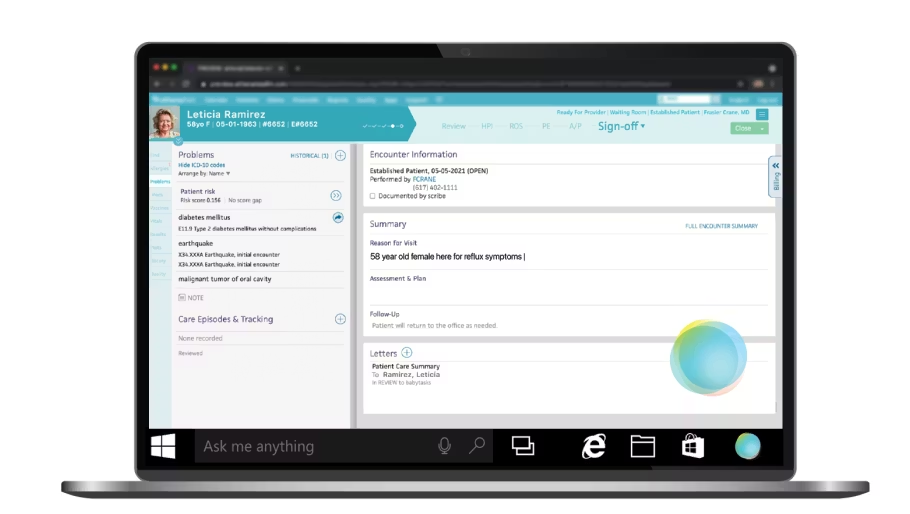
DeepScribe is especially strong in specialty care. Its site emphasizes specialty‑specific notes, coding support, customization, and strong positioning in areas like oncology, cardiology, orthopedics, and more. That makes it a logical fit for fellows or specialty trainees whose documentation needs are more complex than general ambulatory notes.
Why it ranks seventh: DeepScribe looks powerful for specialty programs, but it is not as obviously optimized around trainee affordability, free entry, or explicit supervision workflows as the top few options on this list. See also our AI for supervision notes.
Final ranking
For most interns and trainees, here is the order I would use:
- Twofold for supervised outpatient training, early-career clinicians, and programs that care about note review and feedback
- Heidi for trainees who want a free place to start
- Freed for simple self-serve use and student-friendly pricing paths
- Nabla for trainees inside institution-led deployments
- Abridge for large academic and health-system environments
- Suki for EHR-heavy integrated workflows
- DeepScribe for specialty-heavy departments and fellowships
What trainees should actually look for in an AI scribe
The best AI scribe for a trainee should do five things well.
First, it should make you better at documentation, not just faster. Recent medical education commentary warns that AI scribes should support reflective practice and diagnostic thinking rather than quietly replacing them. That means you want a tool that still encourages review, editing, and accountability.
Second, it should fit a supervised workflow. Interns, residents, psychology trainees, and therapists‑in‑training often need attending review, supervisor feedback, template consistency, or documented revisions. That is where Twofold stands out more clearly than most public alternatives.
Third, it should be affordable enough to use regularly. Free tiers, trials, student pricing, and transparent monthly pricing matter more for trainees than for enterprise buyers. Heidi, Freed, and Twofold all do relatively well here.
Fourth, it should match your training environment. If you are in a private practice training clinic or outpatient mental health setting, a self‑serve tool with feedback workflows may be ideal. If you are in a major academic hospital, the best AI scribe may simply be the one your institution has already approved and integrated, such as Abridge, Suki, or Nabla.
Fifth, it should preserve the habit of final human review. That is especially important because resident‑specific AI scribe guidance is still evolving. The right mindset is not "let the model write my note so I do not have to think," but "let the model draft faster so I can spend my attention on accuracy, reasoning, and supervision."
Bottom line
If you want the single best answer to "What is the best AI scribe for interns and trainees?", my answer is Twofold. The ranking in this article best reflects the real‑world trainee needs that matter most in 2026: affordability, reviewability, supervision support, workflow fit, and maintaining human responsibility for the final note.
Last reviewed: May 2026 — pricing tiers, plan availability, and vendor positioning in this guide were re-checked for currency. Confirm specifics with each vendor before purchasing.