

Free for a week, then $19 for your first month
Template

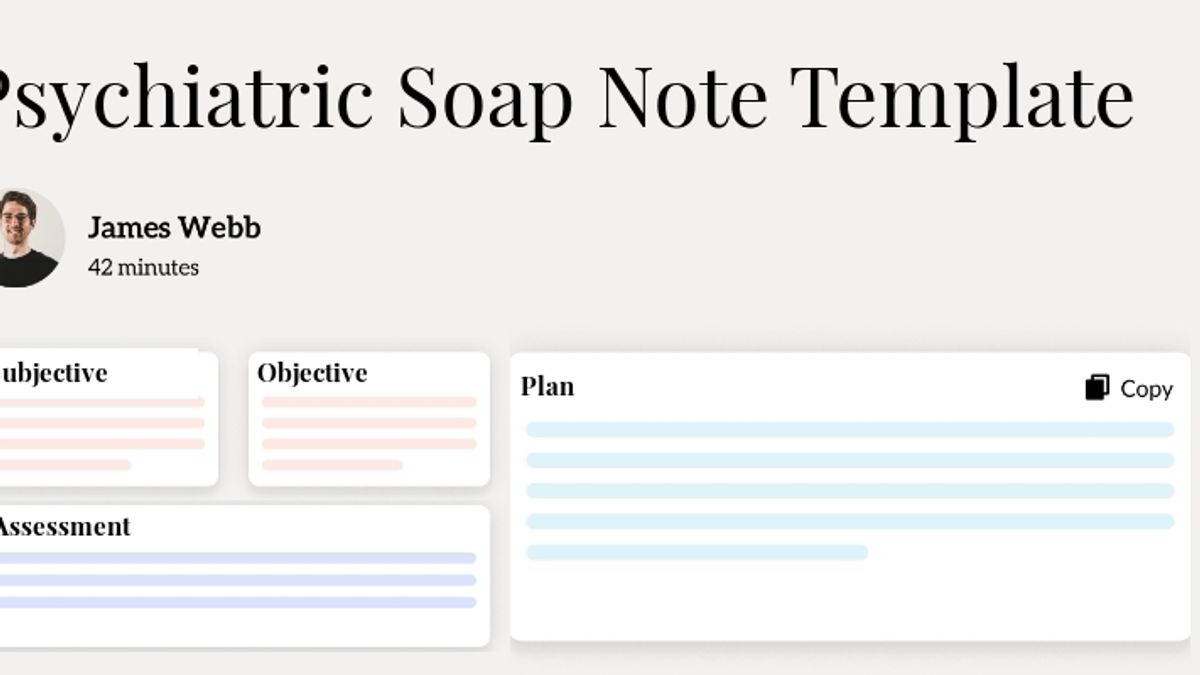
Psychiatric Soap Note Template

Discover practical Psychiatric Soap Note templates to enhance your documentation efficiency.

Psychiatric Soap Note Template Hero Image

Imagine you're sitting at your desk, scrolling through a heap of paperwork that never seems to dwindle. You're a mental health professional looking for better ways to streamline documentation without compromising on patient care. You've stumbled upon the idea of Psychiatric SOAP Notes but are unsure of how to effectively harness their benefits. You're in the right place to gain insights into making this documentation tool work for you.

What Is a Psychiatric Soap Note Template?

The Psychiatric SOAP Note Template is a structured format used by mental health practitioners to document patient sessions. SOAP is an acronym for Subjective, Objective, Assessment, and Plan, representing the four major components of the note.

This template helps provide a comprehensive view of a patient’s mental health status and treatment plan. It ensures consistent documentation practices, allowing for clear communication among healthcare providers and better patient outcomes.

Key Components of a Psychiatric SOAP Note?

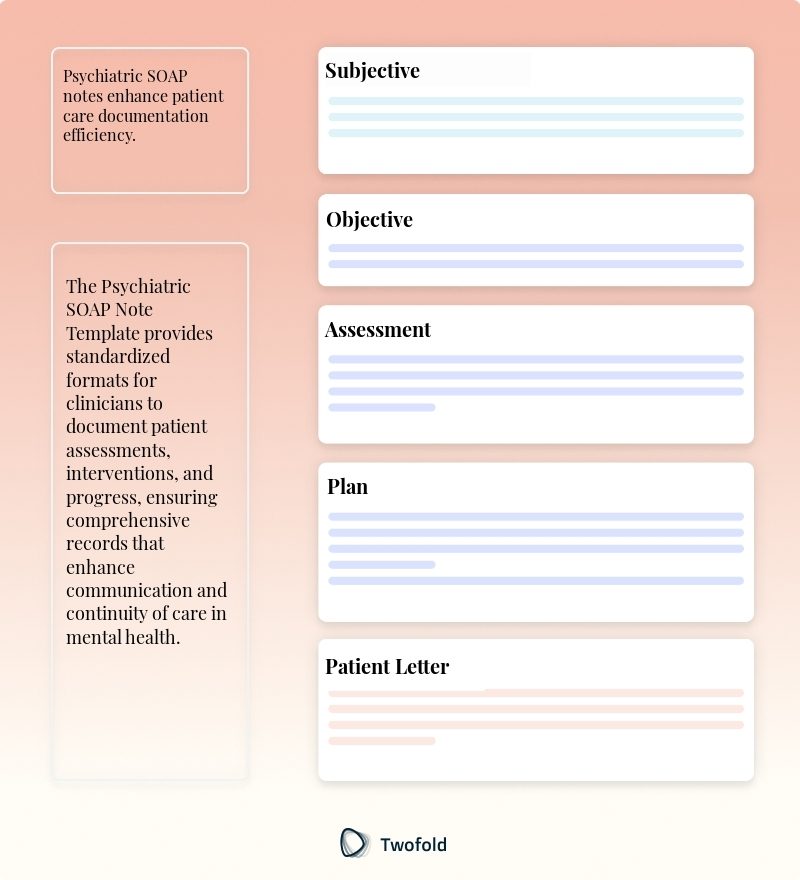
A well‑structured psychiatric SOAP note consists of several essential parts:

  • Subjective: Includes the patient’s verbal expressions about their feelings and symptoms.
  • Objective: Observations made by the clinician, including appearance, behavior, and vital signs.
  • Assessment: Clinician’s evaluation and diagnosis based on the subjective and objective data.
  • Plan: Describes the proposed treatment strategy and any necessary follow-ups.
Key Components of Psychiatric Soap Note Template

How to Use a Psychiatric SOAP Note Template: Step-by-Step Process

  1. Begin with patient identification details for accurate recordkeeping.
  2. Under "Subjective," note patient-reported symptoms and concerns.
  3. In the "Objective" section, include observable data such as mood or appearance.
  4. Write the "Assessment," detailing your clinical interpretation and diagnosis.
  5. Conclude with the "Plan," specifying treatment options and next steps.

Benefits of a Psychiatric SOAP Note

Benefit

Description

Enhanced Communication

Ensures all team members have access to detailed patient progress and care plans.

Time Efficiency

Reduces time spent on documentation, allowing more focus on patient care.

Standardization

Promotes consistency and clarity in patient records across different providers.

Stakeholders in Psychiatric SOAP Note

Several stakeholders interact with or benefit from well‑constructed psychiatric SOAP notes:

  • Mental Health Practitioners: Use the template for accurate patient progress tracking. Dr. Smith updates his notes after each session to ensure continuity of care.
  • Patients: Benefit from clear and structured documentation of their treatment progress, as seen when Maria reviews her care plan before a follow-up session.
  • Healthcare Teams: Leverage the notes for interdisciplinary collaboration. Nurses and therapists at Hope Clinic share insights during weekly meetings.

Example of a Psychiatric SOAP Note

A well‑structured example can illustrate a patient session with essential details maintained while ensuring adherence to the SOAP format.

See Template Example

Real-World Use Cases: Practical Impact of the Psychiatric SOAP Note Template

Pyschiatric SOAP notes have transformative impacts across various healthcare scenarios:

  • In a bustling urban clinic, Dr. Patel finds the standardized template essential for managing a high volume of patients while providing individualized care.
  • A rural mental health center uses these notes to maintain continuity of care as patients transition between providers due to staffing changes.
  • During a community health crisis, therapists efficiently adjusted treatment plans by quickly reviewing past SOAP notes, ensuring responsive care.

Conclusion

The Psychiatric SOAP Note Template is an invaluable tool for streamlining documentation, fostering clear communication, and ensuring effective mental health care. By understanding the key components and deriving benefits from this structured approach, mental health professionals can enhance patient outcomes and work more efficiently.

Disclaimer: This article is for informational purposes only and does not constitute legal or medical advice. Always consult professional guidelines and regulatory bodies for specific compliance requirements.

FAQ

Frequently asked questions

  • How should a provider address discrepancies between patient-reported symptoms and observed behaviors in a Psychiatric SOAP note?

    When discrepancies arise between the subjective and objective components of a SOAP note, it is crucial to document both sets of data accurately and impartially.

    In the 'Assessment' section, providers should explore possible reasons for these discrepancies, such as patient unreliability due to cognitive dysfunction, or observational biases from the clinician's perspective.

    Providers may also indicate the need for further evaluation, adjust the treatment plan accordingly, or seek multidisciplinary insights to resolve these discrepancies effectively.

  • What are the best practices for incorporating psychometric test results into the 'Objective' section of a Psychiatric SOAP note?

    Psychometric test results should be clearly documented in the 'Objective' section, providing a quantitative measure to support clinical observations.

    Clinicians should include relevant scores and interpret the implications of these scores within the context of observed behaviors, noting any significant deviations from baseline measurements.

    It's also important to reference the reliability and validity of the test results in the clinical context and decide if further assessment is required based on these metrics.

  • How can cultural considerations be integrated into the Psychiatric SOAP note to ensure culturally competent care?

    Cultural considerations should be integrated into all sections of the SOAP note, particularly when documenting the 'Subjective' and 'Objective' findings, to enhance culturally competent care.

    Clinicians should be attentive to cultural expressions of distress and consider how cultural identity influences symptom presentation, treatment preferences, and patient‑provider communication.

    In the 'Plan' section, treatment strategies should be culturally sensitive and include patient‑input to support adherence and engagement, considering cultural values and norms surrounding mental health care.