


We ranked the top AI tools for clinical notes on accuracy, note formats, EHR fit, compliance, and price. Twofold ranks first overall for independent clinics and self‑serve clinicians — fast, structured, EHR‑ready notes with transparent pricing — while DAX Copilot and Abridge remain the defaults for enterprise Epic systems, and Heidi is the strongest free starting point.
Disclosure: Twofold Health publishes this comparison and is included in the ranking. Tools were last reviewed in June 2026, and we flag where a competitor is the better fit.
AI for clinical notes refers to software that helps clinicians turn patient encounters into structured documentation faster. Depending on the tool, that can include SOAP notes, assessment and plan, HPI and ROS capture, patient instructions, ambient documentation, dictation, coding support, and EHR‑ready note drafts.
For most clinicians, the real question is not whether AI can generate a note. The real question is which tool gives the best mix of speed, usability, customization, privacy, and workflow fit without adding unnecessary complexity. See also our broader AI medical scribe guide.
How We Evaluated the Tools
This ranking focuses on what matters most to clinicians searching for best AI for clinical notes: note quality, ease of adoption, public pricing or procurement friction, EHR fit, documentation flexibility, and whether the tool feels built for day‑to‑day clinical charting versus a much broader enterprise AI platform.
This is also an editorial ranking, not a raw feature‑count contest. A platform can be powerful and still rank lower if it looks harder to evaluate, more sales‑led, or less focused on the actual note‑writing problem many clinicians are trying to solve.
Best AI for Clinical Notes in 2026
"Twofold drafts my SOAP in under 30 seconds and nails the MSE sections almost every time." – u/Behavioral_NP
1. Twofold
Best overall AI for clinical notes
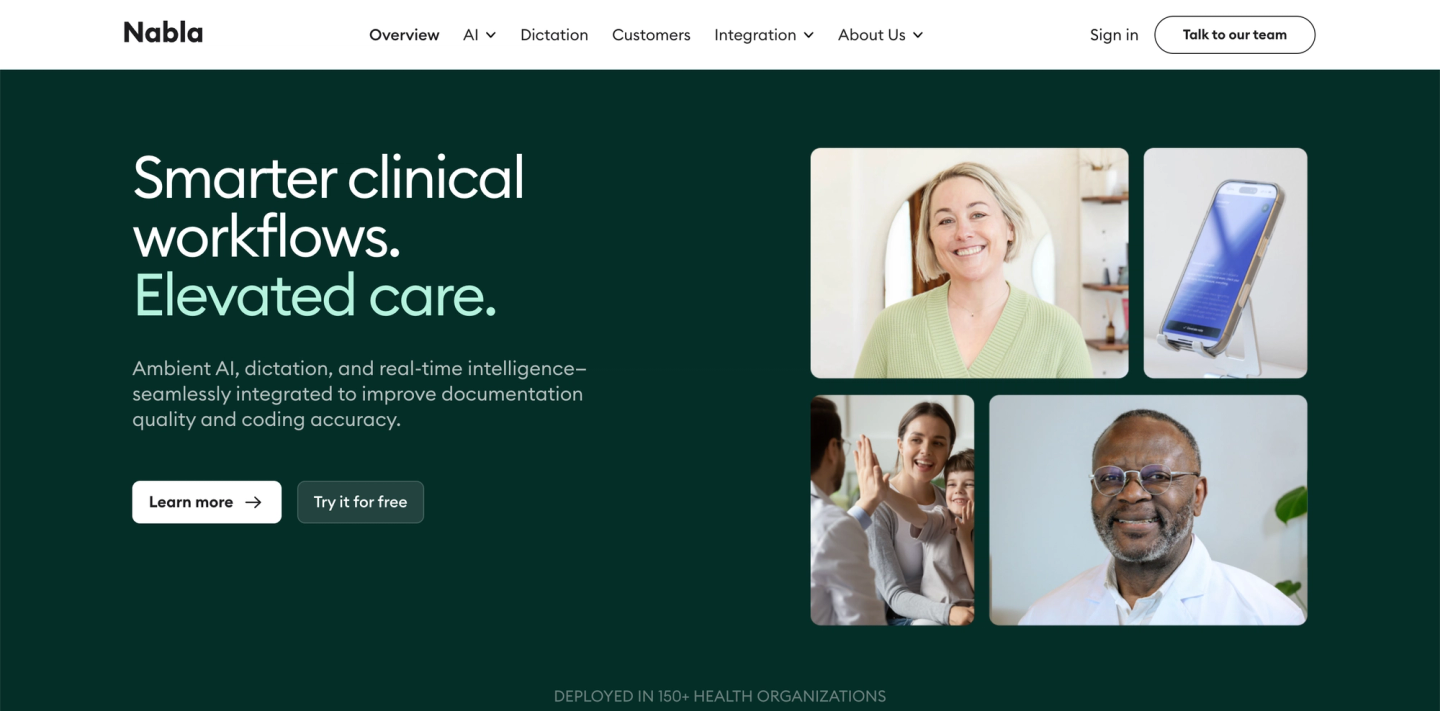
Twofold ranks first because its product is tightly centered on the note itself. Its clinical‑notes page says it generates subjective, objective, assessment, and plan notes, captures HPI and ROS, creates patient instructions, supports templates and personalization, and lets clinicians copy the finished note into any EHR without complex setup. It also supports in‑person and telehealth workflows.
That focus matters. Many clinicians searching this keyword are not trying to buy a giant enterprise AI stack. They want to finish documentation faster, stay organized, and move on with their day. Twofold's public materials line up unusually well with that exact need. That is an inference from its product page and pricing structure.
Pricing is also easy to understand. Twofold's help center lists a Personal Plan at $69/month billed monthly or $49/month billed annually, and that plan includes unlimited notes, treatment plans, custom templates, client progress tracking, mobile and desktop apps, and premium support. That makes it easier to budget than tools that push buyers into contact forms, demos, or usage‑based pricing first.
Its privacy language is another strength. Twofold says it is HIPAA compliant, includes BAA, encryption, consent resources, and easy deletion controls, and elsewhere on the page says it doesn't store patient recordings. For clinicians evaluating note tools, that is a meaningful trust signal.
Pros
- Clear note-first workflow built around clinical documentation rather than broader platform sprawl.
- Public, simple pricing with unlimited notes on the main paid plan.
- Works with any EHR via copy-paste workflow, which lowers implementation friction.
- Supports templates, personalization, patient instructions, telehealth, and in-person visits.
- HIPAA-forward positioning with BAA and no stored recordings.
Cons
- If a buyer wants the AI note tool to also serve as a broader enterprise intelligence layer for coding, reasoning, and large-system workflows, Twofold may look more focused than expansive. That is an inference from how its public product pages are positioned.
Best for: individual clinicians, outpatient practices, and growing clinics that want fast clinical notes without a heavyweight buying process.
2. Heidi
Best if a free (very basic) tier is your main priority
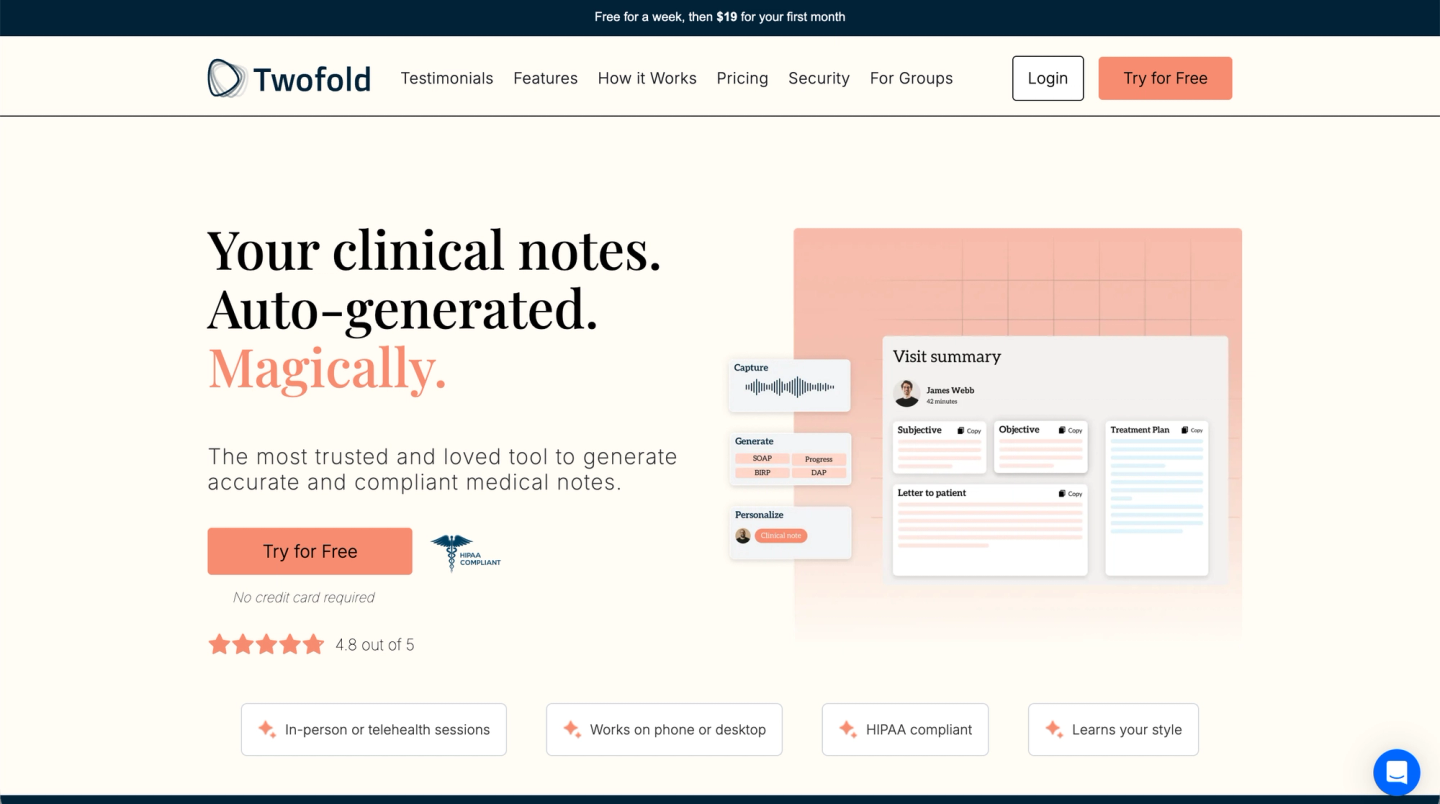
Heidi is one of the most visible alternatives because it offers a Free plan at $0 with unlimited transcription, standard templates, and healthcare‑grade security. Its paid Clinician tier (renamed from Pro) is listed at $150 USD per user per month billed annually, and the site also shows a team‑oriented Practice tier with team controls, unlimited integration access, and priority support.
Heidi is clearly broader than a pure note generator. Its homepage says it supports clinicians across the day from documentation to decisions and follow‑up, and the pricing page includes features like session sharing, team‑shared templates, session status, centralized billing, and team controls. That breadth will appeal to some buyers, but it also makes Heidi feel less focused than Twofold for clinicians whose main pain point is simply getting better notes done faster. The second sentence is an inference from Heidi's public positioning.
Pros
- Real free tier with unlimited transcription.
- Strong team features for practices that want collaboration and governance.
- Richer platform scope than a basic note tool.
Cons
- Less focused than Twofold on the narrow problem of clinical notes. That is an inference from Heidi's broader "care partner" positioning.
- Paid tiers get more layered quickly, which can make budgeting and plan selection less straightforward than a single flat clinician plan.
- Some of the more compelling collaboration and control features sit higher in the pricing ladder.
Best for: clinicians who want a free entry point first and are open to a broader care‑assistant platform.
3. Nabla
Best if you are comfortable with a more enterprise-style buying motion
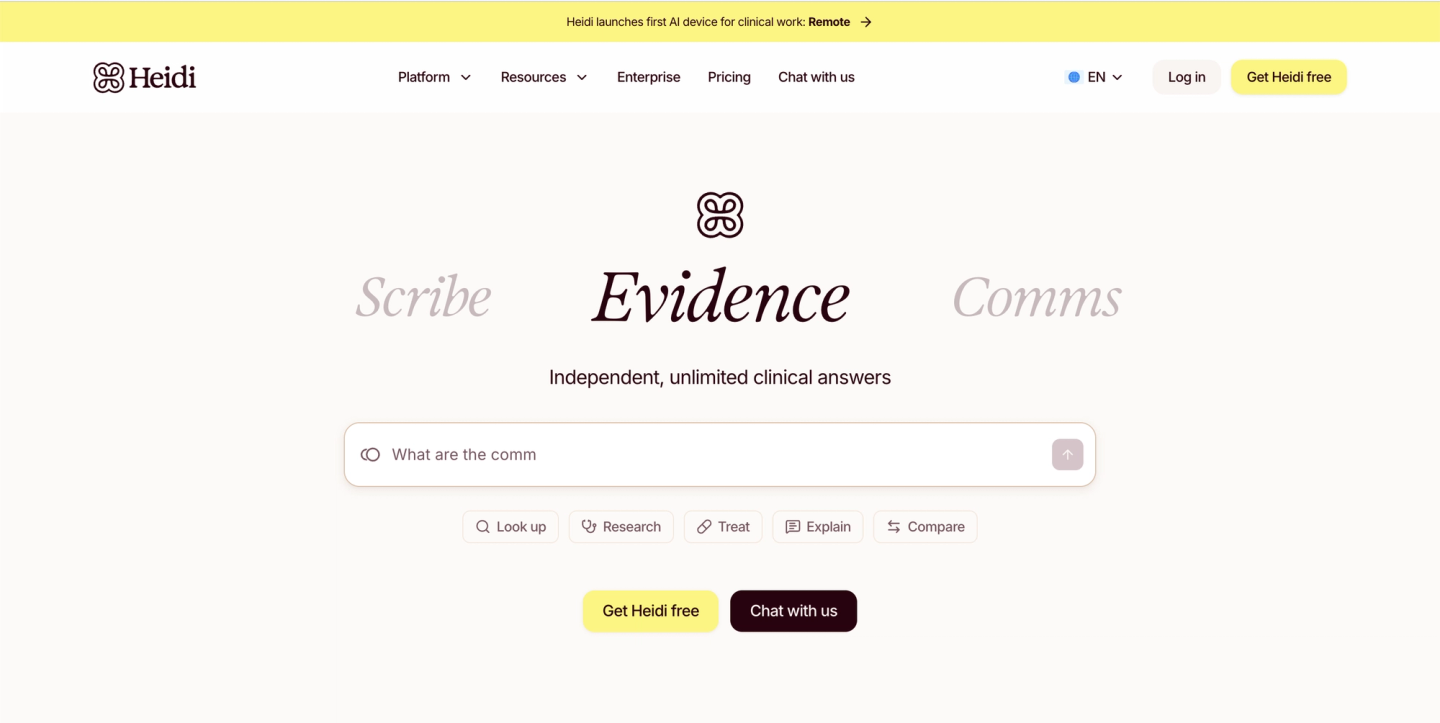
Nabla's public site emphasizes scale. It says it is deployed in 150+ health organizations, used by 85,000+ clinicians, and supports a wide range of specialties and multiple languages. It also highlights customization through custom instructions, dot phrases, and note formatting.
That makes Nabla look strong for larger organizations and broad clinical deployments. But for a typical clinician comparing note tools, one drawback is that public self‑serve pricing is not surfaced on the main site. The site emphasizes Try it for free, Contact Us, and Get a demo, which suggests a more guided procurement path than Twofold's straightforward public plan. That interpretation is an inference from Nabla's site structure.
Pros
- Broad specialty coverage and multilingual documentation.
- Strong customization language.
- Clear traction with larger health organizations.
Cons
- Less transparent than Twofold on public pricing for an individual clinician buyer.
- Public positioning feels more health-system oriented than self-serve clinician oriented. That is an inference from Nabla's emphasis on organization count and demo-led navigation.
- Harder to evaluate quickly if your main question is just "what will this cost me and how fast can I start?" That is an inference from the absence of clear public plan details on the main pages reviewed.
Best for: larger groups or buyers who value scale and customization more than fast self‑serve evaluation.
4. Suki
Best if deep EHR integration and broader assistive workflows matter more than simplicity
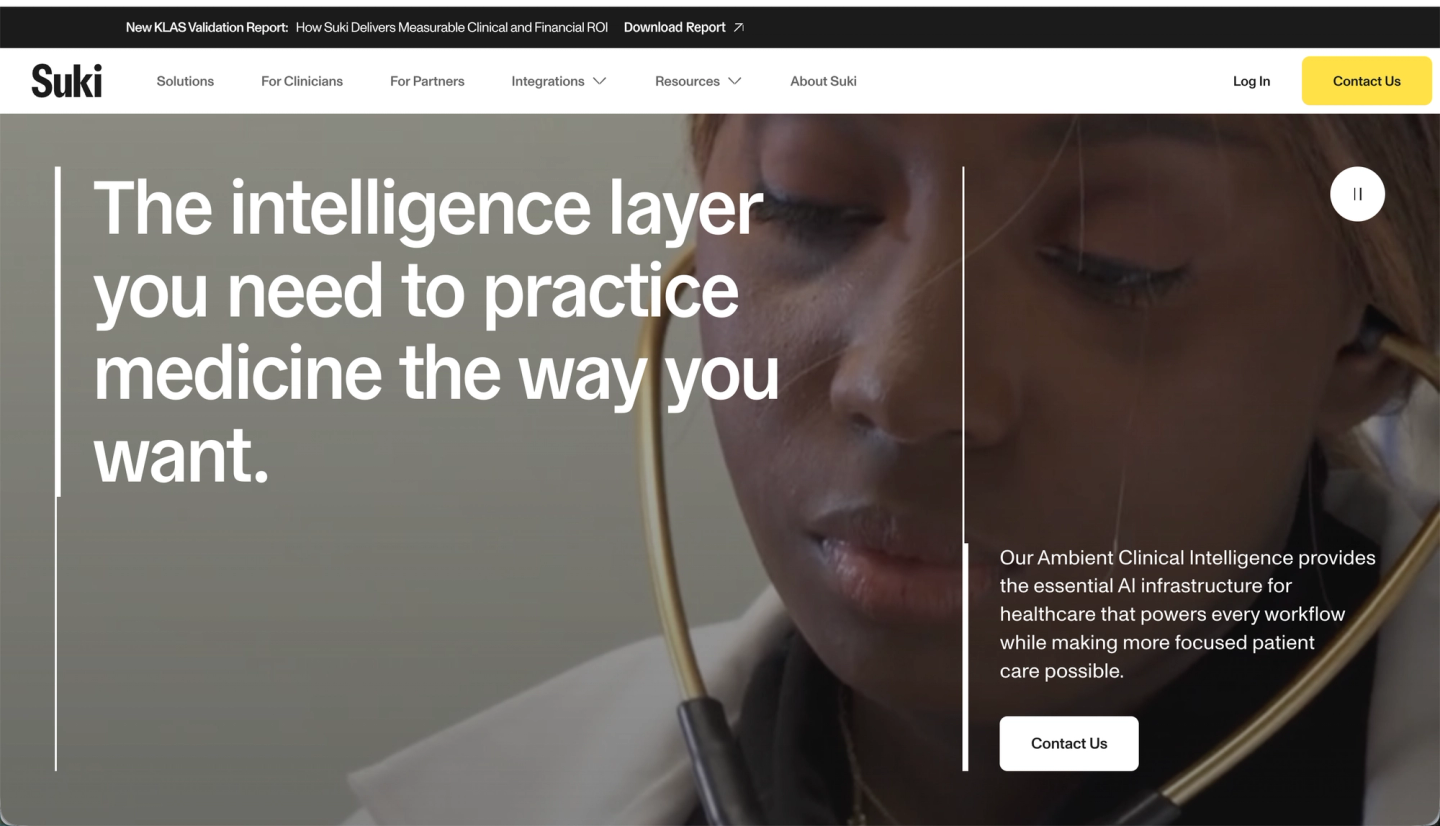
Suki positions itself as more than a note tool. Its clinician pages say it combines documentation, coding, clinical reasoning, and Q&A, and its site highlights deep real‑time integrations with Epic, Oracle Health, athenahealth, and MEDITECH. It also says it works across 100+ specialties and supports ambient documentation, coding, order staging, and post‑visit workflows.
That is compelling for organizations that want a more expansive AI assistant. But it also makes Suki less cleanly aligned with the simple search intent behind "best AI for clinical notes." In other words, Suki may be more tool than some clinicians actually need if the main goal is fast, reliable notes. That is an inference from Suki's public positioning.
Pros
- Very broad capability set beyond notes.
- Deep major-EHR integrations.
- Strong fit for organizations that want ambient documentation plus coding and workflow support.
Cons
- Public site does not surface simple clinician pricing, which raises evaluation friction compared with Twofold.
- Broader than necessary for clinicians who mainly want note creation. That is an inference from Suki's own capability framing.
- Feels more enterprise-grade than lightweight, especially given its emphasis on large EHRs and sales conversations. That is an inference from the homepage and contact-driven structure.
Best for: larger practices and health systems that want clinical notes plus broader AI workflow support.
5. Abridge
Best if you want a highly enterprise-oriented ambient documentation platform
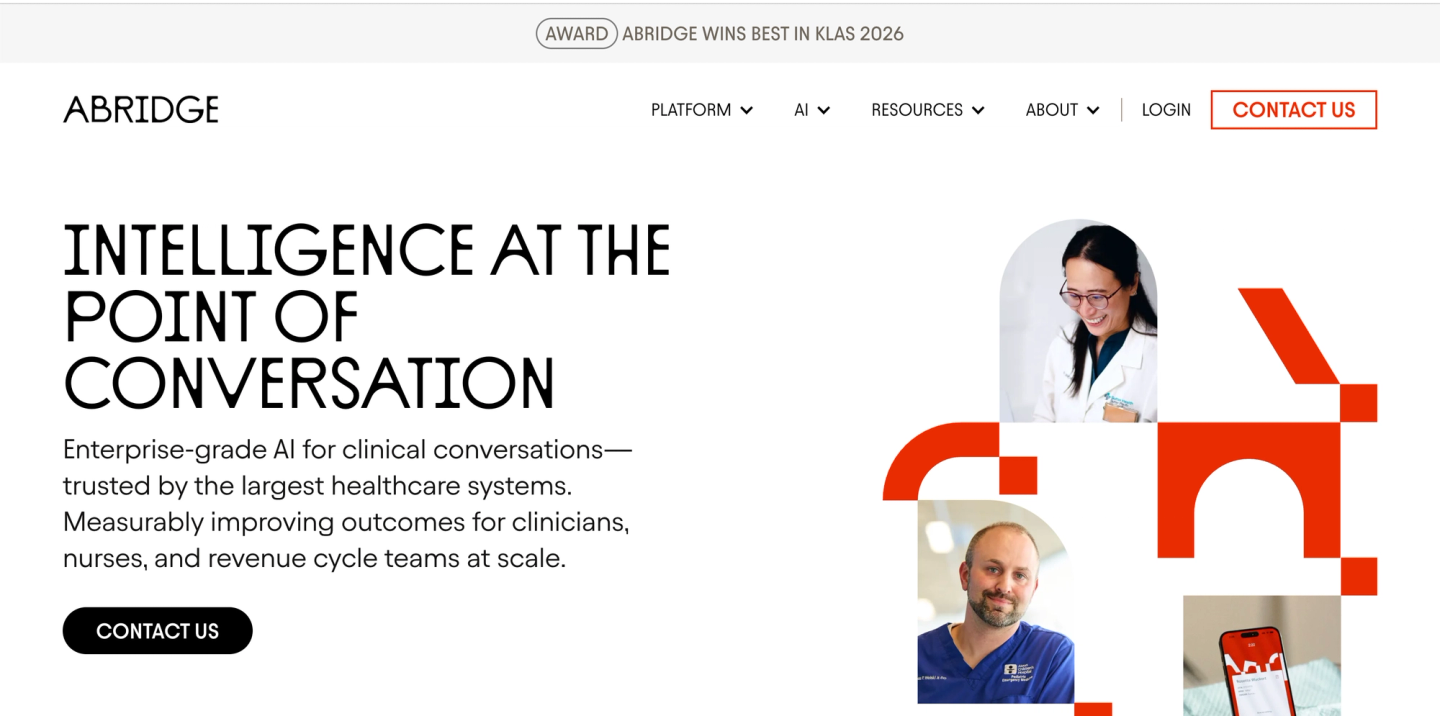
Abridge's clinician platform says it provides clinically useful and compliant AI notes in real time, integrated directly into EHR workflows, and lets clinicians verify note drafts using Linked Evidence. Its broader site emphasizes health‑system outcomes and enterprise traction.
Abridge looks especially strong for large health systems, but the public buying flow also makes that obvious. Its contact form asks about organization, EMR, role, and number of physicians, which signals a more sales‑led, organizational purchase motion than a simple self‑serve clinician tool. That makes Abridge less natural than Twofold for individual clinicians or small outpatient practices looking for a fast start. The last sentence is an inference from the contact flow.
Pros
- Strong enterprise positioning and EHR-centered workflow.
- Emphasis on note verification and compliance.
- Credible outcomes language and visible health-system adoption.
Cons
- Public experience is clearly sales-led rather than self-serve.
- Less approachable for solo clinicians and smaller groups who want fast clarity on pricing and setup. That is an inference from the contact process and enterprise framing.
- More likely to be overkill if your main problem is finishing notes quickly, not rolling out ambient AI across an organization. That is an inference from Abridge's public positioning.
Best for: enterprise buyers and larger health systems evaluating ambient documentation at organizational scale.
Final Ranking
Here's how the top AI clinical‑notes tools compare at a glance:
Rank | Product | Score (/10) | Avg. draft time | Cheapest compliant plan | Mobile/Desktop |
|---|---|---|---|---|---|
1 | Twofold Health | 9.4 | 20 s | $49/mo | Mobile + Desktop |
2 | Ambience | 8.6 | 90 s | Quote | Desktop |
3 | DAX Copilot | 8.5 | 2 min | $500+/mo | Desktop |
4 | Abridge | 8.4 | 120 s | Enterprise | Desktop |
5 | Suki | 8.2 | 50 s | $399/mo | Mobile + Desktop |
6 | Augmedix | 8.0 | 3–5 min | Enterprise | Mobile + Desktop |
7 | Freed | 7.9 | 2 min | $39–$119/mo | Mobile + Desktop |
8 | Vero | 7.7 | 50 s | $59/mo | Mobile + Desktop |
9 | Heidi | 7.6 | 55 s | $0 (free) | Mobile + Desktop |
10 | Deepscribe | 7.5 | 1.6–180 min | Enterprise | Mobile + Desktop |
Scores (out of 10) are a weighted blend of note quality, format coverage, EHR fit, HIPAA compliance, and price; see each tool's section for the detail behind its score.
For the broadest group of clinicians searching best AI for clinical notes, this ranking makes the most sense:
- Twofold
- Heidi
- Nabla
- Suki
- Abridge
That ranking is less about which company has the most ambitious platform and more about which tool best matches the likely search intent. For most clinicians, the winning product is not the most expansive enterprise assistant. It is the one that gets clinical notes done quickly, clearly, and with the least friction. On publicly available information, Twofold fits that profile best. The last sentence is an editorial judgment based on the cited product and pricing pages.
What Should Clinicians Look for in an AI Note Tool?
1. Clear Note Outputs
The best tools should produce structured notes that clinicians can actually use, not just a transcript. Look for support for SOAP or other chart‑ready formats, plus assessment, plan, and follow‑up content.
2. Low-Friction Workflow
A good AI note tool should save time immediately. Products that depend on long procurement cycles, layered plans, or heavy implementation may still be strong, but they are not always the best fit for an individual clinician or small practice. That second sentence is an inference from the contrast between public self‑serve pricing and sales‑led flows.
3. Reasonable Pricing Transparency
Public pricing is not everything, but it makes evaluation easier. Twofold and Heidi publish clear plan details, while some larger vendors push buyers into demos or contact forms first.
4. EHR Tit
Some clinicians want direct integrations. Others are perfectly happy with copy‑paste into any EHR if it keeps things simple. There is no single right answer here, but workflow fit matters more than feature count.
5. Privacy Posture
Clinical note tools sit close to sensitive patient information. Buyers should care about HIPAA posture, BAAs, retention, and how recordings are handled. Twofold and Heidi both surface healthcare‑security language publicly, and Twofold explicitly says it does not store recordings.
Bottom Line
If the question is "What is the best AI for clinical notes?", the strongest overall answer for most clinicians is Twofold. It is the most straightforward blend of focused documentation, usable outputs, privacy‑forward positioning, and clear pricing among the tools reviewed here. That is why it ranks first.
The alternatives are real options, but they are easier to frame as situational choices: Heidi if you care most about a free starting tier, Nabla if you want scale and customization, Suki if you want broader assistive workflows and deep EHR integration, and Abridge if you are buying at health‑system scale.
Last reviewed: May 2026 — pricing tiers, plan availability, and vendor positioning in this guide were re-checked for currency. Confirm specifics with each vendor before purchasing.
How fast can AI draft a clinical note?
Draft speed varies widely by tool. In our testing, Twofold returns a structured draft in about 20 seconds after a visit, voice‑first tools like Suki land near 50 seconds, and ambient enterprise tools such as DAX Copilot or Abridge typically take about two minutes. Tools with human‑in‑the‑loop review, like DeepScribe, can take far longer. Speed matters most in high‑volume outpatient settings where notes pile up between back‑to‑back visits.
How much does AI for clinical notes cost in 2026?
Self‑serve tools run roughly $49–$99 per clinician per month — Twofold's compliant plan starts at $49/mo and Suki at $59/mo — while Heidi offers a limited free tier. Enterprise ambient platforms like DAX Copilot, Abridge, and Augmedix are priced by contract and typically run hundreds of dollars per provider per month. Most independent practices recoup the subscription quickly through reclaimed documentation time.