


Disclosure: Twofold Health publishes this comparison and is included in the ranking. Tools were last reviewed in June 2026, and we flag where a competitor is the better fit.
Why this list matters to small practices
Small offices don’t have CIOs or endless budgets. We filtered dozens of products down to seven that combine predictable pricing, sub‑minute draft speed, easy deployment, and solid HIPAA posture. Each section below begins with a clinician quote, includes live review‑site link,s and ends with a “fit” paragraph to help you decide quickly.
Weight | Criterion |
|---|---|
35 % | Flat or low‑variance pricing |
25% | < 60 second draft speed |
20% | Zero‑install or EHR‑agnostic deployment |
10% | HIPAA & BAA availability without extra fees |
10% | Real user ratings ≥ 4.5 / 5 on G2, Capterra or Software Advice |
Only tools meeting all five thresholds made the cut.
1. Twofold Health — fastest sub‑$50 option
“Twofold’s accuracy was very good, especially once I built my own templates. Note processing time was way shorter than the other two scribes I tried.”
Another Reddit review on Twofold:
"I use a software called Twofold, amazing, subscription costs 49$ per month. Also trialed Quill, freed and upheal, Twofold was way simpler and notes are great".
Tried twofold today for the first time…
Amazing! Thanks 🙏
Pros
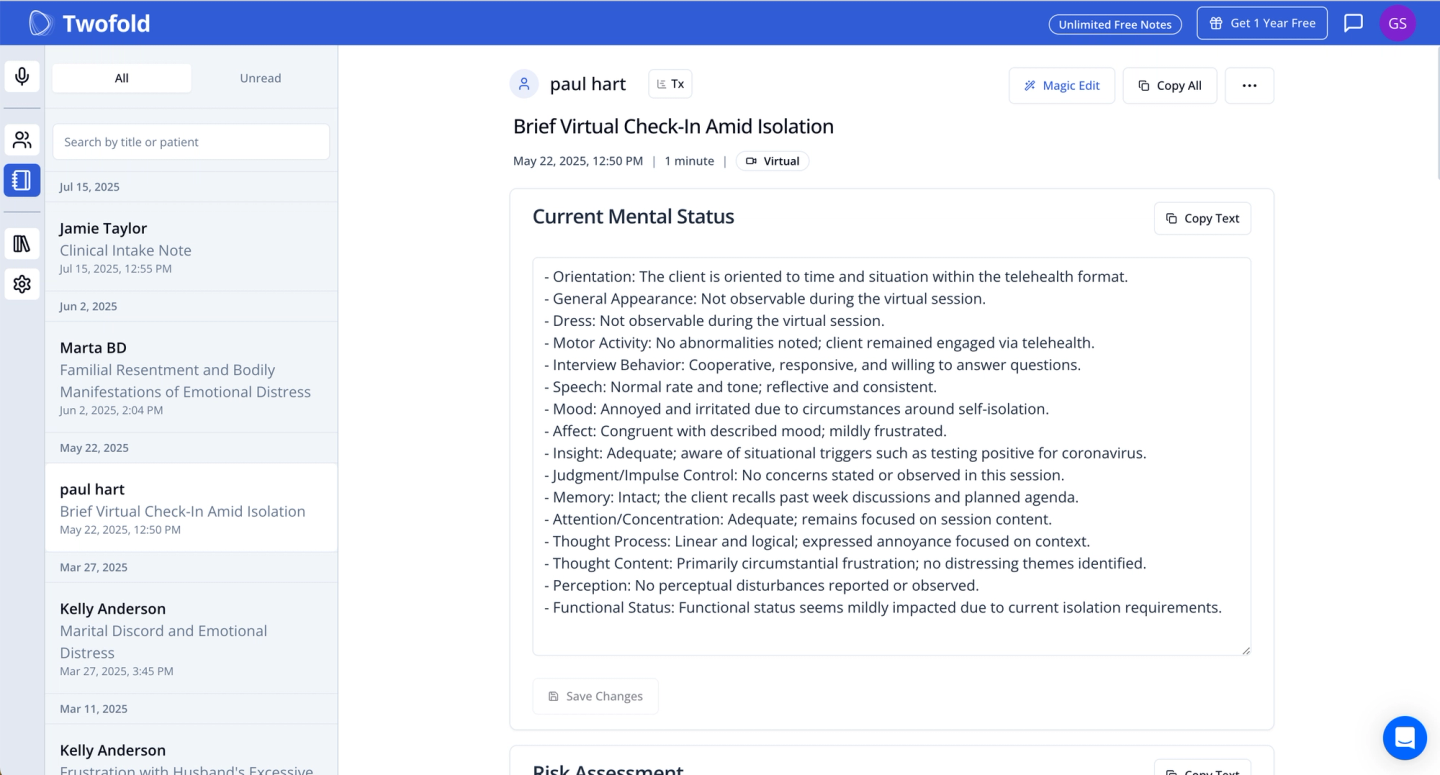
- 20–30 s SOAP/DAP/MSE drafts; flat $49 / mo (annual) with BAA.
- Highly customizable via custom template.
- Audio auto‑purged post‑processing.
- iOS and Android app for the best mobile experience
- Full support for telehealth and virtual sessions
- 24/7 premium customer support on all tiers.
Why this matters: Twofold delivers the fastest note turnaround and the simplest pricing model in the whole lineup. For many micro‑practices, it’s the only tool that pays for itself within a single billing cycle.
2. Freed AI — low flat fee, narrative output
"Works ok until it doesn’t and your whole note doesn’t exist after an hour long visit."
"Great price. But significantly deficient in capturing everything that you say to the patient in the assessment and plan or medical decision-making. For example, if I mention the etiology of the patient’s problem, it always fails to scribe this information. It only scribes brief bullet points. This is by no means a complete solution."
Pros
- Browser & mobile apps—no desktop install.
- Three flat monthly tiers ($39, $79 and $119) keep budgeting simple — no per-note or per-minute metering.
Cons
- Writing tone drifts between visits—extra edits required.
- Free tier minute cap forces quick upgrade.
- No offline capture; a drop‑out kills the note.
- Peak‑hour slow‑downs reported.
- No analytics or coding suggestions for billing.
Fit summary: Freed is attractive if you want a low flat fee and can live with occasional re‑edits. It shines in narrative‑heavy family medicine or therapy settings but may frustrate data‑hungry practices.
3. Tali AI — free starter, voice commands
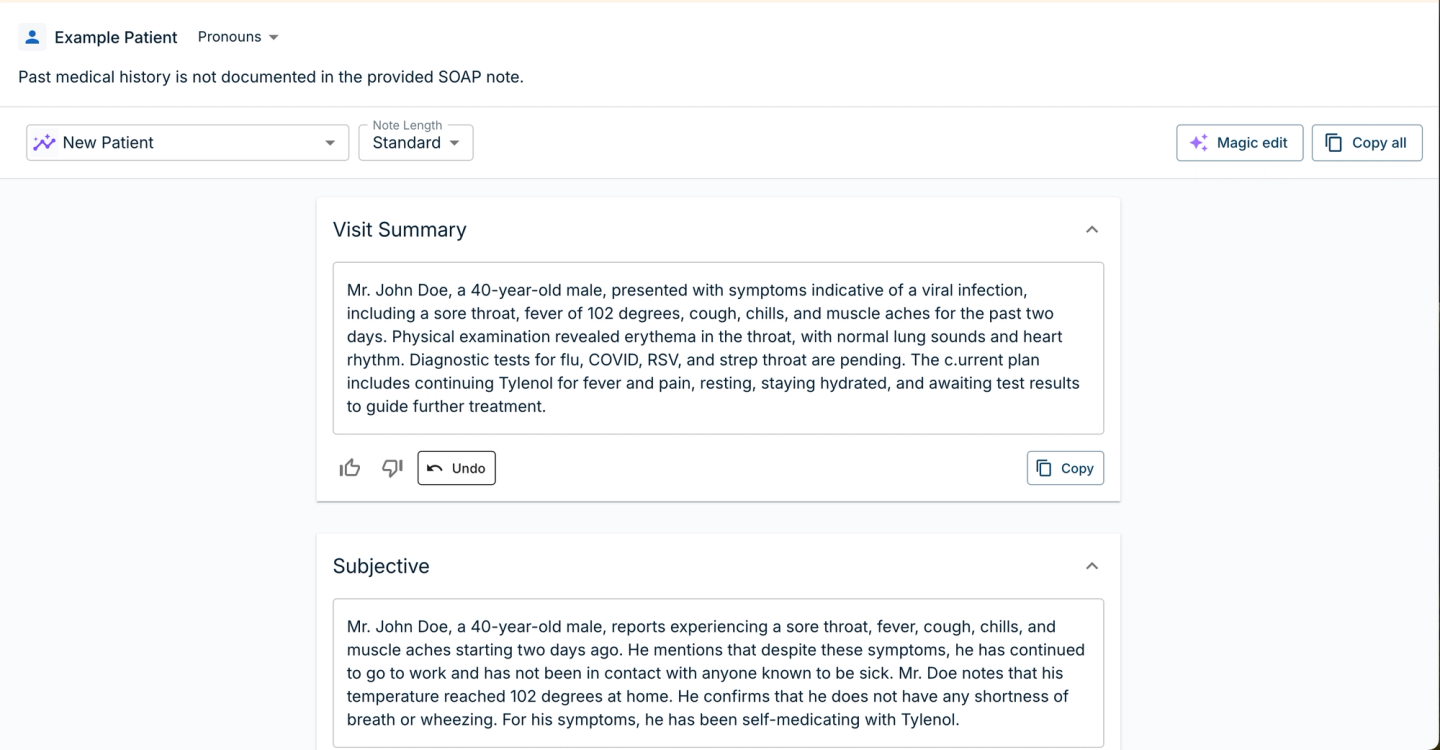
The overall experience is good. Soap note feature is extremely helpful with the added sentences. It obviously needs a lot of improvements.
"I am yet to navigate how to correct the “errors” in dictation in a timely fashion. But there may be features I still need to learn given I have just finished a trial."
Pros
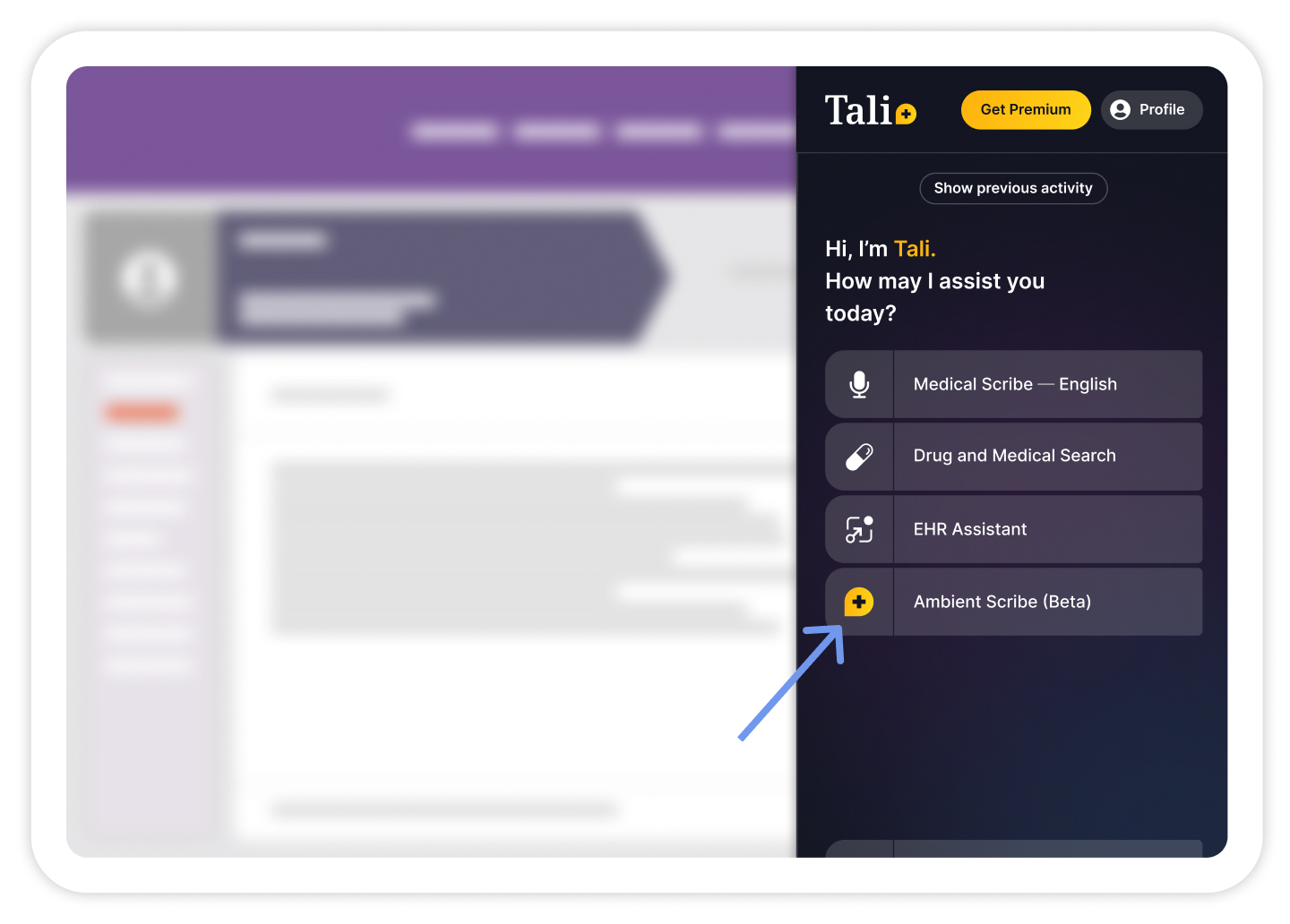
- Chrome extension drops text directly into most web‑EHRs.
- Free tier (100 voice commands) gives you real‑world mileage.
Cons
- Dictation‑only—no ambient capture or analytics.
- Need the Pro plan ($45 / mo) for a signed BAA.
- Limited template library; you build prompts yourself.
- Occasional transcription lag in low bandwidth.
- No mobile app—desktop browser required.
Fit summary: Tali is a cost‑free way to experiment with voice shortcuts, but you’ll upgrade fast if you need HIPAA coverage or templated SOAP notes. Great training wheels for tech‑curious solo docs.
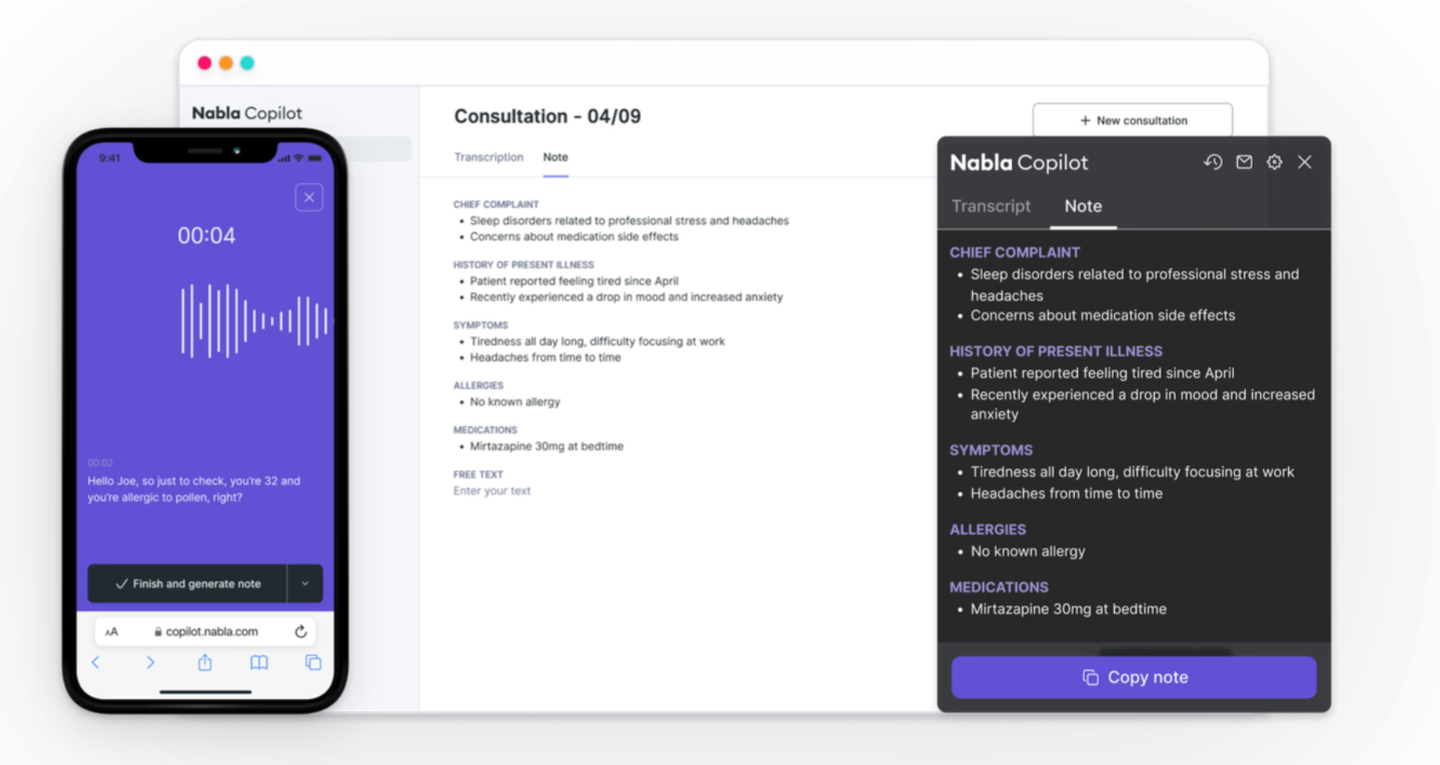
4. Nabla Copilot — unlimited notes at a friendly price
I’ve heard of NABLA but haven’t used it firsthand. Some colleagues are trying it for consult-heavy cases and say it’s decent for longer histories.
Pros
- $120/ mo unlimited notes—simple price point.
- Live transcript panel shows AI edits in real time.
Cons
- Auto‑generated MSE and A/P need heavy rewriting.
- Free version lacks BAA—can’t store PHI.
- Chrome‑only support; Safari and Edge users excluded.
- No emotion analytics or coding help.
- Processing spikes to 90 s during peak traffic.
Fit summary: Nabla’s unlimited volume is compelling for high‑encounter days, but the editing burden means gains depend on your note style. Better for dictation‑friendly internists than code‑intensive specialties.
5. Suki AI — mobile powerhouse for voice lovers
Review on Featuredcustomers.com:
“With Suki ambient documentation, I can pull the pieces and parts from ambient as well as maintain the other pieces I use in Epic. The ambient generated content flows into Epic seamlessly into my note.”
Pros
- Works in 14 languages—unique among contenders.
- Pulls schedule from EHR; start dictating in one tap.
Cons
- $399 / mo list price hits small‑practice margins.
- External mic recommended for accuracy.
- No desktop capture client.
- No flat BAA on entry plan—must buy Business tier.
- Dictation output is often verbose; trimming is required.
Fit summary: Suki excels when you’re on the move or bilingual, but its price makes sense only if you’ll exploit every minute saved. Think concierge or high‑revenue rural clinics.
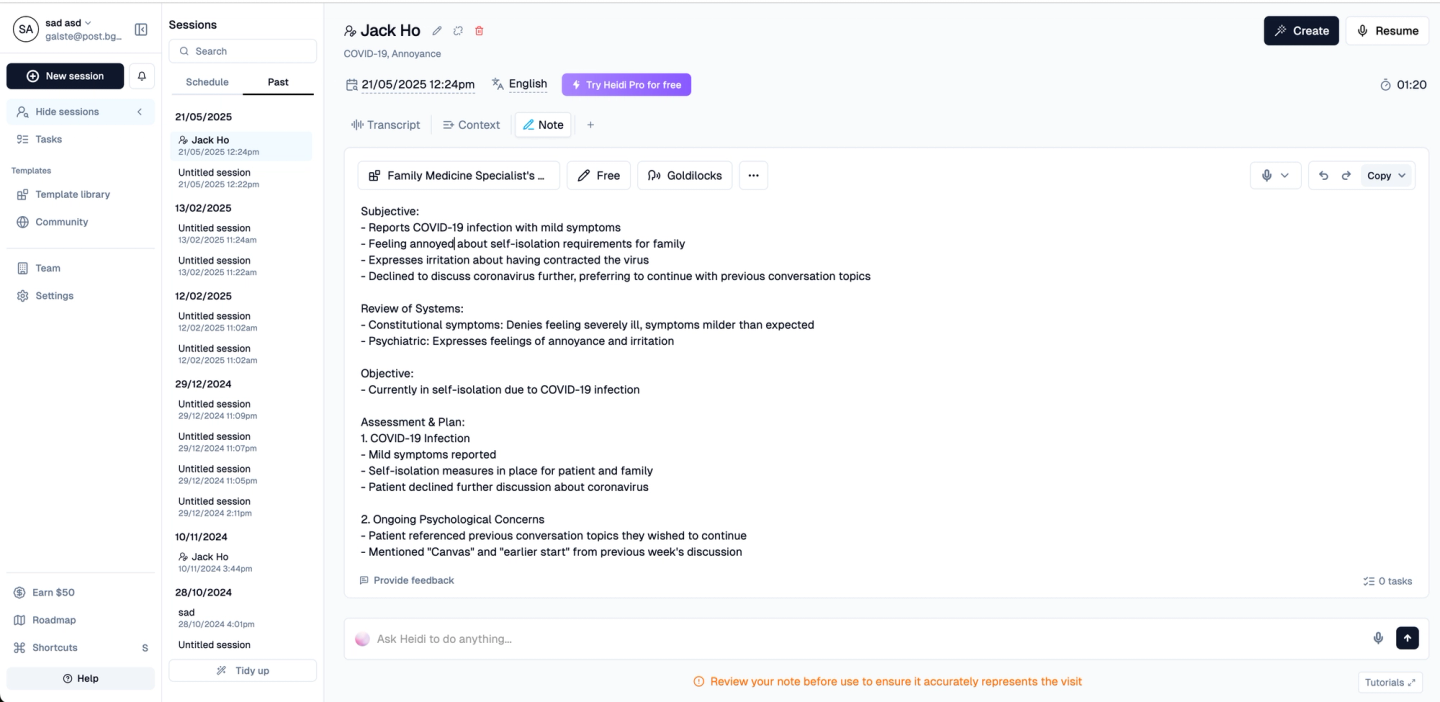
6. Heidi Health — template tinkering on a free tier
“....When it works, it works well but when it doesn't, it causes excessive catch up work...."
Neutral Pros
- Free‑forever plan (30 notes) lets you test HIPAA workflows.
- Drag‑and‑drop template creator plus DSM‑5 coding chat.
Cons
- Web UI is sluggish on older PCs.
- Exports plain text—formatting extra step for PDFs.
- AI queues slower on free tier (~90 s).
- Mobile app “coming soon”—desktop only.
- Paywall for analytics and faster processing.
Fit summary: Heidi attracts DIY template lovers and early‑stage clinics. Upgrade costs are modest, but hardware requirements and slower queues can frustrate fast‑paced practices.
7. Vero Scribe — Canada & UK budget sleeper
Pros
- $59.99 CAD / mo (≈$44 USD) flat fee.
- Clipboard chat answers quick medical questions.
Cons
- Phone support is limited to Canadian business hours.
- Limited direct EMR plug‑ins; copy‑paste most workflows.
- English‑only; French UI in beta.
- No mobile dictation app—browser only.
- SOC‑2 audit in progress, not complete.
Fit summary: Vero offers unbeatable pricing if you’re Canada‑ or UK‑based and don’t mind manual pasting. U.S. micro‑clinics may wait for expanded support and SOC‑2 completion.
Price & Speed Cheat‑Sheet (Aug 2025)
Tool | Score (/10) | HIPAA plan price | Avg. draft time | Key gotcha |
|---|---|---|---|---|
Twofold | 9.3 | $49/mo | 0 : 30 | No emailing to clients |
Freed AI | 9.0 | $39–$119/mo | 0 : 45 | Style drift |
Tali AI | 8.6 | $45/mo | Live dictation | No ambient capture |
Nabla | 8.2 | $120/mo | 0 : 50 | Heavy edits |
Suki AI | 7.9 | $399/mo | 0 : 45 | High cost |
Heidi Health | 7.6 | $69/mo | 0 : 55 | Slow free tier |
Vero Scribe | 7.2 | $44/mo | 0 : 50 | Canada‑centric |
Scores (out of 10) are a weighted blend of note quality, format coverage, EHR fit, HIPAA compliance, and price — weighted for this comparison's criteria.
Conclusion — Twofold Still the Stand‑Out for Lean Clinics
After layering real user ratings, flat‑fee affordability, and sub‑minute speed, Twofold Health emerges as the most practical and best‑reviewed AI scribe for clinics with just a handful of providers. It demands no hardware, hides no per‑minute charges, and erases audio immediately for peace of mind.
While Freed and Nabla offer respectable low‑cost alternatives, and Suki thrills mobile power‑users, Twofold’s combination of price predictability, blazing draft speed and top‑tier review scores keeps it at the front of the small‑practice pack in 2026. See also our ambient AI for small clinics.