


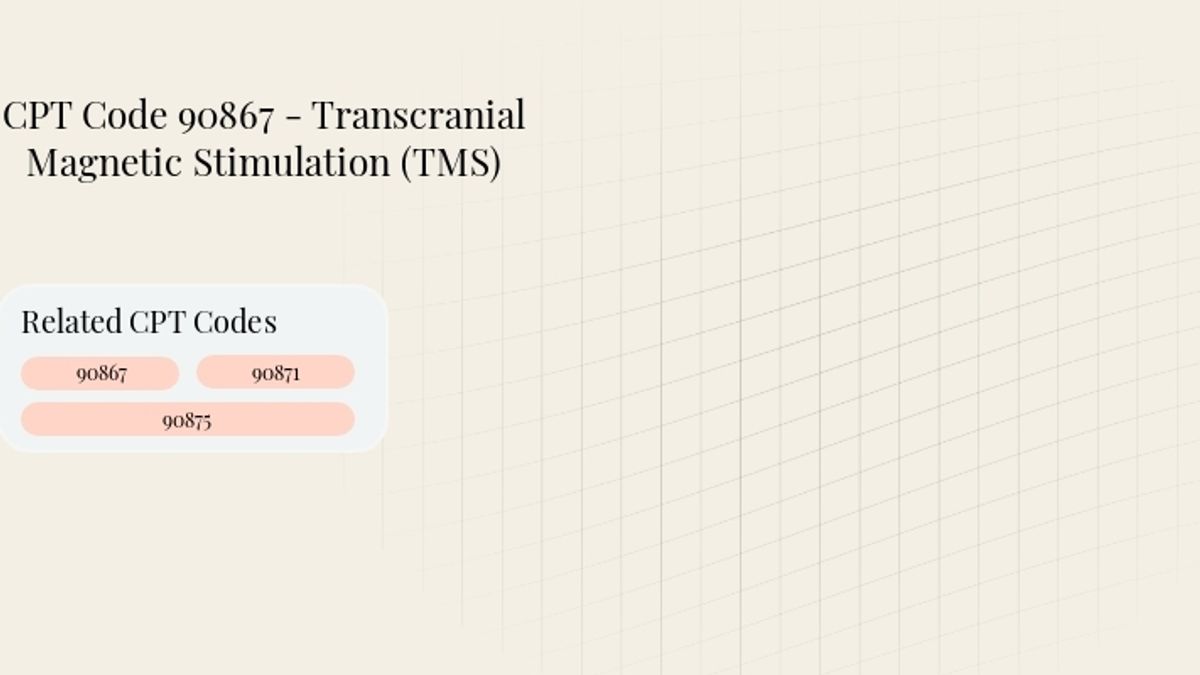
What is CPT Code 90867
CPT Code 90867 represents a specific billing code used for services involving Transcranial Magnetic Stimulation (TMS), a non‑invasive treatment that is recognized for its efficacy in treating certain psychiatric and neurological disorders, particularly major depressive disorder. The procedure involves using magnetic fields to stimulate targeted areas of the brain, making it a valuable option for patients who may not have responded to traditional therapies such as medications or psychotherapy.
TMS therapy is generally characterized by a series of treatments, which can vary in frequency and duration but commonly include sessions done five days a week for four to six weeks. The code captures these sessions, allowing healthcare providers to bill for the delivery of this innovative therapy uniquely tailored to the needs of their patients. With its ability to produce therapeutic effects without the side effects commonly associated with pharmacological treatments, TMS has become an increasingly popular choice for clinicians.
Services Covered Under CPT Code 90867
This code covers a range of services provided during TMS treatment. The following table details the specific components included:
Service Description | Details |
|---|---|
TMS Session | Each session involves precise localization of the treatment area using magnetic stimulation. |
Patient Evaluation | Before starting TMS, a thorough evaluation of the patient's mental health history is conducted. |
Follow-Up Care | Includes monitoring and adjustment of treatment protocols as required to ensure patient safety and effectiveness. |
Who Can Use the 90867 CPT Code?
To ensure effective and safe use of TMS therapy, the following healthcare professionals are authorized to use CPT code 90867:
- Psychiatrists: Often leading the treatment, they evaluate and prescribe TMS therapy as needed for mental health disorders.
- Neurologists: They may administer TMS for various neurological conditions and work closely with psychiatric specialists.
- Clinical Psychologists: In some states, this role can extend to psychologists certified in administering TMS under proper supervision.
How to Use CPT Code 90867
Correct billing and documentation practices are essential for using CPT code 90867 effectively:
- Documenting the Treatment Plan: Ensure that every patient's treatment plan includes objectives and expected outcomes. For instance, a patient scheduled for TMS should have a clearly defined goal of reducing depressive symptoms.
- Recording Session Dates and Times: Keep precise records of each TMS session's date and duration. For example, if a patient has sessions every Monday, Wednesday, and Friday, accurately note these sessions in their medical record.
- Adjusting Treatment Based on Patient Response: Document any changes in the treatment protocol based on patient feedback. If a patient reports inadequate response after two weeks, modifications should be detailed in the notes.
Reimbursement Rates for CPT Code 90867
Insurance Type | Reimbursement Rate |
|---|---|
Private Insurance | $300 - $400 per session |
Medicare | $250 - $350 per session |
Medicaid | $200 - $300 per session |
Disclaimer: The reimbursement rates are subject to change based on various factors, including location and the specific insurance policy. This article will be updated regularly with current average prices.
Benefits of CPT Code 90867
This code provides access to an innovative treatment with numerous advantages:
Benefit | Importance |
|---|---|
Non-Invasive Procedure | Presents a safe alternative to invasive treatments such as surgery. |
Minimal Side Effects | Unlike pharmacological treatments, TMS typically has fewer adverse effects, enhancing patient adherence to therapy. |
Rapid Action | Many patients report improvement in symptoms within a few weeks, making it an appealing option for those in acute distress. |
Common Mistakes to Avoid with CPT Code 90867
The incorrect use of CPT code 90867 can lead to reimbursement denial and potential audits. Awareness of common pitfalls can mitigate these risks:
- Improper Documentation: Insufficient or vague documentation can lead to denials. For example, failing to document the patient's progress after initial sessions can create problems during audits.
- Billing for Non-Covered Services: Charging for services outside the scope of TMS therapy, such as regular therapy sessions alongside TMS without proper use of additional codes, can result in audit flags.
- Ignoring Training Requirements: Professionals without proper TMS training cannot use this code. For instance, if a general practitioner attempts to perform TMS without adequate training and billing for it, this can lead to serious ramifications.
CPT Code 90867 vs other codes
When considering TMS therapy, it is helpful to compare CPT code 90867 with similar codes to understand their differences and appropriate applications:
CPT Code | Description | Comparison |
|---|---|---|
90867 | Transcranial magnetic stimulation therapy | Non-invasive and specific for TMS sessions. |
Repeated TMS therapy session | Used for additional or subsequent sessions, typically after the initial series. | |
Neurostimulator therapy | Differentiates from TMS as it may involve invasive methods. |
Conclusion
CPT code 90867 is a critical code that supports the administration of Transcranial Magnetic Stimulation, a promising treatment for various mental health disorders. Accurate documentation and thorough understanding of billing practices related to TMS therapy ensure that both patients and providers can benefit from this effective treatment modality.
Disclaimer: This article is for informational purposes only and does not constitute legal or medical advice. Always consult professional guidelines and regulatory bodies for specific compliance requirements.