


Filing insurance claims is a hurdle many healthcare professionals encounter. An insurance claim form template can smooth this bumpy road, but knowing how to use the template effectively is the real challenge. This article sheds light on practical techniques to make the experience seamless, so let's explore together how to reap the benefits of efficient claim management.
What Is an Insurance Claim Form Template?
An insurance claim form template is a standardized document used by healthcare providers to submit claims to insurance companies for reimbursement of patient services rendered. This template ensures that all necessary information is included in a uniform format, allowing for efficient processing.
This template aids in the systematic documentation of patient data, treatment details, and cost breakdowns. It simplifies communication between healthcare facilities and insurers, ensuring prompt processing and payment of claims.
Key Components of an Insurance Claim Form Template
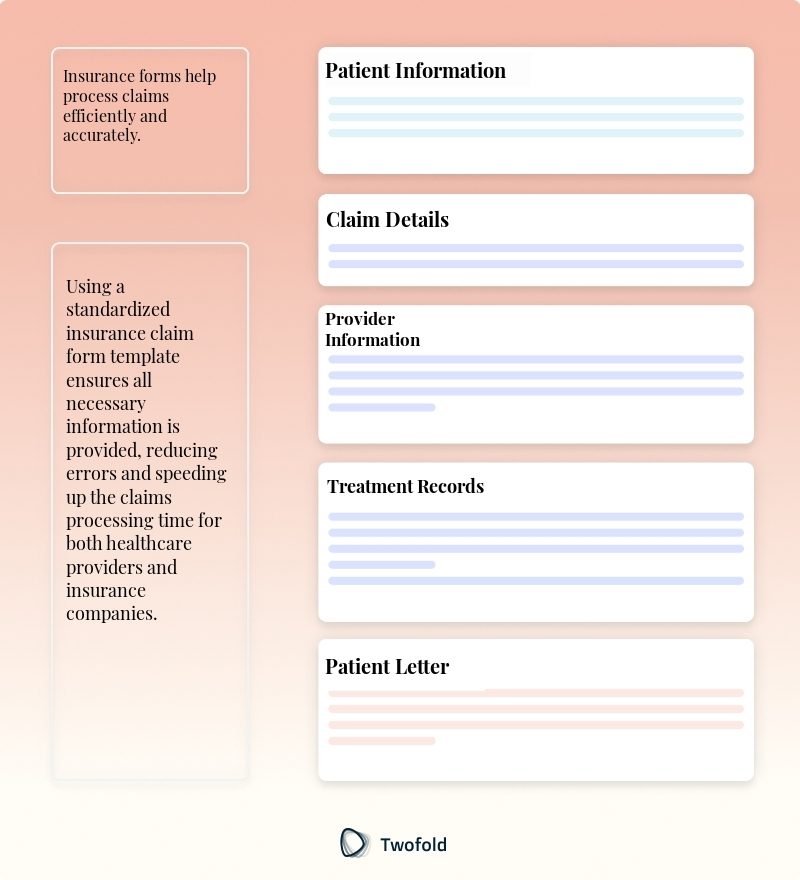
A well‑structured insurance claim form template typically includes the following elements:
- Patient Information: Name, date of birth, and insurance ID.
- Provider Information: Healthcare facility's name, address, and provider ID.
- Service Details: Date of service, description of services rendered, and diagnosis codes.
- Charge Information: Itemized list of charges and procedure codes.
- Insurance Details: Policy number, group number, and insurer's contact information.
How to Use an Insurance Claim Form Template: Step-by-Step Process
- Gather all necessary patient and service information before starting the form.
- Fill in patient and provider information accurately to ensure proper identification.
- Complete the service details section with precise codes and dates.
- Itemize all charges for services rendered, ensuring alignment with the service details.
- Double-check insurance details against the patient's card for accuracy.
- Review the entire form for completeness and any errors before submission.
- Submit the completed form electronically to expedite the claims process.
Benefits of an Insurance Claim Form Template
Benefit | Description |
|---|---|
Efficiency | Reduces the time spent on manual data entry and lowers administrative burden. |
Accuracy | Minimizes errors with pre-defined fields for data entry. |
Compliance | Keeps documentation in line with regulatory standards and changes. |
Cost-effective | Lowers overhead costs associated with claim processing and paperwork. |
Stakeholders in Insurance Claim Form Templates
Various parties use and benefit from insurance claim form templates, each playing a unique role:
- Healthcare Providers: Physicians and clinics utilize templates to ensure timely reimbursements. For instance, Dr. Smith's clinic uses them to minimize claim rejections.
- Insurance Companies: These entities process claims based on the details provided, ensuring accurate assessments. BlueCross relies on consistent formats to streamline approvals.
- Patients: They benefit indirectly through quicker claim resolutions, reducing the financial uncertainty of pending claims. Jane Doe receives timely updates thanks to accurate submissions.
Example of an Insurance Claim Form Template
Consider the CMS‑1500 form used widely across the United States. This standardized form encapsulates all key information necessary for a smooth claim processing journey.