


Managing patient information can often be overwhelming, with the sheer volume of data and the need for accuracy. The need for an effective method becomes evident as healthcare professionals strive to maintain comprehensive patient charts. This article aims to address those needs by offering insights into the Patient Chart Template. It serves as a reliable tool for organizing critical patient data in a clear and accessible manner.
What Is a Patient Chart Template?
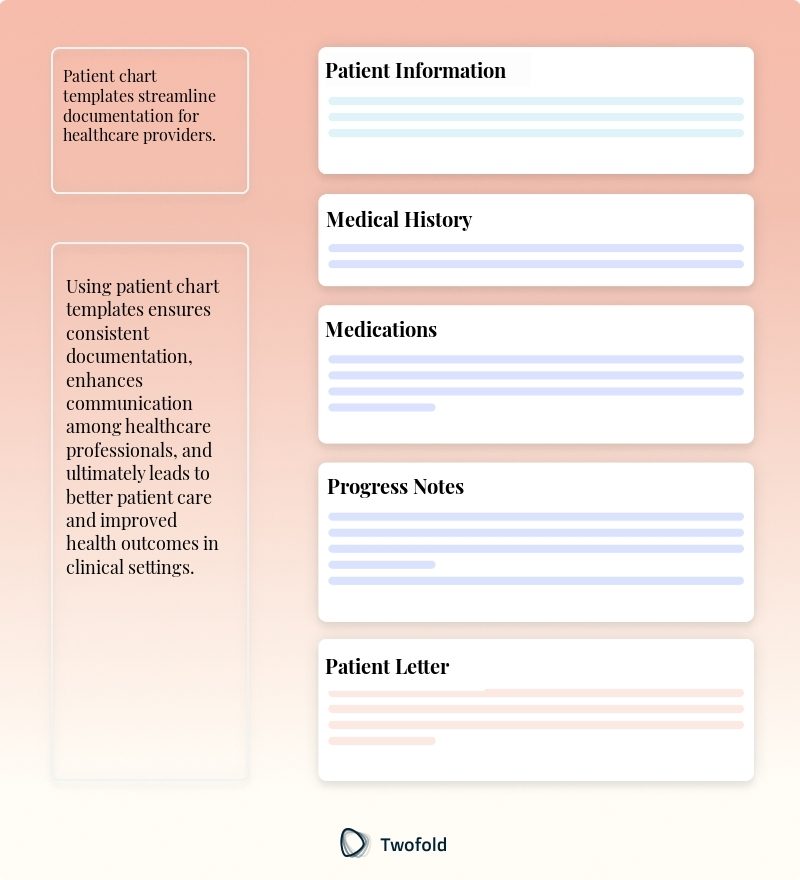
A Patient Chart Template is a structured format used in medical settings to document patient information systematically. It captures critical data such as medical history, treatment plans, and medications, ensuring that healthcare providers have the necessary information to deliver quality care.
This template is an essential component of healthcare records management. It standardizes the recording process, facilitating better communication among healthcare practitioners and enhancing patient care continuity.
Key Components of a Patient Chart Template
This template includes several essential elements that ensure a holistic view of the patient's health status:
- Patient Identification Information
- Medical History
- Current Medications
- Treatment Plans
- Laboratory and Diagnostic Test Results
- Physician and Nursing Notes
- Consent Forms and Authorizations
How to Use a Patient Chart Template: Step-by-Step Process
Step 1: Patient Admission
Begin by recording the basic patient identification details. This includes name, date of birth, and contact information.
Step 2: Document Medical History
Gather and document comprehensive medical history, including chronic conditions, past treatments, and allergies.
Step 3: Update Current Medications
List all current medications the patient is taking, including dosages and frequency.
Step 4: Outline Treatment Plans
Clearly define the ongoing treatment plans, including scheduled procedures, therapies, and follow‑up appointments.
Step 5: Record Laboratory Results
Include recent lab and diagnostic tests, noting critical values and any follow‑up required.
Step 6: Include Medical Notes
Make a record of any notes from physicians or nurses to capture observations and important remarks.
Benefits of a Patient Chart Template
Benefit | Description |
|---|---|
Improved Accuracy | Reduces errors by standardizing documentation practices. |
Enhanced Communication | Facilitates better communication among healthcare team members. |
Streamlined Workflow | Simplifies data entry and retrieval, allowing more time for patient care. |
Compliance Assurance | Ensures all necessary legal documentation is maintained. |
Efficient Data Management | Organizes patient information logically, aiding in quick access and review. |
Stakeholders in a Patient Chart
The Patient Chart Template impacts various stakeholders across the healthcare spectrum:
- Physicians: Use it to track patient progress and modify treatment plans effectively. For example, a cardiologist might adjust a heart patient's medication based on the latest chart entries.
- Nurses: Rely on it for patient care details, ensuring consistency in care routines through every shift.
- Administrative Staff: Use it for processing patient information and billing, ensuring insurance claims are accurate and substantiated.
- Patients: Can access their own charts to stay informed about their health, fostering a collaborative healthcare relationship.
Example of a Patient Chart Template
A typical Patient Chart Template includes sections for personal information, medical history, medications, and treatment notes, ensuring comprehensive documentation.