


If you've ever felt overwhelmed by the intricacies of mental health documentation, you're not alone. Whether you're a seasoned professional or new to the field, capturing the nuances of a patient's mental health can pose quite the challenge. Enter the Mental Health Doctors Note Template. It's designed to simplify the process while ensuring you don't miss any crucial details. Let's delve into this so you can focus on what truly matters — patient care.
What Is a Mental Health Doctors Note Template?
A Mental Health Doctors Note Template is a structured document used by mental health professionals to record patient interactions and assessments. It serves as a standardized approach to capturing essential details in a patient's mental health profile. This type of template supports clinicians in maintaining comprehensive and organized records that can be easily referenced for future treatment planning.
These templates are crucial in ensuring continuity of care, as they provide a clear and consistent record that can easily be shared with other healthcare providers. They help avoid the pitfalls of documentation errors or omissions that may occur with more ad‑hoc methods.
Key Components of a Mental Health Doctors Note
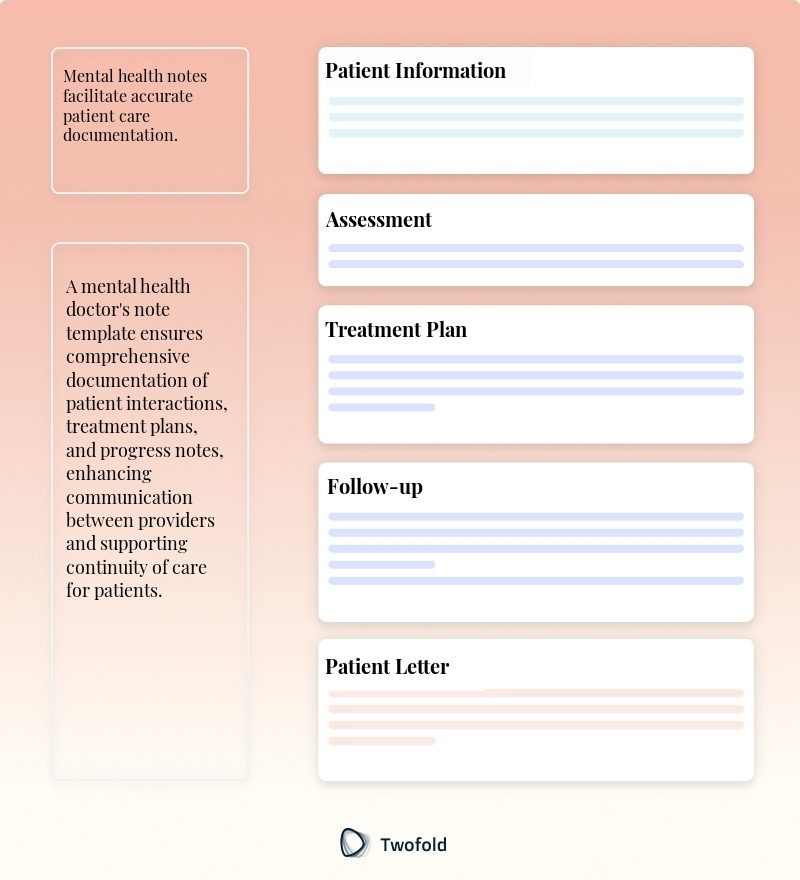
This template is thoughtfully organized to capture the essence of a patient's mental well‑being.
- Patient Identification: Full name, date of birth, and patient ID.
- Reason for Visit: Chief complaint or purpose of the consultation.
- Mental Status Examination: Objective findings regarding mood, thought process, orientation, and cognition.
- Diagnosis: Based on current diagnostic criteria, such as DSM-5.
- Treatment Plan: Proposed interventions and therapeutic strategies.
- Progress Notes: Observations and updates from previous sessions.
- Future Recommendations: Next steps or follow-up appointments.
How to Use a Mental Health Doctors Note Template: Step-by-Step Process
Step 1: Initialize the Template
Begin by personalizing the template with the patient's demographic information and reason for visit.
Step 2: Conduct Mental Status Examination
Use the template to meticulously document observable behaviors and patient quotes during the examination.
Step 3: Fill in Diagnosis
Record the diagnosis derived from clinical findings and confirm with current diagnostic guidelines.
Step 4: Outline the Treatment Plan
Detail all recommended therapies, medications, and patient instructions tailored to their specific needs.
Step 5: Record Progress Notes
Update the progress notes with any changes in the patient's condition or response to treatment.
Step 6: Future Recommendations
Conclude the note with any further actions required, such as appointments or referrals.
Benefits of a Mental Health Doctors Note
Benefit | Description |
|---|---|
Consistency | Facilitates a uniform approach to documentation across different practitioners. |
Efficiency | Saves time by providing a proven framework to capture essential data. |
Accuracy | Reduces errors by guiding the clinician through a comprehensive checklist. |
Continuity | Ensures smooth transitions of care by maintaining clear records. |
Stakeholders in a Mental Health Doctors Note
This template affects multiple parties involved in mental health care:
- Mental Health Professionals: Allows clinicians to maintain comprehensive patient records for continuity. For example, a psychologist uses the note to record counseling progress over several sessions.
- Patients: Ensures accurate documentation of their health journey. A patient can refer back to their notes for understanding therapy progression.
- Insurance Providers: Facilitates claims processing by providing detailed documentation of treatment necessity. An insurer requires clear documentation for authorizing patient claims.
- Healthcare Institutions: Provides a structured method for maintaining regulatory compliance. Hospitals leverage these templates to ensure documentation meets audit standards.
Example of a Mental Health Doctors Note
An example of this template would include a standardized form where sections are pre‑labeled for efficient documentation. It might begin with patient identifiers, list observed mental statuses, and conclude with detailed treatment plans.