


Hey there! Struggling with organizing mental health group notes? You're not alone! It's a common pain point for mental health professionals. The good news is, there's a handy solution that can make your documentation process a breeze. Ready to explore how the Mental Health Group Note Template can simplify your work?
What Is a Mental Health Group Note Template?
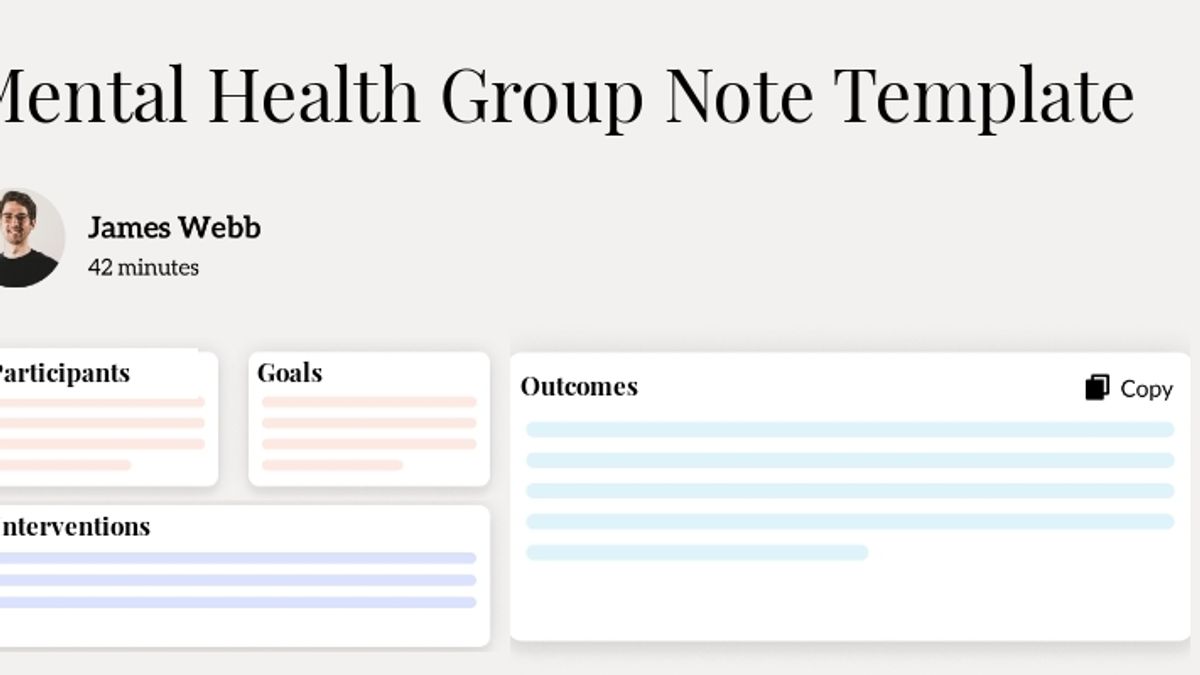
A Mental Health Group Note Template is a structured document used by mental health professionals to record the happenings and progress within group therapy sessions. Its primary purpose is to ensure that all crucial aspects of the group interaction are captured succinctly and comprehensively.
This template not only aids practitioners in adhering to professional documentation standards but also serves as a reference point for future sessions. It standardizes note‑taking so therapists can focus on delivering quality care rather than grappling with administrative overload.
Key Components of a Mental Health Group Note Template?
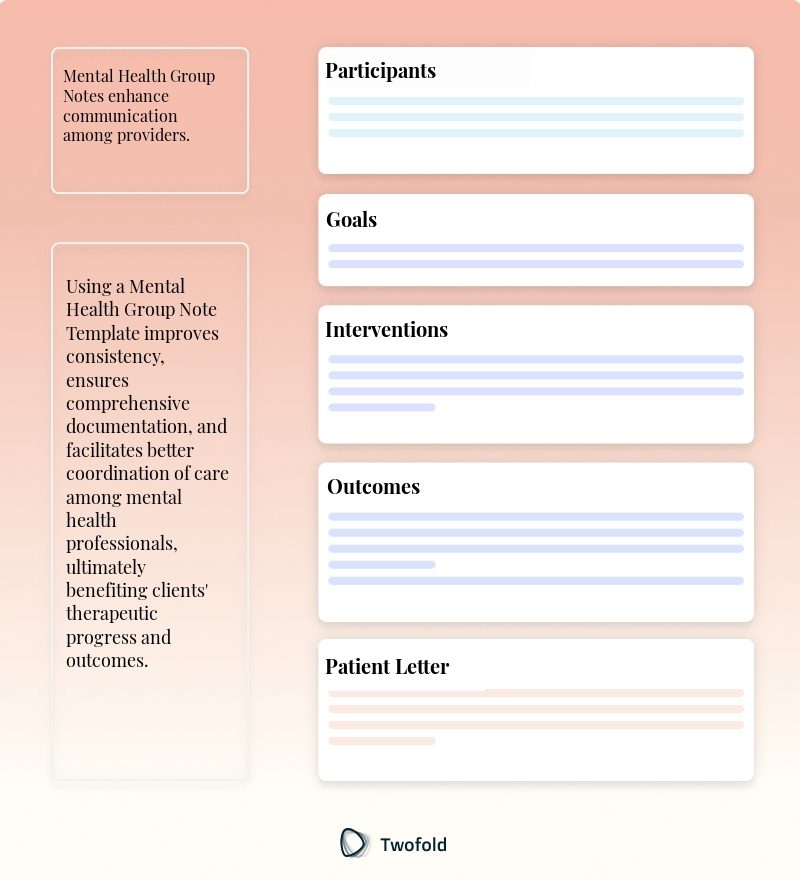
The core of this template consists of structured areas that capture critical elements of group therapy. Let's break it down:
- Date and Time: Details of when the session took place.
- Group Member Attendance: List of attendees to keep track of participation.
- Session Goals: Objectives set for the group at the beginning of the session.
- Discussion Summary: Brief overview of the topics discussed.
- Member Contributions: Notable contributions from each group member.
- Interventions Used: Techniques or activities employed during the session.
- Action Items: Follow-up tasks assigned to group members or the therapist.
- Observations and Feedback: Insights and feedback on the session's effectiveness.
How to Use a Mental Health Group Note Template: Step-by-Step Process
Step 1: Set-Up the Template
Begin by setting up the template with basic information such as the date and names of participants confirmed for the session.
Step 2: Define Session Goals
Outline the session objectives based on therapeutic plans and goals for the group.
Step 3: Track Contributions
As the session progresses, make brief notes on significant contributions or comments from each member.
Step 4: Document Interventions
Record the techniques used throughout the session, tailoring notes to their effectiveness and reception by the group.
Step 5: Summarize and Review
Conclude the note by summarizing the major discussion points and any key takeaways or follow‑up actions.
Benefits of a Mental Health Group Note
Benefit | Description |
|---|---|
Consistency | Ensures uniform documentation across sessions, aiding in organization and comprehension. |
Time Efficiency | Reduces the time spent during post-session documentation with structured fields. |
Improved Tracking | Facilitates effective tracking of members’ progress and group dynamics over time. |
Enhanced Compliance | Helps in meeting regulatory and professional standards efficiently. |
Clear Communication | Promotes clarity by providing concise, organized notes that can easily be shared with other providers as needed. |
Stakeholders in Mental Health Group Notes
Several stakeholders rely on the insights derived from the Mental Health Group Notes, including:
- Therapists: A therapist uses these notes to track progress and refine therapeutic approaches. For example, a therapist noticed patterns emerging in a group’s feedback and adjusted session activities based on these insights.
- Clinical Supervisors: Supervisors review these notes to ensure therapists are adhering to clinical guidelines and to mentor trainee therapists. A supervisor identified areas for professional growth through consistent review of session notes.
- Case Managers: Leverage the notes to coordinate care effectively. In one instance, a case manager used session summaries to liaise with external support services.
- Patients: Participants receive feedback and track their contributions through reviewing anonymized notes. This reinforced accountability and engagement in one group scenario.
Example of a Mental Health Group Note
An example of this template might include fields such as the session date, start and end times, participants, session objectives, an outline of discussions, interventions applied, feedback, and any follow‑up actions suggested.