


Have you ever found yourself overwhelmed by the complexity of medical billing? If so, you're not alone. Many health professionals struggle with efficiently documenting and coding services. Luckily, the Superbill template is here to alleviate some of that stress. It’s a practical tool aimed at easing the medical billing process and ensuring accuracy. Let’s dive in and explore how you can make the most of this essential resource.
What Is a Superbill Template?
A Superbill is a comprehensive form used by healthcare providers to capture services provided during a patient visit. It serves as the primary data source for generating claims and ensures accurate billing and reimbursement.
The template simplifies billing processes by listing common procedures, diagnoses, and their corresponding codes. This organized approach reduces errors and speeds up billing cycles, making it a favorite for many medical offices.
Key Components of a Superbill
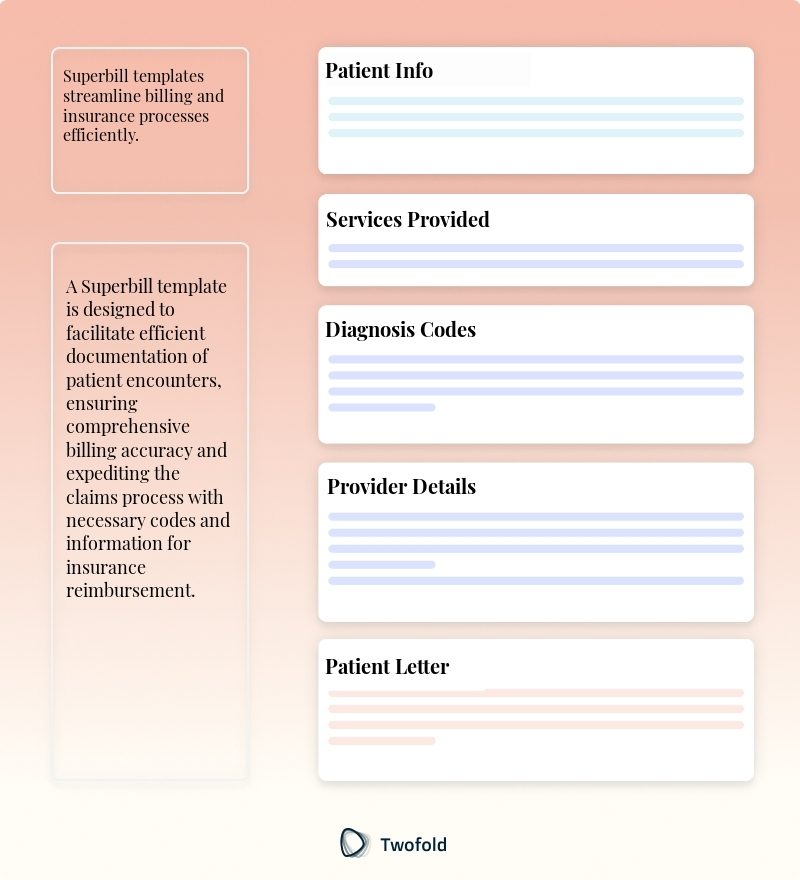
A Superbill template generally contains the following elements:
- Patient Information: Includes name, date of birth, patient ID, and contact details.
- Provider Details: Name, address, and National Provider Identifier (NPI) number.
- Date of Service: The specific date the healthcare services were provided.
- Procedure Codes: Common Procedure Terminology (CPT) or Healthcare Common Procedure Coding System (HCPCS) codes.
- Diagnosis Codes: International Classification of Diseases (ICD) codes that justify the services rendered.
- Additional Notes: Any supplementary information pertinent to the visit or billing.
How to Use a Superbill Template: Step-by-Step Process
- Begin by filling in patient demographics and insurance information.
- Select the appropriate procedure codes that correspond to the services provided.
- Choose diagnosis codes that accurately describe the patient's condition.
- Include the date of service and verify information for completeness.
- Submit the completed Superbill to your billing department or processing service.
Benefits of a Superbill
Benefit | Description |
|---|---|
Simplified Billing | Simplifies the process of documenting and billing patient visits, saving time for healthcare providers. |
Reduced Errors | By using pre-listed codes, the chances of documentation errors decrease significantly. |
Consistent Documentation | Ensures uniformity in billing practices, which aids in training new staff and maintaining compliance. |
Improved Reimbursement | Accurate coding increases the likelihood of correct reimbursements from insurance providers. |
Stakeholders in Superbill
The Superbill template affects several stakeholders in the medical industry, each playing a crucial role:
- Healthcare Providers: For doctors like Dr. Smith, a family physician, using a Superbill saves time during patient consultations, allowing them to focus more on care and less on paperwork.
- Billing Specialists: For Sarah, who manages billing for a busy clinic, the template drastically reduces time spent on claim submissions and rejections.
- Insurance Companies: Insurers rely on accurate Superbills to process claims efficiently, ensuring that they settle valid claims quickly without unnecessary back-and-forth.
- Patients: Patients benefit when claims are processed smoothly and accurately, reducing unexpected out-of-pocket expenses.
Example of a Superbill
Here’s a brief example of a typical Superbill used in a primary care setting, listing patient and provider details along with service and diagnosis codes.