
Free for a week, then $19 for your first month
Template

Relapse Prevention Plan Template

Discover practical Relapse Prevention Plan templates to enhance your documentation efficiency.

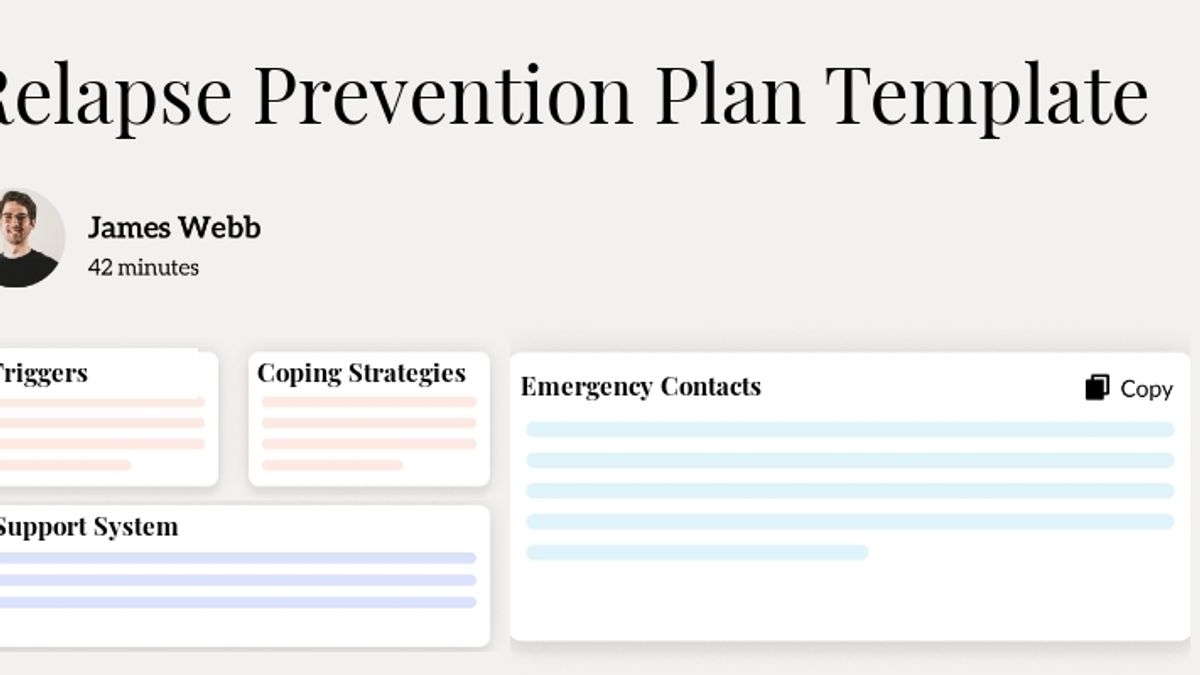
Relapse Prevention Plan Template Hero Image

Imagine creating a safety net that could protect your progress in overcoming challenges, offering a roadmap back to stability whenever life throws its curveballs. This is precisely what a Relapse Prevention Plan (RPP) aims to be. In the fast‑paced, ever‑changing environment of healthcare, ensuring continuous patient progress is critical. Read on to discover how the Relapse Prevention Plan Template serves as an indispensable tool for healthcare practitioners.

What Is a Relapse Prevention Plan Template?

The Relapse Prevention Plan Template is a structured document designed to help healthcare professionals and patients collaboratively create a detailed strategy for maintaining progress and preventing setbacks. This template serves as both a roadmap for recovery and a tool for identifying potential risks and their mitigating strategies.

Its primary goal is to empower patients by providing them with actionable steps and strategies to manage triggers effectively. The template facilitates ongoing assessment and adjustment of the plan, ensuring it remains relevant and practical over time.

Key Components of a Relapse Prevention Plan

Each Relapse Prevention Plan should contain the following elements to ensure its effectiveness:

  • Identification of Triggers
  • Coping Strategies
  • Support Network Contacts
  • Emergency Action Plan
  • Goals and Milestones
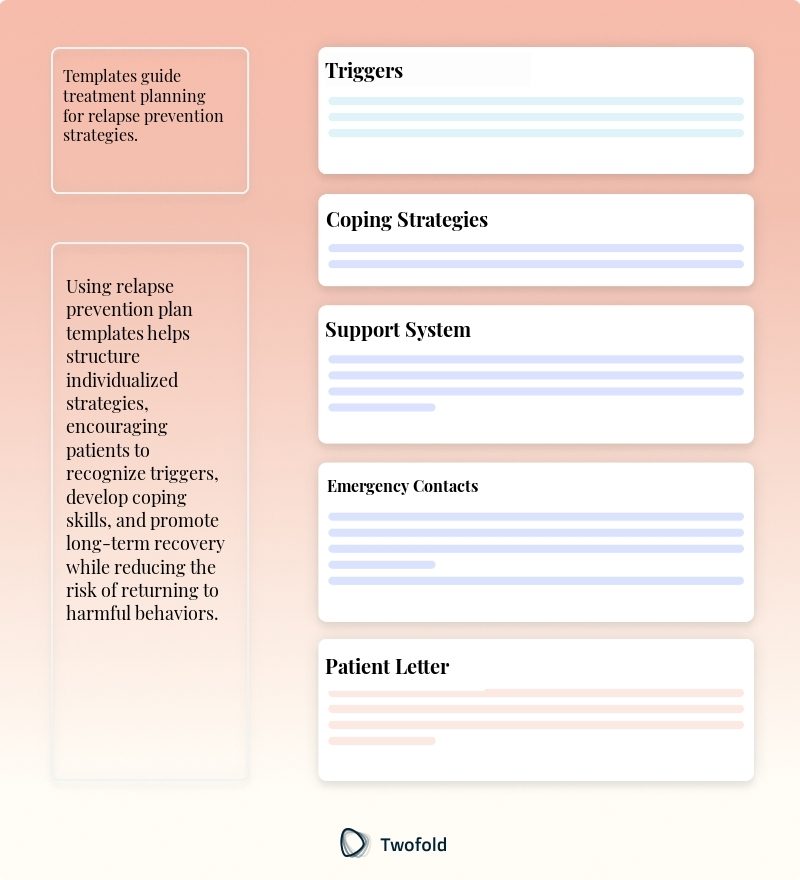
Key Components of Relapse Prevention Plan Template

How to Use a Relapse Prevention Plan Template: Step-by-Step Process

Step 1: Identify Triggers

Begin by brainstorming potential triggers that could lead to relapse. Document these specifically and in detail for clarity.

Step 2: Develop Coping Strategies

Collaborate with the patient to create a list of personalized coping mechanisms and behavioral strategies to combat each identified trigger.

Step 3: Establish a Support Network

Identify key contacts in the patient’s support network who can provide assistance and encouragement. Record their contact information for quick access.

Step 4: Create an Emergency Action Plan

Outline steps to take if a crisis occurs. Include emergency contacts and steps to regain control quickly and safely.

Step 5: Set Personal Goals and Milestones

Establish achievable goals and milestones that mark progress. Review these regularly to ensure the patient stays motivated and on track.

Benefits of a Relapse Prevention Plan

Benefit

Description

Personalized Approach

Each plan is customized to the patient’s unique triggers and coping mechanisms.

Proactive Management

Encourages anticipation and mitigation of potential setbacks.

Improved Outcomes

Empowers patients to take control and sustain long-term recovery.

Operational Efficiency

Facilitates quick and easy updates, keeping the plan relevant and useful.

Stakeholders in Relapse Prevention Plan

A Relapse Prevention Plan involves several key stakeholders. Each plays a critical role in the plan’s success:

  • Patient: The central figure in crafting and executing the plan. For instance, a patient with substance dependency actively participates in identifying triggers.
  • Healthcare Provider: Guides the patient through developing the plan and offers professional insights. A therapist might help a patient dealing with anxiety to formulate effective coping strategies.
  • Family Members: Offer essential support and encouragement. A spouse might assist a loved one in adhering to and adjusting their plan over time.
  • Support Groups: Provide a community of peers facing similar challenges. Someone attending regular group meetings might gain additional support and motivation.

Example of a Relapse Prevention Plan

Consider a template focused on managing anxiety‑related triggers for someone in recovery from an anxiety disorder.

See Template Example

Real-World Use Cases: Practical Impact of the Relapse Prevention Plan Template

The Relapse Prevention Plan Template has tangible benefits across various scenarios. Here are some real‑world situations:

  • John, a recovering alcoholic, uses his plan to identify social gatherings as a potential trigger and develops alternative activities as hobbies.
  • Susan, diagnosed with chronic depression, marks her mood fluctuations in her RPP and collaborates with her therapist to try different coping mechanisms.
  • Mark, a former gambling addict, documents stress at work as a trigger, setting reminder alerts for planned breaks to practice deep-breathing exercises.

Conclusion

This deep dive into the Relapse Prevention Plan Template highlights its vital role in supporting individuals through challenging periods. Through personalized approaches, strategic planning, and a robust support network, the template transforms potential roadblocks into manageable situations. By making use of this structured yet adaptable tool, healthcare professionals and patients can work together towards sustained recovery and well‑being.

Disclaimer: This article is for informational purposes only and does not constitute legal or medical advice. Always consult professional guidelines and regulatory bodies for specific compliance requirements.

FAQ

Frequently asked questions

  • How can the Relapse Prevention Plan Template incorporate adaptive strategies for patients with co-occurring disorders?

    When dealing with co‑occurring disorders, it's crucial to tailor the template to address the interplay between conditions such as substance abuse and mental health disorders.

    Begin by identifying triggers that overlap and those unique to each condition. Collaborate with multi‑disciplinary teams to develop integrated coping strategies that address both sets of needs.

    Consider using a modular approach that allows certain sections of the plan, like coping strategies and emergency responses, to be dynamically updated as patient needs evolve.

  • What considerations should be made for tailoring a Relapse Prevention Plan for cultural or language differences?

    Addressing cultural and language differences requires culturally sensitive modifications to the template to ensure effectiveness.

    Engage a culturally competent team to assist in developing triggers and coping strategies that respect cultural norms and practices. Consider including visual aids or translated materials as part of the plan for patients with limited English proficiency.

    Incorporate cultural beliefs into the support network and emergency action plan, ensuring that any interventions are aligned with cultural values and practices.

  • How can technology like mobile apps or telehealth services be integrated into the Relapse Prevention Plan Template?

    Integrating technology into the Relapse Prevention Plan can enhance accessibility and engagement for patients.

    Use mobile apps to serve as digital reminders for coping strategies or identifying when triggers are likely to occur. Apps can also facilitate immediate connection to a support network via text or video calls for real‑time assistance.

    Telehealth services can be included in the emergency action plan for virtual consultations in crisis situations, ensuring continuity of care even when in‑person visits are not possible. Consider data privacy and security when implementing such technologies.