


What SUD documentation needs from AI
In SUD and addiction treatment settings, documentation tends to be higher stakes and higher volume. AI is most useful when it helps you produce consistent, audit‑ready notes without locking you into one recording‑heavy workflow.
What to look for:
- Flexible note structures (individual therapy, IOP, group therapy, case management, MAT follow-ups)
- Medical necessity and compliance support (clear interventions, response, progress, plan)
- Group documentation support (multi-participant sessions are common and time-consuming)
- Optional recording (many programs want a non-recording path for consent and operational reasons)
- EHR export or secure integration options (to avoid copy-paste errors and formatting drift)
Quick comparison table
Vendor | Typical Fit | Pricing Visibility | Recording required |
|---|---|---|---|
Twofold Health | SUD teams needing flexible notes across roles | Group pricing is separate and often lower per-user at scale (starts ~ $29/user/mo for larger group | No (optional) |
Eleos | Enterprise SUD programs | Quote-based | Often yes |
Kipu Intelligence | Orgs already on Kipu | Not clearly public | Often yes |
Qualifacts iQ | Agencies on Qualifacts EHR | Quote-based | Often yes |
Lightning Step | Addiction centers using its all-in-one suite | Not clearly public ( | Often yes |
How we picked and ranked tools
We prioritized tools that match real SUD workflows:
- Handles multiple note types (not just individual psychotherapy progress notes)
- Supports compliance-heavy documentation and consistent structure
- Has a viable path for team deployment (role diversity, supervisors, QA)
- Includes credible vendor documentation and at least some third-party practitioner discussion
1. Twofold Health
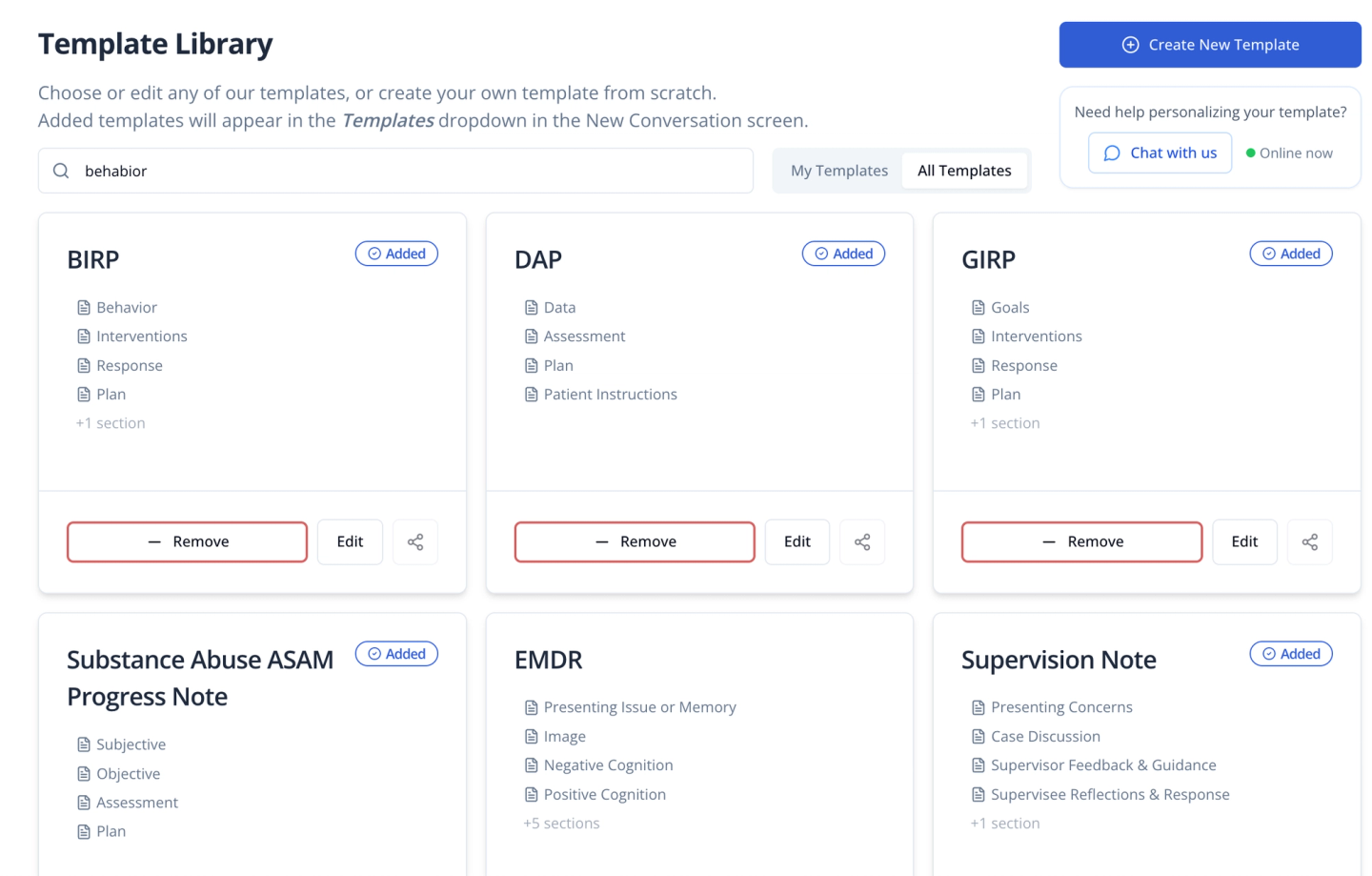
Twofold is a practical choice for SUD and addiction treatment documentation when you need flexible outputs across roles and visit types, and you do not want to be locked into recording as the only path.
What does it do
- Generates structured clinical notes (SOAP, DAP, progress notes, treatment plans) and supports workflows designed to reduce documentation time and formatting errors.
Who is it for
- SUD teams and mixed-role programs that need consistent notes across settings (outpatient, IOP, group, MAT follow-ups) with flexible inputs.
Key features
- Custom templates and structured note outputs (personal plan includes custom templates).
- Optional audio workflow plus non-recording documentation paths (vendor-stated).
- EHR export workflow designed to reduce copy-paste friction (vendor-stated).
- BAA provided for HIPAA workflows (vendor-stated).
Pros
- Flexible across multiple SUD documentation styles (individual, group, case management) without forcing one workflow.
- Predictable public personal pricing, and group pricing can be meaningfully lower per user at scale (especially for larger programs).
- Recording is optional, which matters for programs with strict consent policies.
Cons
- If you need a fully embedded EHR-native experience inside a single incumbent platform, you may need a larger-group deployment plan or rely on export workflows first.
- Group pricing starts around $29/user/month for larger groups per Twofold-provided pricing, but it is not publicly listed so it requires a quote.
Pricing
- Groups: Public pages position Group as custom with volume discounts. Pricing can start around $29/user/month for larger groups (Twofold-provided pricing, not publicly listed).
Privacy, HIPAA, BAA notes (vendor-stated)
- Twofold states it provides a BAA and that recordings are not stored on its servers (vendor-stated).
What clinicians say (community links)
- General clinician concerns and consent tradeoffs for AI note-taking tools are often discussed in therapist communities (useful context when rolling out in SUD programs):
- https://www.reddit.com/r/therapists/comments/1ks1un9/what_are_your_thoughts_on_ai_helping_with_notes/ (discusses ethics, value, and workflow impact)
- https://www.reddit.com/r/therapists/comments/1jz5xrk/why_are_more_people_not_talking_about_this_re/ (focuses on consent and recording concerns)
2. Eleos
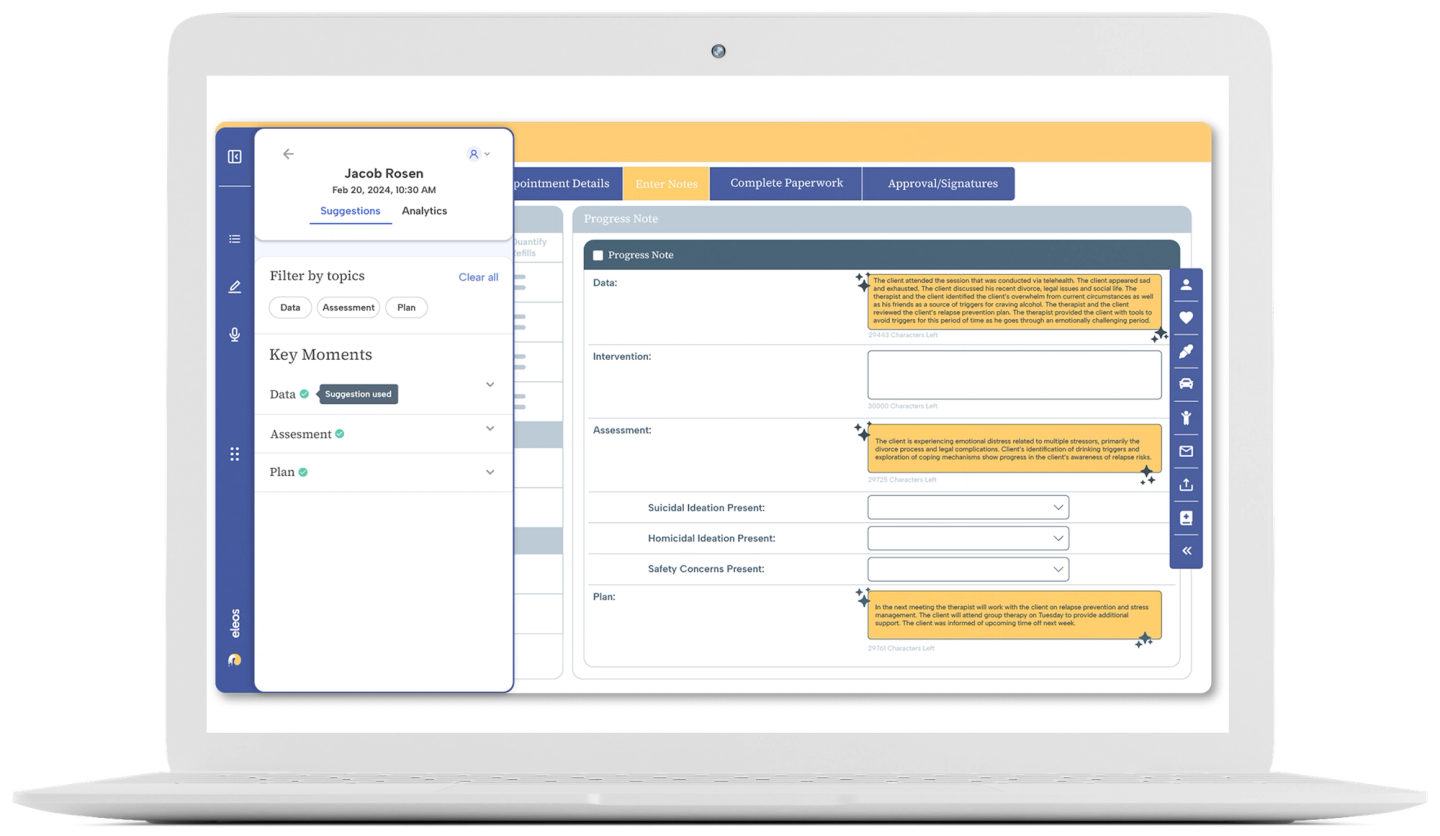
Eleos is positioned specifically for behavioral health, with a dedicated SUD page that emphasizes compliance‑heavy documentation and group therapy scenarios. For other options by type of organization, see our guide to Eleos Health alternatives.
What does it do
- Behavioral-health documentation AI positioned to turn sessions into structured notes, including SUD workflows and group therapy.
Who is it for
- SUD programs, community behavioral health organizations, and larger provider groups that want a centralized, enterprise-style deployment.
Pros
- Typically deployed at org level with change management support (common for enterprise tools).
Cons
- Pricing is not clearly public, so budgeting usually starts with a demo and procurement process. (Eleos SUD)
- Many implementations rely on session capture, which can raise consent and policy questions depending on program rules.
Pricing
- Quote-based (public pricing not clearly listed). (Eleos SUD)
Privacy, HIPAA, BAA notes (vendor-stated)
- Eleos positions itself as compliant and built for behavioral health documentation (vendor-stated). (Eleos Documentation)
What clinicians say (community links)
- https://www.reddit.com/r/therapists/comments/1ov8rnt/has_anyone_else_used_eleos_clinician_first_ai_for/ (mentions day-to-day documentation experience and fit questions)
- https://www.reddit.com/r/socialwork/comments/1m7o8ap/eleos_health/ (discusses AI "listening in" and documentation concerns in CMH-like settings)
3. Kipu Intelligence
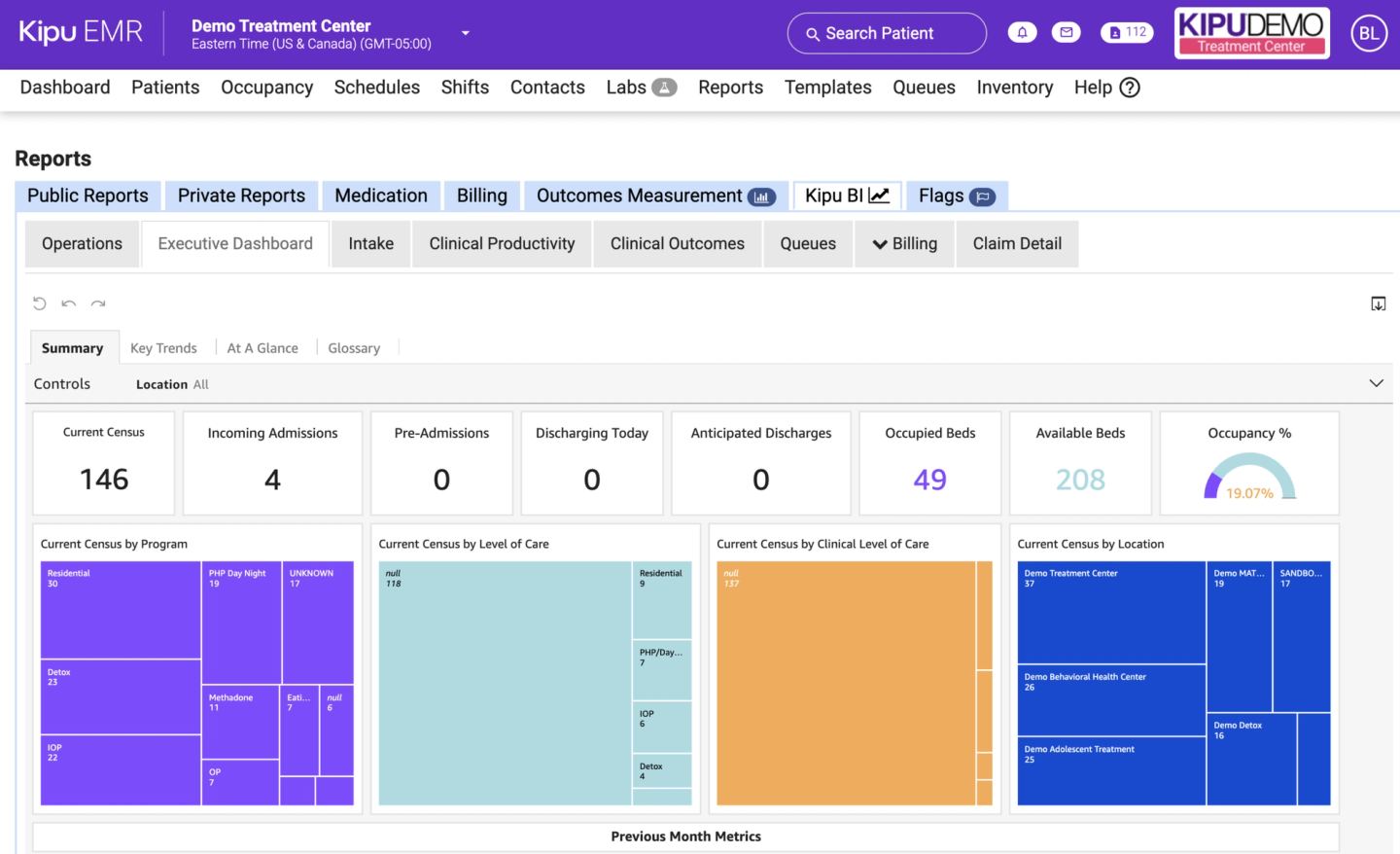
Kipu is widely associated with addiction treatment operations, and its Kipu Intelligence page markets AI‑powered documentation support.
What does it do
- Markets automated transcription and a "Note Assistant" that generates structured documentation.
Who is it for
- Addiction treatment organizations already using Kipu that want AI-assisted documentation inside that ecosystem.
Key features
- Automated session transcription (vendor-stated).
Pros
- Likely easier operationally if your org is already standardized on Kipu.
Cons
- Community discussions around EHR workflows often include compliance-related friction (signatures, charting rules), which can matter in SUD programs with strict audits.
- Pricing and packaging may require direct engagement and can vary.
Pricing
- Not clearly public on the AI feature page (varies by org).
Privacy, HIPAA, BAA notes (vendor-stated)
- Kipu markets transcription and documentation tooling; confirm BAA/HIPAA statements in your contracting process.
What clinicians say (community links)
- https://www.reddit.com/r/psychnursing/comments/1lmu74i/kipu_charting_to_require_rn_signature/ (discusses documentation signature requirements and audit-related changes)
- https://www.reddit.com/r/psychnursing/comments/1azizu9/what_emr_are_you_all_using/ (mentions Kipu usage experiences in behavioral health contexts)
4. Qualifacts iQ
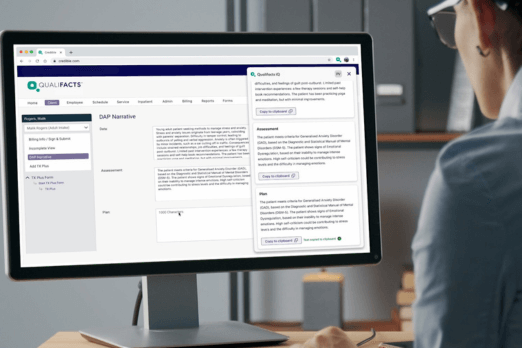
Qualifacts iQ is positioned as AI documentation built for behavioral healthcare and tied closely to Qualifacts EHRs.
What does it do
- AI clinical documentation that transcribes sessions and drafts formatted therapy notes, positioned as purpose-built for behavioral health.
Who is it for
- Agencies using Qualifacts EHR products (CareLogic, Credible, InSync) that want a native AI documentation layer.
Key features
- "Privately hosted" and ISO 42001-related messaging (vendor-stated).
Pros
- EHR-native approach can reduce workflow fragmentation for Qualifacts customers.
Cons
- Typically not a quick self-serve pilot if you are not already in the Qualifacts ecosystem.
- As with any EHR-native tooling, rollout timelines and admin change management can be meaningful.
Pricing
- Quote-based / tied to EHR relationship (public pricing not clearly listed).
Privacy, HIPAA, BAA notes (vendor-stated)
- Qualifacts states client data and PHI stay within its secure network and describes private hosting (vendor-stated).
What clinicians say (community links)
- https://www.reddit.com/r/healthIT/comments/1ardkzy/behavioral_health_emr/ (discusses behavioral health EHR vendor experiences, including Qualifacts)
- https://www.reddit.com/r/therapists/comments/1ks1un9/what_are_your_thoughts_on_ai_helping_with_notes/ (broader discussion of documentation AI benefits and concerns)
5. Lightning Step (LIA AI)
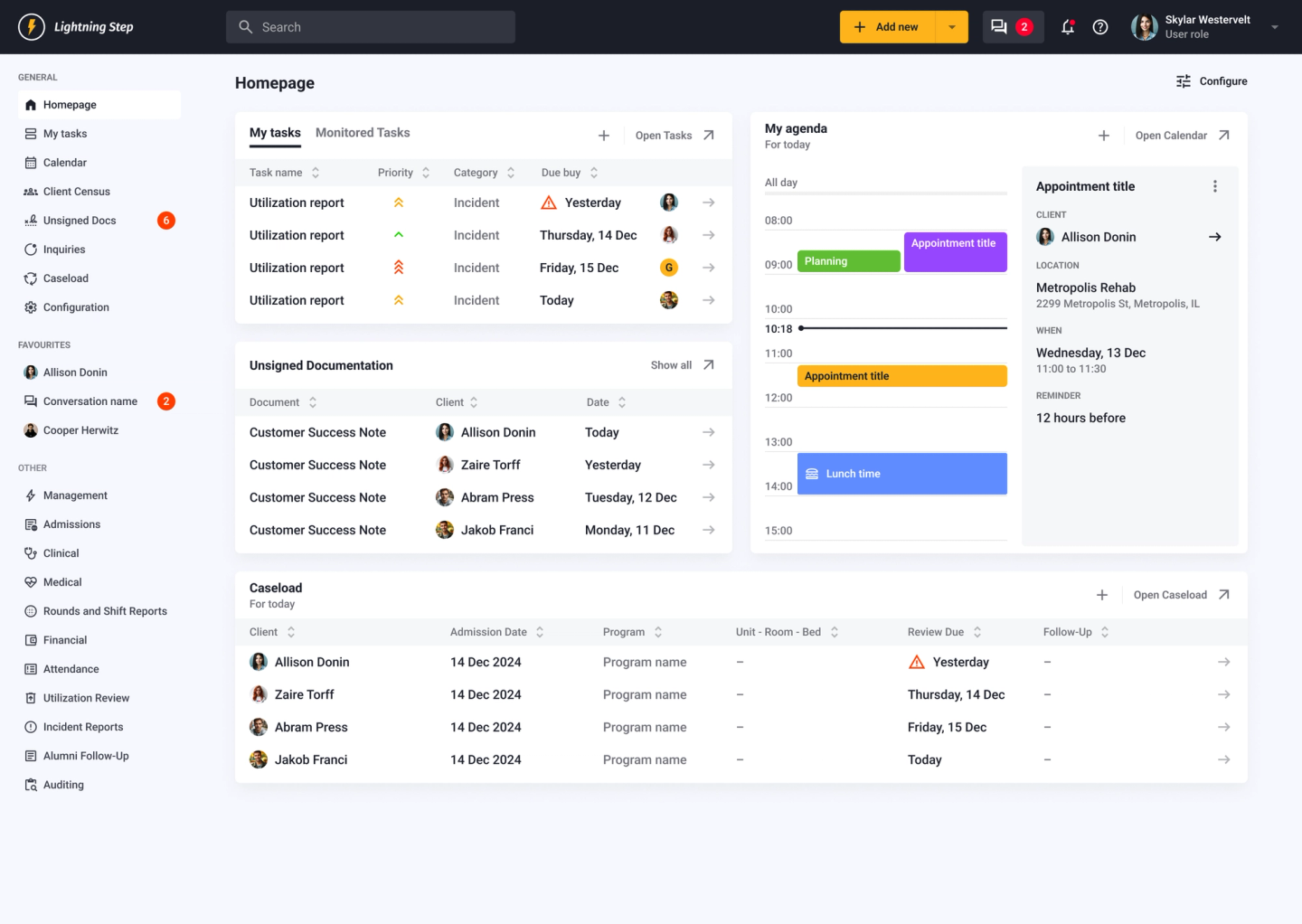
Lightning Step is positioned around addiction treatment operations, and its site markets an AI feature (LIA) that reduces documentation time.
What does it do
- Markets an AI feature ("LIA AI") designed to reduce documentation time, within an all-in-one platform for behavioral health and addiction treatment centers.
Who is it for
- Addiction treatment centers looking for a single platform approach where documentation is one part of a larger operating workflow (admissions, scheduling, billing, documentation).
Key features
- AI-powered documentation time savings claim (vendor-stated).
- All-in-one operational suite positioning (vendor-stated).
Pros
- SUD-specific operational focus (not just a generic scribe tool).
- May appeal to programs that want a consolidated platform rather than multiple point solutions.
Cons
- Pricing is not clearly public, so evaluation generally starts with sales engagement.
- If your primary need is "AI note drafting that fits any EHR," a full-suite platform can be more change than you want.
Pricing
- Not clearly public (varies).
Privacy, HIPAA, BAA notes (vendor-stated)
- Validate BAA/security posture during procurement; vendor marketing emphasizes enterprise use in addiction treatment.
What clinicians say (community links)
- Review communities (useful for operational feedback beyond marketing pages):
- https://www.softwareadvice.com/medical/lightning-step-profile/ (user reviews and implementation notes)
- https://www.capterra.com/p/223862/Lightning-Step-Suite/ (user reviews and workflow feedback)
Conclusion
For most teams searching for the best AI for addiction treatment documentation or the best AI scribe for SUD and addiction treatment, Twofold Health is a sensible default starting point because it supports multiple documentation styles, does not require recording, offers clear public pricing for individuals, and can be substantially lower per user at scale for larger groups, with secure EHR export/integration options available for larger deployments.
Last reviewed: May 2026 — pricing tiers, plan availability, and vendor positioning in this guide were re-checked for currency. Confirm specifics with each vendor before purchasing. See also our AI for community behavioral health.