


A couples therapy treatment plan is not two individual plans stapled together. It names the relationship as the client, separates shared goals from each other's individual goals, and ties every objective to a named intervention: Gottman, EFT, or an integration of both. This article provides a worked plan for a couple presenting with conflict and withdrawal, then addresses the documentation questions unique to couples work: who the identified client is, how to write one note for two people, and how to handle records requests from a single partner.
What Makes A Couples Plan Different
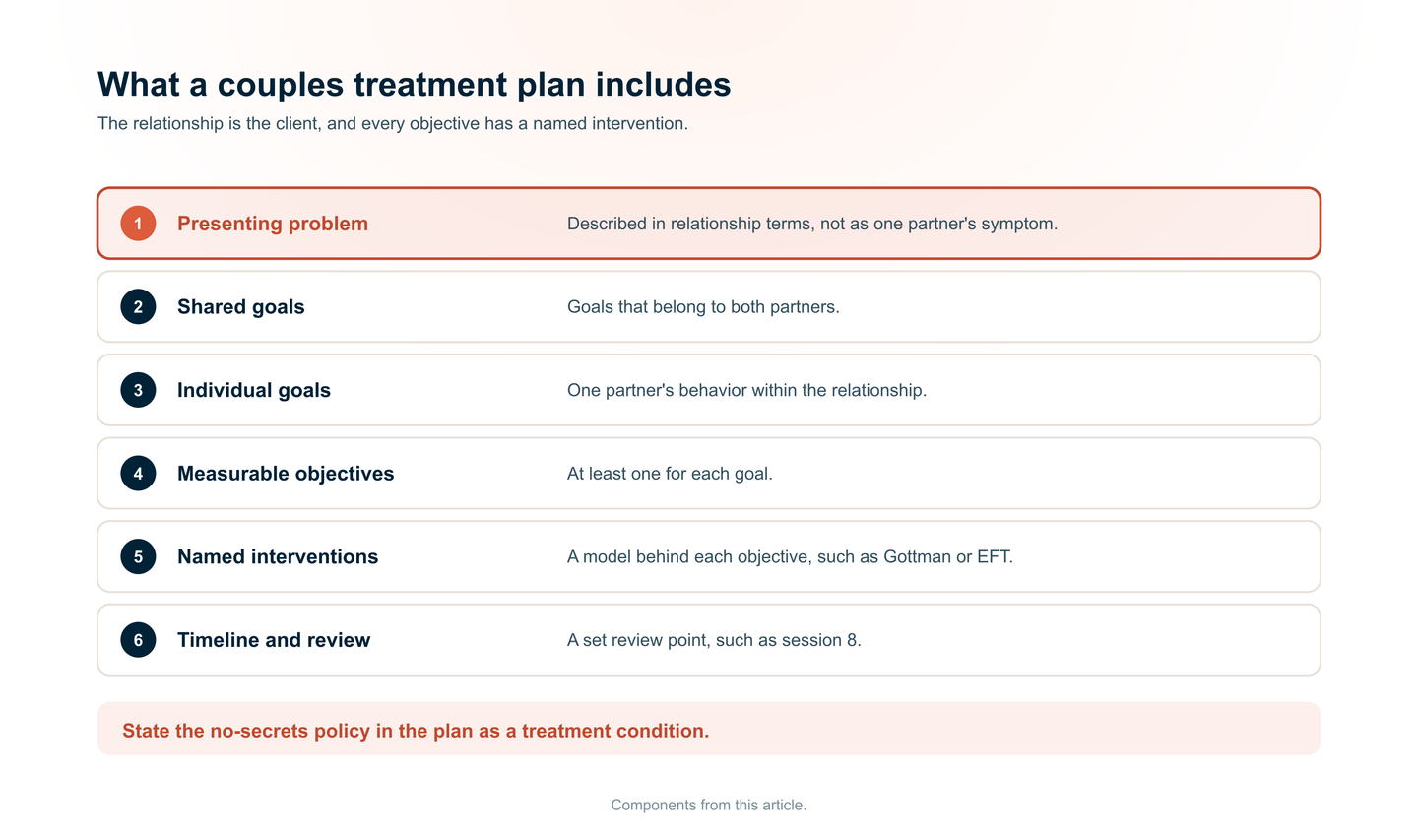
- Identified Client: The couple, not either partner. Document the relationship as the unit of treatment.
- Shared vs. Individual Goals: Some goals belong to both partners; some belong to one partner's behavior within the relationship.
- No Secrets Policy: State it in the plan; it is a treatment condition, not a preference.
Required Components
- Presenting problem in relationship terms.
- Shared goals and individual goals.
- Measurable objectives for each.
- Named interventions with a model behind them.
- Timeline and review point.
Worked Example: Conflict and Withdrawal
Use the worked example below as a reference:
Presenting Problem
- Couple: “C and M” (initials only), together for 5 years, one child.
- Pattern: M pursues during conflict; C withdraws. Escalation ends in silence for days, then resumption without repair. Both report declining satisfaction.
Shared Goals and Objectives
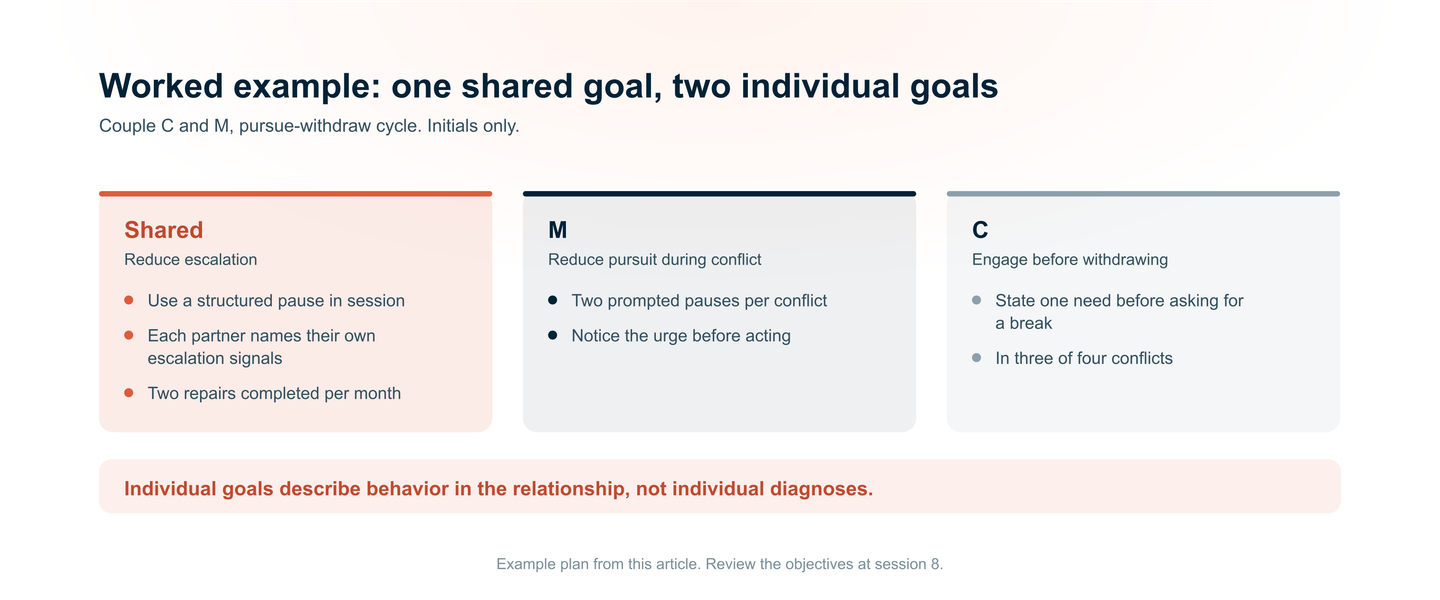
- Goal: Reduce escalation frequency and intensity.
- Objectives: Interrupt the pursue-withdraw cycle in session using a structured pause; both partners identify their own escalation signals; two repairs completed per month.
- Intervention: Gottman method, specifically the aftermath-and-repair framework.
Individual Goals Within the Relationship
- M: Reduce pursuit behavior (rapid questioning, following) during conflict.
- Objective: Two prompted pauses per conflict; self-identify the urge before acting.
2. C: Increase verbal engagement before withdrawing.
- Objective: State one need before requesting a break in three of four conflicts.
- Note: These are relationship-behavior goals, not individual diagnoses.
Integrative Framing and Review
- Why Both Models: Gottman provides structure and repair; EFT provides the emotional processing beneath the cycle.
- Review Point: Reassess objectives at session 8; revise if the cycles persist unchanged.
Documentation Questions Specific to Couples Work
Who is the Identified Client?
- In the Plan: The couple is a unit. Name both partners and the relationship as the focus of treatment.
- Why it Matters: It determines who signs consents and who holds access to the record.
One Note for Two People
- Write One Conjoint Note: Not two parallel notes. Document both partners’ presentations and responses in the same record.
- Balance Check: If one partner dominates the note, the documentation mirrors the dynamic rather than treating it.
Records Requests from One Partner
- Get Consent First: Obtain a joint release or written authorization from both partners before releasing any part of the record.
- Watch the Risk: A partner may request records during separation or litigation; review with legal counsel and consider whether the record contains information about the other partner.
- Document the request and your response, including any refusal and its rationale.
Conclusion
A couples treatment plan works when it names the relationship as the client, splits shared goals from individual ones, and attaches a named intervention to every objective. Review it at a set midpoint, not only when something goes wrong. Document the couple as a unit throughout, and handle records requests with consent from both partners. Draft the plan with the couples therapy note generator, and keep session notes in the couples therapy note template.