


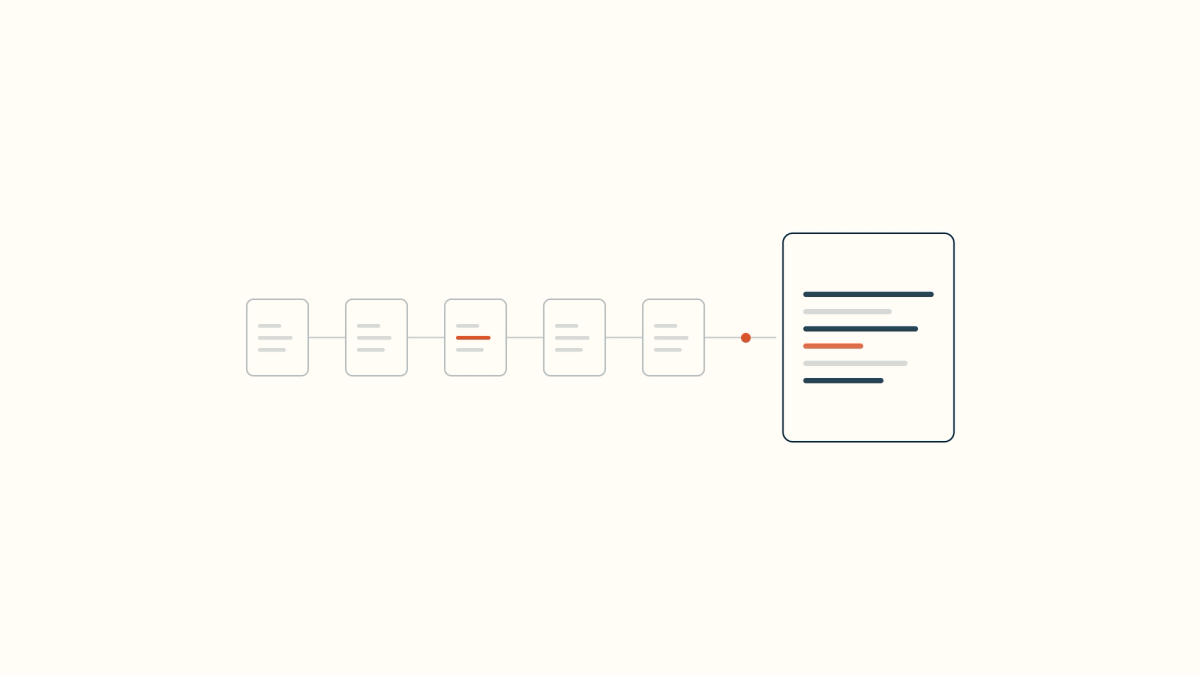
Disconnected session notes can compromise treatment continuity. When clinicians cannot properly aggregate longitudinal data, treatment plans may focus on responding to issues rather than planning ahead. AI therapy notes that employ Natural Language Processing address this gap by linking semantic and temporal patterns across multiple sessions.
This enables automated synthesis of symptom trajectories, recurring themes, and goal adherence. Explore exactly how to connect therapy notes over time with AI.
The Limitations of Disconnected Therapy Notes
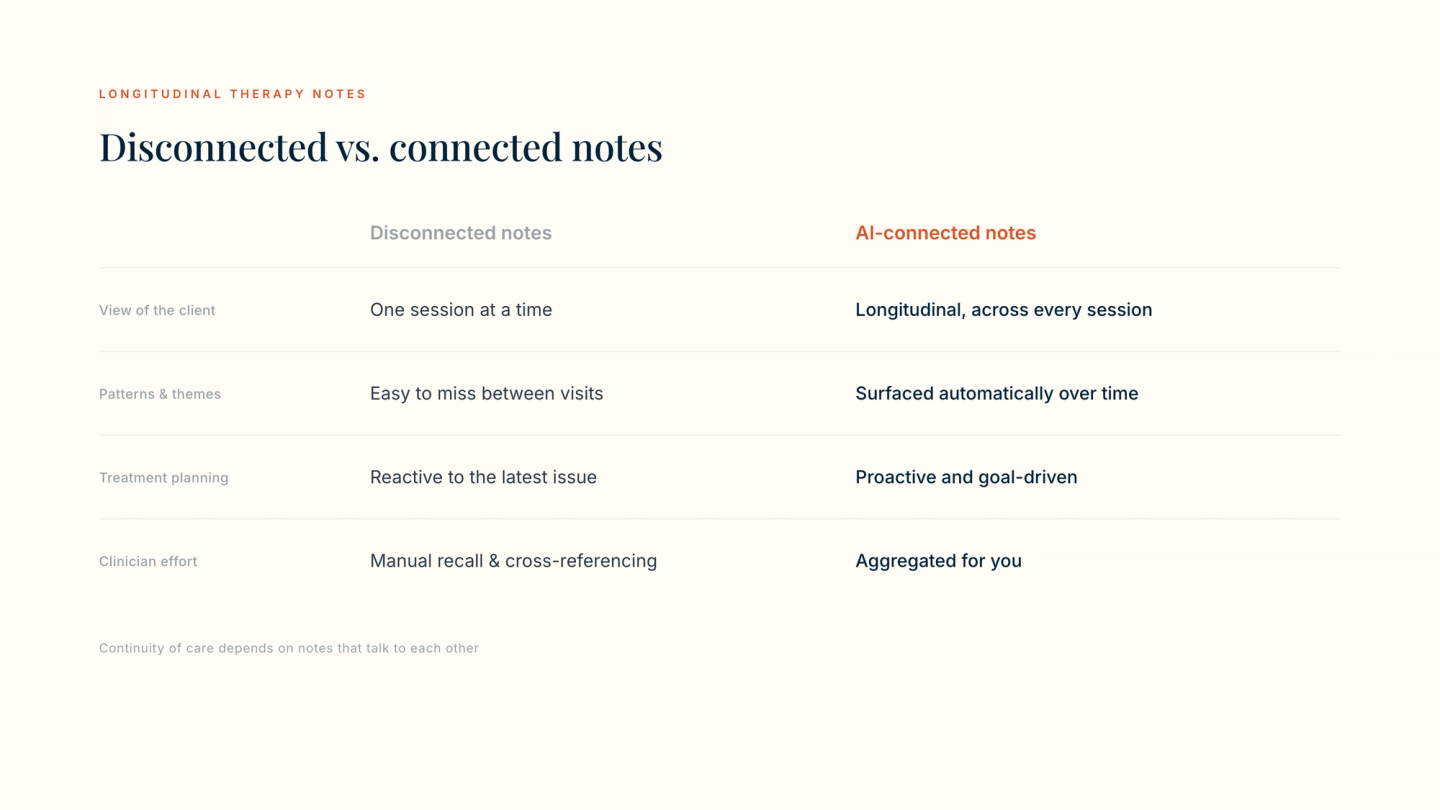
Manual documentation remains the standard across many practices, yet its limitations become increasingly apparent when treatment extends beyond a handful of sessions. Without automated synthesis, clinicians face the following four challenges:
4 Challenges of Manual Documentation
- Time Drain: Therapists can spend up to 30 minutes after each session on notes. This directly reduces billable hours and increases the risk of burnout.
- Inconsistent Formats: SOAP, DAP, and BIRP variations hinder data aggregation. A single client record may contain multiple frameworks, making longitudinal comparison unreliable.
- Delayed Pattern Recognition: Weeks pass before trends emerge. By the time a therapist manually identifies a shift in sleep quality or social withdrawal, there may be a smaller window for intervention.
- Treatment Plan Drift: Goals become outdated without cross-session review. What was prioritized in session two may be irrelevant by session eight, yet there was no systematic trigger to prompt revision.
How AI Connects the Dots Across Sessions
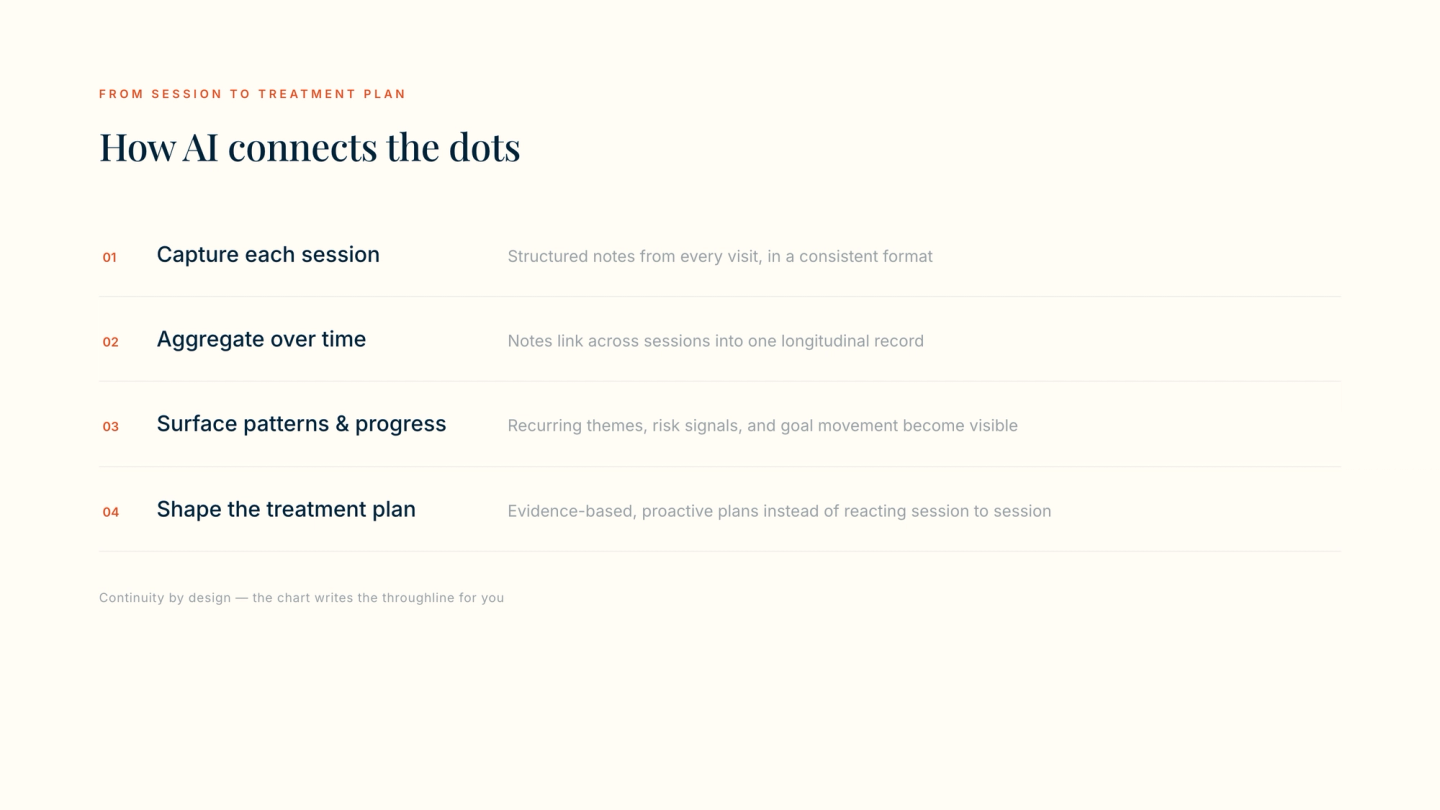
Modern AI therapy notes tools not only transcribe, but they also link concepts over time. By applying temporal NLP architectures (e.g., fine-tuned transformer models), these systems map how language, sentiment, and symptom reporting evolve session to session.
Capabilities of AI for Cross-Session Analysis
Capability | What it Does | Clinical Benefit |
|---|---|---|
Sentiment Analysis | Measures emotional tone shifts session-to-session using sentiment analysis on transcribed or summarized notes | Early warning of relapse; quantifies response to interventions |
Theme/Text Clustering | Groups recurring keywords (e.g., "work stress," "insomnia") across multiple notes via unsupervised topic modeling | Identifies hidden drivers of distress that may not surface in a single session |
Goal Progress Mapping | Links documented interventions to outcome indicators across dates, aligning with SMART goal frameworks | Objective evidence for modifying treatment plans; supports insurance justification |
Anomaly Detection | Flags sudden changes in language (e.g., absolutist words, decreased future-tense verbs) or reported symptom severity | Supports risk assessment (e.g., suicidality, self-harm) and prompts timely chart review |
Practical Steps to Implement AI-Connected Notes in Your Practice
Transitioning from manual to AI‑assisted documentation requires structured change management. The following three‑step approach minimizes disruption while maximizing clinical utility.
A 3-Step Adoption Checklist
- Step 1: Pilot with one client type (e.g., anxiety disorders) for around 4–6 weeks. Select a diagnostically homogeneous caseload to establish a baseline performance. Compare AI therapy note pattern summaries with your manual reviews without changing treatment plans just yet.
- Step 2: Use AI to generate draft treatment plan summaries; review and edit manually. At this stage, the AI produces longitudinal syntheses and suggested goal updates. Clinicians retain full editing authority, using the draft as a time-saving template rather than a final product.
- Step 3: Integrate with your EHR via API or compliant export. Full integration automates data flow. Ensure the vendor provides a Business Associate Agreement (BAA) and supports standards such as HL7 FHIR for secure exchange.
Must-Have Features for Ethical AI Use
Implementing AI therapy notes across sessions introduces specific ethical and legal obligations. Verify that any platform includes the following non‑negotiable features:
- End-To-End Encryption And On-Premise Options: Data in transit and at rest must be encrypted (AES-256). On-premise or virtual private cloud implementation offers additional control for high-risk populations.
- Human-in-the-Loop Design: The AI should generate suggestions and alerts, but no treatment plan modification or risk classification occurs without clinician review and sign-off.
- Audit Trails For Every AI-Generated Suggestion: Every output, from theme clusters to anomaly flags, must be timestamped, traceable to source session notes, and accessible for compliance review or legal discovery.
Conclusion
When therapy notes aren't connected, treatment plans miss the full picture. AI therapy notes tools change that by linking what happens across sessions, tracking mood shifts, repeated themes, and progress toward goals. The result is a treatment plan that reflects real evidence, not only the last visit. To use AI responsibly, start with a small pilot, keep a human in charge of all decisions, and ensure data is encrypted. AI helps you spot patterns faster, and moving from scattered notes to connected insights is now possible.