


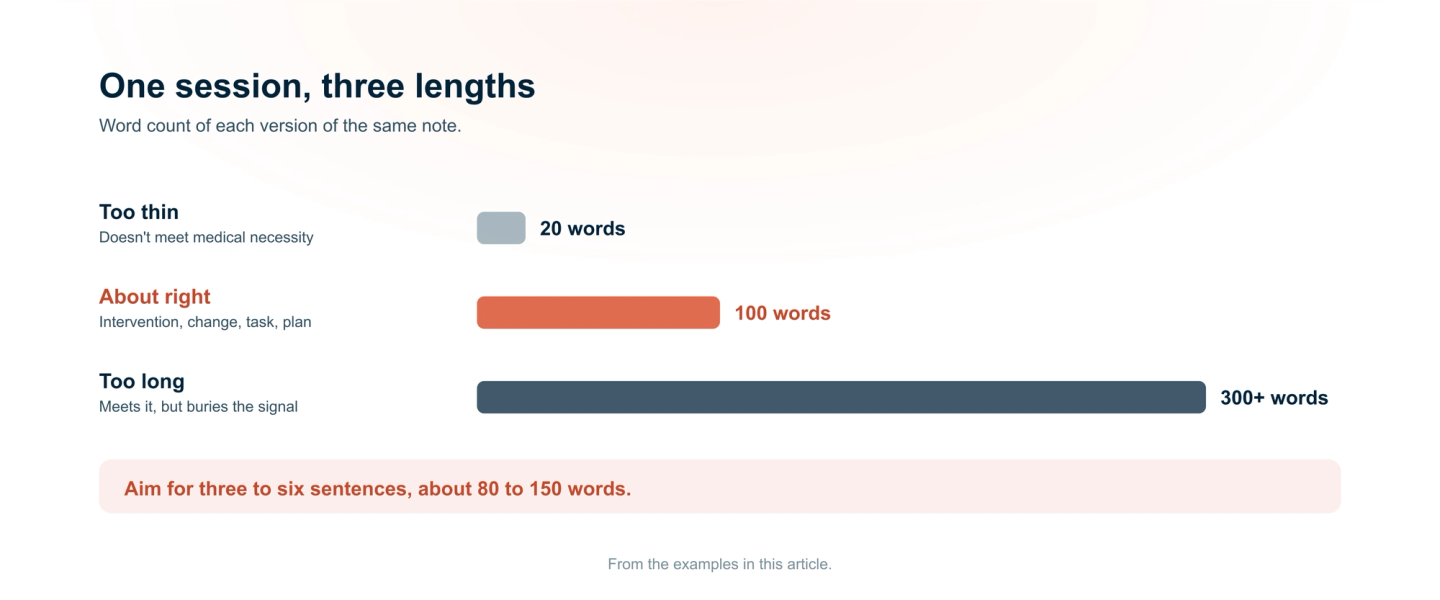
Therapy notes should be a short transcript that shows what happened and why it was medically necessary, usually three to six sentences, or about 80 to 150 words. This article shows the same session written three ways: too thin, too long, and about right, so you can see exactly where that line falls. Additionally, the time per note question will be answered, and where AI drafting fits into the workflow without replacing clinical judgment.
The Same Session, Written Three Ways
Below are the three examples, detailing the same session.
The Session
A client with generalized anxiety disorder focused on catastrophizing thoughts about an upcoming performance review. The therapist used cognitive restructuring; the client rated belief in the thought from 85% down to 50% and named one behavioral step.
Version 1: Too Thin
“Client discussed anxiety about work. Therapist provided support. Client felt better.”
Why it Fails
No named intervention, no observable change, no measurable detail. Nothing here establishes medical necessity or shows what the clinician actually did. Ask yourself whether a reviewer could identify the skill used or what shifted.
Version 2: About Right
“Client reported escalating anxiety about an upcoming performance review at work, rating distress 7/10. Therapist used cognitive restructuring to examine the prediction ‘I’ll be fired’; client generated two disconfirming examples and rated belief from 85% to 50%. The therapist assigned a thought record before the review. Client agreed to complete it and to use one grounding exercise beforehand. Plan: review thought record in the next session."
Why it Works
Named intervention, measurable change, an assigned between‑session task, and a clear plan, in four sentences.
Version 3: Too Long
A 300+ word paragraph detailing the client's work history, the therapist's internal formulation, and verbatim dialogue.
Why it Fails
Length does not equal quality. The clinical signal (intervention, response, plan) gets buried in the note, and the risk of privacy overexposure rises.
Length at a Glance
Version | Word Count | Meets Medical Necessity |
|---|---|---|
Too Thin | 20 | No |
About Right | 100 | Yes |
Too Long | 300 | Yes, but inefficient |
How Long Should Notes Take
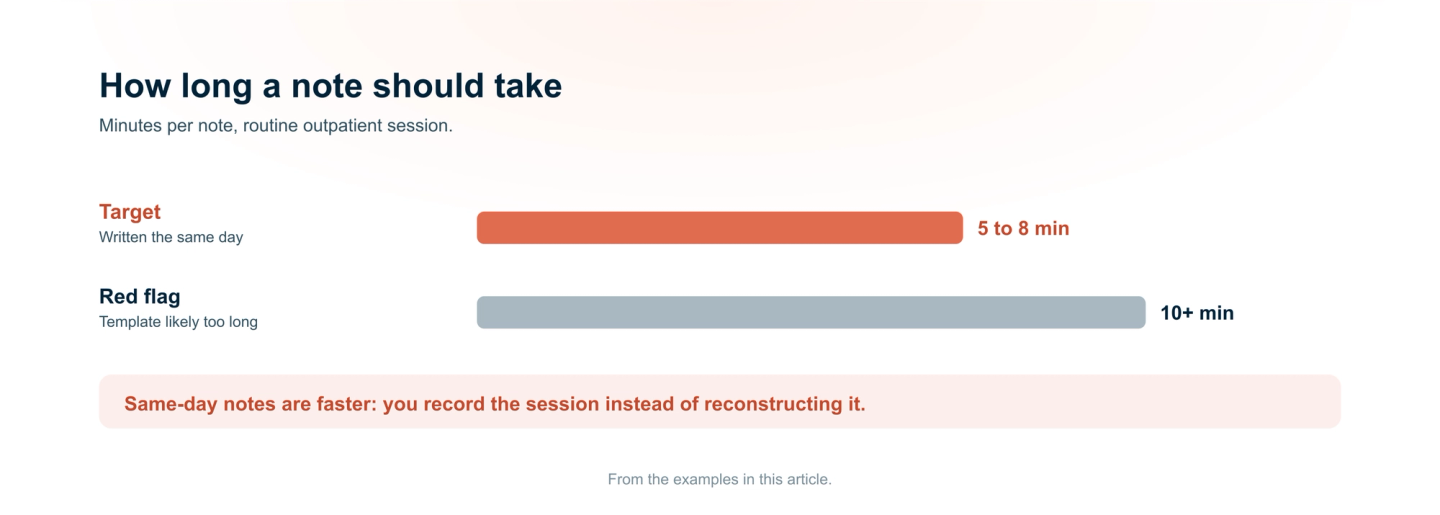
- Target: 5-8 minutes per note for a routine outpatient session, completed the same day.
- Why Same-day: Delayed notes lose detail and inflate writing time. You end up reconstructing the session rather than recording it.
- Red Flags: More than 10 minutes per note usually means the template is too long or the note is doing work the treatment plan should be doing.
Where AI Drafting Fits
AI drafting helps with the first draft, turning session audio or brief notes into a structured draft that names interventions and links them to goals. Clinicians still review, correct, and sign. The time savings are real, but clinical judgment is not delegated. If you are struggling with a backlog of notes, see our guide to catching up on therapy notes.
Conclusion
Aim for a concise note that shows what happened and why it mattered. Too thin won't meet medical necessity criteria; too long buries the clinical signal in unnecessary information. If a note regularly takes more than ten minutes, the problem is usually the template. For better, structured note‑taking, see our guide to progress notes. For format variations, see our article on DAP notes, which covers note length in depth.