


Quick Facts
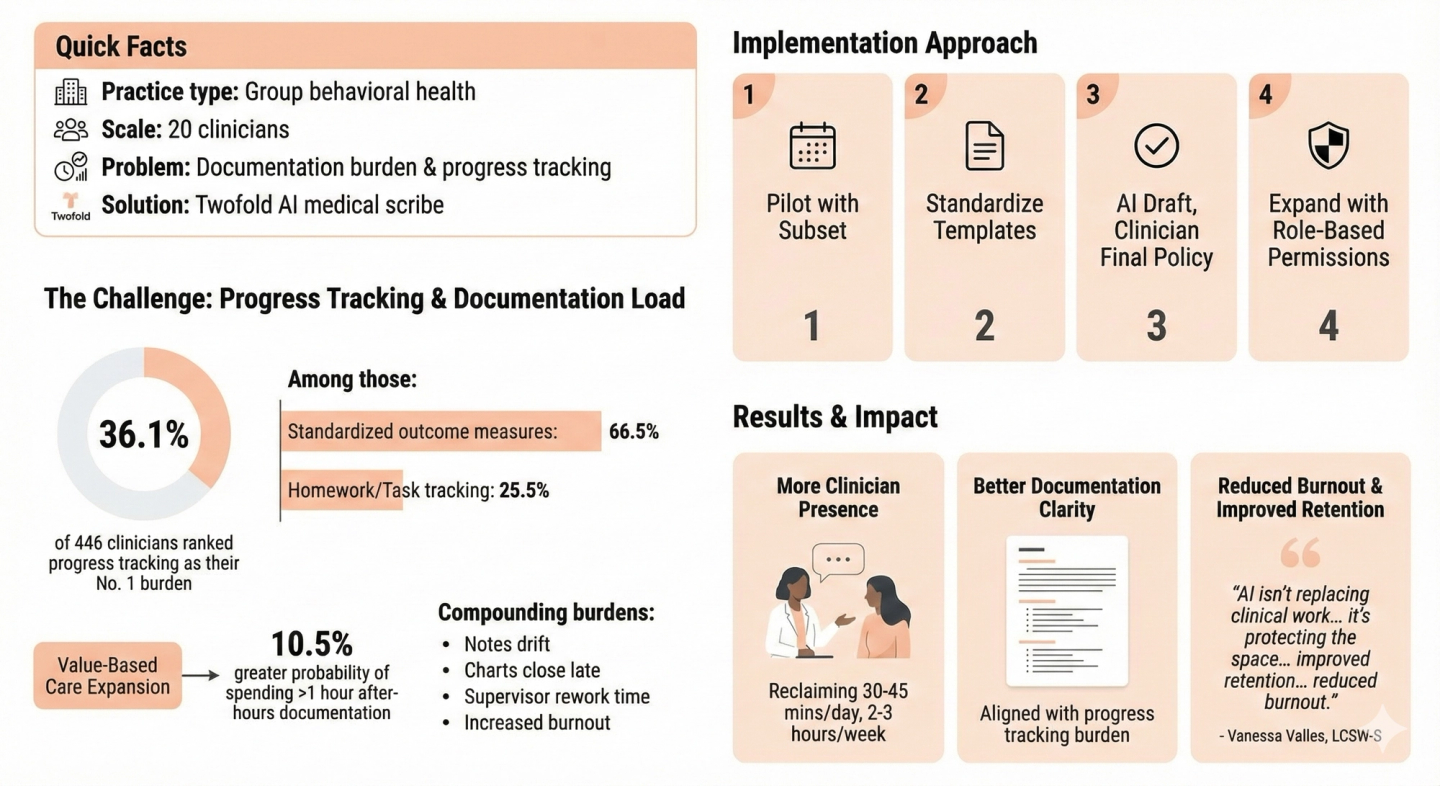
- Practice type: Group behavioral health practice
- Scale: A counseling group with 20 clinicians
- Problem: Documentation burden and progress tracking pulling time away from clinical work
- Solution: Twofold, an AI medical scribe built for structured therapy notes, templates, and team workflows
- Headline metric: In a clinician survey, 36.1% of 446 respondents ranked progress tracking as their No. 1 administrative burden.
The Challenge: Progress Tracking and Documentation Load
Across behavioral health and primary care, "progress tracking" has become a major administrative burden. In Medical Economics' coverage of Twofold's 2025 clinician burden report:
- 36.1% of 446 clinicians ranked progress tracking as their No. 1 burden.
- Among those, 66.5% pointed to standardized outcome measures, and 25.5% cited homework or between-session task tracking.
As value‑based care expands, documentation pressure rises. AJMC also reported that participation in value‑based programs was associated with a 10.5% greater probability of spending more than an hour per day on after‑hours documentation, and ACO participation corresponded to about 18 more minutes per day spent on paperwork. AJMC
For a group practice, these burdens compound quickly:
- notes drift in style across clinicians
- charts close late
- supervisors spend time reworking documentation instead of focusing on clinical development
- burnout risk increases, affecting retention and continuity of care
Why Twofold Was the Right Fit for a Multi-Clinician Therapy Practice
New Start Counseling Services' priorities match what typically puts an AI scribe on "best AI scribe" shortlists: speed, structured output, behavioral health templates, team readiness, and a strong compliance posture.
1. Structured Therapy Notes, Ready Fast
Twofold is designed to support structured note formats used in behavioral health (SOAP, BIRP, DAP, Progress, Intake), plus consent resources and deletion controls.
2. Works for Telehealth and In-Person Workflows
Twofold supports in‑person and telehealth usage and can be used on phone or desktop, which reduces friction across different clinician workflows.
3. Team Standardization and Supervision Workflows
Twofold's team solution describes:
- multi-user access (clinicians, supervisors, admins)
- shared templates to standardize documentation
- supervisor review and finalization within a secure workspace
4. Compliance Posture Designed for Clinical Environments
Twofold states it provides a BAA, encrypts data, and uses role‑based access controls. Its help center also states recordings are not stored on its servers and that deletion permanently deletes visit data (with metadata retained for record‑keeping).
Implementation Approach (How Practices Like New Start Roll This Out Safely)
This is the rollout model that fits group therapy practices and aligns with Twofold's product capabilities:
- Pilot with a subset of clinicians
Start with common visit types (intake, follow-up, therapy sessions). Align on one or two standard templates first, then expand. - Standardize templates across the team
Use shared templates to reduce variability and improve QA and supervisor review consistency. - Establish a clear "AI draft, clinician final" policy
AI scribes reduce work, but clinicians remain responsible for review and final clinical judgment. - Expand with role-based permissions and supervisor workflows
Scale to the full team once templates and review expectations are stable.
Results and Impact
More Clinician Presence, Less After-Hours Charting
Health Tech Magazines describes how clinicians often end up spending evenings catching up on progress notes and outcome tracking. The article also describes a shift where documentation can move from "hours later at night" to a short review process.
In that same piece, clinicians using AI scribe tools reported reclaiming 30 to 45 minutes per day, adding up to 2 to 3 hours per week.
Better Documentation Clarity and Progress Tracking (Aligned With the Biggest Admin Pain)
The Medical Economics report makes the case plainly: progress tracking is the top burden and is tied to standardized outcomes and between‑session tracking.
Twofold's value proposition is directly aligned here: structured templates, consistent documentation, and easy‑to‑review drafts that reduce the administrative load without sacrificing clinical quality.
Reduced Burnout and Improved Retention (Reported by the Practice Owner)
"AI isn't replacing clinical work and judgement, it's protecting the space needed for it to thrive. By automating documentation in real time, Twofold frees clinicians to focus on patient care and treatment planning, therapeutic presence, and measurable outcomes rather than administrative load.
The result is better compliance, clearer documentation and progress tracking, and higher-quality care without adding to burnout. It has improved retention rates for staff and reduced feelings of burnout amongst clinicians"
-Vanessa Valles, LCSW-S, Group Practice Owner, A New Start Counseling
Medical Economics separately quotes Valles describing how progress tracking and documentation take time away from direct patient care and how reducing administrative load can improve retention and reduce burnout.