


The history of present illness is where a psychiatric note succeeds or fails, meaning a vague HPI gives the next clinician nothing to work from, and a structured one answers the questions that drive diagnosis and treatment. This article provides two complete psychiatric HPI examples and explains what separates a psychiatric HPI from a medical one: onset and course, stressors, safety assessment, substance use, and prior treatment response.
Complete HPI Example 1: New Depressive Episode
“Ms. K is a 29-year-old with no prior psychiatric history presenting for a first evaluation; she reports a 4-month history of low mood, anhedonia, and insomnia with early morning waking (between 3- 4 a.m.). Symptoms began after a breakup and job transfer in the same month. She describes concentration as ‘shot’ and has made two errors at work that she attributes to inattention. Appetite decreased; 8-lb weight loss over 3 months. Energy low most days; she stopped running, previously daily. Denies suicidal ideation, plan, or intent; no history of self-harm. Denies alcohol and cannabis use; no prior treatment. Sleeps 4-5 hours, wakes up unrefreshed.”
What this HPI Accomplishes
- Onset and Course: 4 months, tied to two identified stressors: a breakup and a job transfer in the same month.
- Symptom Inventory: Neurovegetative (sleep, appetite, energy), cognitive (concentration), and functional (work errors, stopped running) domains named with specifics.
- Safety: Suicidal ideation, plan, intent, and self-harm; history explicitly assessed, not assumed.
- Substance Use and Prior Treatment: Both stated, both negative, so the next clinician knows the baseline.
Complete HPI Example 2: Medication Follow- Up
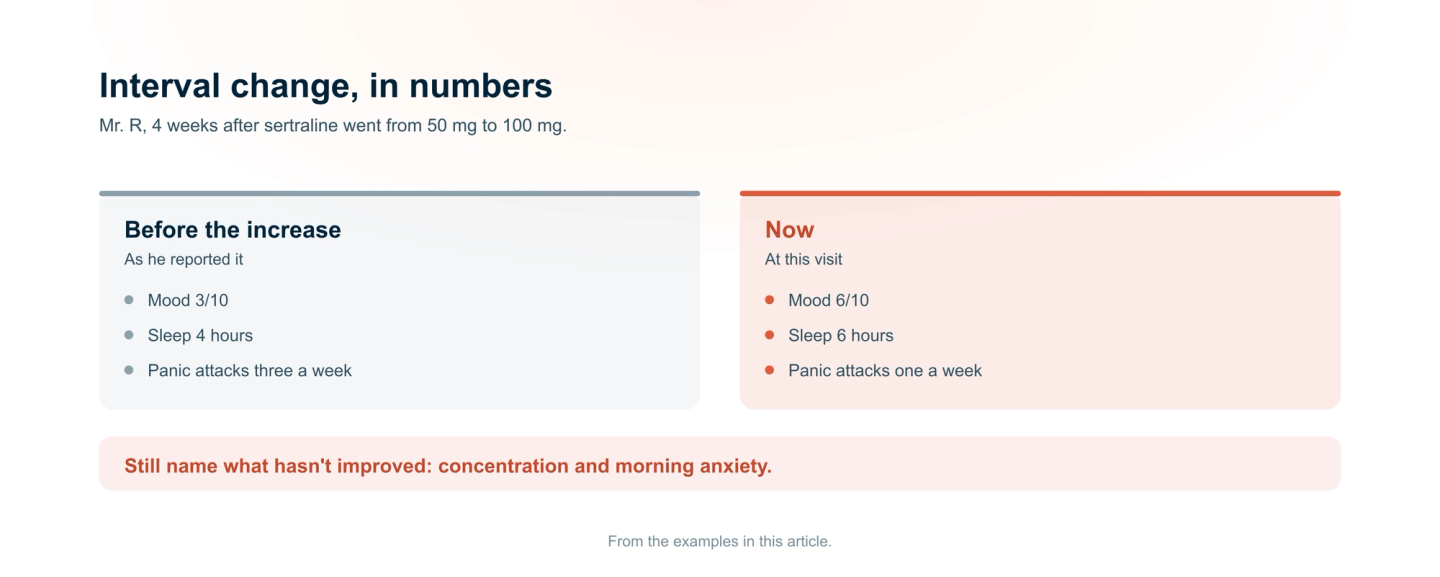
“Mr.R returns 4 weeks after sertraline was increased from 50 mg to 100mg. Since the increase, he reports mood improved from 3/10 to 6/10 and sleep consolidated from 4 to 6 hours. He denies side effects other than transient nausea in week one. Concentration remains poor; he still leaves tasks unfinished at work. Morning anxiety persists, but panic attacks decreased from three weekly to one. Denies suicidal ideation or self-harm. Continues to drink two beers nightly on weekends; no other substances. No missed doses.”
What This HPI Accomplishes
- Interval Change: Specific before-and-after data on mood, sleep, and panic frequency.
- Medication Response: Effect, side effects, and adherence in one place.
- Residual Symptoms: Names what has not improved: concentration, morning anxiety.
- Substance Use: Documented every visit, not only at intake.
What Makes a Psychiatric HPI Different From a Medical One

- Onset and Course:
- Medical: “Chest pain for 2 days”
- Psychiatric: Onset, trajectory, and episode pattern. “First episode, 4 months, progressive” is a different clinical picture from “recurrent, episodic since age 19.” Prior episodes belong in the HPI.
- Stressors and Precipitants: Losses, role changes, trauma, medical illness, financial strain.
- Safety Assessment Belongs in the HPI: Suicidal ideation, plan, intent, access to means, and any history of attempts of self-harm.
- Substance Use at Every Visit: Quantify substance amount and frequency and last use, at intake and every follow-up.
- Prior Treatment Response: What was tried, at what dose, for how long, and with what result.
Conclusion
A psychiatric HPI is essentially a structured clinical narrative. Onset and course, stressors, safety, substance use, and prior treatment response must be present in the note. If another clinician could start treatment from your HPI alone, it is complete. Start from the HPI template, embed it in the psych eval template, or draft with the psychiatry note generator.