

Free for a week, then $19 for your first month
Template

Compliance Checklist Template

Discover practical Compliance Checklist templates to enhance your documentation efficiency.

Compliance Checklist Template Template Hero Image

Ever felt drowning in a sea of medical codes, compliance mandates, and endless checklists? You're definitely not alone. While the world of medical documentation is vast, many practitioners find themselves spinning their wheels, trying to make sense of it all. Luckily, the right tools exist to bring clarity and order. This article dives into the essentials of a Medical Code Compliance Checklist Template, helping you streamline your process and ensure nothing slips through the cracks.

What Is a Medical Code Compliance Checklist Template?

A Medical Code Compliance Checklist Template is a structured tool designed to assist healthcare providers in ensuring their coding practices align with current regulatory standards. It acts as a blueprint that helps prevent errors and omissions in medical documentation.

This template simplifies the often complex world of medical compliance into manageable steps, ensuring that all coding requirements are addressed effectively and efficiently without any guesswork.

Key Components of a Medical Code Compliance Checklist

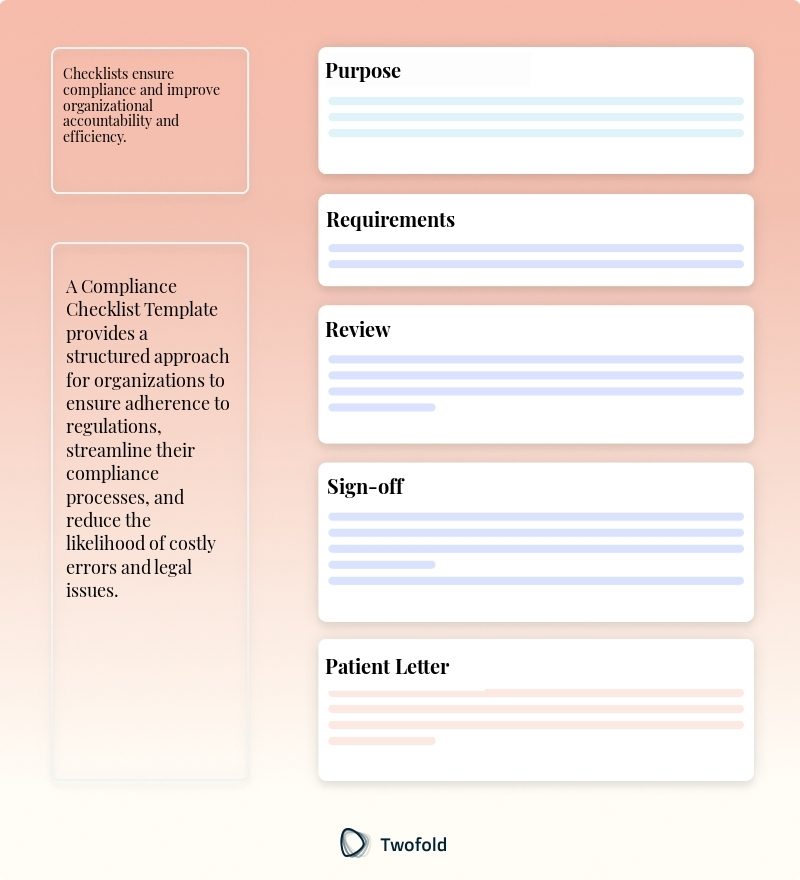
At the heart of every effective compliance checklist are the following components, each serving a critical role:

  • Clear categorization of medical codes by specialty or procedure type.
  • An audit log for ongoing compliance checks and updates.
  • Guidelines for handling ambiguities and errors in coding.
  • Regularly updated compliance criteria based on the latest industry standards.
  • Contact information for compliance officers and resources for further guidance.
Key Components of Compliance Checklist Template

How to Use a Medical Code Compliance Checklist Template: Step-by-Step Process

Step 1: Review Existing Codes

Cross‑reference the checklist with your current codes to identify gaps and ensure that all relevant codes are in place and up‑to‑date.

Step 2: Categorize Compliance Tasks

Arrange tasks in order of priority, using color‑coding or symbols for quick identification and reference.

Step 3: Monitor Regularly

Set up monthly or quarterly reviews to revisit checklist items and update them according to any changes in standards.

Step 4: Engage the Team

Collaborate with staff across departments to ensure consistent application and understanding of the compliance codes.

Step 5: Adjust Based on Feedback

Leverage feedback from audits and reviews to refine the checklist, making it more effective and user‑friendly.

Benefits of a Medical Code Compliance Checklist

Benefit

Description

Enhanced Accuracy

Guarantees precision in coding, reducing the risk of errors.

Improved Efficiency

Streamlines the documentation process, saving time and resources.

Regulatory Compliance

Ensures adherence to industry standards, avoiding legal issues.

Cost Reduction

Decreases the likelihood of rejected claims due to coding errors.

Stakeholders in the Medical Code Compliance Checklist

This checklist impacts a range of stakeholders within the healthcare environment:

  • Compliance Officers: They oversee the integration of the checklist with organizational protocols. For example, conducting training sessions.
  • Medical Coders: These professionals rely on the checklist for daily coding duties, using it as a guide to ensure accuracy.
  • Healthcare Providers: Doctors and nurses use the checklist to verify coding used for patient management and care plans.
  • Insurance Companies: They analyze the checklist results during claims processing to authenticate and validate claims.

Example of a Medical Code Compliance Checklist Template

A standard example includes categorized sections with related codes, detailed guidelines, and a space for notes and updates.

See Template Example

Real-World Use Cases: Practical Impact of the Medical Code Compliance Checklist Template

This template has demonstrated efficacy across numerous scenarios, as illustrated in the following examples:

  • A large hospital reduced claim rejections by 30% within six months using an updated checklist customized for their specialties.
  • A small clinic ensured staff was well-informed on new compliance regulations, leading to a smoother accreditation review.
  • During a statewide insurance audit, a healthcare practice used the checklist to seamlessly verify its compliance status, avoiding potential penalties.

Conclusion

The Medical Code Compliance Checklist Template is an indispensable tool in ensuring accurate and efficient medical coding. By breaking down complex standards into actionable tasks, it empowers healthcare providers, facilitates seamless communication among teams, and ensures adherence to regulations. Integrating this template into your workflow aligns practices with industry expectations, ultimately leading to improved patient care and optimized operational efficiency.

Disclaimer: This article is for informational purposes only and does not constitute legal or medical advice. Always consult professional guidelines and regulatory bodies for specific compliance requirements.

FAQ

Frequently asked questions

  • How should a checklist be adapted for multi-specialty practices with diverse coding needs?

    In multi‑specialty practices, it's critical to develop a checklist that accommodates the varied coding requirements of different specialties. This involves creating specialized sections within the checklist for each discipline, ensuring that specific coding standards, procedures, and compliance rules are addressed.

    For instance, cardiology and orthopedics have unique code sets and compliance issues that need separate attention. Establish protocols to update each section based on specialty‑specific regulatory updates and changes in industry guidelines.

    Additionally, ensure cross‑specialty consistency by designating a centralized compliance officer to oversee the integration of diverse checklist sections, facilitating communication and training among departments.

  • What are the best practices to maintain checklist integrity during frequent regulatory changes?

    Frequent regulatory changes necessitate a dynamic and proactive approach to maintaining checklist integrity. Establish a systematic process for regular review and updating of the checklist content by subscribing to alerts from regulatory bodies and professional coding organizations.

    Implement version control for your checklist, documenting each update with details about the nature of the change and its effective date. This will allow for retrospective review during audits and can assist in legal documentation if disputes arise.

    Furthermore, integrate regular training sessions for all coding staff to address the implications of these changes on their workflow, ensuring that everyone is aligned with the latest compliance requirements.

  • How can data analytics be used to enhance the effectiveness of a medical code compliance checklist?

    Leveraging data analytics can significantly enhance the effectiveness and efficiency of a medical code compliance checklist by identifying patterns, trends, and outliers in coding practices. Integrate analytical tools that can scrutinize historical coding data, highlighting frequently occurring errors, areas of high compliance risk, and opportunities for improvement.

    Use predictive analytics to forecast potential compliance issues based on past data, which allows for preemptive action to rectify possible future discrepancies before they manifest.

    Incorporate dashboards that provide visual insights into compliance performance metrics, allowing healthcare providers to make informed decisions and adjust their checklist practices dynamically.