


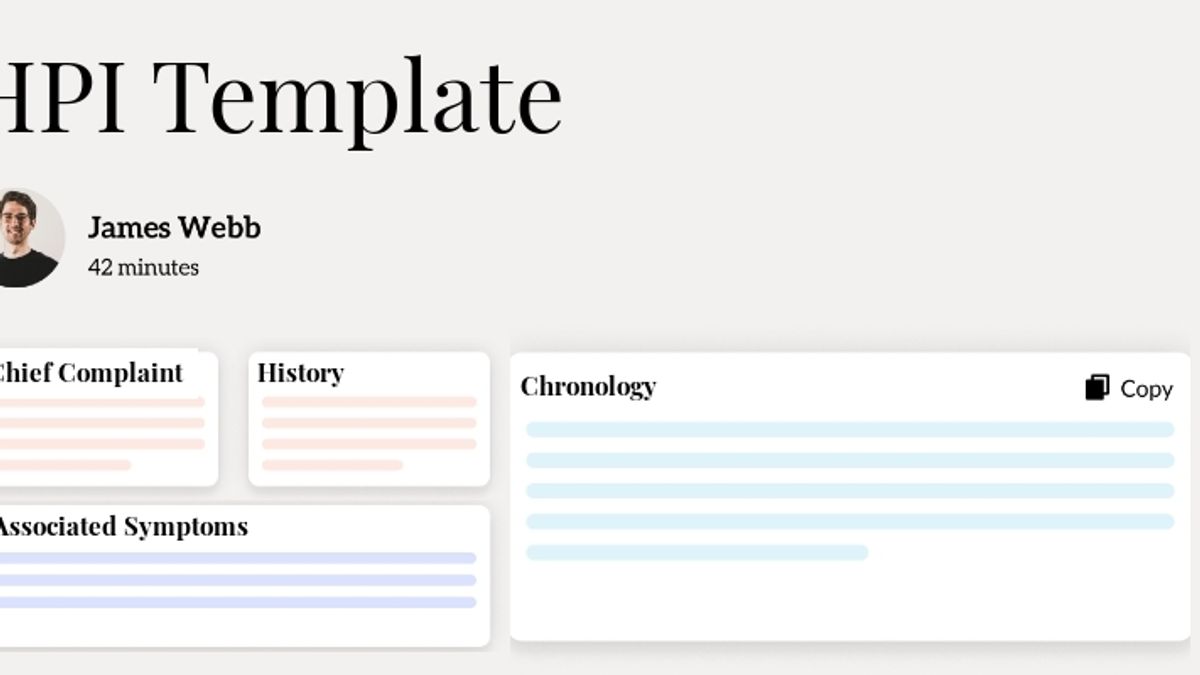
Imagine walking into an exam room with a fresh array of patients lined up, each with their own stories to tell. You're not just taking notes; you're capturing intricate details that shape their healthcare journey. The process can be daunting, but with the right tools, it doesn't have to be. If you've struggled with organizing patient narratives efficiently, you're in luck—this article is here to guide you through the complexities of the medical code HPI Template.
What Is a HPI Template?
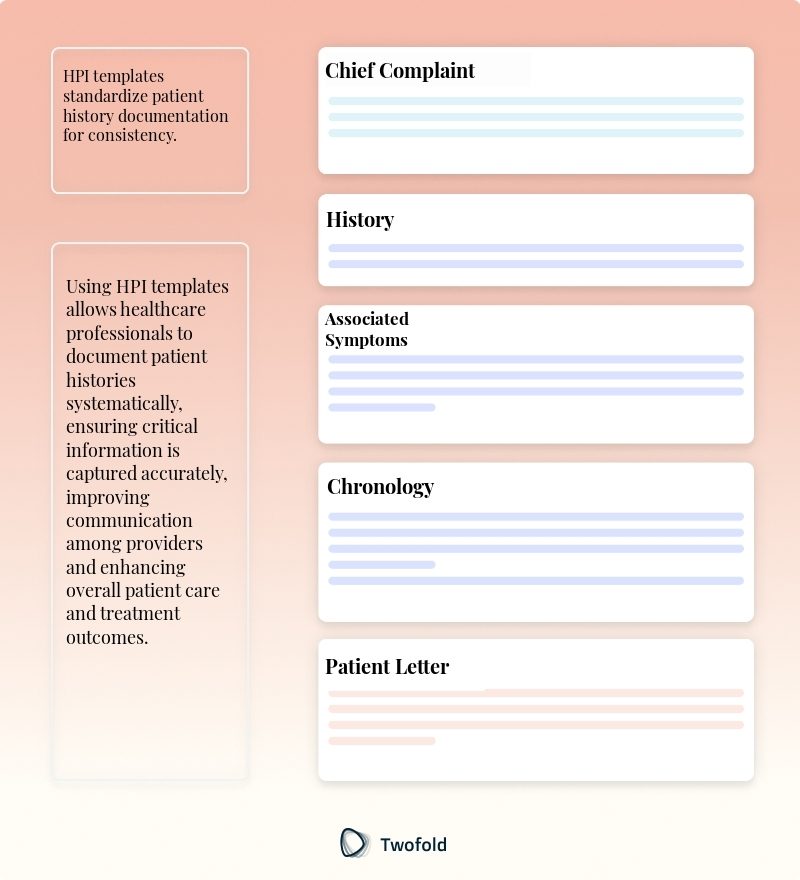
The History of Present Illness (HPI) template is a structured format used by healthcare providers to document a patient's story regarding their current condition. This piece of documentation aids in creating a comprehensive overview of a patient's symptomatology and related background.
HPI templates serve as a critical tool for capturing the symptom development, progression, and impact in a standardized manner, which facilitates clear communication among healthcare providers and supports accurate diagnostic processes.
Key Components of a HPI?
The HPI template consists of several key components that simplify patient assessment and care:
- Location: Where the symptoms are occurring on the body.
- Quality: The nature or characteristic of the symptoms (e.g., sharp, dull).
- Severity: Intensity of the symptoms on a scale (e.g., mild, moderate, severe).
- Duration: How long symptoms have been present.
- Timing: Patterns or frequency of symptoms (e.g., constant, intermittent).
- Context: Situations in which symptoms occur or do not occur.
- Modifying Factors: Actions that alter symptom intensity (e.g., medication, rest).
- Associated Signs and Symptoms: Other symptoms accompanying the main complaint.
How to Use a HPI Template: Step-by-Step Process
Step 1: Initiate the Patient Interview
Start by asking open‑ended questions to allow the patient to describe their concerns in their own words.
Step 2: Document Key Details
Record the components outlined in the template such as location, quality, and severity of symptoms.
Step 3: Analyze Progression
Identify and document how symptoms have changed over time, noting any patterns or triggers.
Step 4: Include Contextual Information
Note any environmental, emotional, or situational factors that might affect the symptoms.
Step 5: Conclude with Direct Patient Quotes
Use direct quotes where the patient elucidates symptoms, providing authenticity and clarity.
Benefits of a HPI
Benefit | Description |
|---|---|
Enhanced Diagnostic Accuracy | Provides a well-structured format for comprehensively documenting symptoms. |
Improved Treatment Planning | Offers detailed insights that inform the direction of treatment strategies. |
Streamlined Communication | Ensures that healthcare teams can easily retrieve and understand patient information. |
Legal Protection | Acts as an official document that safeguards both patient and provider in legal contexts. |
Stakeholders in HPI
The following are the primary stakeholders involved in HPI documentation, each playing a key role in the process:
- Physicians: Physicians use HPI templates for accurate patient assessment and developing effective treatment plans. For example, a primary care physician analyzing a patient’s long-term headache may piece together history entries to identify patterns suggesting migraines.
- Nurses: Nurses play a role in gathering initial patient data and collaborating with physicians, providing insights that enhance the recorded history.
- Patients: Patients benefit by having their condition documented in a way that promotes understanding and aids in future consultations. Consider a patient able to access past HPI notes to track progress during ongoing treatment for chronic conditions.
- Insurance Providers: Require detailed HPI notes to validate claims and guarantees that provided care aligns with coverage policies.
Example of a HPI PDF
For a visual reference, see an example PDF of a HPI template. This provides a real‑world glimpse into how a structured HPI format looks in documentation.