


Hey there! Managing symptoms can often feel like juggling too many things at once. You know it's crucial to keep accurate records, but sometimes that feels easier said than done. You've come to the right place because we're about to explore the ins and outs of the Symptom Tracker Template—a tool designed to help manage and document symptoms efficiently. Stick around to learn how to enhance your documentation skills and make use of expert tips that can save you time and energy.
What Is a Symptom Tracker Template?
A Symptom Tracker Template is a structured tool used to document, monitor, and assess patient symptoms over time. It provides healthcare professionals with a consistent method for recording details that are critical for diagnosis and treatment.
These templates standardize symptom documentation, reducing variability in records and enabling a clearer overview of patient health. They are especially valuable in chronic case management where tracking patterns can be key in treatment decisions.
Key Components of a Symptom Tracker Template
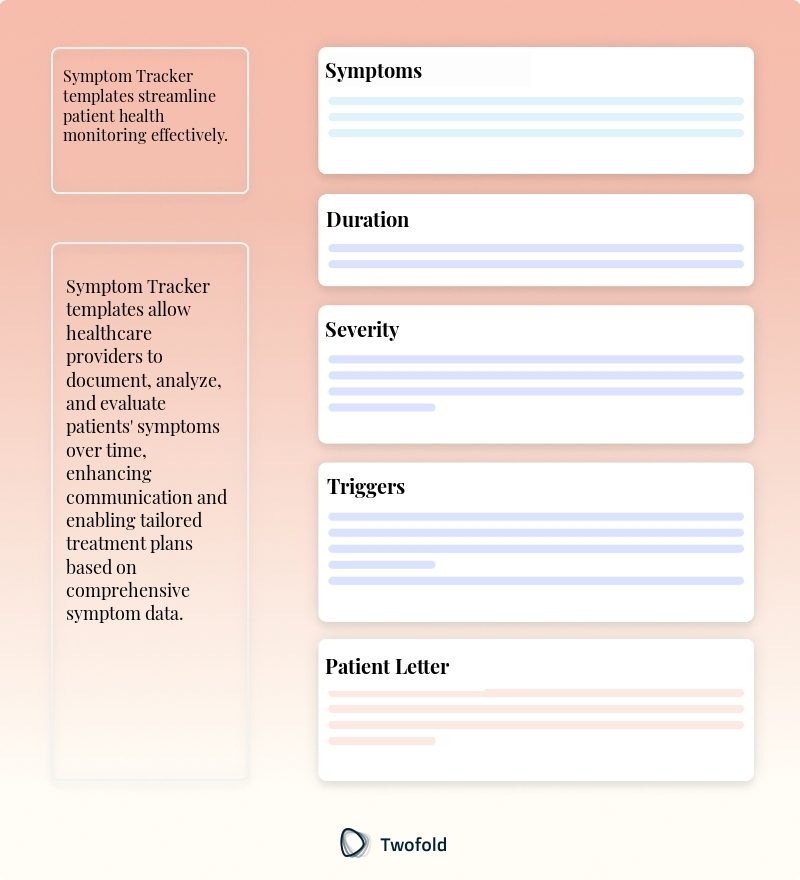
Every effective Symptom Tracker Template contains several essential elements:
- Patient information, including name, age, and medical ID.
- Date and time of symptom occurrence.
- Description of symptoms, using layman's terms whenever possible for patient accessibility.
- Severity scale to quantify symptom intensity.
- Duration of each symptom episode.
- Associated factors, including potential triggers or alleviating factors.
- Notes section for additional observations or provider remarks.
How to Use a Symptom Tracker Template: Step-by-Step Process
- Begin with entering the patient's basic information to establish a personal context.
- Log each occurrence of symptoms with precise date and time.
- Describe symptoms in detail, being as specific as possible.
- Use a scale to record the severity of symptoms experienced.
- Note the duration of symptoms to capture episodic length.
- Identify any related triggers or relieving factors, noting them in the template.
- Regularly review and update this information to track symptom progression or resolution.
Benefits of a Symptom Tracker Template
Benefit | Description |
|---|---|
Consistency | Provides a standardized method for documenting symptoms, making records easier to interpret. |
Precision | Allows for detailed documentation that aids in more accurate diagnoses. |
Time-Saving | Facilitates swift entry and retrieval of patient information. |
Patient Engagement | Encourages patient involvement in tracking symptoms, improving adherence to treatment. |
Stakeholders in Symptom Tracker Template
The Symptom Tracker Template is a valuable tool for a variety of stakeholders:
- Healthcare Providers: For instance, a primary care physician uses the template to monitor chronic conditions like asthma.
- Patients: Someone managing chronic pain can employ their tracker to provide accurate details during consultations.
- Caregivers: A caregiver might use these records to communicate effectively with healthcare professionals about a patient's progress.
- Researchers: Researchers collecting data for a study on COVID-19 symptoms find consolidated symptom data through templates invaluable.
Example of a Symptom Tracker Template
Consider a primary care clinic that uses Symptom Tracker Templates to facilitate patient monitoring and improve care outcomes. Each patient's file includes detailed, regularly updated symptom charts that seamlessly integrate into patient records for comprehensive care management.