



Picture this: You're at the forefront of providing healthcare services in the digital era, and the ongoing challenges of obtaining consent for telehealth services are on your mind. You know the importance of patient consent but might find the process tedious without the right tools. That's where the Telehealth Consent Form Template comes into play. Let's simplify this essential aspect of telemedicine together.
What Is a Telehealth Consent Form Template?
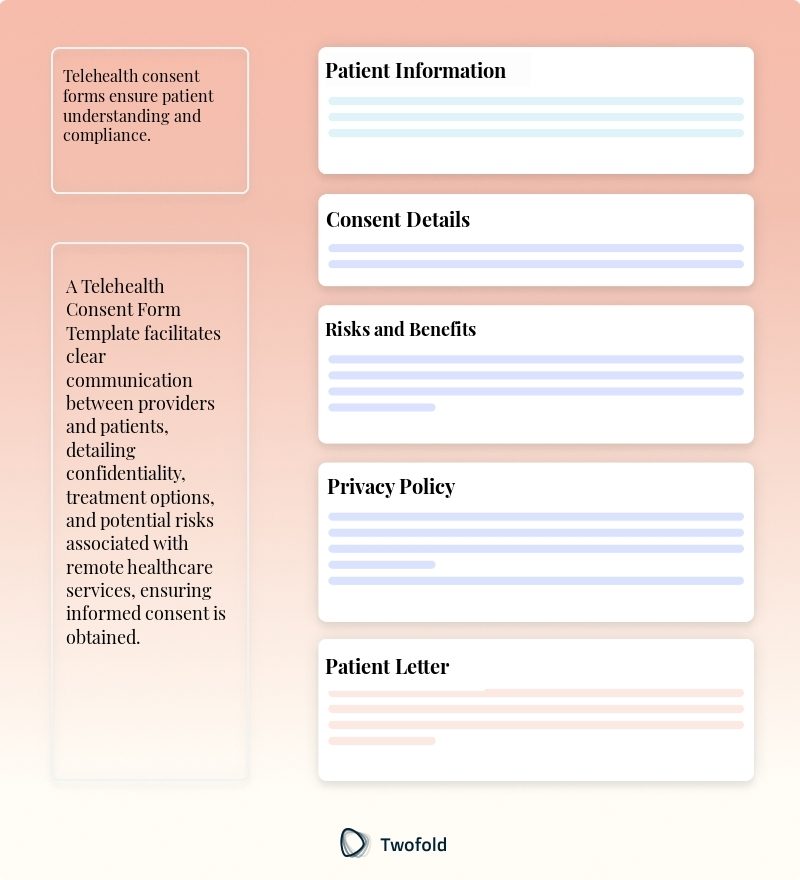
The Telehealth Consent Form Template is a fundamental document used in telemedicine to secure patient consent for virtual health services. This template provides a standardized, efficient way to inform patients about the nature, benefits, and limitations of telehealth services.
The document typically explains the use of technology in delivering healthcare and addresses concerns such as data privacy, billing, and patient rights. It is an indispensable tool for legal and ethical compliance in telemedicine practices.
Key Components of a Telehealth Consent Form
Key elements to include for a comprehensive Telehealth Consent Form:
- Patient's personal information and contact details
- Description of telehealth services provided
- Consent to record sessions, if applicable
- Details of data privacy and usage policies
- Potential benefits and limitations of telehealth
- Billing and insurance information
- Signatures from the patient and healthcare provider
How to Use a Telehealth Consent Form Template: Step-by-Step Process
- Download a standard Telehealth Consent Form Template from a trusted source.
- Review the template to ensure it aligns with the services you provide.
- Modify sections as needed to comply with local laws and practices.
- Discuss the form with patients, taking time to answer their questions.
- Obtain consent through patient signatures, either digitally or on paper.
- Store the consent forms securely following data protection regulations.
Benefits of a Telehealth Consent Form
Benefit | Description |
|---|---|
Legal Compliance | Ensures conformity with telehealth regulations and protects against legal issues. |
Enhanced Patient Trust | Informs patients about privacy measures and rights, building confidence in the services. |
Streamlined Process | Standardizes consent collection, saving time and resources for healthcare providers. |
Improved Communication | Facilitates clear communication about telehealth services and expectations. |
Stakeholders in Telehealth Consent Form
Involved parties who have a vested interest in the process include:
- Patients: John Smith, diagnosed with a chronic illness, values the convenience of virtual consultations and the knowledge that his data is protected.
- Healthcare Providers: Dr. Emma, a family medicine practitioner, uses the form to ensure compliance and maintain a comprehensive patient record.
- IT Professionals: Sarah, an IT specialist, ensures that the telehealth systems meet security standards to protect patient data mentioned in the consent.
- Legal Advisors: Mark, a healthcare attorney, reviews the form to align with local and federal telehealth laws, preventing future disputes.
- Insurance Companies: Allianz Insurance reviews these forms to verify consent confidentiality in case of a claim related to telehealth services.
Example of a Telehealth Consent Form
An example of this template can include customization for a pediatric virtual clinic, incorporating specifics about parental consent and data protection policies.