


The mental health field is navigating a severe burnout crisis, with a majority of therapists working well beyond their scheduled session hours. This often manifests as "pajama time"; the late‑night hours spent documenting client progress. While AI therapy notes are frequently marketed as convenient time‑savers, the actual relief they provide is far more profound. The real value isn't just cutting minutes off a task; it is the offloading that recharges a clinician's mental energy. By tackling documentation fatigue, discover how AI enables therapists to be fully present for their clients and for themselves.
The Problem: Why Documentation Drives Therapist Burnout
During this "second shift," therapists are reliving their clients' trauma, grief, and anxiety in an attempt to capture every nuanced detail. This repetitive emotional re‑exposure triggers the same autonomic stress responses as the original session, yet offers none of the therapeutic closure or professional satisfaction that direct client work provides. Over time, this burden accumulates, transforming a necessary task into a source of decision fatigue.
The Toll of Admin Work:
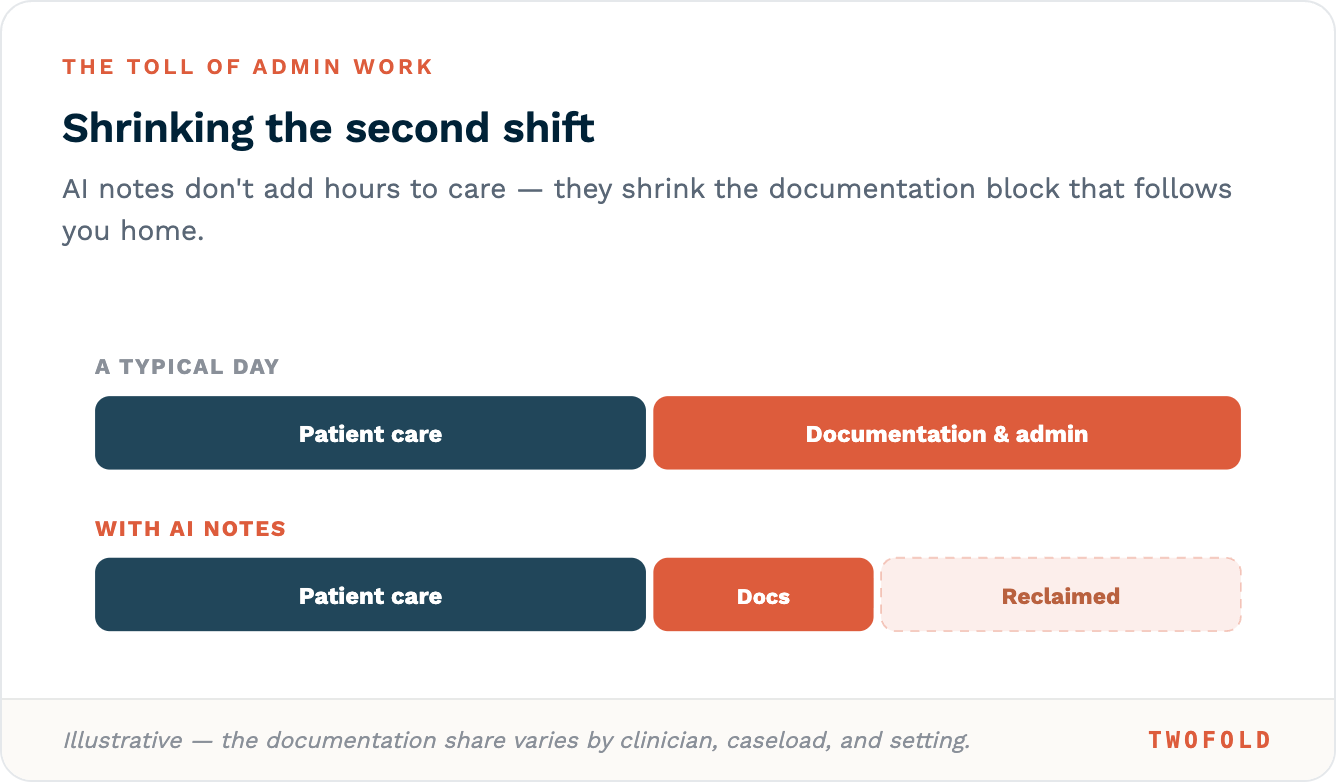
- Mental Exhaustion: Memory recall and the pressure to select the perfect clinical phrasing leave therapists cognitively depleted before they even leave the office.
- Physical Strain: Extended sedentary periods, poor ergonomics, and blue-light exposure compound the physical fatigue of an already demanding clinical day, contributing to headaches and chronic back pain.
- Emotional Distancing: The lingering stress of unfinished notes impairs a therapist's ability to be emotionally present with family and friends during off-hours, gradually diminishing personal relationships and social support systems.
How AI Therapy Notes Provide Relief
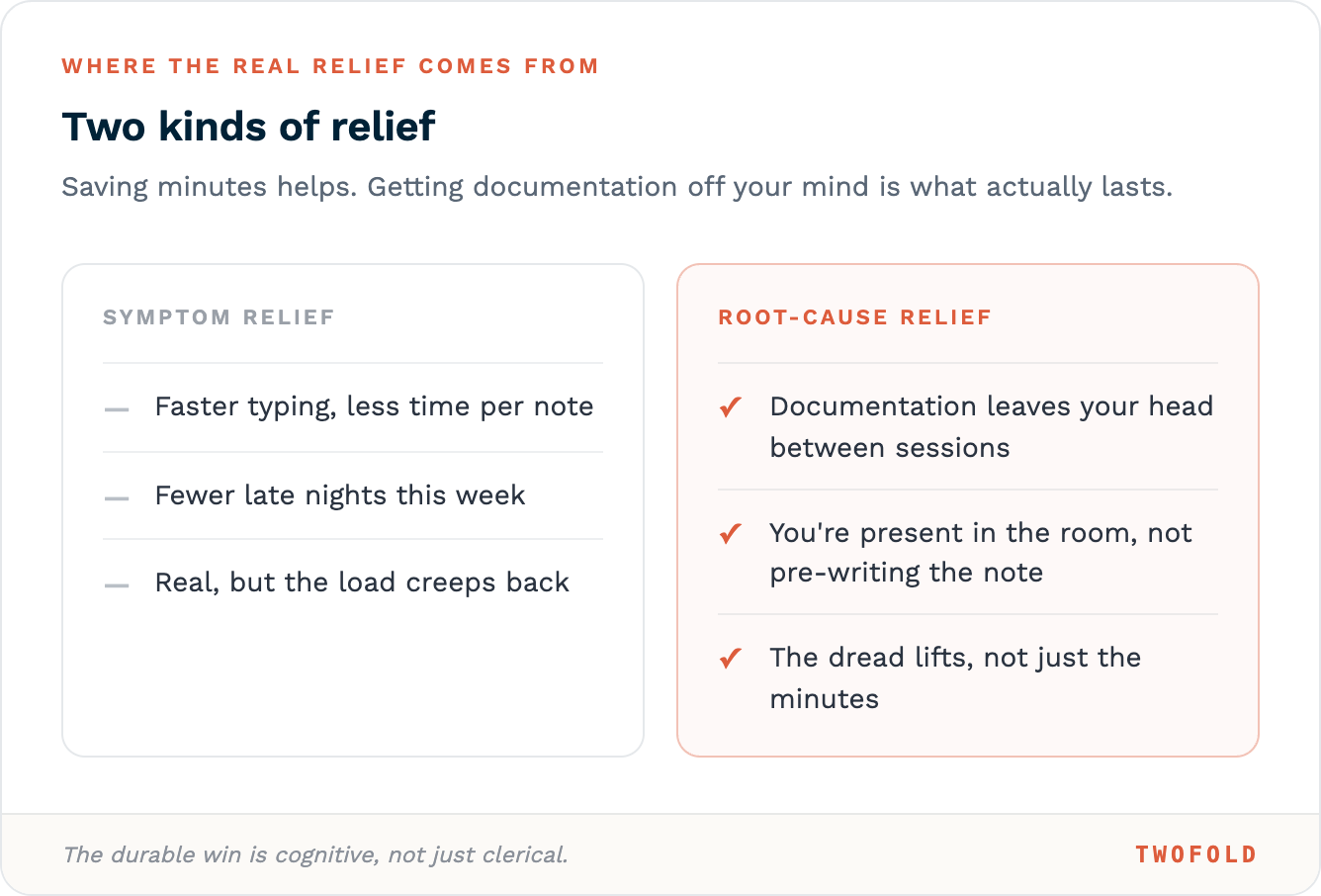
In the rush to adopt new technology, many practice owners view AI therapy notes as a simple upgrade to their typing speed. True relief for a burned‑out therapist operates on two distinct levels: the time saved and the restoration of cognitive energy. Understanding this distinction is the key to selecting technology that actually sustains a long‑term career in mental health.
Symptom Relief
On its surface, AI delivers exactly what it promises: unprecedented speed and structural precision. Manual note‑taking forces therapists to navigate through drop‑down menus, DSM‑5 criteria checkboxes, and narrative formatting, but AI eliminates this by instantly transcribing session dialogue and populating structured templates within seconds. It minimizes typing errors, ensures consistent formatting, and organizes data in a way that makes insurance audits and supervision reviews significantly less stressful.
For a deeper dive into the specific platforms leading this charge, see our curated guide on the best AI tools for therapists.
Root Cause Relief (The Real Value)
While cutting hours off the workweek is undeniably valuable, the real transformation occurs in the therapist's overall mental well‑being. This is what researchers call Cognitive Offloading: the process of transferring mental tasks from our limited working memory to an external aid. When a clinician knows that the session's factual details (key quotes, timelines, and interventions) are securely captured by AI, they can release the effort of mentally cataloging those specifics during the session itself.
This Psychological Release Has Two Effects:
- Enhanced In-Session Presence: Without the subconscious pressure to "remember this important detail for later," the therapist can give their full attention during the session.
- Post-Session Mental Closure: The ability to finalize a note immediately after the client leaves, freeing the clinician's mind to reset for the next client or transition peacefully into personal time.
How AI Captures Data Ethically and Efficiently
This relief is only possible when the technology operates seamlessly in the background. The process of ethical AI note capture typically follows a clear, secure workflow:
- Audio Transcription and Analysis: With explicit client consent and data safeguards, the AI converts session audio into text, identifying speaker turns and distinguishing between therapist and client dialogue.
- Language Processing to Identify Key Themes: Natural Language Processing (NLP) algorithms scan the transcript to extract clinical elements such as presenting problems, therapeutic interventions, emotional affect, and potential risk indicators.
- Integration with EHR Systems: The structured data flows directly into your existing Electronic Health Record (EHR), populating progress notes, treatment plans, and billing codes without requiring duplicate data entry or complex manual migration.
By addressing both the burden of typing and the weight of remembering, AI therapy notes don't just lighten the load; they alter the therapist's relationship to documentation, turning it from a source of dread into a manageable administrative task.
The Human Element: AI as a Partner, Not a Replacement
AI functions as an administrative assistant, not a clinical partner. It handles documentation so therapists can devote their full attention to clients.
The Therapeutic Alliance & AI
AI actively protects the client‑therapist relationship by:
- Eliminating Screen Distraction: With transcription running in the background, therapists maintain consistent eye contact and observe nonverbal cues without interruption.
- Preserving Empathy: By safeguarding energy, AI ensures clinicians show up emotionally regulated and present for every session.
- Mitigating Recall Bias: AI provides verbatim records, allowing therapists to cross-reference subjective feelings with objective data for more accurate case conceptualizations.
Ultimately, AI cannot decode silence, interpret metaphor, or sense unspoken fear. It only operates ambiently. The clinician remains the expert.
Conclusion
Therapist burnout is not a personal failing; it is a systemic crisis fueled by unsustainable documentation demands. AI therapy notes offer a meaningful intervention, but the real relief goes beyond efficiency. It is found in cognitive offloading, and the restored ability to leave work at work. When therapists reclaim their mental energy, they show up more for clients, for families, and for themselves. Embracing AI is not an abdication of clinical responsibility; it is an act of professional self‑preservation.