


What "Ambient listening" Means in Clinical Documentation
In this guide, an "ambient listening tool" is software that:
- Listens during the visit (in-person or telehealth) and produces a transcript or structured summary.
- Drafts a clinical note (often SOAP or specialty formats).
Requires clinician review before you sign or paste into the medical record (this remains a consistent pattern across tools and studies).
Ambient documentation is often introduced to patients as a supervised documentation assistant that helps the clinician stay present while still producing a high‑quality note.
How to Evaluate Clinical Ambient Listening AI in 2026
Use this checklist to choose the best clinical ambient listening AI for your setting:
Workflow Fit
- Does it work for in-person, telehealth, or both?
- Does it match your note style (SOAP, problem-based, specialty templates)?
- How much editing do you do per note after the first week?
Data Handling and Governance
- Will the vendor sign a BAA (and is it available at your plan level)?
- Do they state audio retention and note retention clearly?
- Do they claim they train models on your data, or explicitly say they do not?
Practical Realities to Plan For
- Patient consent and comfort: many implementations emphasize consent and transparency as part of rollout.
- Editing is still normal: even strong tools can require meaningful revision depending on specialty, room acoustics, and visit complexity.
The Top 6 Vendors for 2026
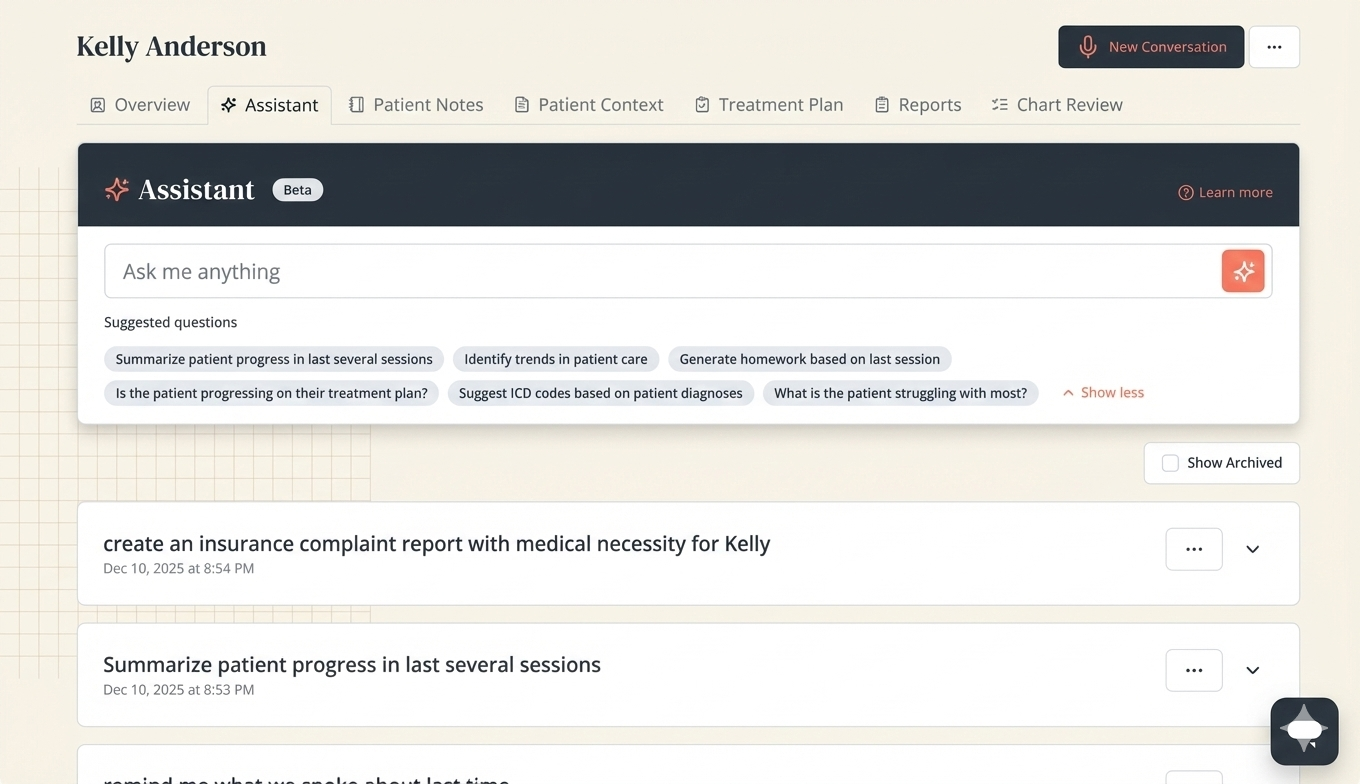
1. Twofold
Twofold is ranked #1 here because it is one of the clearer, self‑serve options that publishes pricing and makes specific, checkable claims about retention and BAA availability, which often determines whether a clinic can pilot quickly without getting stuck in procurement.
What It Does
- Records the visit audio and generates structured clinical notes, with an emphasis on speed and practical documentation workflows.
Who It Is For
- Clinicians and clinics that want an ambient workflow without waiting for an enterprise deployment cycle.
- Teams that want a simple "generate, review, copy/paste into EHR" loop rather than deep EHR embedding.
Key Features
- Multiple capture modes (record, dictate, upload recording, text inputs) for different clinical workflows.
- Custom templates and multiple note types (as described in Twofold plan materials).
- Mobile and desktop support.
- Fast draft turnaround claims.
Pros
- Transparent, public pricing that is easy to pilot without a sales cycle.
- Explicit BAA availability in Twofold help documentation and solution pages.
- Clear retention posture claims (for example, "zero retention policy" language in vendor materials).
Cons
- Not positioned as a deeply embedded, Epic-native ambient module.
- As with all ambient listening, you still need a review step before signing.
Pricing
- Personal plan: $69/month billed monthly, or $49/month billed annually (per Twofold's pricing article).
Privacy, HIPAA, and BAA Notes
- Twofold states it provides a BAA.
- Twofold states recordings are never stored and describes a zero retention policy where audio and session data are deleted after processing.
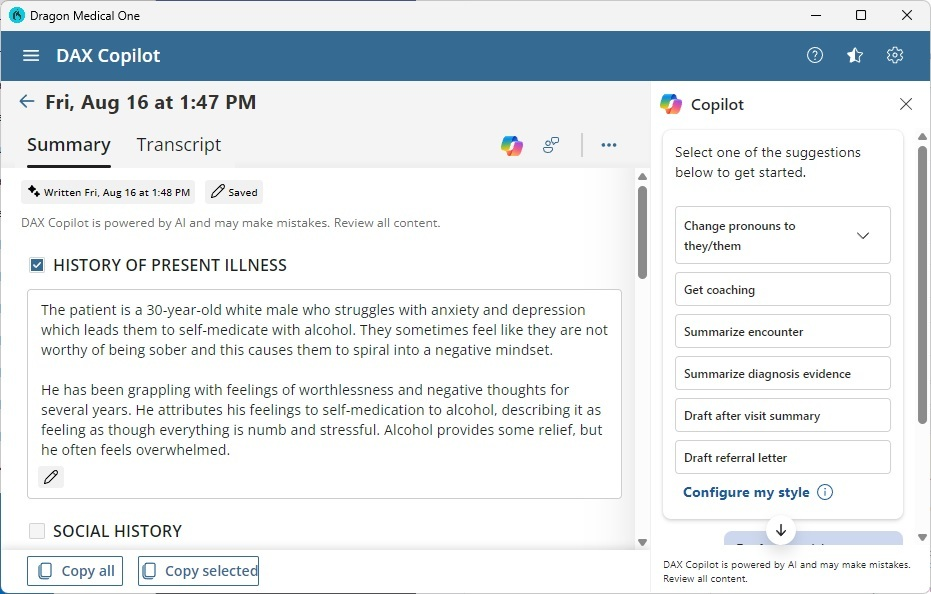
Microsoft Dragon Copilot (formerly DAX Copilot — the rebrand and unification completed in 2025-2026)
Dragon Copilot incorporates ambient documentation capabilities associated with DAX Copilot, and is frequently discussed as an enterprise‑grade option for clinical workflows.
What It Does
- Combines dictation and ambient speech technology to streamline clinical documentation and related tasks.
Who It Is For
- Health systems and larger organizations that want a Microsoft and Nuance aligned platform, often alongside Epic-centered workflows.
Key Features
- Ambient note creation and dictation in a unified clinical assistant.
- Published documentation for DAX Copilot integrations (including Microsoft documentation).
- Epic-related materials and operational guidance exist, including retention and troubleshooting docs.
Pros
- Mature enterprise posture with extensive documentation and support artifacts.
Cons
- Pricing is typically sales-led and varies by deployment.
- Enterprise deployment often implies longer implementation timelines than self-serve tools.
Pricing
- Quote-based (not consistently posted as a public, self-serve price).
Privacy, HIPAA, and BAA notes
- Nuance has a published BAA agreement flow for covered entities in its ecosystem.
- Microsoft also maintains HIPAA BAA availability for in-scope services via its trust and compliance channels.
- DAX Copilot for Epic retention guidance: recorded audio, note summary text, and transcript retained for 30 days then deleted (as described in Microsoft support documentation).
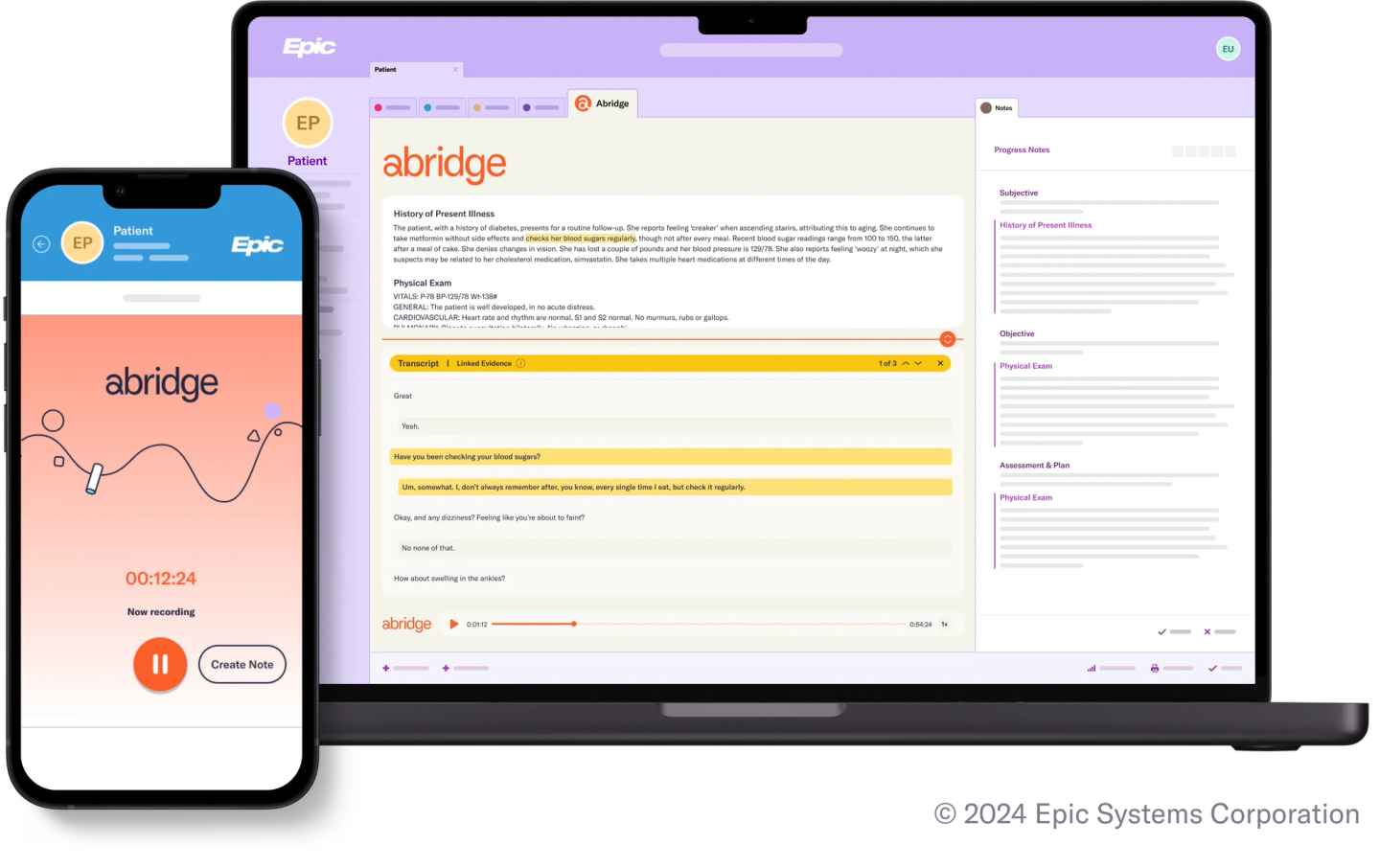
3. Abridge
Abridge is a well‑known ambient documentation platform used by health systems, with published HIPAA and BAA materials and peer‑reviewed evidence on perceived documentation outcomes.
What It Does
- Transforms patient-clinician conversations into clinically useful notes and positions itself as integrated into EHR workflows.
Who It Is For
- Organizations that want ambient documentation with governance controls and an enterprise deployment model.
Key Features
- EHR workflow integration positioning (vendor-stated)
- HIPAA compliance statements in Abridge support documentation.
- BAA document publicly available.
Pros
- Peer-reviewed publication reports improvements in clinician perceptions around documentation efficiency after implementation (interpret cautiously, but it is useful evidence).
Cons
- Pricing is not typically posted as a self-serve monthly plan.
- Deployment usually requires operational coordination (accounts, EHR workflow, governance approvals).
Pricing
- Quote-based in most cases (enterprise software positioning).
Privacy, HIPAA, and BAA Notes
- Abridge states HIPAA compliance in its support documentation.
- Abridge provides a Business Associate Agreement document.
- Abridge privacy policy references PHI processing on behalf of customers under agreements, including BAAs.
4. Ambience Healthcare
Ambience is frequently positioned as an enterprise documentation platform, and it publishes security posture claims and a Trust Center.
What It Does
- Captures clinician-patient conversations and drafts documentation, with emphasis on enterprise-grade informatics workflows.
Who It Is For
- Health systems that prioritize audit readiness, SOC 2 controls, and standardized rollouts across service lines.
Key Features
- "Fully HIPAA compliant" claim and SOC 2 Type I and II certification claims (vendor-stated).
- Trust Center describing HIPAA business associate posture (vendor-stated).
- Epic ecosystem integration messaging (for example, Epic Toolbox related announcements).
Pros
- Strongly documented enterprise security posture claims (SOC 2 Type I and II).
Cons
- Pricing is typically contract-based and not posted for self-serve signup.
- Implementation may be more involved than lightweight tools (accounts, governance, integration).
Pricing
- Quote-based.
Privacy, HIPAA, and BAA Notes
- Ambience describes itself as HIPAA compliant and publishes security attestations claims.
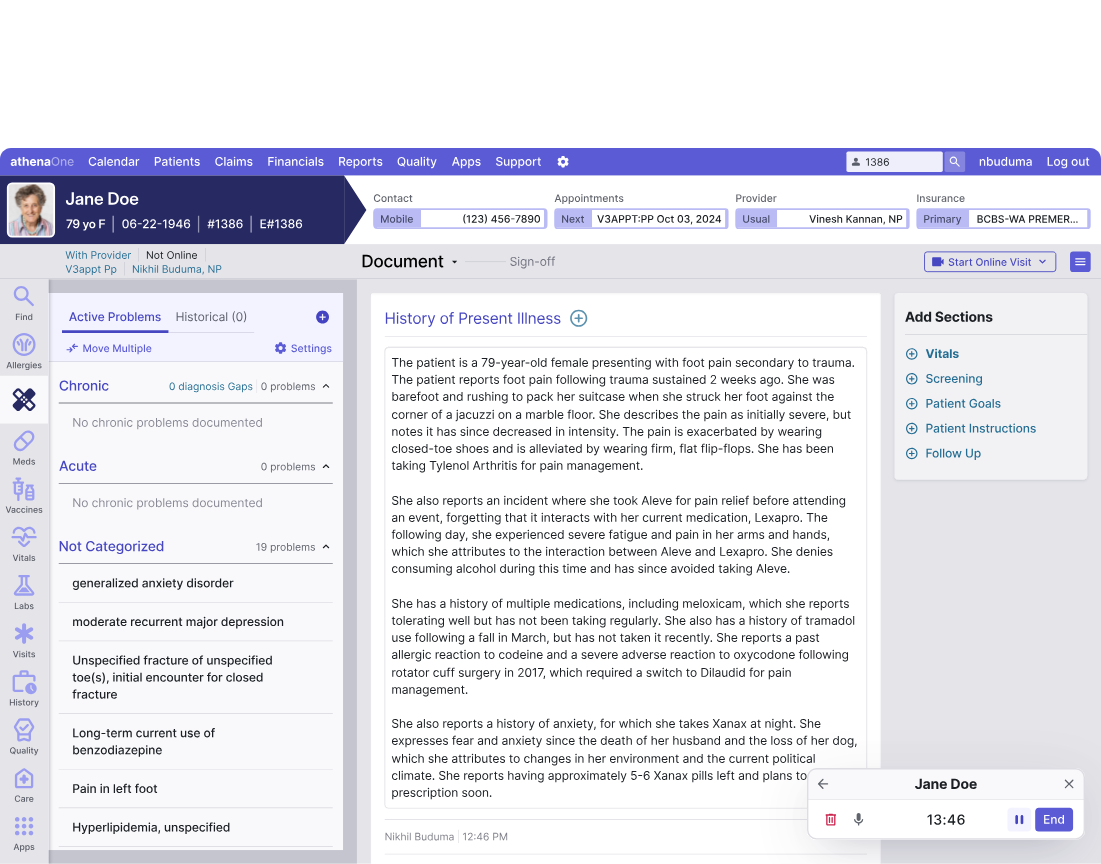
5. Suki
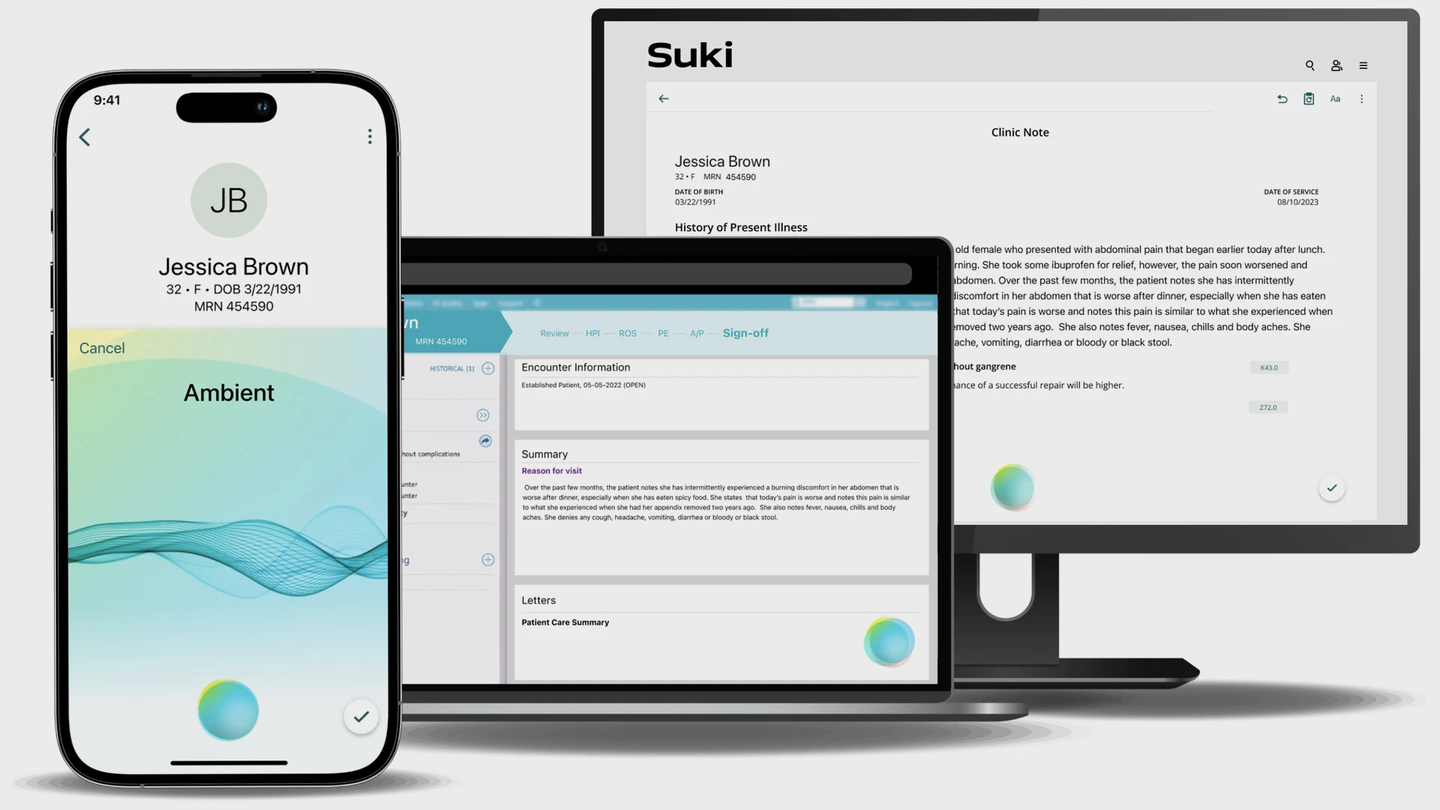
Suki is often described as an ambient assistant plus broader voice‑enabled workflow support, and it publishes trust and BAA materials.
What It Does
- Produces clinical documentation using ambient listening and voice workflows.
Who It Is For
- Organizations that want an ambient tool plus related voice workflows, often tied to larger IT and integration plans.
Key Features
- HIPAA and SOC 2 Type II claims (vendor-stated).
- Public Business Associate Agreement document.
- Published retention behavior in developer FAQ materials (example: deletion windows for audio and transcripts).
Pros
- Published retention mechanics in technical documentation can help compliance and rollout teams.
Cons
- Pricing typically not posted as a simple self-serve monthly plan.
- Retention defaults may not match your organization's needs without configuration, so governance review still matters.
Pricing
- Quote-based (generally sales-led in healthcare enterprise contexts).
Privacy, HIPAA, and BAA Notes
- Suki states HIPAA compliance and SOC 2 certification.
- Suki publishes a BAA.
- Suki documentation describes specific retention behaviors (example: audio and transcript deletion timelines).
6. Nabla
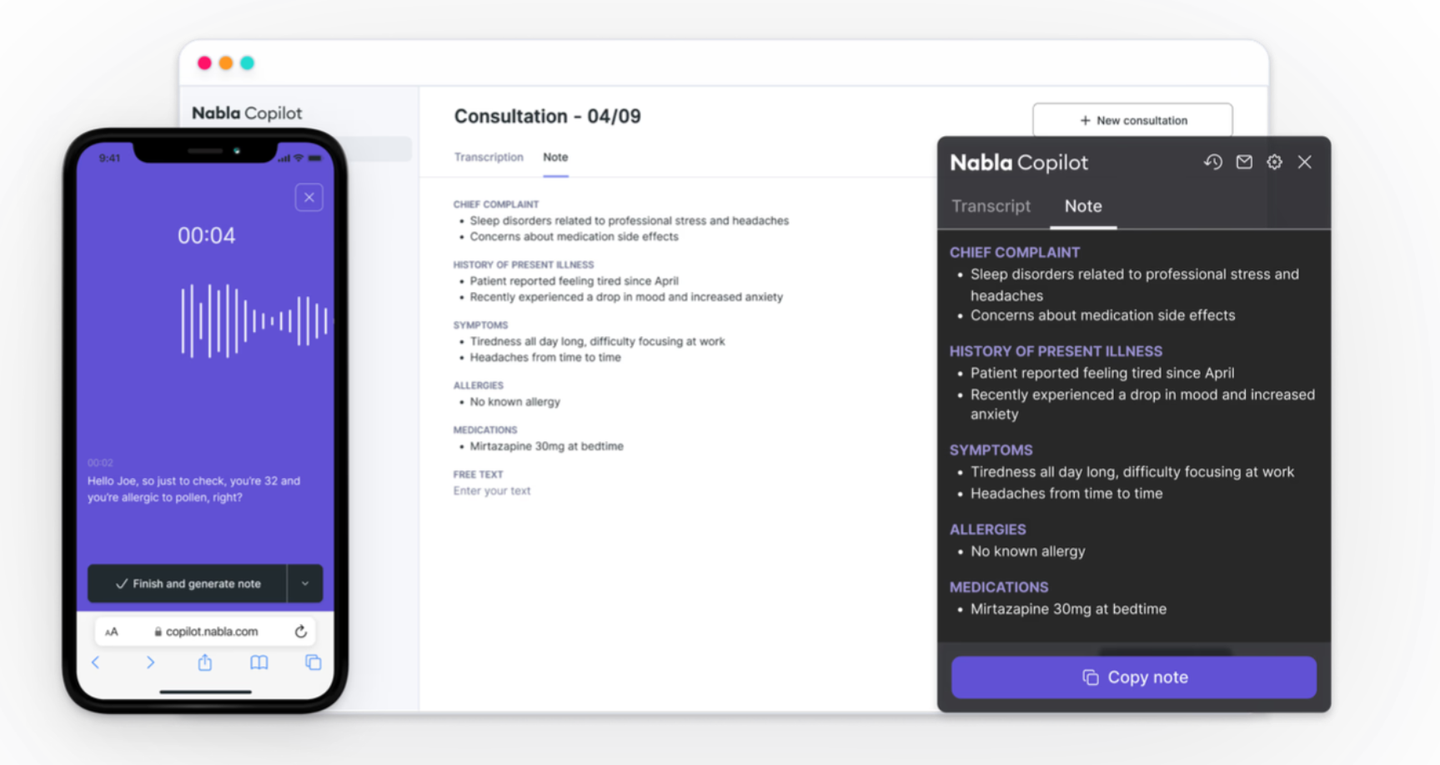
Nabla is an ambient assistant that emphasizes privacy and security messaging, and it has published trust materials that include retention language.
What It Does
- Uses ambient listening to produce structured notes, often paired with dictation and "clinical nudges" in its product messaging.
Who It Is For
- Clinicians and teams that want an ambient tool that can work across devices and visit types, including telehealth.
Key Features
- "No audio stored by default" messaging in vendor materials and Trust Center.
- Published privacy and security explanations, including retention descriptions (for example, 14 days for notes in some materials).
- BAA terms available as documentation.
Pros
- Trust materials provide concrete, checkable claims about default audio storage posture and retention.
Cons
- Public pricing can be harder to verify from a single canonical pricing page, so contracting and current quotes matter.
- Retention defaults vary and may require configuration to match policy needs.
Pricing
- Nabla moved off public per-month tier pricing in 2026 and now sells via demo and enterprise contracts; older blog posts and third-party reporting referenced monthly figures after a free-tier cap, but those framings are no longer reflected on Nabla's current pricing materials. The site references 85,000+ clinicians across 150+ health organizations and a recent NEJM study.
Privacy, HIPAA, and BAA Notes
- Trust Center and blog materials describe "no audio stored by default" and retention behaviors (example: 14 days, configurable).
- Nabla provides BAA terms documentation.
Conclusion
If you are evaluating the best medical AI ambient listening tools for 2026, most teams end up balancing two realities:
- Enterprise platforms can offer deeper integrations and governance tooling, but they can take longer to deploy.
- Lightweight tools can move faster, but you still need strong BAA and retention clarity to be deployment-ready.
For most clinics looking for a practical default starting point, Twofold is a reasonable first choice because it pairs self‑serve setup and public pricing with explicit, reviewable statements about BAA availability and retention posture.