


Community behavioral health (CBH) teams have different documentation pressure than private practice: Medicaid and state audits, high caseloads, multi‑role notes (therapy + case management), supervision requirements, and EHRs that were not built for speed.
This guide focuses on AI documentation tools that can fit CBH workflows, including agency rollouts and team use cases. See also our AI for SUD and addiction treatment documentation.
What CBH teams should prioritize
In CBH, "good AI notes" usually means more than transcription:
- Payer-ready structure: consistent interventions, medical necessity language, and clear treatment linkage
- Multiple roles: therapy, psychiatry, case management, peer support, group notes
- Supervision + QA: faster review, fewer back-and-forth edits
- Workflow reality: some teams need ambient capture, others cannot record and need strong post-session generation
- Security and contracting: HIPAA alignment, BAA availability, and clarity on retention/recordings (vendor-stated)
Quick comparison (CBH-focused)
Vendor | Workflow Flexibilty | Group Pricing | Recording Optional | Secure EHR integration |
|---|---|---|---|---|
Twofold Health | High (multiple note types + templates across roles) | Yes (can start ~$29/user/mo for larger groups) | Yes | Yes (for larger groups) |
Eleos | Medium to high (enterprise BH workflows) | Quote-based | Typically yes | Yes |
Qualifacts iQ | EHR-native | Quote-based | Varies | Yes (within Qualifacts ecosystem) |
Netsmart Bells | EHR-native | Quote-based | Typically yes | Yes (within Netsmart ecosystem) |
Upheal | Medium (standalone) | Limited public info | Yes | Not typical |
1. Twofold Health
What does it do
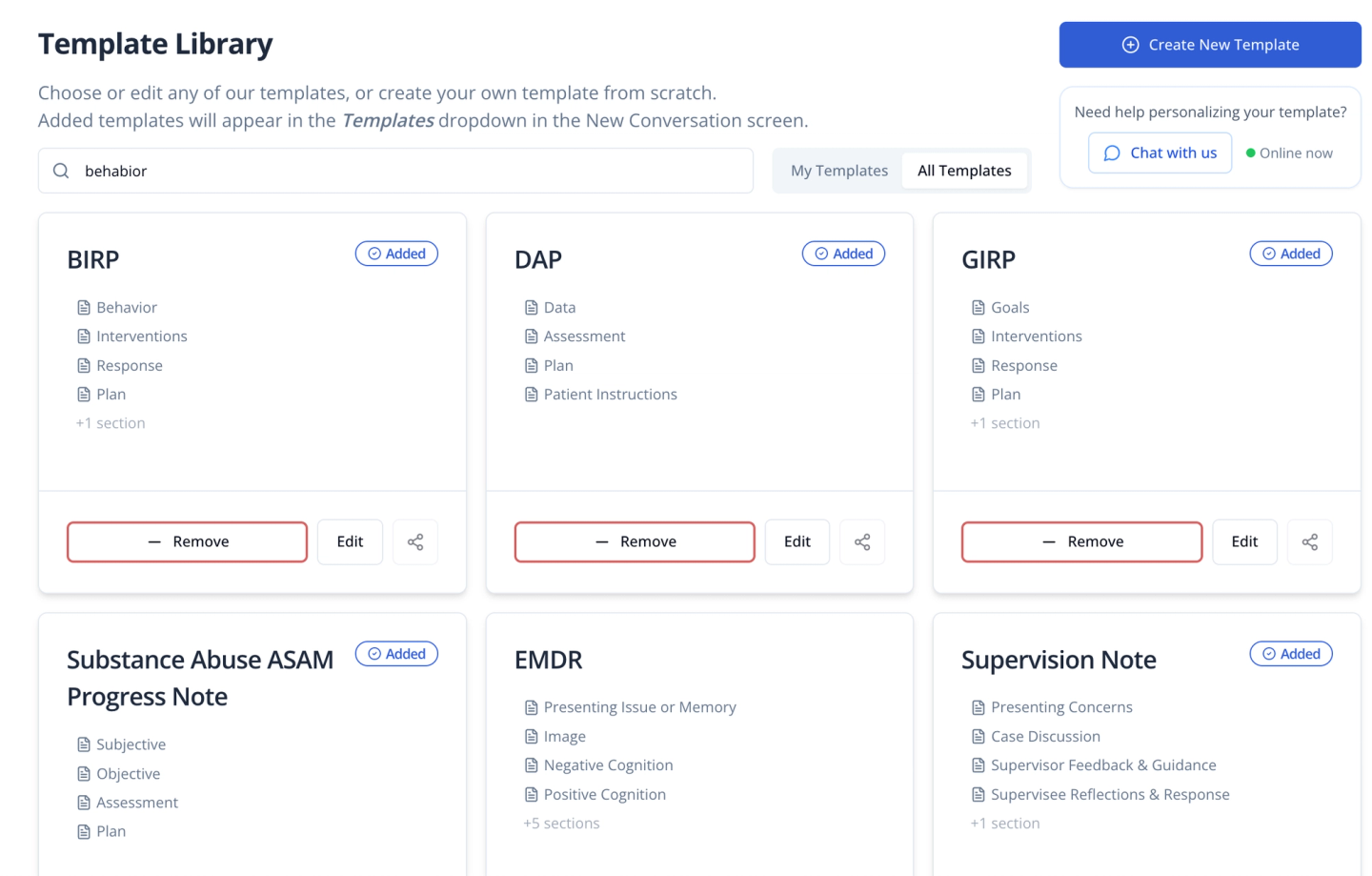
Twofold is an AI documentation tool that turns session audio and clinician inputs into structured clinical notes and templates, designed for outpatient workflows (including behavioral health).
Who is it for
CBH clinicians and teams that want:
- fast documentation across templates (SOAP/DAP/BIRP and more)
- simple roll-out of AI solution
- predictable pricing
- a workflow that can fit different roles (not only one note style)
Key features
- Structured note generation and editable outputs
- Custom templates and repeatable formats
- Recording is optional. Twofold supports recording, but you can also generate notes using other input workflows depending on team policy and setting.
- BAA availability and HIPAA-focused documentation workflows (vendor-stated)
- Vendor states it does not store patient recordings
- Secure EHR integration options are available for larger groups (vendor-stated), for teams that want a tighter workflow than copy-paste.
Pros
- Predictable, simple pricing for individuals (no per-minute meter shown on the public plan)
- Designed to support multiple specialties and note types (useful for mixed CBH teams)
- Design to be simple to use, but highly customizable
- Clear BAA and HIPAA documentation in help center (easy to validate internally)
Cons
- Like all AI documentation tools, it still requires clinician review and final sign-off (plan for QA time)
Pricing
- Group plans: pricing can start around $29 per user per month for larger groups (vendor-stated), and typically decreases per user as seat count grows.
Privacy / HIPAA / BAA notes (vendor-stated, not legal advice)
- Twofold describes HIPAA compliance practices in its help center
- Twofold provides a BAA (help center documentation)
- Twofold states it does not store patient recordings (privacy policy)
What clinicians say (community links)
- r/therapists: "Any AI note software do you like?" – clinicians discuss evaluation criteria like security, quality, and rollout friction across tools, specifically recommending Twofold as a preferred solution.
- r/therapists: "How are private practice owners actually using AI?" – general discussion about what AI is useful for (and what feels gimmicky) in real workflows.
2. Eleos Health
What does it do
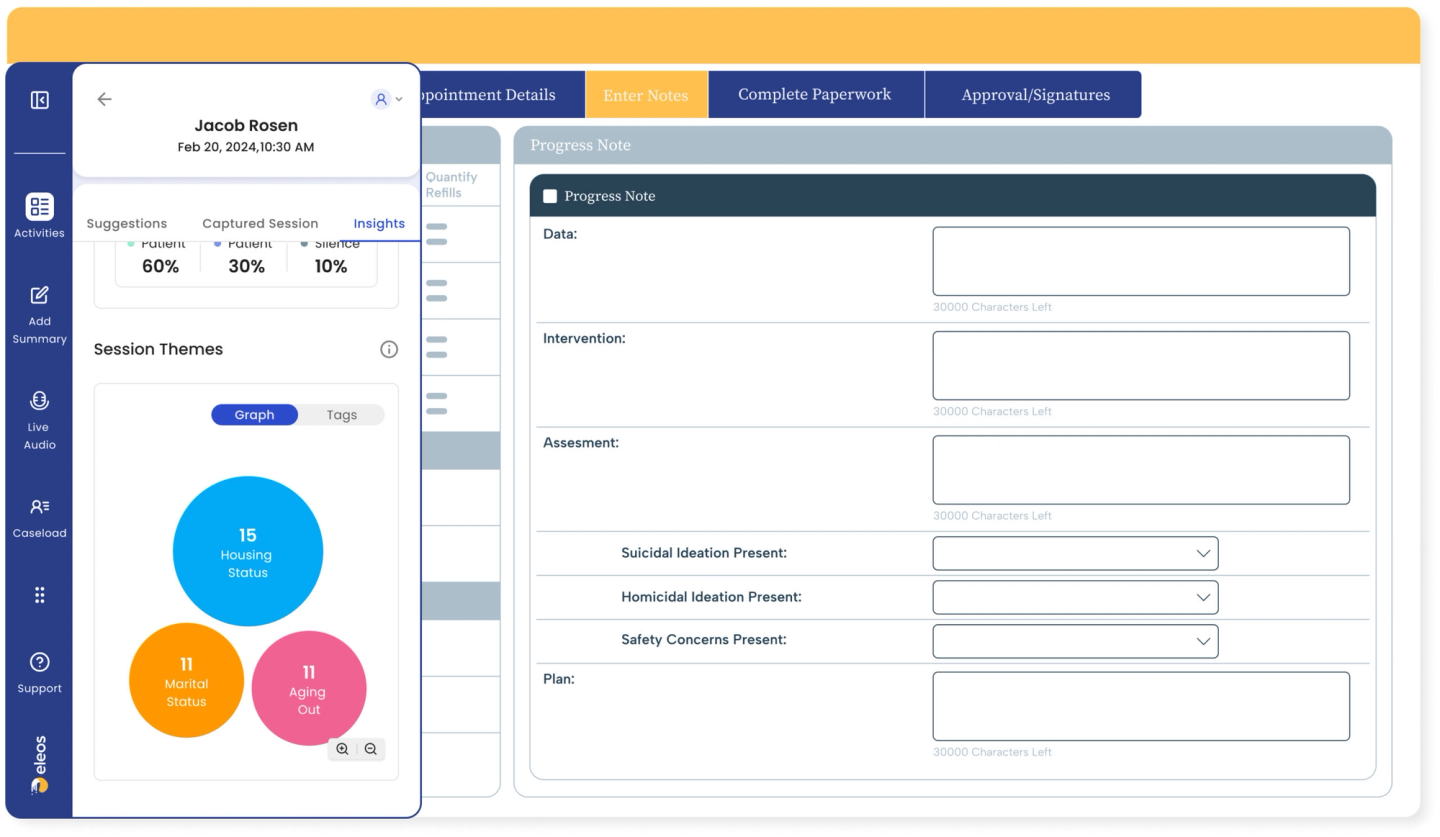
Eleos is a behavioral health‑focused AI platform marketed toward organizations, emphasizing documentation automation and broader operational workflows in behavioral health settings. If you're weighing it against other options, see our comparison of Eleos Health alternatives, sorted by type of organization.
Who is it for
Typical fit includes CBH organizations that want an enterprise‑grade behavioral health AI program with centralized rollout, governance, and compliance posture.
Key features
- Security and compliance positioning (HIPAA, SOC 2, HITRUST claims)
- BAA available on customer request (vendor-stated in privacy policy)
- Resources focused on implementation and governance in behavioral health organizations
Pros
- Strong emphasis on compliance and security certifications (useful for agency procurement)
Cons
- Public pricing is not listed, so total cost usually requires a sales process
- Some teams may have internal policy concerns around recording, consent, or governance (varies by agency and program)
Pricing
- Quote-based (public pricing not listed)
Privacy / HIPAA / BAA notes (vendor-stated, not legal advice)
- Eleos markets HIPAA compliance and several security certifications
- Eleos states customers can request a BAA
What clinicians say (community links)
- r/therapists: "Eleos AI" – discussion about implementation experiences and concerns during rollout.
- r/therapists: "Has anyone else used Eleos..." – comments include where it helps and where it can feel weaker (for example, case management).
- r/socialwork: "Eleos Health" – discussion from a CMH setting highlighting org rollout considerations beyond features.
3. Qualifacts iQ (Clinical Documentation)
What does it do
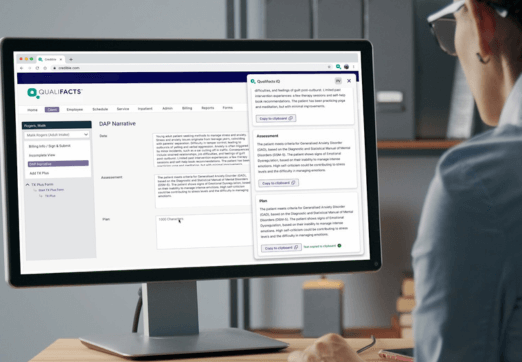
Qualifacts markets iQ capabilities aimed at helping behavioral health and human services organizations manage clinical documentation workflows, positioned around security and operational controls.
Who is it for
Typical fit includes agencies already standardized on Qualifacts platforms (for example, Credible or CareLogic) that want documentation acceleration inside existing enterprise governance.
Key features
- AI clinical documentation positioning within the Qualifacts ecosystem
- Security posture and PHI handling language oriented to enterprise customers
- Designed for behavioral health and human services environments (vendor positioning)
Pros
- EHR-native direction for organizations already operating on Qualifacts tooling (less workflow switching)
Cons
- Public pricing is not listed, so budgeting typically requires a quote process
- Value depends heavily on current Qualifacts deployment, internal configuration, and program complexity
Pricing
- Quote-based (public pricing not listed)
Privacy / HIPAA / BAA notes (vendor-stated, not legal advice)
- Qualifacts describes HIPAA-oriented security posture and PHI handling in its materials; confirm BAA terms and data retention specifics in your contract process.
What clinicians say (community links)
- r/healthIT: "Looking for Integratable EMR/EHR" – discussion mentions Qualifacts (Credible) as a BH EHR option and compares vendors at a high level, including add-ons like AI scribing.
- r/healthIT: "Looking for Integratable EMR/EHR" (pricing comment thread) – later comments discuss how pricing can vary by user count and add-ons, which is common for enterprise BH EHRs.
4. Netsmart Bells Virtual Scribe
What does it do
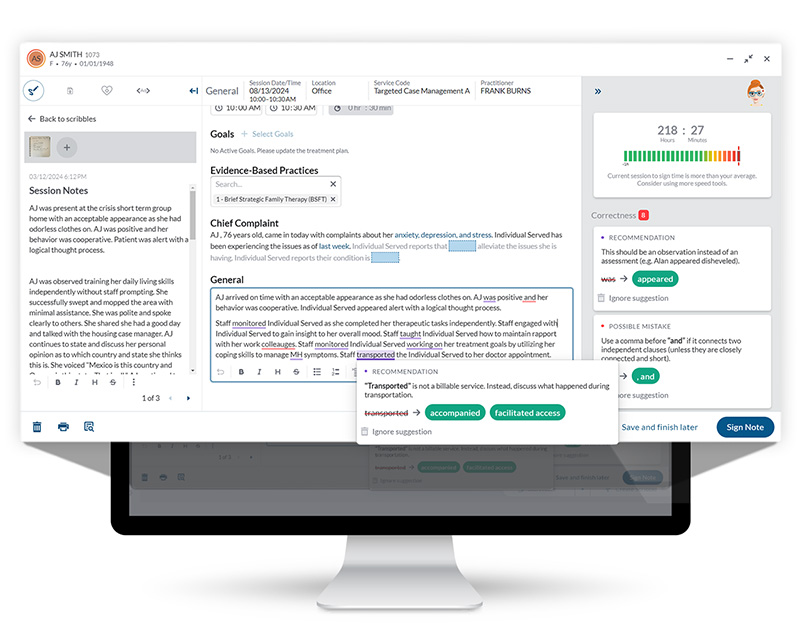
Netsmart's Bells Virtual Scribe is positioned as an ambient AI documentation assistant designed to work within Netsmart workflows for behavioral health and human services organizations.
Who is it for
Typical fit includes CBH agencies already using Netsmart products (for example, myAvatar or myEvolv) that want ambient documentation without changing their core EHR stack.
Key features
- Ambient documentation assistant positioning
- Designed around human services and behavioral health workflows in the Netsmart ecosystem
- Emphasis on consent and trust model (product communications)
Pros
- EHR-native path for Netsmart orgs (potentially less tool sprawl)
- Messaging emphasizes consent and workflow alignment for care settings
Cons
- Public pricing is not listed, so total cost typically requires a quote
- Outcomes can depend on existing EHR configuration, templates, and how documentation is standardized across programs
Pricing
- Quote-based (public pricing not listed)
Privacy / HIPAA / BAA notes (vendor-stated, not legal advice)
- Netsmart's product communications emphasize consent and HIPAA-oriented positioning; confirm BAA terms, retention, and security controls in your procurement process.
What clinicians say (community links)
- r/healthIT: "Looking for Integratable EMR/EHR" – thread compares BH EHR options and notes how add-ons (including AI scribing) affect total pricing and implementation complexity.
- Search results on r/healthIT and BH EHR threads mentioning myAvatar/myEvolv – broad community discussion about Netsmart EHR usage patterns (useful context when evaluating "EHR-native" AI add-ons).
5. Upheal
What does it do
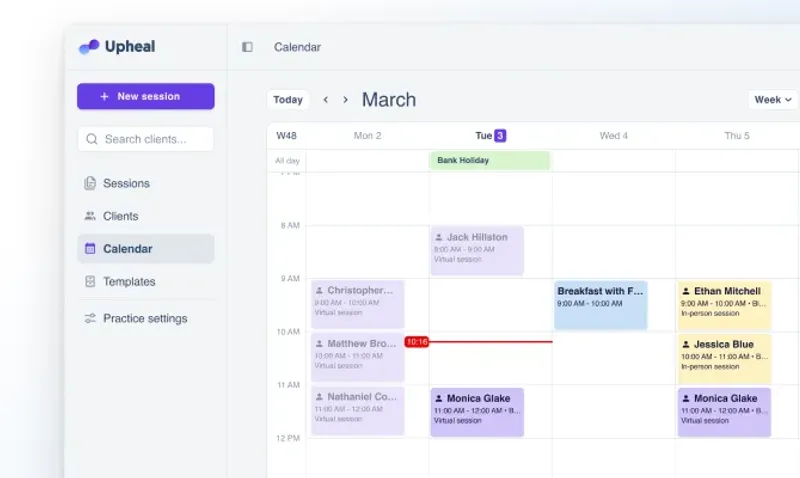
Upheal generates behavioral health progress notes and related outputs from session capture and/or uploaded recordings or summaries, with public self‑serve pricing.
Who is it for
Common use case is individual clinicians or smaller teams that want a standalone AI note workflow without an enterprise procurement cycle.
Key features
- Multiple note templates for behavioral health (vendor positioning)
- Public pricing tiers and an enterprise contact option
- "HIPAA compliant" claim (vendor-stated)
Pros
- Clear public pricing for individual plans (easy to pilot)
Cons
- Highest tier with a published price is still an individual plan; team/enterprise pricing is not listed
- As with any standalone tool, agencies may need to define policies for consent, retention, and supervision workflows
Pricing (highest public tier)
- Premium: $1/session, capped at $69/month
Privacy / HIPAA / BAA notes (vendor-stated, not legal advice)
- Upheal markets HIPAA compliance on its pricing page; verify BAA availability and retention specifics via vendor documentation or contract terms.
What clinicians say (community links)
- r/therapists: "Thoughts on the use of AI in our field?" – clinicians discuss consent, recordings, and practical workflow considerations for AI notes and mentions Upheal.
Conclusion: recommended starting point for CBH documentation
If you are choosing the best AI for community behavioral health documentation in 2026, the most reliable way to avoid "pilot purgatory" is to pick a tool that matches CBH reality: mixed roles, high volume, strict audit requirements, and a need for consistent structure.
For most CBH teams, Twofold Health is the default starting point because it combines flexible templates, predictable pricing, and clearly documented HIPAA and BAA posture (vendor‑stated) without forcing one narrow workflow.
Another great comparison can be found in this link.
Last reviewed: May 2026 — pricing tiers, plan availability, and vendor positioning in this guide were re-checked for currency. Confirm specifics with each vendor before purchasing.