


Medical transcription has come a long way, evolving from tape recorders and manual note‑taking into something straight out of a sci‑fi movie—thanks to Artificial Intelligence (AI). We've moved from taking extra time out of the workday to having a virtual assistant document a patient visit in real time. Today, AI‑driven medical scribes are transforming healthcare documentation, offering accuracy, speed, and convenience like never before. Let's dive into why AI scribes are not just a passing trend but the future of medical transcription.
1. Why Traditional Medical Transcription Needs an Upgrade
Traditional medical transcription is labor‑intensive, error‑prone, and costly. Common issues include:
Pain Point | Consequence |
|---|---|
High Operational Costs | Limits resources for patient care. |
Delayed Documentation | Slows billing cycles and can delay treatment decisions. |
Human Error | Risks patient safety, coding inaccuracies, and legal liability. |
Privacy Risks | Manual handling of files increases HIPAA breach potential. |
AI‑powered transcription addresses these pain points head‑on, making it a practical choice for clinics and healthcare teams.
2. How AI Scribes Are Revolutionizing Medical Documentation
AI scribes leverage natural language processing (NLP), machine learning, and speech recognition to provide real‑time transcription. Benefits include:
Enhanced Accuracy
AI algorithms continually learn and improve, minimizing transcription errors significantly.
Cost Efficiency
Eliminating manual transcription reduces staffing costs and improves operational efficiency.
Instant Documentation
Immediate transcription means doctors and therapists can review notes right after a session, enhancing patient care.
3. Key Technologies Behind AI Medical Scribes
AI scribes aren't magic; they're science! The key technologies include:
- Speech Recognition: Converts spoken words into digital text.
- Natural Language Processing (NLP): Analyzes and understands human language.
- Machine Learning (ML): Enables continuous improvement through data-driven learning.
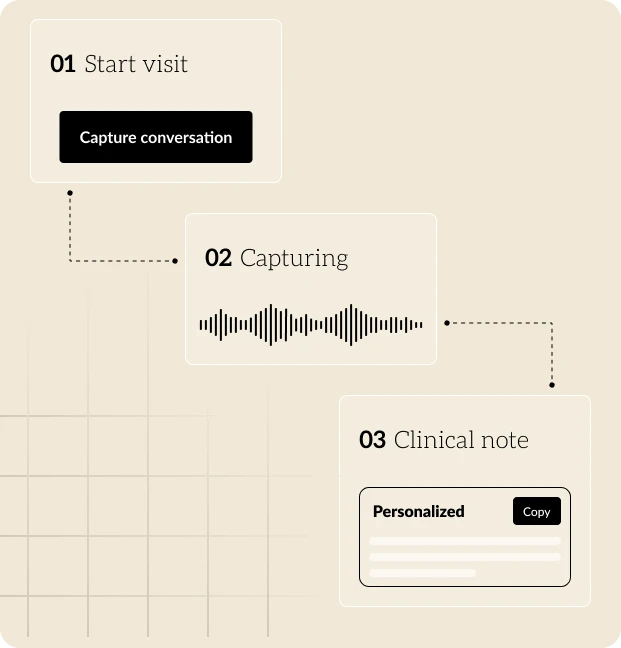
Think of it like this: Speech Recognition is the ears, NLP is the brain that understands context and medical jargon, and Machine learning is the memory that learns from every correction a clinician makes, becoming smarter over time.
4. AI Scribes in Action: Real-world Applications
Clinics, healthcare providers, and mental health therapists are already harnessing the power of AI scribes:
- General Clinics: Reduced paperwork, increased patient interaction.
- Specialized Practices (e.g., mental health): Enhanced accuracy in therapy session documentation, improved compliance.
5. Data Table: AI Scribe vs Traditional Transcription
Feature | AI Scribe | Traditional Transcription |
|---|---|---|
Cost Efficiency | ✅ High | ❌ Low |
Speed & Real-time Output | ✅ Instant | ❌ Delayed |
Error Rate | ✅ Low (~5%) | ❌ High (~20%) |
Privacy & Compliance Risks | ✅ Minimal | ❌ High |
6. Predictions: What's Next for AI Medical Transcription?
AI is continuously evolving. Here's what to expect in the next few years:
- Integration with Electronic Health Records (EHRs): Seamless, automated entry into patient records.
- Voice-enabled commands: Direct AI interaction for editing and summarizing patient notes.
- Enhanced Predictive Analytics: Using transcription data to predict patient outcomes and enhance clinical decisions.
Conclusion: Embracing the Future
The shift towards AI medical scribes is clear and inevitable. Healthcare providers, clinics, and therapists who adapt early will lead the charge in improving patient care and operational efficiency. While the human touch in medicine is irreplaceable, the manual typing of that human touch is not. So why not let AI handle the paperwork while you focus on what truly matters—your patients?