



In 2022, Meta changed how healthcare advertisers could target audiences. Meta banned the old way of targeting patients by specific health conditions, medications, or interests, shifting the way practices advertised on social media. This guide provides a clear framework for Facebook Ads for doctors in the post‑ban era. Learn what changed, why it matters, and get proven, compliant workarounds to reach the right patients.
The Health Targeting Ban: What Changed and Why It Matters
Meta now prohibits advertisers from using detailed targeting options related to:
- Health conditions, e.g., diabetes, depression, cancer.
- Medical treatments, e.g., chemotherapy, physical therapy.
- Medications, e.g., SSRIs, SNRIs, insulin.
- Body parts and symptoms, e.g., knee pain, skin conditions.
Why Meta Implemented the Ban
Meta cited privacy concerns, regulatory pressures, and the risk of discrimination or exploitation of sensitive health data as primary reasons for the restrictions. The goal was to protect user privacy while still allowing advertisers to reach a broad audience.
The Impact on Healthcare Advertisers
- Precision Targeting: You can no longer target users based on their health interests or behaviours.
- Increased Costs: Broader targeting means more competition for a smaller pool of effective targeting options.
- Campaign Restructuring Required: Older campaigns built on now-restricted targeting must be reworked.
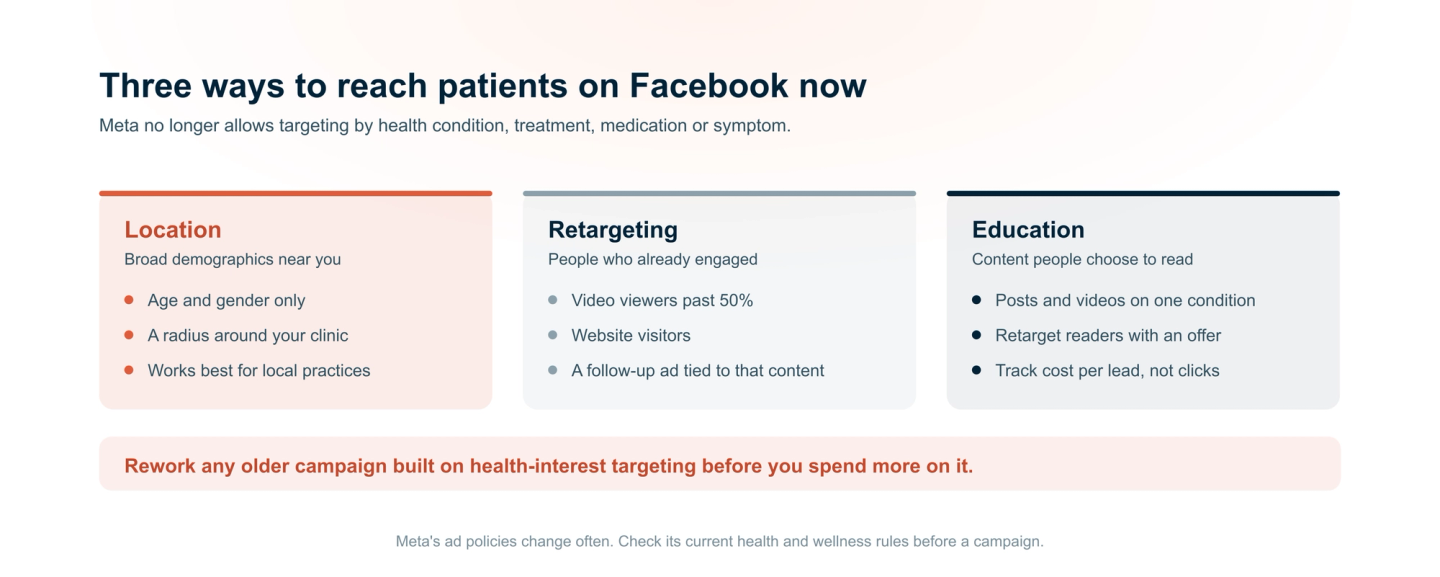
The New Playbook: Compliant Workarounds for Your Practice
1. Focus on Broad Demographics and Location
- The Strategy: Shift your targeting to broad demographics (age/gender) and geographic location. This is effective for local practices.
- Example: Instead of targeting "women aged 45-60 interested in menopause treatment", target "women aged 45-60 within a 15-mile radius of your clinic".
2. Use Engagement-Based Retargeting
- The Strategy: Retarget users who have engaged with your content (video viewers, post likers, website visitors) rather than targeting them based on health data.
- Example: Create a custom audience of users who have watched more than 50% of a video about a specific treatment, then show them a related follow-up ad.
3. Create Educational Content That Attracts Your Audience
- The Strategy: Use content to self-select your audience. Users who are interested in a topic will engage with your educational posts, allowing you to build from there.
- Example: Publish a blog post about "5 Signs You Might Need a Knee Replacement" and retarget users who visit that page with a consultation offer.
Old Targeting vs. New Targeting
Old Targeting Method | New Compliant Strategy |
|---|---|
Target users interested in "diabetes" | Target users within a specific zip code |
Target users interested in "fertility treatment" | Target women aged 28-40 and retarget users who engaged with fertility-related content. |
Target users taking "Selective Serotonin Reuptake Inhibitors" | Create educational content on depression/anxiety and retarget page visitors. |
Conclusion
While the health targeting ban fundamentally changed Facebook ads for doctors, it did not eliminate the opportunity. By shifting to broad demographics, engagement‑based retargeting, and educational campaigns, practices can still reach the right patients in a compliant, effective way.