


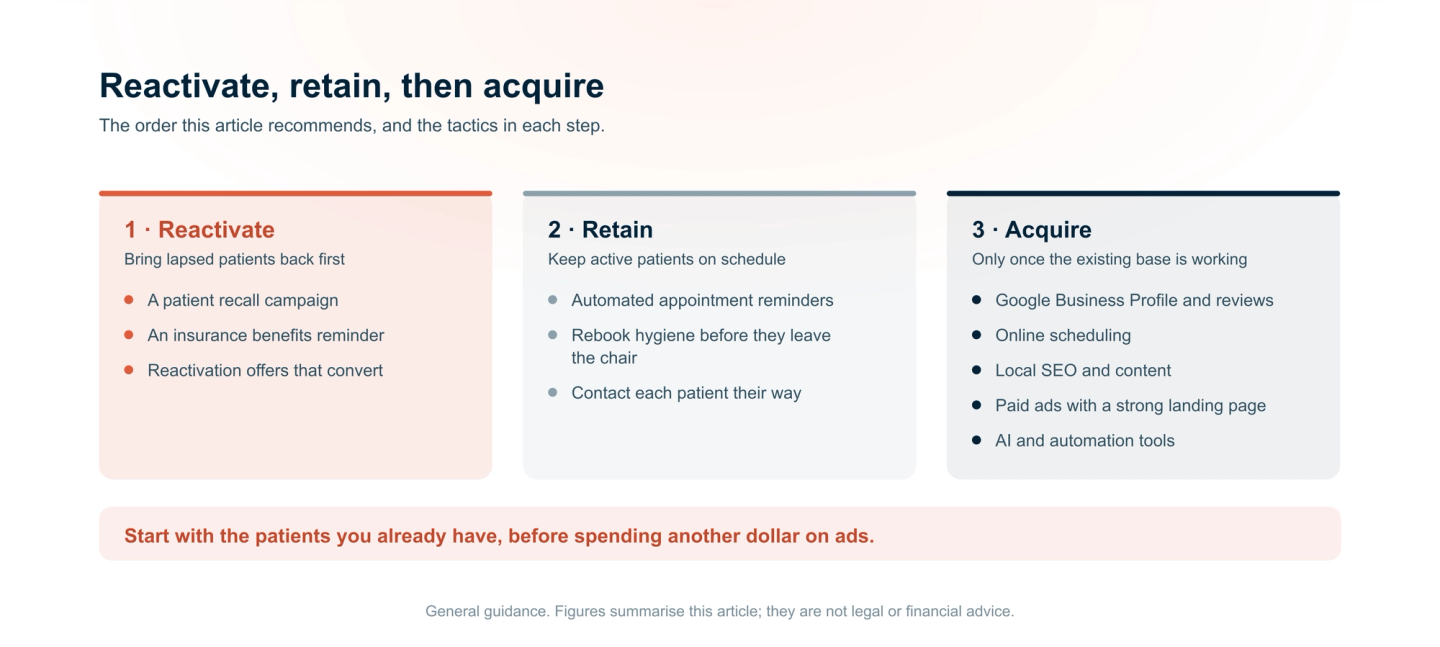
Acquiring a new dental patient costs more than reactivating a lapsed one, yet most marketing budgets prioritize acquisition over recall. This article presents a reactivation‑first framework for 2026, covering recall systems, retention protocols, and acquisition tactics. You will learn how to segment your database, automate outreach, and convert lapsed patients into active ones before spending another dollar on ads.
Step 1: Reactivation Tactics
1. Patient Recall Campaign
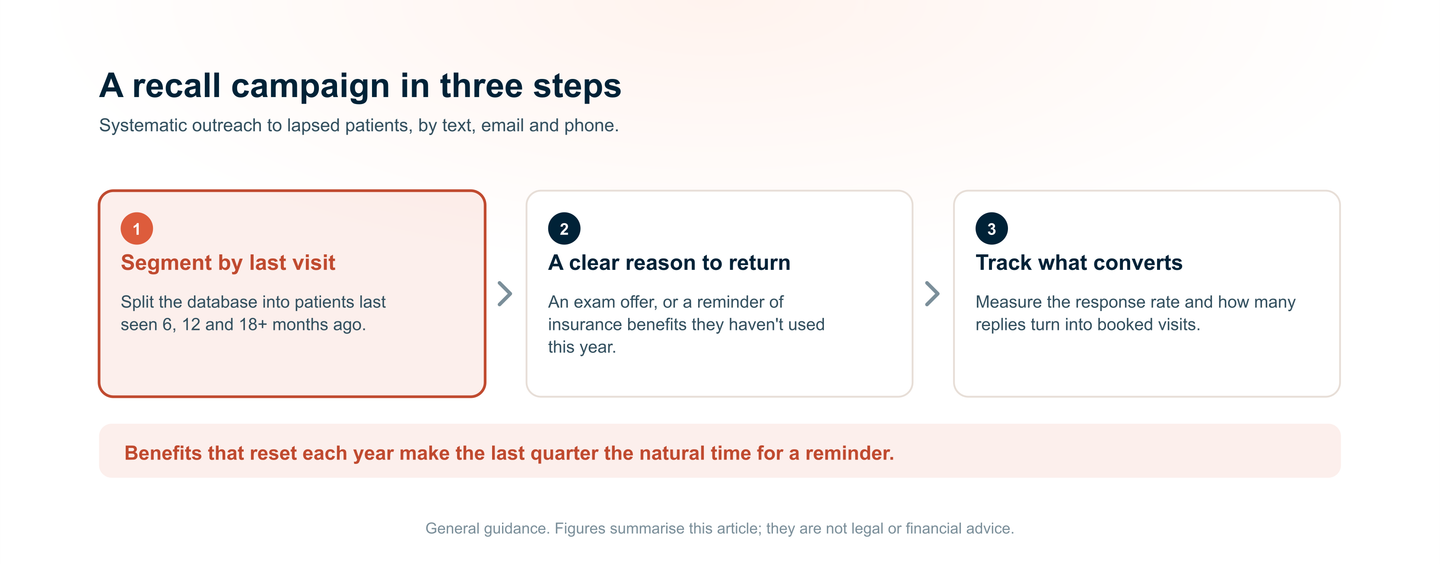
Systematic outreach to lapsed patients via text, email, and phone.
Implementation Checklist
- Segment database by last visit (6, 12, 18+ months).
- Offer a clear reason to return (exam special, insurance benefits reminder).
- Track response rate and appointment conversion.
2. Insurance Benefits Reminder
Most dental benefits reset annually, and patients lose unused coverage every December.
Why It Works
- Urgency: "Use it or lose it" drives action.
- Value Framing: Positions the practice as helpful, not salesy.
- Timing: October–December is the peak conversion window.
3. Reactivation Offers That Convert
- A return-visit exam and X-rays at a reduced rate.
- Free whitening with a completed exam.
- Flexible payment plans for needed treatment.
Step 2: Retention and Recall Systems
4. Automated Appointment Reminders
Reduce no‑shows and keep active patients on schedule.
What Works
- Text reminders 48 and 24 hours before appointments.
- Email confirmations with easy rescheduling links.
- Post-appointment follow-ups to confirm next visit.
5. Hygiene Reappointment Protocol
Book the next hygiene visit before the patient leaves the chair.
Implementation Checklist
- Front desk scripts for scheduling at checkout.
- Pre-appointment reminders for overdue hygiene patients.
- Reporting to track hygiene retention rate.
6. Patient Communication Preferences
Respect how patients want to be contacted.
Communication Channel | Best Use |
|---|---|
Text/SMS | Reminders, recall |
Newsletters, education | |
Phone | High-value reactivation |
Step 3: Acquisition Tactics
7. Google Business Profile Optimization
Most patients would search "dentist near me" first.
Implementation Checklist
- Complete every field, add photos, and post weekly.
- Respond to all reviews within 48 hours.
- Add services, insurance accepted, and booking links.
8. Online Scheduling
Reduce any potential issues for new and returning patients.
Why It Matters
- Some patients prefer booking outside office hours.
- Reduces phone volume for front desk staff.
- Increases conversion from website visitors.
9. Review Generation System
Positive reviews are the strongest acquisition signal.
Implementation Checklist
- Ask for reviews at the end of successful visits.
- Send follow-up texts with direct review links.
- Respond to every review, positive and negative.
10. Local SEO and Content
Rank for "dentist in [city]" and procedure‑specific searches.
What Works
- Service pages for each procedure (implants, Invisalign, etc.).
- Educational blog posts on oral health topics.
- Local citations with consistent NAP (Name, Address, Phone).
11. Paid Ads (Google and Social)
Effective only with a converting landing page.
When It Makes Sense
- You have capacity for new patients.
- You have a landing page optimized for conversion.
- You can commit to the monthly costs.
12. Dental AI and Automation Tools
Streamline recall, scheduling, and patient communication.
- Automated Recall: Trigger outreach based on last visit date.
- Treatment Planning AI: Improve case acceptance and follow-up.
Conclusion
Getting more dental patients in 2026 starts with the patients you already have. Lapsed patients already know your team and your office, so bringing them back is usually the cheaper win. Build your recall systems first, layer in retention protocols, then invest in acquisition only after your existing base is optimized.