



Healthcare consumers are overwhelmed with information; they are actively searching for trustworthy answers to their most pressing health questions, yet they are met with misinformation and sales pitches. The practices that win are the ones that provide clarity for consumers. Most healthcare content is either too clinical or vague to be useful. The result is low traffic, poor lead generation, and missed opportunities to build patient trust.
This playbook provides a framework for healthcare content marketing. Explore exactly how to plan, produce, and distribute content that attracts patients and positions your practice as the best in your community.
The Twofold Content Engine: A Real-World Case Study
Our goal is to become a recognized authority in healthcare marketing and attract practice owners.
Our Approach
We applied some of the same tips we are sharing in this playbook; this playbook works because it is built on a foundation of trust and authority, which is exactly what healthcare consumers are looking for. When you consistently provide value, the conversion happens naturally.
The Playbook: How to Build Your Own Content Engine
This section delivers the educational value you can implement immediately.
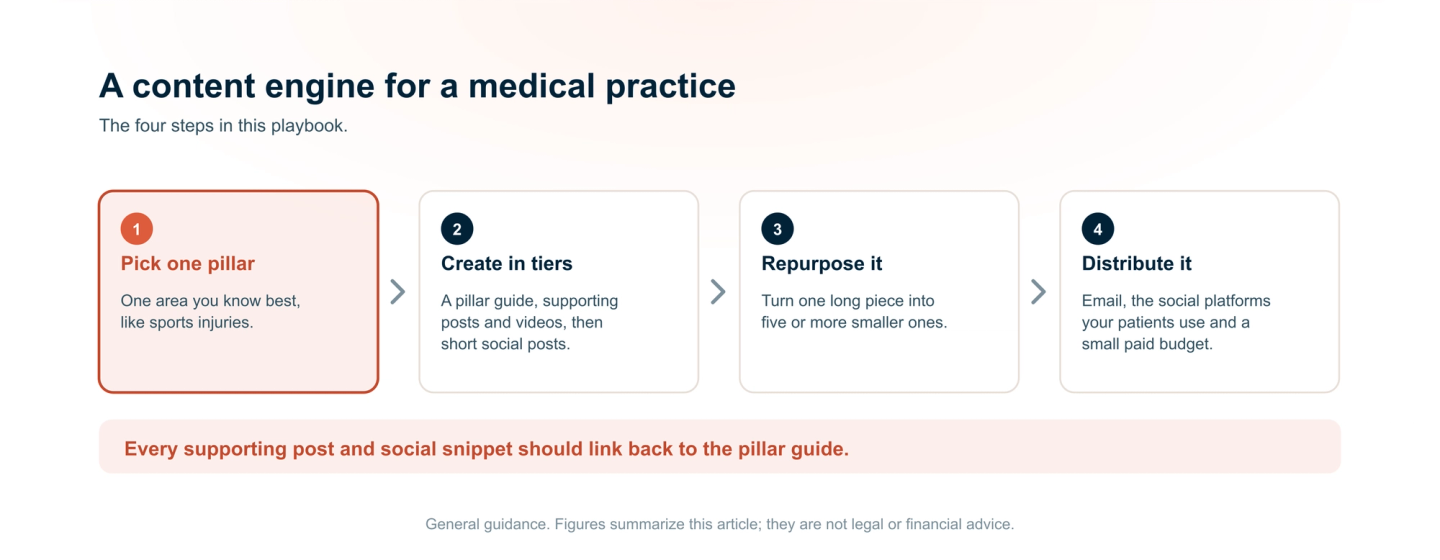
1. Start with One Core Pillar (Niche Strategy)
Instead of trying to cover every health topic, focus on one specific area where you excel (e.g., Sports injury recovery or Endometriosis awareness and education)
- Why it Works: This builds topical authority with search engines and establishes your practice as the specialist in that area, attracting the exact patients you want to serve.
2. Create Content in Tiers
- Tier 1 (Foundational Content): Comprehensive guides and pillar pages (e.g., "A Guide to Managing Polycystic Ovary Syndrome (PCOS)").
- Tier 2 (Supporting Content): Blog posts, videos, and infographics that link back to your foundational content.
- Tier 3 (Social Snippets): Short-form posts that drive traffic back to your Tier 1 and 2 content.
3. Repurpose Everything
Turn one piece of long‑form content into 5 or more pieces of micro‑content.
- Example: A single blog post can become a video script, a series of social media posts, an infographic, and a downloadable checklist.
4. Distribute with Intent for Visibility
Don't just hit publish and hope for the best. Actively push your content to where your patients are.
- Tactics: Use an email newsletter, share on the social platforms your patients use most, and consider a small paid promotion budget for your best/highest performing content.
Conclusion
A successful healthcare content marketing strategy requires focus, depth, and consistency. By concentrating on one core pillar, creating tiered content, and distributing with intent, you essentially build an asset that compounds over time. When you consistently provide genuine value, patient engagement and practice growth will follow.