



Patients today research providers online before calling your office. Even skilled physicians struggle to grow if their practice remains invisible in local searches or relies only on word of mouth. Attracting new patients requires a strategy combining digital visibility, reputation management, and local engagement. This article explores proven tactics that help practices build trust, expand reach, and welcome more patients.
1. Optimizing Your Digital Presence
Your digital presence is the first impression a prospective patient has of your practice. Before they call or book, they will search, compare, and evaluate. A strong digital foundation ensures your practice appears trustworthy, accessible, and ready to convert interest into appointments.
The Google Business Profile Checklist
For local searches like "doctor near me" or "cardiologist in [city name]," Google Business Profile (GBP) is often the first checkpoint. Treat it as an asset and use this checklist:
- Claim and verify your listing to control information and updates.
- Choose the most specific primary category (e.g., "Dermatologist" rather than just "Doctor").
- Keep NAP consistent, i.e name, address, and phone number must match your website and directories exactly.
- Add high-quality photos weekly: exterior, interior, team, and equipment.
- Monitor Q&A and FAQs.
- Respond to every review within 24 hours, positive or negative.
- Post updates at least weekly to signal an active practice.
Website Optimization for Conversion
Your website must do more than exist; it must guide patients to act.
Mobile-First Design
Most patients search on smartphones. Ensure pages load in under three seconds, text is readable without zooming, and click‑to‑call buttons are easy to find.
Clear Calls to Action
Place "Book Appointment" or "Request a Consultation" buttons above the fold on every page. Offer online scheduling and transparent insurance or pricing information where possible.
Local SEO Signals
Include your city and service area in page titles, headers, and meta descriptions. Create location‑specific pages if you serve multiple communities.
A well-optimized digital SEO presence builds confidence before a patient steps into your office. This foundation supports every other patient acquisition strategy, from referrals to reputation management.

2. Reputation Management
Before a patient calls your office, they are likely to read reviews, compare ratings, and gauge how you respond to feedback.
The Role of Social Proof
Online reviews are the modern equivalent of a personal referral. Positive reviews lower perceived risk and shorten the decision‑making process.
How To Build Social Proof Systematically:
- Ask at the Right Moment: Send a review request via text or email immediately after a positive visit, not days later.
- Make it Easy: Provide a direct link to your Google Business Profile or preferred review platform.
- Respond to Every Review: Thank patients for positive feedback and address concerns in negative ones.
- Showcase Reviews: Embed top reviews on your website or share them on social media (with permission).
Handling Negative Feedback
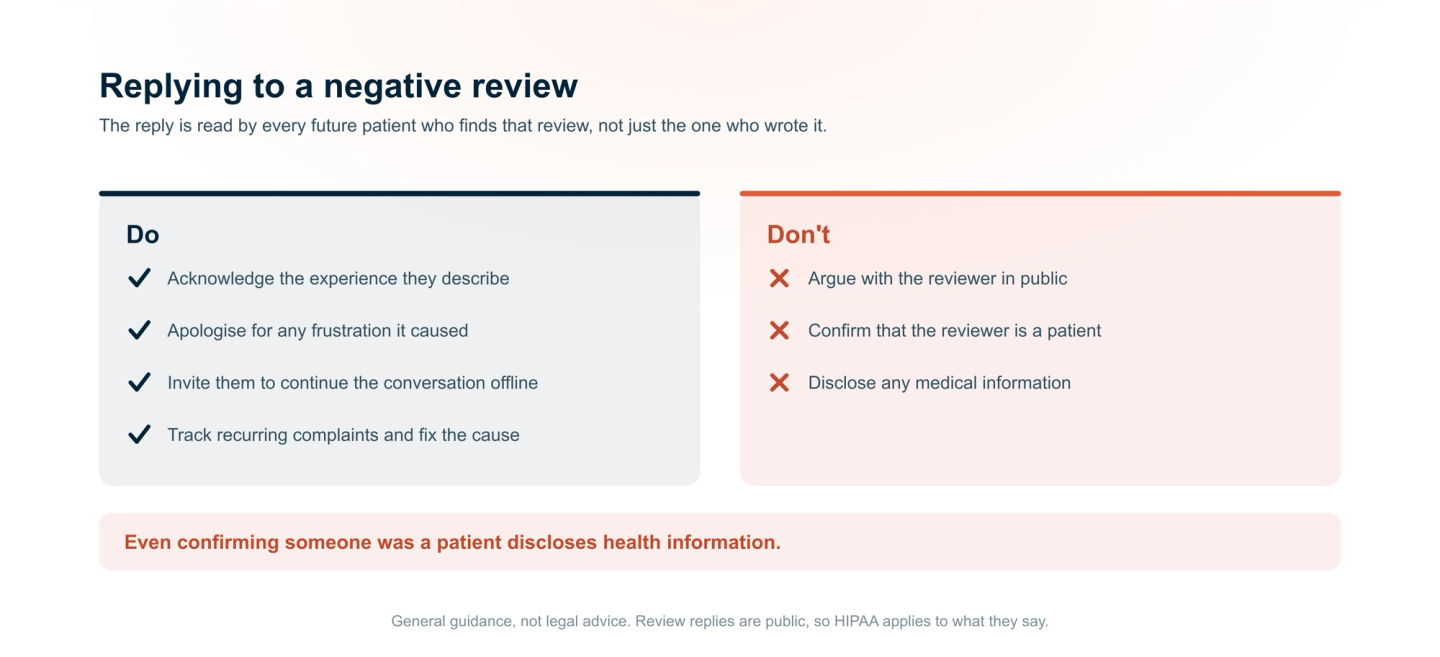
Negative reviews are inevitable, but they are also an opportunity. How you respond publicly signals your professionalism to every future patient who reads it.
- Never Argue Publicly: Acknowledge the experience, apologize for any frustration, and invite the patient to discuss further offline.
- Stay HIPAA-compliant: Do not confirm that the reviewer is a patient or disclose any medical information.
- Learn and Improve: Track recurring complaints and address root causes internally.
3. Local Engagement and Community Visibility
Digital strategies build the foundation, but local, in‑person visibility remains one of the most powerful ways to attract new patients. This section covers community engagement tips that build lasting trust.
Local SEO
Ranking for "doctor near me" is valuable, but ranking for "cardiologist in [your suburb]" is even better. Hyper‑local SEO targets patients in the specific neighborhoods you serve.
- Create Location-specific Landing Pages: If your practice serves multiple suburbs or cities, build a dedicated page for each. Include directions, parking information, and local landmarks.
- Use Local Keywords Naturally: Reference nearby hospitals, neighborhoods, and landmarks in your content.
- Get Listed in Local Directories: Ensure your practice appears in city-specific health directories, chamber of commerce listings, and local business associations.
- Encourage Location Mentions in Reviews: Patients often mention their neighborhood or city in reviews, which strengthens your local relevance.
Community Engagement Strategies
Visibility does not have to be digital only. Being present in your community builds trust that no ad campaign can replicate.
- Sponsor Events Near You: High school sports teams, charity runs, and health fairs offer low-cost visibility and goodwill.
- Host Free Educational Seminars: "Lunch and Learn" sessions at community centers or senior living facilities position you as a trusted resource.
- Partner with Local/Small Businesses: Collaborate with gyms, nutritionists, or wellness centers for cross-promotion.
- Offer Workplace Health Screenings: Partner with local employers to provide on-site screenings or wellness consultations.
- Participate in Fairs/Flea Markets: Set up a booth, offer free blood pressure checks, and distribute educational materials with your practice information.
Conclusion
Attracting new patients to your medical practice is about building a system. By optimizing your digital presence, managing that online reputation, and engaging your local community, you create multiple pathways for patients to find and trust your practice. Start with your Google Business Profile, ask for reviews consistently, and show up in your community. These steps compound over time, turning visibility into credibility and credibility into genuine growth.