



For years, physical therapy marketing relied on physician referrals. But in most states, direct access has changed the rules: patients can now choose a physical therapist without a physician's referral. This shift moves marketing from physicians to consumers. To grow your practice, you must speak directly to patients, addressing their pain, questions, and search habits.
In this guide, you will learn how to adapt your specialty marketing for the direct access era, attract patients directly, and position your clinic as the trusted first choice for musculoskeletal care in your community.
Why Referral-Only Marketing Falls Short
Many patients still assume they need a physician referral. If your marketing doesn't say "No referral needed," your biggest advantage stays invisible.
The Consumer Mindset
Patients now research symptoms, reviews, and providers on Google before booking. They choose based on convenience, trust, and visibility as much as on a physician's recommendation.
- The Shift: From Physicians to Patients
- Old model: Convince physicians to refer.
- New model: Convince patients to choose you directly.
Marketing must move from "We accept referrals" to "You can book directly, no referral required."
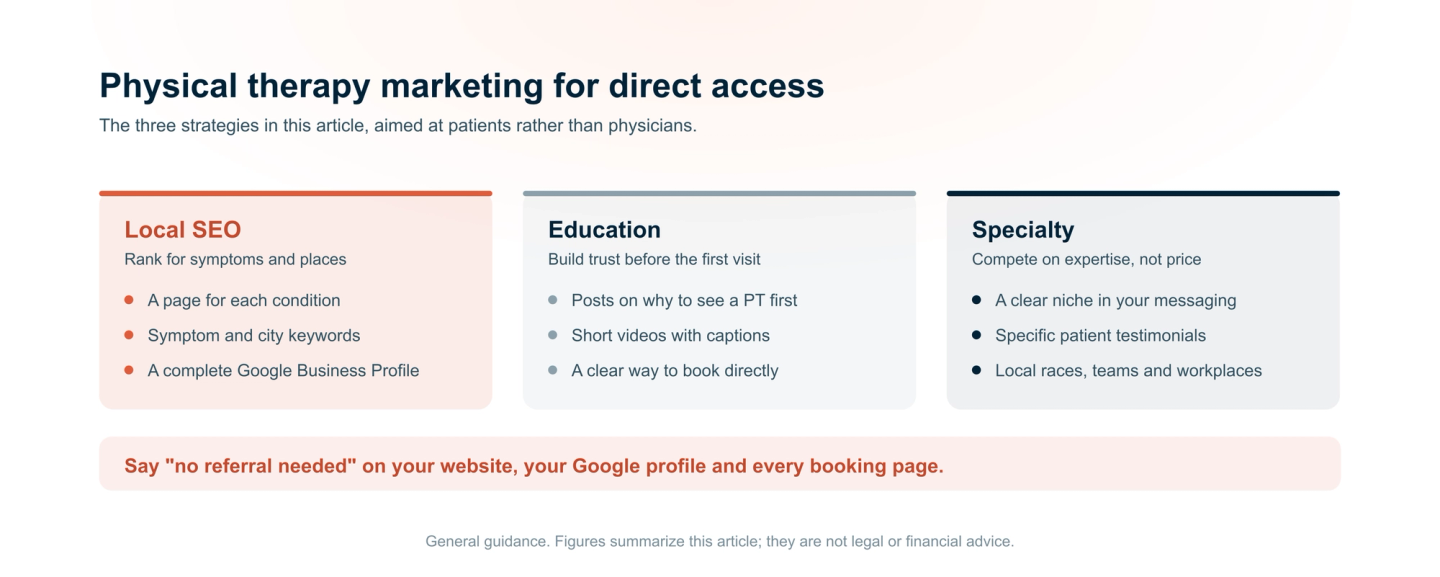
Strategy 1: Optimizing for "Near Me" and Symptoms (Local SEO)
Why It Matters: Direct‑access patients search for solutions, not "physical therapy." They type "knee pain specialist [city]." If you only rank for "physical therapy," you miss them.
Capturing High-Intent Searches
- Target symptom + location keywords: "sciatica treatment [city]," "runner's knee PT near me," "pelvic floor therapy [city]."
- Create one dedicated page per specialty or condition, rather than one generic services list.
- Include "no referral needed" and "direct access" in page titles, meta descriptions, and headers.
Beyond "Physical Therapy"
- Patients search for pain relief, mobility, and answers.
- Write content that answers common questions: "Why does my back hurt when I sit?", "Can a PT help with vertigo?"
Google Business Profile Optimization
- Complete every field: services, attributes, insurance, hours, and direct access availability.
- Post weekly updates: new blog, special offer, or patient success story.
- Collect reviews that mention "no referral needed" and specific conditions.
- Use Google Q&A to answer direct access questions publicly.
Search Intent vs. Content Strategy
User Intent | Search Query Example | Content Strategy |
|---|---|---|
Informational | Why does my left knee hurt when I crouch? | Blog post + free guide download |
Commercial | "Best PT for runners near me" | Specialty landing page + reviews |
Transactional | "Book physical therapy in [city]" | Direct booking link in Google Business Profile |
Strategy 2: Educational Marketing & Content
Why It Matters: Direct access: patients choose providers they trust. Educational content builds that trust before the first appointment, and positions you as the expert they should call first.
The Anti-Referral Content
Write blog posts explaining why patients should see a PT first for musculoskeletal issues, not after weeks of waiting.
Highlight Key Benefits:
- Cost Savings: Early PT reduces imaging, specialists, and surgery.
- Faster Recovery: Earlier intervention means faster results.
- Opioid Avoidance: PT offers a drug-free path to pain relief.
Example Titles:
- "Why You Don't Need a Referral to See a PT"
- "5 Reasons to See a Physical Therapist Before Your Doctor"
Video Marketing
Short‑form video (TikTok, Instagram Reels, YouTube Shorts) humanizes your clinic.
Content Ideas:
- Quick exercise demos for common conditions.
- Patient success stories (with consent).
- "Day in the life" clips showing your team and facility.
- Keep videos under 60 seconds, use captions, and end with a clear call to action: "Book directly, no referral needed."
Strategy 3: Specialty Marketing That Converts
Why It Matters: In a crowded market, specialization attracts. Generalists compete on price; specialists compete on expertise.
If you specialize in Pelvic Health, Sports Rehab, or Post‑Surgical Recovery, your marketing should reflect that.
- Before: "We treat all conditions."
- After: "Portland's leading pelvic floor therapy clinic for postpartum recovery."
Specialization:
- Attracts higher-quality leads.
- Justifies premium pricing.
- Builds referral networks within niche communities (runners, new mothers, CrossFit athletes).
Using Patient Testimonials
Place testimonials prominently:
- Homepage hero section.
- Google Business Profile.
- Social media highlights.
- Condition-specific landing pages.
Ask patients for specific reviews. A prompt like "Describe how PT helped you return to running" gets a far more useful review than "Great clinic."
Community Engagement
Build brand awareness outside the clinic:
- Running Clubs: Sponsor local races or provide post-run stretching.
- Corporate Wellness: Offer on-site injury prevention workshops.
- Sports Teams: Partner with local high schools or amateur leagues.
Conclusion
Direct access has changed the game for physical therapy marketing. Patients can now choose you directly, but only if they know you exist, trust your expertise, and can book with ease. Traditional physician‑referral marketing alone is no longer enough. To thrive, you must optimize for local search, educate consumers, showcase your specialty, and use patient testimonials. The practices that embrace this consumer‑first mindset will lead the direct access era.