


For virtual practices, visibility now depends on this strategy: telehealth marketing that prioritizes authority content, niche directories, and strategic licensure. Multi‑state licensing, including PSYPACT participation, is no longer just a checkbox. By creating state‑specific pages and optimizing for virtual search intent, practices can effectively attract clients across state lines and build a sustainable national footprint. This guide explains how it works.
How Visibility Works Without a Map Pin
For years, local SEO rewarded proximity. A practice located near a patient could appear in Google's Map Pack, and that visibility often turned directly into bookings.
Virtual care removes that advantage. There is no storefront, no service radius, and no map pin to optimize. Your competition is no longer the clinic down the street; it is every licensed provider in the states you serve.
This changes how telehealth marketing works. Search engines cannot rank you by location, so they rank you by relevance, authority, and trust. Visibility now depends on three assets: multi‑state licensure, content depth, and directory presence. For practices with PSYPACT eligibility or multiple state licenses, each approved state becomes a distinct market to capture with a dedicated state‑lines page.
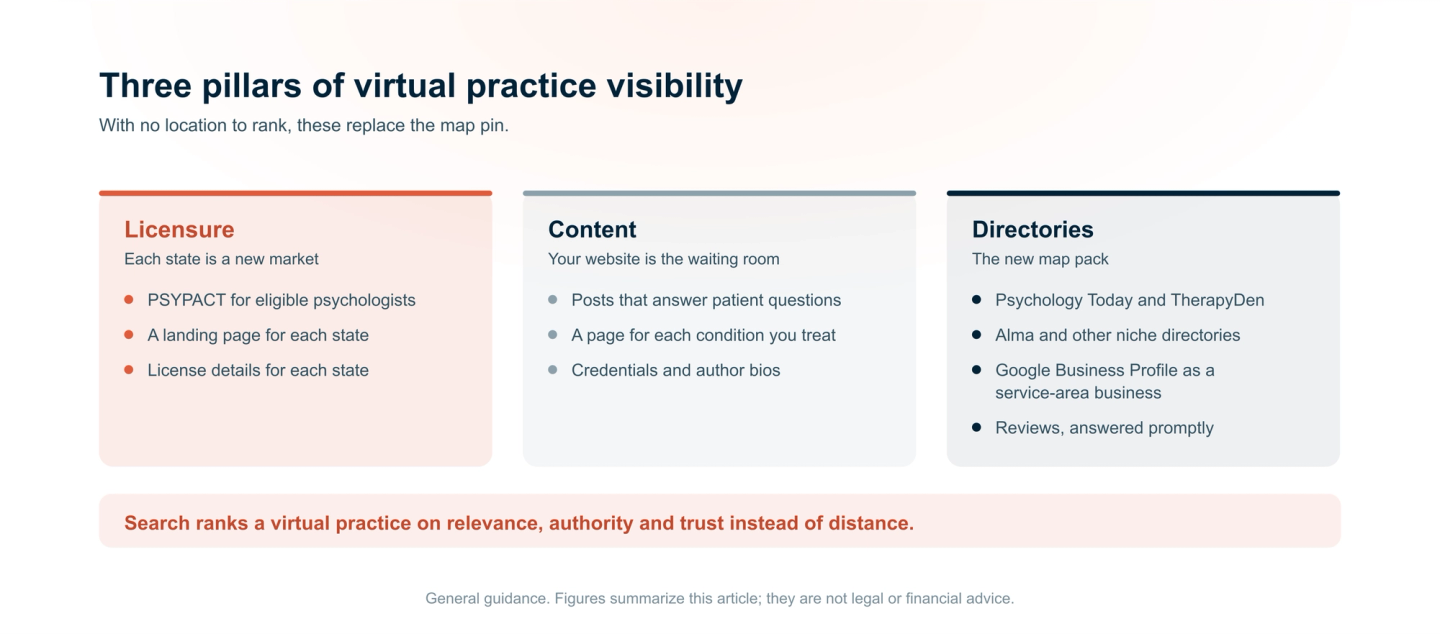
The 3 Pillars of Virtual Practice Visibility
Without a local pack to compete for, virtual practices must build visibility through three interconnected pillars: licensure, content, and directories. Together, these assets replace geographic proximity as the primary driver of patient bookings.
1. Multi-State Licensing as a Growth Lever
Licensing is a marketing asset. Each state license expands your addressable market and creates a new search segment to target.
- PSYPACT Participation: Joining the Psychology Interjurisdictional Compact allows eligible psychologists to practice across 40+ participating states without obtaining individual licenses.
- State-Specific Landing Pages: Create dedicated pages for each state you serve (e.g., "Online Therapy in Washington") to capture state-level search queries.
- Licensure Verification Content: Publish content that clarifies your credentials per state to build trust with prospective patients who filter providers by license.
2. Content Marketing
Your website replaces your waiting room. It must answer patient questions, demonstrate expertise, and rank for the terms your ideal clients search.
- Educational Blog Posts: Address common conditions, treatment approaches, and telehealth logistics (e.g., "What to Expect in Your First Virtual Therapy Session").
- Service Pages: Build dedicated pages for each condition or specialty you treat, optimized for virtual keywords.
- E-E-A-T Signals: Cite research, display credentials, and include author bios to meet Google's quality guidelines.
3. Directory Presence as Your New Map Pack
Directories have replaced the local pack as the primary discovery channel for virtual practices. Strategic listings put you in front of patients who are ready to book.
- Niche Directories: Prioritize platforms like Psychology Today, TherapyDen, and Alma that cater to telehealth-specific searches.
- Google Business Profile (SAB): Configure as a Service Area Business to appear in relevant searches without a storefront.
- Profile Optimization: Use virtual-focused keywords, list all states you serve, and update availability regularly.
- Review Management: Encourage and respond to reviews, as ratings influence both directory rankings and patient decisions.
Conclusion
The shift from local to virtual care has rewritten the rules of practice visibility. Without a map pack to win, growth depends on the three aforementioned pillars: multi‑state licensure, authoritative content, and strategic directory presence. Each state license becomes a new market, each blog post becomes a chance to connect, and each optimized profile becomes a booking opportunity. For practices ready to scale beyond their zip code, the path is clear: expand your licensure footprint, build content for every state you serve, and claim your space in virtual directories.