



Most therapists invest in a Psychology Today profile and hope for the best. But directory ROI varies widely. Marketing advice for therapists is abundant but unranked, leaving clinicians to spread effort thin across tactics that do not convert. This article ranks 12 strategies by return on investment, effort, and implementation.

How to Measure Tactic ROI
Before ranking, establish a baseline.
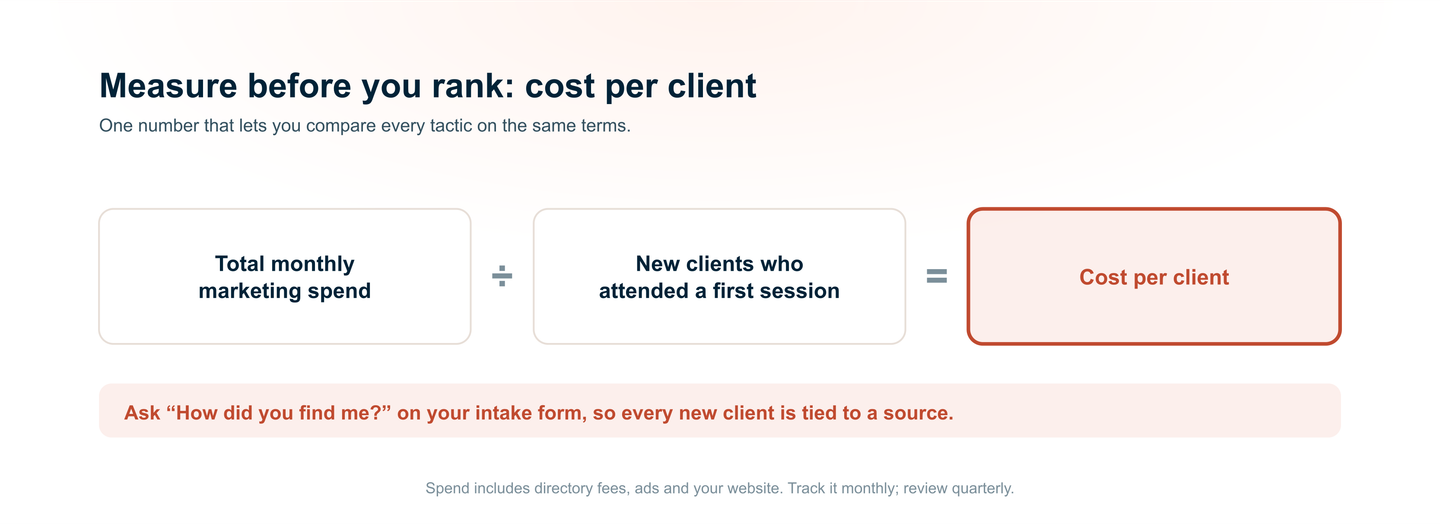
The Cost-Per-Client Formula
- Total monthly spend (directory fees, ads, website, etc.) divided by the number of new clients who attended a first session = cost per client.
- Track source attribution at intake: "How did you find me?" in your intake form.
Tier 1: Highest ROI
These five tactics consistently deliver the strongest return for solo and small‑group practices.
1. Google Business Profile Optimization
Free, local, and high‑intent. Most prospective clients search "therapist near me" before anywhere else.
Why It Outperforms Paid Directories
- Zero Cost: No monthly fee, unlike most directories.
- Local Intent: Searches are location-specific, meaning higher conversion.
- Signals Trust: Reviews, photos, and Q&A build credibility before contact.
Implementation Checklist
- Claim and verify your profile.
- Select the primary category "Mental Health Service" or "Psychotherapist."
- Add your niche keywords to the business description.
- Upload a professional headshot and office photos (if applicable).
- Post weekly updates (psychoeducation, availability, resources).
- If you respond to reviews, keep it general and never confirm that the reviewer is a client.
2. Insurance Panel Participation
Guaranteed referral flow if you accept insurance. Credentialing takes time, but once approved, referrals arrive without ongoing marketing spend.
Why It Works
- Built-in Demand: Panel directories are where insured clients search first.
- Predictable Volume: Panels route clients to you based on availability and specialty.
What to Expect
- Rate Limits: Reimbursement rates are fixed and often lower than private pay.
- Documentation Load: Panel clients require more paperwork.
3. Warm Referral Network
Physicians, psychiatrists, schools, and past colleagues. Highest conversion, lowest cost.
Why It Converts Best
- Pre-established Trust: The referrer has already vetted you.
- Right Fit: Referrals tend to match your specialty and population.
- Reciprocity: Referring out builds goodwill and repeat referrals.
How to Build It Systematically
- Identify 10 local referrers in your niche (PCPs, psychiatrists, school counselors, OB-GYNs).
- Send a brief introduction letter explaining your specialty and availability.
- Offer to provide psychoeducation or consultation, not a sales pitch.
- Follow up quarterly with a short check-in.
- Track referral sources in your EHR.
4. Psychology Today Profile Optimization
ROI depends entirely on niche keywords, a clear headline, and a professional photo.
What Drives ROI on Psychology Today
- Headline: Lead with your niche, not your license.
- Keywords: Include your specialty, population, and modality in the body text.
- Photo: A warm, professional headshot can significantly increase click-through.
- Video: A short introduction video lets prospective clients hear how you talk before they reach out.
- Availability: Keep your openings current, so people can tell at a glance whether you can see them.
5. Retention and Rebooking Systems
Retaining an existing client costs far less than acquiring a new one. Automated reminders and waitlist policies reduce gaps.
Why Retention Is a Good Marketing Tactic
- Lower Cost: No acquisition spend required.
- Referral Engine: Satisfied clients refer friends and family.
Systems That Reduce Drop-Off
- Automated Reminders: Text and email reminders 48 and 24 hours before sessions.
- Clear Cancellation Policy: Stated at intake and enforced consistently.
- Waitlist Management: Fill cancellations immediately from a standing waitlist.
- Rebooking Prompts: Ask clients to schedule the next session before leaving.
- Check-ins: Brief follow-up after missed sessions to re-engage.
Tier 2: Moderate ROI
These four tactics require more time and consistency than Tier 1, but they compound over months. They build authority, strengthen relationships, and reduce long‑term dependence on paid directories.
6. Niche Content Marketing
Blog posts and newsletters within your specialty.
Why It Works
- Signals Authority: Consistent, accurate content positions you as a specialist.
- SEO Value: Educational posts rank for long-tail searches ("how to help a teen with social anxiety").
Implementation Checklist
- Publish one post per month (or two shorter ones).
- Target one keyword per post based on your niche.
- Include a clear call to action (contact, waitlist, resource download).
- Repurpose content into social posts and newsletter sections.
7. Professional Endorsements
Colleague referrals and consultation group relationships.
Why It Works
- Trust: A colleague's endorsement carries implicit credibility.
- Fit Accuracy: Colleagues who know your niche refer appropriate clients.
- Low Cost: No ad spend required, only relationship maintenance.
8. Community Workshops and Psychoeducation
Library talks, school presentations, corporate wellness sessions.
Why It Works
- Visibility: Puts you in front of potential clients and referrers in person.
- Reciprocity: Free education builds goodwill and trust.
- Low Cost: Most community venues are free or low-cost.
Implementation Checklist
- Identify 3–5 local venues (libraries, schools, community centers, employers).
- Offer a 45–60 minute psychoeducation session on a topic within your niche.
- Bring business cards and a one-page resource handout.
- Follow up with attendees who request more information (never solicit attendees directly).
9. Email Newsletter
Keeps you top‑of‑mind with referrers and past inquiries.
Why It Works
- Low Effort, High Retention: One email per month maintains relationships.
- Warm Audience: Subscribers already know you.
- Compounding Value: Consistent presence leads to referrals months later.
Implementation Checklist
- Use a HIPAA-compliant email platform (never include client information).
- Send monthly with a mix of psychoeducation, resources, and practice updates.
- Keep it short: 150–300 words maximum.
- Include a clear unsubscribe option.
Tier 3: Long-Game or Higher-Cost
These tactics offer strong visibility but require significant budget, effort, or longer time. Use them only after Tier 1 is optimized, and Tier 2 is running consistently.
10. Google Ads
Effective only with a converting landing page and clear niche targeting.
When It Makes Sense
- You have a specific niche with search volume.
- You have a landing page designed to convert (not just a homepage).
- You can afford the costs per month.
Implementation Checklist
- Target local keywords ("anxiety therapist [city]").
- Send traffic to a dedicated landing page, not your homepage.
- Include a clear call to action and simple contact form.
- Track cost per client frequently.
11. Social Media
Best used for credibility, not acquisition.
When It Makes Sense
- You enjoy creating content and can post consistently.
- Your niche audience is active on a specific platform.
Implementation Checklist
- Choose one platform (not all of them).
- Post 3–5 times per week with psychoeducation, not promotion.
- Avoid client stories, even de-identified, without explicit consent.
- Link to your website in your bio for those who want to learn more.
12. Podcast and Media Appearances
Strong authority signal, but requires lead time and outreach effort.
When It Makes Sense
- You have a clear niche and a message worth sharing.
- You want to build long-term authority, not immediate caseload.
Implementation Checklist
- Identify podcasts, local news, and blogs aligned with your niche.
- Prepare a short media kit with your bio, headshot, and talking points.
- Pitch a specific topic, not a general introduction.
- Link to your website in show notes and episode descriptions.
Conclusion
Getting more therapy clients is not about doing everything; it is about doing the highest‑ROI few things consistently. Start with Tier 1: your Google Business Profile, insurance panels if you accept insurance, warm referrals, your Psychology Today profile, and retention systems. Layer in Tier 2 as your capacity allows. Use Tier 3 selectively, only when foundations are solid. Track cost per client, review quarterly, and let data guide you.