


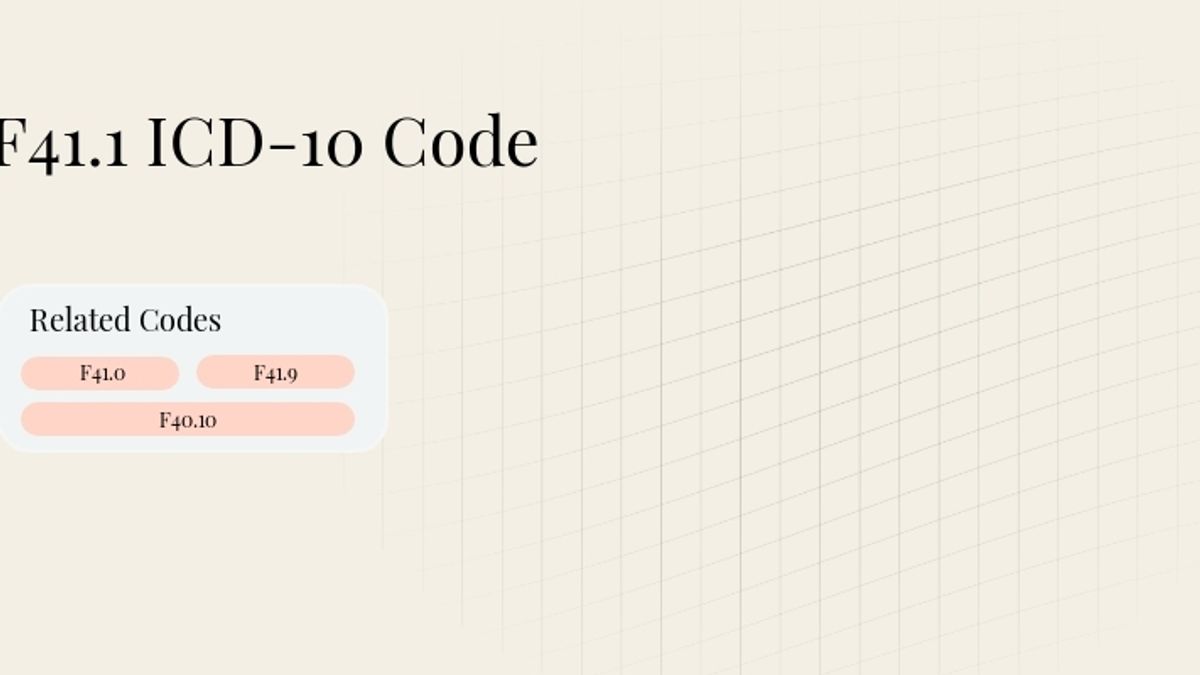
What is ICD-10 Code F41.1?
The ICD‑10 code F41.1 refers to Generalized Anxiety Disorder, a chronic condition characterized by persistent and excessive worry about various aspects of life such as health, finances, and relationships. Individuals with GAD often find it difficult to control their anxiety, leading to significant distress and impairment in daily functioning.
This disorder is differentiated from other anxiety disorders by the pervasive nature of the worry and associated symptoms, including restlessness, fatigue, difficulty concentrating, irritability, muscle tension, and sleep disturbances. Understanding this code is essential for healthcare providers to ensure appropriate diagnosis and treatment plans are implemented.
Services Covered Under ICD-10 Code F41.1
This code encompasses a variety of services aimed at diagnosing and treating Generalized Anxiety Disorder. Below is a detailed data table illustrating the services covered.
Service Type | Description |
|---|---|
Psychiatric Evaluation | A comprehensive assessment to diagnose GAD, including patient history and symptom evaluation. |
Cognitive Behavioral Therapy (CBT) | A structured therapy aimed at changing negative thought patterns associated with anxiety. |
Medication Management | Prescribing and monitoring anxiolytics or antidepressants to manage symptoms effectively. |
Group Therapy | Facilitated sessions where patients can share experiences and coping strategies in a supportive environment. |
Who Can Use the F41.1 ICD-10 Code
Various healthcare professionals can use this code for billing purposes, provided they meet specific qualifications and criteria.
- Psychiatrists: Can diagnose and treat GAD, often prescribing medications as part of the treatment plan.
- Psychologists: Typically provide therapy and psychological assessments, including CBT for anxiety disorders.
- Primary Care Physicians: May initially diagnose and treat GAD, referring patients to specialists as needed.
- Licensed Clinical Social Workers: Can offer therapy and support services for patients experiencing GAD.
How to Use ICD-10 Code F41.1
Proper use of this code is crucial for accurate billing and treatment documentation. Here are steps to ensure its correct application:
- Document symptoms: Clearly outline the patient's anxiety symptoms and their duration. For example, a patient reports excessive worry about health and finances for over six months.
- Include treatment details: Record the type of therapy or medication prescribed. For instance, the patient is receiving CBT sessions once a week.
- Track patient progress: Regularly update notes on the patient's response to treatment, such as decreased anxiety levels noted during follow-up visits.
Reimbursement Rates for ICD-10 Code F41.1
Insurance Type | Reimbursement Rate |
|---|---|
Medicare | $100 per session |
Medicaid | $75 per session |
Private Insurance | $90 per session |
Disclaimer: Reimbursement rates can change frequently and depend on various factors, including the specific insurance plan, location, and provider contracts. This article will be updated with average prices as they evolve.
Benefits of ICD-10 Code F41.1
This code has several benefits that enhance treatment and billing processes. Below is a detailed data table illustrating its advantages.
Benefit | Description |
|---|---|
Accurate Diagnosis | Ensures patients receive appropriate treatment by clearly identifying GAD. |
Insurance Coverage | Facilitates reimbursement for services related to GAD, ensuring financial viability for providers. |
Standardized Treatment | Promotes evidence-based practices in treating anxiety, improving patient outcomes. |
Improved Patient Care | Allows for comprehensive tracking of patient progress and treatment efficacy over time. |
Common Mistakes to Avoid with ICD-10 Code F41.1
Misuse of this code can lead to audits, claim denials, and financial losses. Understanding common mistakes can help avoid these pitfalls.
- Inadequate Documentation: Failing to document the severity and duration of symptoms can undermine the justification for the diagnosis. For instance, a provider may not note the patient's anxiety levels adequately during sessions.
- Incorrect Code Assignment: Using this code when a different mental health diagnosis is more appropriate can lead to billing errors. For example, coding GAD when the patient has a panic disorder instead.
- Not Tracking Treatment Progress: Without ongoing documentation of treatment effectiveness, claims may be questioned. For example, a provider may not record significant changes in the patient's anxiety levels over time.
- Failure to Meet Insurance Requirements: Not adhering to specific insurance guidelines for GAD treatment may result in claim denials. For instance, a provider may not follow the required session frequency as stipulated by the insurer.
ICD-10 Code F41.1 vs Other Codes
Comparing this code with other similar codes helps clarify its specific use and context in mental health care.
ICD-10 Code | Description | Comparison |
|---|---|---|
F41.0 | Panic Disorder | Characterized by recurrent panic attacks, unlike the chronic worry seen in GAD. |
F41.9 | Anxiety Disorder, Unspecified | A more general code that lacks the specificity of GAD, making it less suitable for billing. |
F40.10 | Social Anxiety Disorder | Focuses on fear related to social situations rather than generalized anxiety. |
Conclusion
Understanding the ICD‑10 code for Generalized Anxiety Disorder is crucial for healthcare providers involved in diagnosing and treating this condition. Proper documentation, adherence to billing guidelines, and awareness of common pitfalls can significantly enhance the efficiency of mental health services. By employing best practices and staying updated on reimbursement rates and coding standards, providers can ensure that they deliver effective care while maintaining compliance with insurance requirements.
Disclaimer: This article is for informational purposes only and does not constitute legal or medical advice. Always consult professional guidelines and regulatory bodies for specific compliance requirements.