


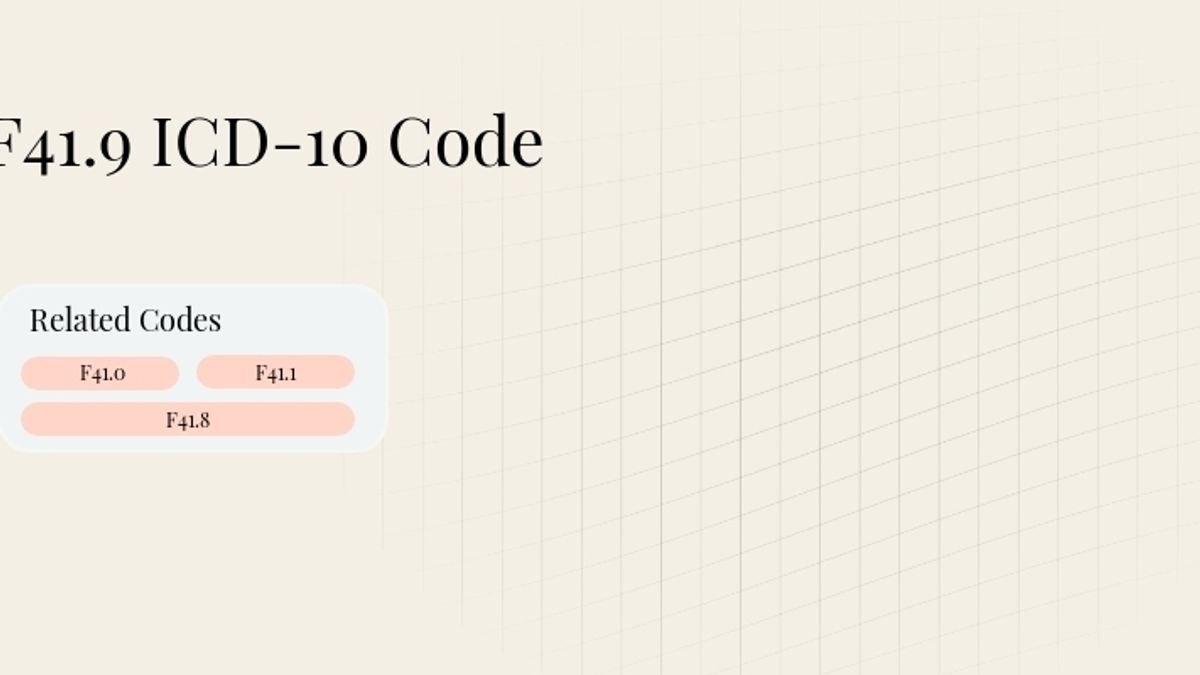
What is ICD-10 Code F41.9?
ICD‑10 Code F41.9 refers to "Anxiety Disorder, Unspecified," which is used when a patient exhibits symptoms of anxiety but does not meet the criteria for a more specific anxiety disorder. This code is essential for capturing cases where anxiety is present but lacks a precise diagnosis, allowing healthcare providers to classify and treat these conditions effectively.
This code can be applied across various settings, including outpatient therapy sessions, hospital admissions, or emergency department visits. It is crucial for mental health professionals to recognize the nuances of this classification, as it influences treatment plans and insurance reimbursement.
Services Covered Under ICD-10 Code F41.9
The following table outlines the services typically covered when billing with this code:
Service Type | Description | Typical Duration |
|---|---|---|
Psychotherapy | Individual therapy sessions focusing on anxiety management. | 30-60 minutes |
Group Therapy | Sessions involving multiple patients discussing anxiety in a supportive environment. | 60-90 minutes |
Psychiatric Evaluation | A comprehensive assessment to diagnose anxiety disorders. | 45-90 minutes |
Medication Management | Monitoring and prescribing medications to manage anxiety symptoms. | 15-30 minutes |
Who Can Use the F41.9 ICD-10 Code?
The use of this code is generally reserved for qualified mental health professionals. Here are the key roles that may apply this code:
- Psychiatrists: Medical doctors specializing in diagnosing and treating mental health disorders, including anxiety.
- Psychologists: Professionals trained in mental health assessment and therapy who can provide psychotherapy.
- Licensed Clinical Social Workers (LCSWs): Social workers with specialized training in mental health who can offer therapy and support.
- Nurse Practitioners (NPs): Advanced practice nurses who can diagnose and treat anxiety disorders, including prescribing medications.
How to Use ICD-10 Code F41.9
When applying this code, careful documentation is essential. Here are some steps to consider:
- Document Symptoms: Clearly outline the patient's anxiety symptoms. For example, if a patient experiences excessive worry and restlessness, record these specifics.
- Record Treatment Plan: Include the therapeutic approaches being implemented, such as cognitive-behavioral therapy (CBT) or mindfulness techniques.
- Monitor Progress: Regularly assess and document the patient's progress. For instance, if a patient reports reduced anxiety levels after several sessions, note this improvement.
Reimbursement Rates for ICD-10 Code F41.9
Insurance Type | Average Reimbursement Rate |
|---|---|
Private Insurance | $100 - $150 per session |
Medicare | $75 - $125 per session |
Medicaid | $50 - $100 per session |
Disclaimer: Reimbursement rates are subject to change and may vary based on specific plans and other factors. This article will be updated to reflect average rates regularly.
Benefits of ICD-10 Code F41.9
This code offers several advantages for both providers and patients. The following table highlights these benefits:
Benefit | Description |
|---|---|
Broad Applicability | Allows for treatment of patients who do not fit into specific anxiety categories, ensuring that more individuals receive appropriate care. |
Facilitates Insurance Reimbursement | Enables providers to receive compensation for treating anxiety symptoms, which is critical for sustaining mental health practices. |
Encourages Comprehensive Treatment | Promotes thorough documentation and treatment planning, leading to better patient outcomes. |
Common Mistakes to Avoid with ICD-10 Code F41.9
Misusing this code can lead to audits and denials, impacting revenue cycles and patient care. Here are common mistakes to avoid:
- Inadequate Documentation: Not providing detailed notes on patient symptoms can result in denials. For example, a therapist may fail to document the specific anxiety triggers discussed during sessions.
- Incorrect Session Length: Billing for sessions that do not meet the minimum duration can lead to reimbursement issues. For instance, a 15-minute session billed as a standard therapy session may be rejected.
- Failure to Update Patient Status: Not adjusting the diagnosis code as the patient's condition improves can lead to inaccuracies in billing. For example, continuing to use this code after a patient has been diagnosed with a specific anxiety disorder is incorrect.
- Assuming Automatic Coverage: Believing that all services related to anxiety automatically qualify for this code without proper evaluation can lead to billing errors. For instance, providers might mistakenly bill this code for a general wellness visit that does not involve anxiety treatment.
ICD-10 Code F41.9 vs Other Codes
Understanding how this code compares to others in the anxiety disorder category can help in accurate coding and billing. The following table provides a comparison:
Code | Description |
|---|---|
F41.0 | Panic disorder |
F41.1 | Generalized anxiety disorder |
F41.8 | Other specified anxiety disorders |
F41.9 | Anxiety disorder, unspecified |
Conclusion
The ICD‑10 code for unspecified anxiety disorder plays a crucial role in accurately diagnosing and treating patients experiencing anxiety without a clear categorization. By understanding its applications, documentation requirements, and reimbursement implications, healthcare providers can enhance patient care while ensuring compliance with billing practices. Proper use of this code can lead to better patient outcomes and sustainability for mental health practices.
Disclaimer: This article is for informational purposes only and does not constitute legal or medical advice. Always consult professional guidelines and regulatory bodies for specific compliance requirements.