


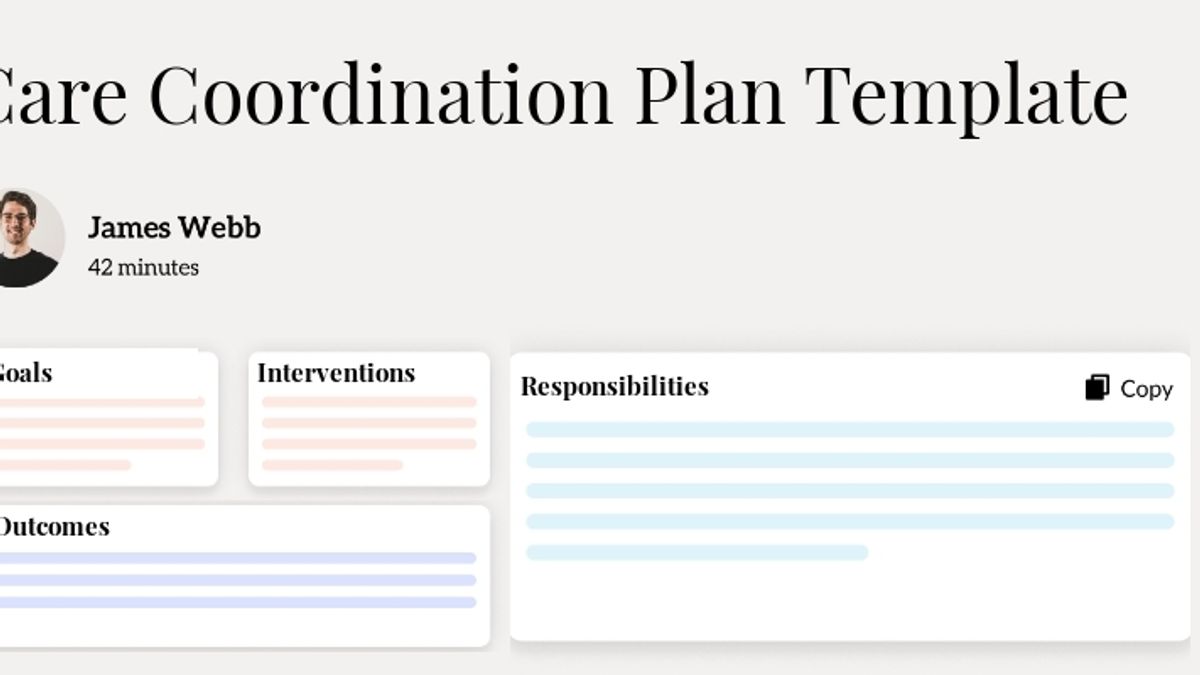
In the hustle and bustle of managing patient care, an efficient care coordination plan can feel like a lifeline. You're likely here because you’ve experienced the chaos that can ensue when communication breaks down in healthcare teams. Fear not! By the end of this article, you'll have the tools to streamline your coordination efforts with a solid care coordination plan template.
What Is a Care Coordination Plan Template?
The care coordination plan template is a structured format for organizing and sharing pertinent information about a patient's care across all involved parties. It serves as a roadmap to improving patient outcomes by enhancing communication and resource allocation.
This template not only outlines the healthcare needs of the patient but also details the roles and responsibilities of each team member involved in the care process. Its primary aim is to eliminate ambiguity and ensure all parties are well‑informed and aligned in their approach.
Key Components of a Care Coordination Plan
A care coordination plan should consist of several key components to ensure comprehensive documentation:
- Patient Information: Essential demographics and contact details.
- Healthcare Providers: List of all involved healthcare professionals including primary contacts.
- Medical History: A concise summary of the patient’s medical background.
- Assessment and Goals: Clinical assessments and targeted health outcomes.
- Interventions: Detailed plan of actions to achieve the care goals.
- Care Timeline: Timelines for reassessment, follow-ups, and interventions.
- Evaluation Metrics: Criteria for assessing the progress and effectiveness of the care provided.
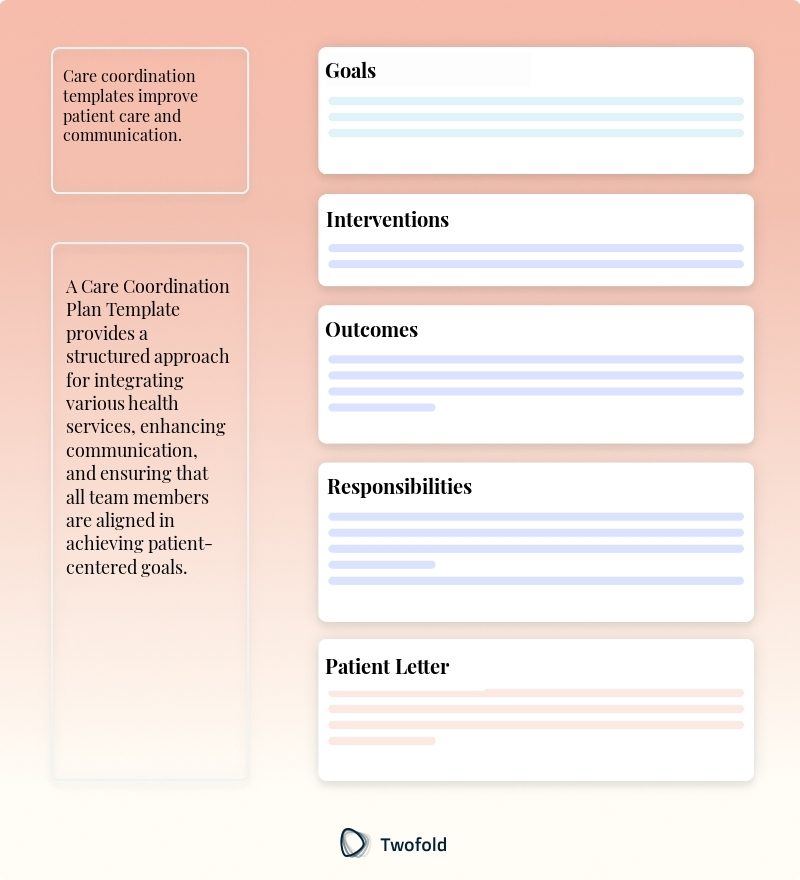
How to Use a Care Coordination Plan Template: Step-by-Step Process
- Gather complete patient information and ensure all details are up-to-date.
- Convene a meeting with the care team to discuss the patient's goals and current health status.
- Fill out the template beginning with patient data, followed by medical history and assessments.
- Identify specific care goals and establish a coherent plan of interventions.
- Assign roles and responsibilities to each team member involved.
- Determine evaluation metrics to periodically assess the effectiveness of the care plan.
- Share the completed plan with the entire care team and update it regularly.
Benefits of a Care Coordination Plan
Benefit | Description |
|---|---|
Improved Communication | Facilitates open communication across interdisciplinary teams, minimizing errors and miscommunication. |
Patient-Centered Care | Ensures that care is tailored to meet the unique needs of each individual patient, leading to better health outcomes. |
Efficiency in Care Delivery | Streamlines processes and ensures that resources are used effectively, reducing unnecessary interventions. |
Accountability | Clearly outlines each team member's roles, fostering accountability and responsibility. |
Stakeholders in Care Coordination
The success of a care coordination plan is heavily reliant on the active involvement of various stakeholders:
- Primary Care Physicians: Dr. Smith coordinates the treatment plan by regularly updating the team on patient progress.
- Nurses: Sarah, a registered nurse, ensures the patient's daily needs are met and communicates any changes in condition.
- Specialists: Dr. Chan, a cardiologist, provides expert insights and adjustments to cardiac treatment protocols.
- Social Workers: Laura assists in addressing the socio-economic aspects affecting patient care, such as access to transportation for appointments.
- Pharmacists: Thomas reviews and manages medication plans to prevent adverse drug interactions.
Example of a Care Coordination Plan
Consider a geriatric patient who requires coordination between their primary care provider, a cardiologist, and a nurse. The plan includes communication protocols, scheduled monitoring, and regular family meetings.