


You've probably spent more time than you'd like scrolling through an endless stream of charts and notes, trying to make sense of a patient's medical history. It can be frustrating, especially when you're pressed for time or need to make a quick decision. That's where a well‑structured Medical Chart Template can come to your rescue. This article will guide you through the nuances of using these templates effectively and show you how they can transform the typically tedious task of medical documentation into a more streamlined process.
What Is a Medical Chart Template?
A Medical Chart Template is a standardized document layout used by healthcare professionals to record, update, and maintain a patient’s medical information. It ensures that all relevant data, from medical history to treatment updates, is systematically documented.
The primary purpose of these templates is to enhance communication among medical staff, reducing errors and improving the quality of patient care. This framework allows for the efficient and accurate recording of a patient's journey through the healthcare system.
Key Components of a Medical Chart Template
Essential elements included in a Medical Chart Template are:
- Patient Information: Demographic and personal details.
- Medical History: Past medical events, allergies, and family history.
- Medications: Current prescriptions and dosages.
- Today's Visits: Presenting complaints, diagnostic tests, and outcomes.
- Physical Examination: Vital signs and general health observations.
- Plan of Care: Treatment plans and future visits or procedures.
- Notes Section: General remarks and observations by various medical staff.
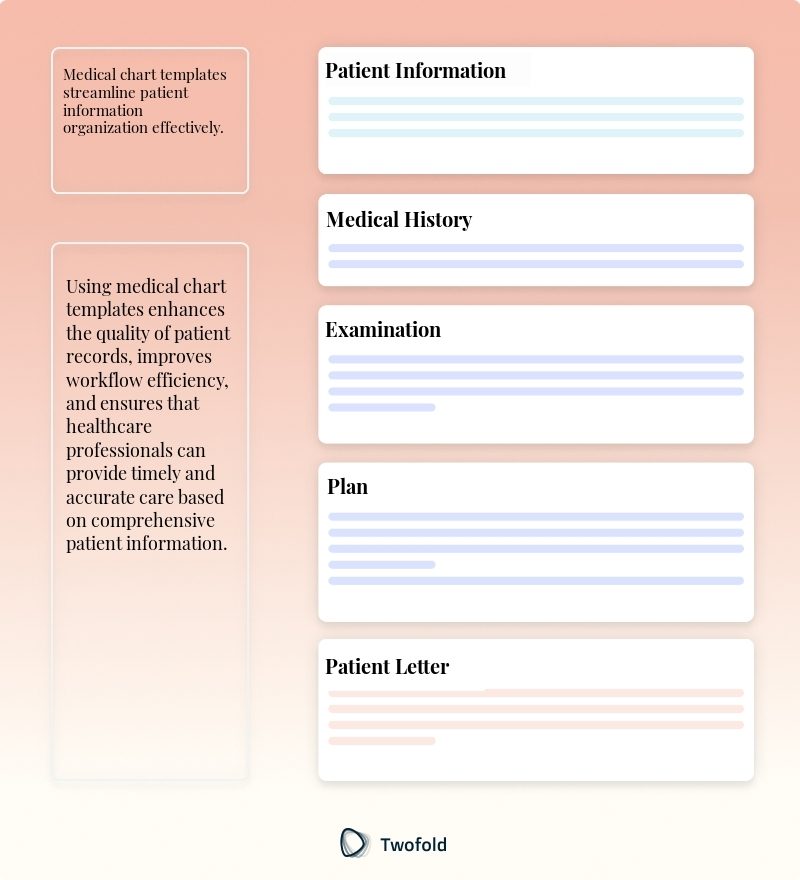
How to Use a Medical Chart Template: Step-by-Step Process
Step 1: Gather Patient Information
Begin by collecting all necessary demographic data, such as name, age, and contact information. Confirm these details with the patient to avoid inaccuracies.
Step 2: Record Medical History
Log past medical records, including chronic conditions, previous surgeries, and known allergies. Ensure this section is meticulously updated to portray an accurate picture.
Step 3: Review Current Medications
Insert any prescribed medication details, including dosages and frequencies. Align them against known allergies and previous adverse reactions.
Step 4: Document Current Visit Details
Note the reasons for the current visit, symptoms presented, and any diagnostic tests conducted. Also, provide space for the results once available.
Step 5: Outline Physical Examination Findings
Record vital signs and other physical examination results systematically. This can help in observing trends over time.
Step 6: Develop the Plan of Care
Conclude by detailing the treatment plan, medications prescribed, and any instructions given to the patient for home care. Schedule follow‑up appointments as needed.
Benefits of a Medical Chart Template
Benefit | Explanation |
|---|---|
Improved Accuracy | Reduces the risk of errors by providing a consistent format for data entry. |
Efficient Communication | Facilitates the transfer of information among healthcare providers effectively. |
Time-Saving | Eliminates the need for starting documentation from scratch during each visit. |
Easy Accessibility | Ensures that relevant patient data is quickly accessible when needed. |
Stakeholders in Medical Chart Templates
Several stakeholders benefit from the structured use of Medical Chart Templates:
- Doctors: Leveraging charts for quick reference during patient visits can drastically reduce diagnosis time. Consider a pediatrician who swiftly identifies a known allergic reaction due to accurate historical documentation.
- Nurses: Effective charting helps nurses manage their workflows by accurately tracking medication schedules. Imagine a busy ER nurse using the chart to immediately know a patient's last administered medication.
- Hospital Administrators: Charts assist in auditing and managing patient records for quality control purposes. An administrator might use charts to quickly verify compliance with medical standards during an audit.
- Patients: Transparent record-keeping provides patients with a clear understanding of their health journey. A patient referring to their chart can better manage their own health outcomes by understanding their history and treatment plans.
Example of a Medical Chart Template
Here is a brief overview of how a Medical Chart Template could look in practice, incorporating all the key components in a digital format for ease of use.