
Free for a week, then $19 for your first month
Template

Service Dog Letter From Doctor Template

Discover practical Service Dog Letter From Doctor templates to enhance your documentation efficiency.

Service Dog Letter From Doctor Template Hero Image

Many people find themselves in need of a service dog letter from a doctor, whether due to anxieties, PTSD, or a myriad of other health concerns. Navigating the process can feel overwhelming, especially if you’re unsure of the right steps to take. Don’t worry; this guide will help you understand what you need to create a compelling letter that clearly indicates your need for a service dog.

What Is a Service Dog Letter From Doctor Template?

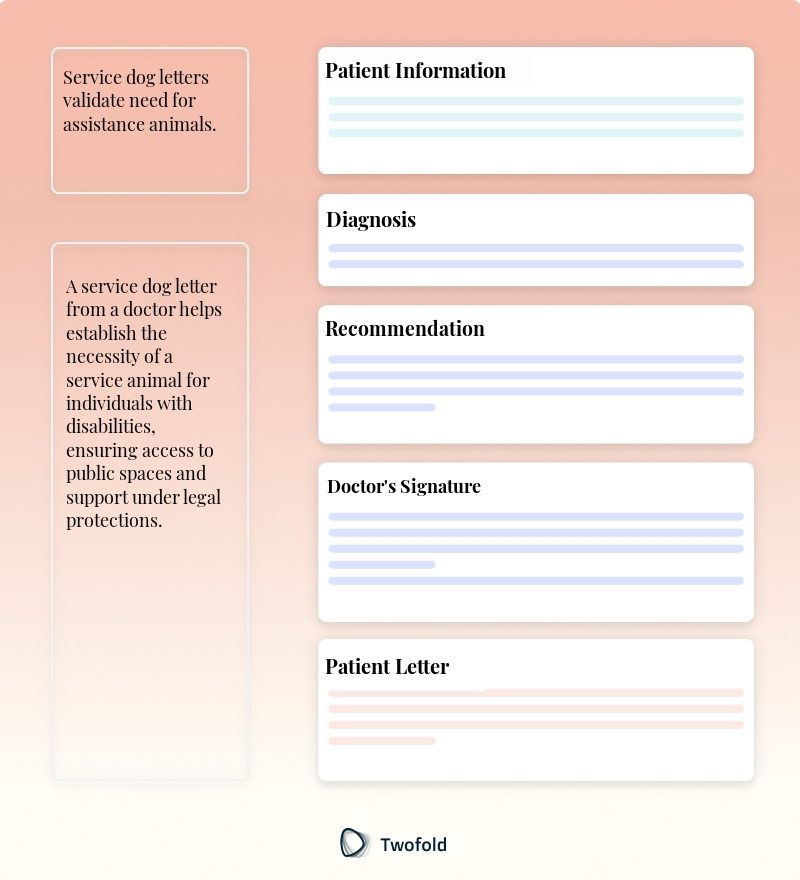
A service dog letter from a doctor is a formal document that confirms a patient's need for a service animal. This letter serves to validate the health condition and the necessity of the trained dog to assist in daily tasks.

Using a template can simplify the process, ensuring that all vital information is included in a structured manner. This approach can help both the patient and healthcare provider in drafting an effective letter quickly.

Key Components of a Service Dog Letter Template

The following points are critical when crafting a service dog letter:

  • Patient’s full name and contact information
  • Provider's credentials and contact information
  • Date of the letter
  • Statement of the patient's condition
  • Explanation of how the service dog assists the patient
  • Provider’s signature
Key Components of Service Dog Letter From Doctor Template

How to Use a Service Dog Letter From Doctor Template: Step-by-Step Process

  1. Obtain or download a service dog letter template.
  2. Fill in the patient's personal information at the top of the letter.
  3. Provide detailed information about the patient’s condition.
  4. Describe the specific tasks the service dog will perform.
  5. Sign the letter with professional credentials and date it.
  6. Provide a copy to the patient for their records.

Benefits of a Service Dog Letter

Benefit

Description

Legal Protection

Helps ensure compliance with the Americans with Disabilities Act.

Access to Public Places

Allows entry with the service dog into restaurants, stores, and transportation.

Awareness and Understanding

Educates others about the necessity of service dogs for certain conditions.

Support in Housing

Facilitates support for tenant rights in no-pet policies under Fair Housing laws.

Emotional Well-Being

Provides validation of the patient’s needs, contributing to mental health improvement.

Stakeholders in Service Dog Letter Template

Several stakeholders are involved in the process of acquiring a service dog letter. Each plays a crucial role in ensuring that patients receive proper support.

  • Healthcare Providers: They issue the letter, ensuring it contains accurate information about the patient's condition.
  • Patients: They require the letter to access legal protections and public accommodations.
  • Service Dog Trainers: They train the dogs to perform specific tasks that assist the patient effectively.
  • Legal Advisors: They provide guidance to ensure compliance with disability laws.

Example of a Service Dog Letter From Doctor

Here’s an example of how a service dog letter might look:

See Template Example

Real-World Use Cases: Practical Impact of the Service Dog Letter Template

Understanding the real‑world implications of the service dog letter can highlight its importance:

  • Veterans: a veteran with PTSD secures a service dog letter, helping him to go to social events without anxiety, improving his quality of life.
  • Children: a child with autism receives a letter granting access to a service dog that calms him during crowded school events, reducing stress for both the child and parents.
  • Fear of Flying: An individual with severe anxiety uses the letter to travel by air, resulting in a more comfortable journey thanks to the support of a service dog.

Conclusion

A service dog letter from a doctor is a vital tool for individuals needing assistance from a trained animal. Understanding its components, importance, and proper format can empower patients in their quest for support. This guide provides practical steps and expert tips that streamline the process and enhance compliance with legal standards.

Disclaimer: This article is for informational purposes only and does not constitute legal or medical advice. Always consult professional guidelines and regulatory bodies for specific compliance requirements.

FAQ

Frequently asked questions

  • What are some advanced considerations when using this template in complex cases?

    In cases of comorbid conditions, it's important to detail how the service dog assists with each specific ailment while ensuring clarity in the letter.

    Consider including assessments from multiple healthcare providers if the patient is receiving support for various diagnoses, as this demonstrates a well‑rounded approach to their treatment.

    Be mindful of state‑specific laws regarding service dogs, as requirements may vary; ensure that the letter aligns with local regulations to prevent any potential legal challenges.

  • How does this template interact with other related procedures or billing requirements?

    Billing for related therapies that accompany a service dog may require detailed documentation that supports the medical necessity of both the therapy and the service animal.

    Ensure that the service dog letter explicitly relates to any corresponding treatment plans to facilitate seamless insurance claims, especially in cases involving mental health support, as insurers may have specific criteria.

    In instances where additional assessments or consultations are needed, they should be coded appropriately to reflect the comprehensive care being provided.

  • What are some practical tips for optimal implementation of this template?

    Use a structured template that incorporates all necessary elements to enhance clarity and prevent omissions, which can lead to delays.

    Regularly update your knowledge on shifting laws and regulations surrounding service animals to provide current and accurate information in letters.

    Facilitate training for staff on best practices for issuing these letters to ensure uniformity and compliance with medical guidelines while addressing patients’ needs effectively.