



Whether you're a healthcare professional, office manager, or a patient trying to understand healthcare processes, you've probably come across the concept of patient registration forms. These documents can often seem daunting, but they are essential for ensuring that a patient's journey through the healthcare system is smooth and effective. Let's break down the patient registration form template and explore why it's so crucial.
What Is a Patient Registration Form Template?
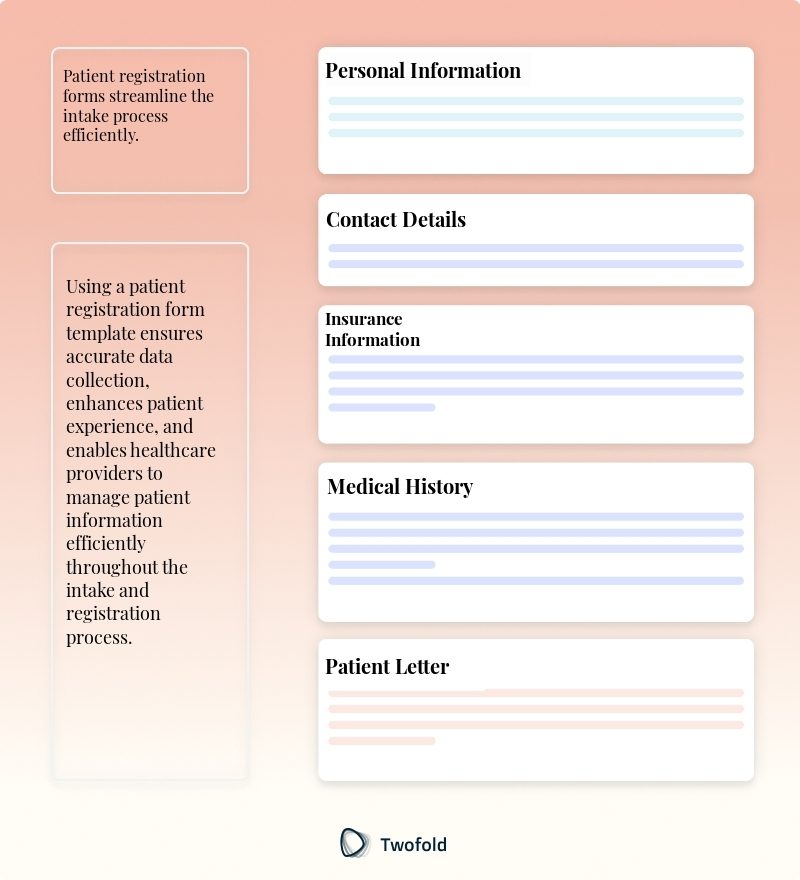
A patient registration form template is a standardized document used to collect essential information from new patients at a healthcare facility. This form typically gathers personal details, contact information, medical history, and insurance information.
The use of templates helps healthcare providers ensure that they collect uniform data for all patients, simplifying the process of record‑keeping and enabling better patient management.
Key Components of a Patient Registration Form
There are several critical components that should be included in a patient registration form to ensure comprehensive data collection:
- Patient's full name
- Date of birth
- Contact information (address, phone number, email)
- Emergency contact details
- Insurance information
- Medical history (including allergies and medications)
- Consent for treatment and privacy notice acknowledgment
How to Use a Patient Registration Form Template: Step-by-Step Process
- Download the patient registration form template from a reliable healthcare resource.
- Customize the template to fit the specific needs of your practice.
- Distribute the form to new patients upon their arrival.
- Instruct patients on how to fill out the form and provide assistance if needed.
- Collect completed forms and input the data into your patient management system.
- Store the forms securely in compliance with privacy regulations.
Benefits of a Patient Registration Form
Benefit | Description |
|---|---|
Streamlined Data Collection | Standardizing patient information helps in quick and efficient data gathering. |
Improved Patient Experience | A well-structured form can enhance patient satisfaction by making registration easy. |
Regulatory Compliance | Forms that meet legal standards help avoid potential legal issues for the practice. |
Data Consistency | Using a template ensures uniformity in the information collected across patients. |
Efficient Communication | Clearly gathering contact information facilitates easier follow-ups and communication. |
Stakeholders in Patient Registration Forms
The patient registration form involves several key stakeholders in the healthcare process:
- Healthcare Providers: Doctors and nurses rely on accurate patient data for treatment decisions. For example, a physician may review medical histories before prescribing medications.
- Administrative Staff: Office staff manage the forms and ensure data entry into systems, making their processes quicker and more organized.
- Patients: Patients provide the necessary information, affecting their care experience. A patient who fills out a registration form correctly can receive timely care and services.
- Insurance Companies: They depend on accurate information for billing and reimbursement processes, ensuring that healthcare facilities are compensated correctly.
Example of a Patient Registration Form
Here is a basic example of what a patient registration form might include:
- Patient Name: __________________________
- Date of Birth: __________________________
- Address: ________________________________
- Phone Number: __________________________
- Insurance Provider: ______________________