

Imagine you're sitting in a dental chair, nervously contemplating the procedure ahead. You aren't alone; many patients feel this way. But the primary issue isn't just the dental work—it's understanding the terms and consent involved. That's where a well‑crafted Dental Treatment Consent Form can make a significant difference, easing anxiety with clear communication.
What Is a Dental Treatment Consent Form Template?
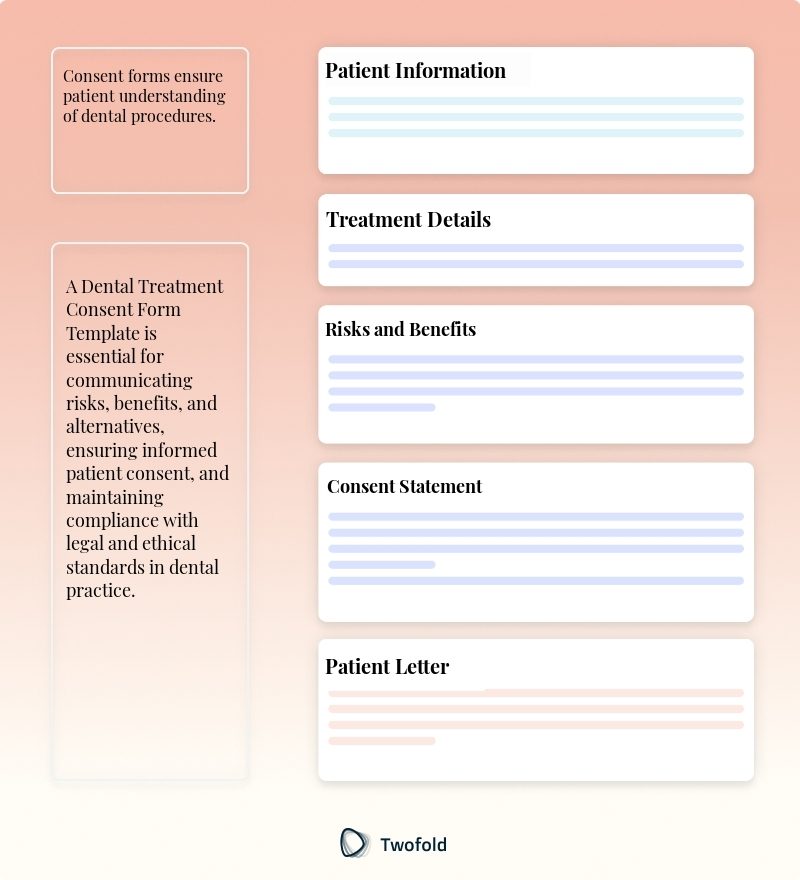
A Dental Treatment Consent Form Template is a standardized document used to obtain a patient's permission before proceeding with dental procedures. It outlines the details of the treatment, potential risks, benefits, and alternative options.
This template is a vital part of dental practice, providing both legal protection for the dentist and clarity for the patient. It is designed to facilitate informed decision‑making by comprehensively outlining the treatment details.
Key Components of a Dental Treatment Consent Form
Here are the core elements that comprise a comprehensive consent form:
- Patient information, including name, age, and contact details.
- Description of the proposed treatment or procedure.
- Potential risks and complications associated with the procedure.
- Alternative treatments and their risks/benefits.
- Patient's acknowledgment and voluntary agreement to the procedure.
- Signature lines for both patient and dentist with date fields.
How to Use a Dental Treatment Consent Form Template: Step-by-Step Process
Step 1: Customize the Template
Insert specific patient and treatment information to personalize the form.
Step 2: Explain the Procedure
Discuss the procedure in detail with the patient and make notes if necessary.
Step 3: Highlight Risks and Alternatives
Ensure the patient understands all possible risks and alternative treatments.
Step 4: Obtain Patient Acknowledgment
Confirm patient understanding and agreement, requiring signature and date.
Step 5: Record and Store Safely
Store the signed form securely in the patient's file, both digitized and on paper if needed.
Benefits of a Dental Treatment Consent Form
Benefit | Description |
|---|---|
Legal Protection | Protects dentists against liability by providing a clear record of patient consent. |
Patient Confidence | Increases trust through transparency about procedures and risks. |
Clear Communication | Documents all aspects of treatment clearly, avoiding misunderstandings. |
Time Efficiency | Saves time during consultations by having pre-prepared, customizable templates. |
Stakeholders in Dental Treatment Consent Forms
Several parties are involved in the use of dental treatment consent forms:
- Dentists: Ensure patients are fully informed, reducing potential liability. For example, Dr. Smith uses the forms to explain procedures, elevating patient understanding and trust.
- Patients: Gain understanding and reassurance through clearly defined details of procedures. A patient like Jane Doe feels more at ease when every step is explained and documented.
- Legal Advisors: Craft and review forms for legal compliance. Laura, a legal consultant, works with dental practices to keep forms updated with current legal standards.
Example of a Dental Treatment Consent Form PDF
A downloadable example of a Dental Treatment Consent Form PDF helps visualize its layout and structure.