

Free for a week, then $19 for your first month
Template

Physical Exam Checklist Template

Discover practical Physical Exam Checklist templates to enhance your documentation efficiency.

Physical Exam Checklist Template Hero Image

Creating a comprehensive physical exam checklist isn't just about checking boxes; it's about ensuring every patient's needs are covered with precision and care. Cultivating an effective checklist might seem overwhelming, especially when you're trying to balance thoroughness with efficiency. Let's explore how a refined template can transform your approach to physical examinations.

What Is a Physical Exam Checklist Template?

A Physical Exam Checklist Template is a structured format used by healthcare professionals to systematically assess a patient's health. It ensures that all necessary examination components are covered, minimizing the risk of oversight.

This template serves as a reminder and guide during patient evaluations, encompassing various systems and functions to deliver comprehensive patient care. The checklist approach aids in maintaining a high standard of health assessment, ensuring attention to detail.

Key Components of a Physical Exam Checklist?

An effective physical exam checklist typically includes the following key elements:

  • Patient identification and demographic details
  • Vital signs: blood pressure, heart rate, temperature, respiratory rate
  • General appearance and mental status
  • Head and neck examination: ears, eyes, throat, lymph nodes
  • Cardiovascular examination: heart sounds, jugular venous pressure
  • Respiratory examination: lung sounds, percussion findings
  • Abdominal examination: bowel sounds, palpation findings
  • Musculoskeletal evaluation: joint function, range of motion
  • Neurological assessment: reflexes, coordination, sensory responses
  • Skin examination: lesions, rashes, color changes
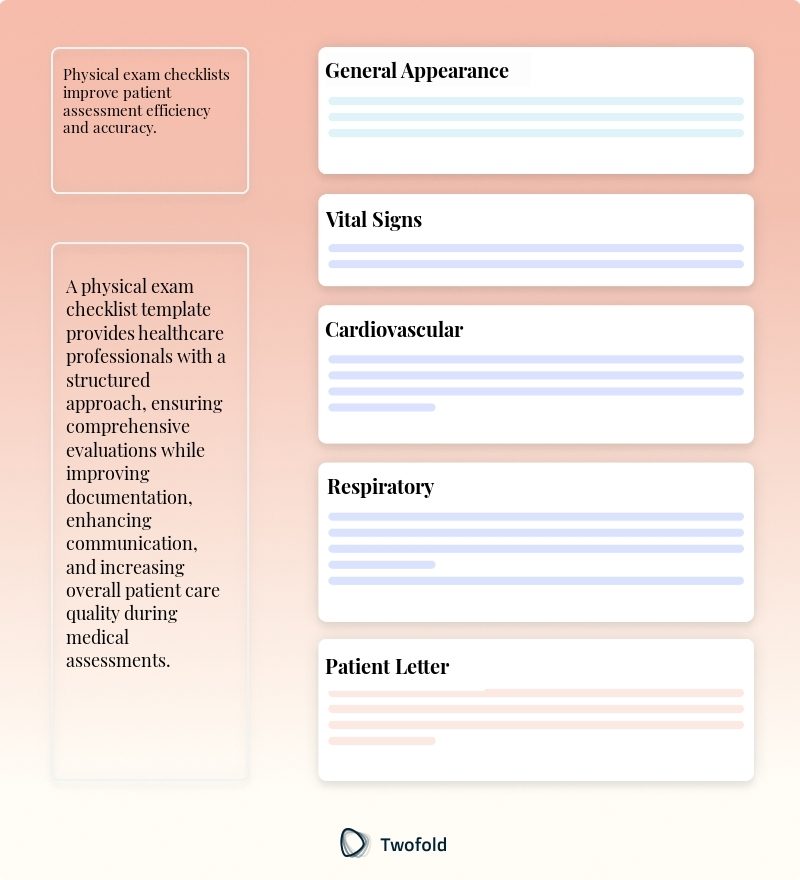
Key Components of Physical Exam Checklist Template

How to Use a Physical Exam Checklist Template: Step-by-Step Process

  1. Begin with patient identification to confirm details and document consent for examination.
  2. Record initial observations including general appearance and any immediate concerns noted by the patient.
  3. Proceed with measuring and charting vital signs accurately.
  4. Follow the checklist sequentially, examining each body system as outlined, ensuring no step is missed.
  5. Note any abnormalities, using precise medical terminology and supported by findings from the physical exam.
  6. Summarize findings at the end of the checklist to guide subsequent clinical decisions.

Benefits of a Physical Exam Checklist

Benefit

Description

Outcome

Comprehensive Assessment

Ensures all critical components of the physical exam are covered

Reduces the likelihood of missing critical signs

Consistency

Provides a standardized approach to physical exams

Improves quality and reliability of patient care

Efficiency

Streamlines the examination process

Allows for more focused patient care and reduced exam time

Training Tool

Serves as a guide for educating new healthcare practitioners

Accelerates learning and ensures adherence to best practices

Stakeholders in Physical Exam Checklist

Several stakeholders benefit from a detailed physical exam checklist:

  • Healthcare Providers: Doctors and nurses use the checklist to ensure comprehensive patient evaluations, leading to better diagnosis and treatment plans.
  • Patients: Patients gain confidence in receiving a thorough examination, as illustrated by Mrs. Andrews, who, through a detailed checklist, had her chronic condition identified early.
  • Hospitals: Institutions benefit from standardization which can improve their quality scores and reputation, like St. Mary's Hospital which launched a successful checklist campaign resulting in enhanced patient satisfaction ratings.

Example of a Physical Exam Checklist

Consider a checklist template that's customized for pediatric exams, emphasizing aspects such as growth tracking, developmental milestones, and vaccination status verification.

See Template Example

Real-World Use Cases: Practical Impact of the Physical Exam Checklist Template

The implementation of physical exam checklists has brought tangible improvements across various practices:

  • Reduced Exam Times: In a busy urban clinic, standardized checklists reduced exam times by 20%, freeing up resources for additional patient consultations.
  • Detection of Chronic Diseases: In a rural healthcare setting, a comprehensive checklist helped detect and manage chronic illnesses earlier, reducing long-term healthcare costs.
  • Involvement In Treatment: A family practice increased patient satisfaction rates after employing checklists, as patients felt more involved and informed about their health status during check-ups.

Conclusion

The physical exam checklist template is a vital tool in ensuring thorough, efficient, and consistent patient assessments. By embracing these structured, comprehensive guides, healthcare professionals not only improve patient outcomes but also streamline their workflows, demonstrating the true impact of such checklists in modern medical practice.

Disclaimer: This article is for informational purposes only and does not constitute legal or medical advice. Always consult professional guidelines and regulatory bodies for specific compliance requirements.

FAQ

Frequently asked questions

  • How do physical exam checklists accommodate patients with rare or complex medical conditions?

    When dealing with patients who have rare or complex medical conditions, it's important to customize the checklist to include specific signs, symptoms, and diagnostic evaluations pertinent to those conditions.

    For example, certain genetic disorders might require additional neurological assessments that aren't standard in typical checklists. Providers should incorporate consultations with specialists, when necessary, to enhance the checklist’s relevance for these patients.

    Additionally, continuous feedback and updates from experienced clinicians encountering such cases can help refine the checklist to be more inclusive of non‑standard observations.

  • What considerations are important when integrating a physical exam checklist into electronic health record (EHR) systems?

    Integrating a physical exam checklist into EHR systems demands careful mapping of the checklist components to existing data fields within the EHR. This ensures that all necessary data points are captured and seamlessly incorporated into patient records.

    Maintain EHR flexibility to accommodate updates or expansions of the checklist while ensuring user‑friendliness for clinicians.

    It's also crucial to balance the granularity of the data captured with the need for efficient data entry processes, which might involve customizing user interfaces with specific templates or quick‑fill options.

  • What are the key challenges in training staff to effectively utilize a detailed physical exam checklist?

    One of the key challenges is ensuring all staff have a deep understanding of each component's purpose and relevance. Training should focus not only on checklist usage but also on clinical reasoning to interpret findings effectively.

    Practicing with simulated patient scenarios can help staff become comfortable with seamlessly integrating the checklist into their workflow without compromising on care quality.

    Additionally, promoting a culture of feedback and continuous improvement encourages staff to propose enhancements to the checklist based on practical experience, ensuring it remains responsive to real‑world demands.