


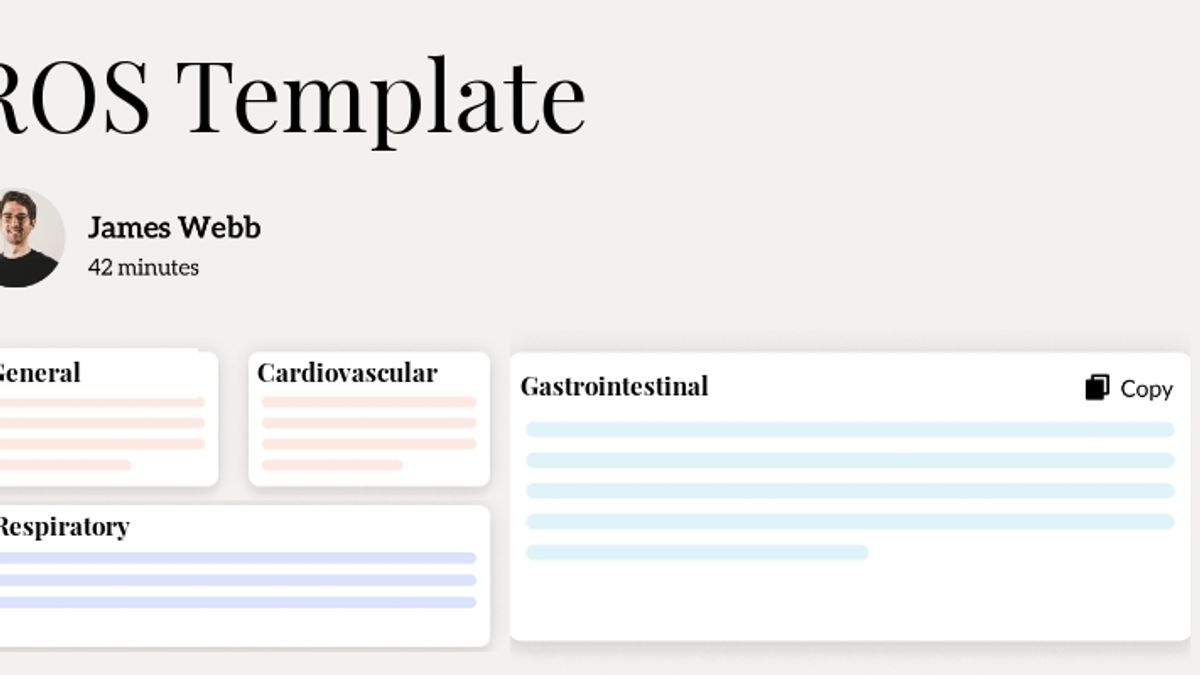
Have you ever sifted through an ocean of patient information, wishing there was a magical template to simplify the Review of Systems (ROS)? You're not alone. The medical ROS template is like a medical professional's secret weapon, streamlining the chaos of patient data into meaningful insights. But what makes it so effective? Let's explore the secrets of mastering this template to elevate your practice.
What Is an ROS Template?
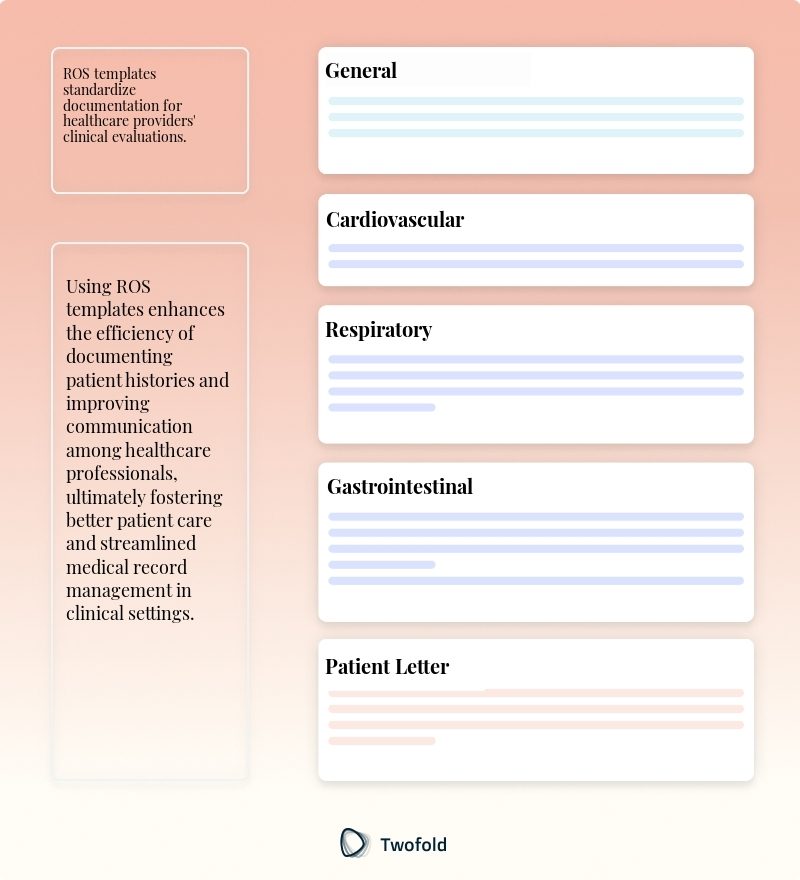
An ROS template is a structured document used in medical settings to systematically record a patient's health status through a comprehensive evaluation of each body system. It aids healthcare providers in gathering and organizing vital information, resulting in a coherent clinical picture.
These templates streamline the review process, ensuring all necessary systems are evaluated without overlooking critical data. By following a standardized approach, clinicians can efficiently detect irregularities and patterns that may signify underlying health concerns.
Key Components of an ROS Template
The ROS template includes specific sections designed to capture comprehensive health information:
- General Symptoms
- Eyes
- Ears, Nose, and Throat
- Cardiovascular
- Respiratory
- Gastrointestinal
- Musculoskeletal
- Neurological
- Psychiatric
- Endocrine
- Hematologic/Lymphatic
- Allergic/Immunologic
How to Use an ROS Template: Step-by-Step Process
Step 1: Patient Details
Begin by entering the patient's demographic information including name, age, and medical ID.
Step 2: Systematic Inquiry
Proceed through each body system listed in the template, asking pertinent questions and noting responses.
Step 3: Documentation
Record both positive and negative findings for each system to get a comprehensive view.
Step 4: Review and Finalize
Critically review the collected data, ensuring accuracy before finalizing the document.
Benefits of an ROS Template
Benefit | Description |
|---|---|
Efficiency | Streamlines gathering of patient systems data, reducing time spent on documentation. |
Comprehensive Care | Ensures no aspect of the patient's health is overlooked, promoting thorough evaluations. |
Consistency | Provides a standardized approach that fosters uniformity across medical teams. |
Diagnostic Aid | Helps in identifying patterns that might suggest underlying medical conditions. |
Stakeholders in an ROS Template
Several stakeholders play a pivotal role in the creation and utilization of ROS templates:
- Healthcare Providers: Doctors and nurses use the template to collect patient data systematically, enhancing diagnostic accuracy. For instance, a clinician promptly discovering a new symptom pattern through consistent use of an ROS template.
- EHR Developers: These stakeholders integrate ROS templates into EHR systems, customizing functionality to fit the healthcare setting's unique needs.
- Patients: Indirectly benefit from the use of ROS templates as their data is organized well, allowing for more efficient and effective consultations.
- Healthcare Administrators: These individuals ensure that the templates are updated according to institutional policies and healthcare regulations.
Example of an ROS Template
An example ROS template typically includes a list of all body systems with associated symptoms, presenting a structured approach for documenting both positive and negative findings.