


You're in your clinic and it feels like you're bombarded with endless paperwork and administrative tasks. The idea of a medical code Client Feedback Form Template promises the organizational magic you need. The pain of scattered feedback and disorganized notes grabs every practitioner's attention. And no matter how many patients you've helped, gathering and managing client feedback can be challenging. But don't worry, we've got expert insights to make this process a breeze!
What Is a Client Feedback Form Template?
A Client Feedback Form Template is a structured tool used by medical professionals to capture and assess client feedback effectively and efficiently. This form allows practitioners to gather insights directly from clients about their experiences and more effectively tailor the services provided.
The template helps streamline the feedback gathering process, ensuring no valuable client insights are lost in translation. By standardizing the feedback, it allows for easy comparison and assessment of client opinions and helps identify trends over time.
Key Components of a Client Feedback Form Template
The essential elements included in a Client Feedback Form Template are designed to capture comprehensive and detailed client feedback.
- Client Information: Name, date of visit, and service provided.
- Service Rating: A section for clients to rate the service on a scale (e.g., 1 to 5).
- Comments Section: An area for clients to provide detailed feedback or suggestions.
- Follow-Up Preference: Option for clients to request follow-up communication for unresolved issues.
- Anonymity Option: Ensures clients have the option to submit feedback anonymously.
How to Use a Client Feedback Form Template: Step-by-Step Process
Step 1: Customize and Finalize the Template
Tailor the template to suit the specifications of your services and client needs.
Step 2: Distribute the Feedback Form
Make the form available both online and in print, ensuring clients can easily access it post‑service.
Step 3: Collect Feedback
Gather completed forms consistently. Using automated reminders if using digital platforms.
Step 4: Review Feedback
Analyze the feedback regularly, focusing on both quantitative and qualitative data.
Step 5: Implement Changes and Respond
Take action based on the feedback received and communicate back to clients where applicable.
Benefits of a Client Feedback Form Template
Benefit | Description | Impact |
|---|---|---|
Improved Service Quality | Continuously refine service offerings based on direct client input. | Enhanced client satisfaction and retention. |
Efficient Feedback Management | Standardized template allows for systematic feedback analysis. | Time-saving and increased accuracy in service evaluations. |
Enhanced Client Relationships | Shows clients their opinions are valued and actively considered. | Builds trust and fosters a loyal client base. |
Stakeholders in Client Feedback Form Templates
Various stakeholders are involved in the effective use and implementation of the feedback form.
- Practitioners: Use the feedback to improve patient care and service delivery. For example, a chiropractor might alter their appointment scheduling based on time management feedback.
- Administrative Staff: Ensure the feedback forms are distributed and collected. They might develop check-in and check-out procedures to efficiently gather feedback from all clients.
- Clients: Provide essential feedback that directly influences service improvements. A regular client might praise specific staff, leading to recognition and rewards.
- Management: Oversee the feedback process and act on trends. For example, managers might initiate new training programs when feedback suggests a need for improved service interaction.
Example of a Client Feedback Form Template
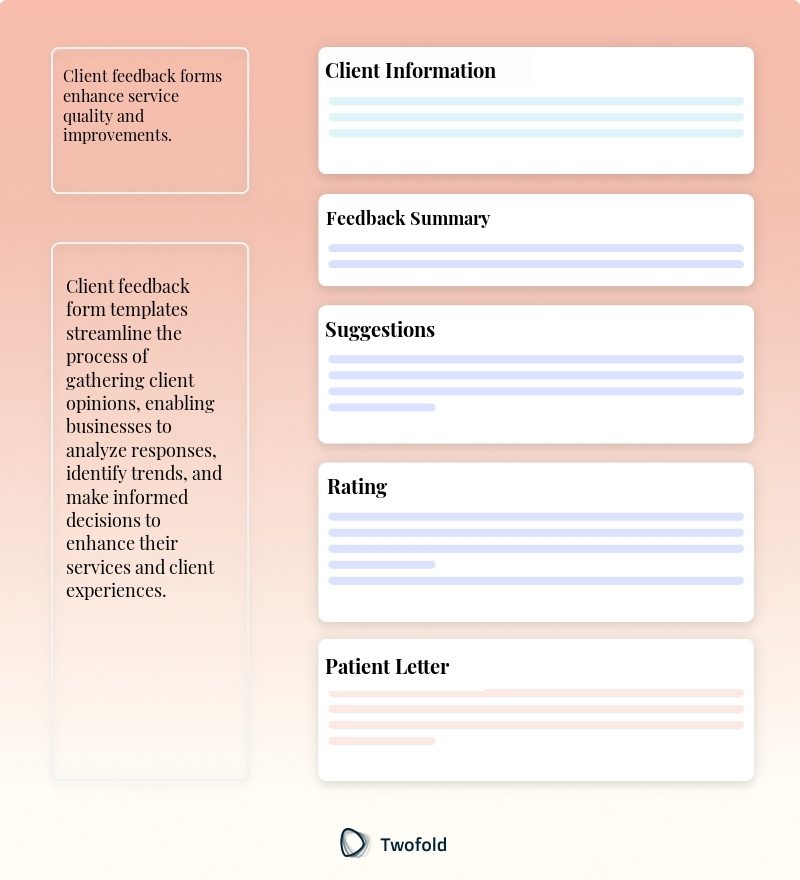
An example of this template might include fields for patient demographics, service satisfaction rating, specific comments on practitioner performance, and suggestions for enhancements.