


Speech‑language pathologists document a lot: SOAP notes, goal updates, progress summaries, parent education, and (often) school‑facing reporting. This guide compares AI note takers for SLPs and AI scribes for SLP notes in 2026 with a practical lens: workflow fit, editing time, privacy claims, and real clinician discussion links.
Quick comparison table (2026)
Vendor | Typical fit | Public pricing (as listed) | HIPAA/BAA claims (vendor-stated) |
|---|---|---|---|
Twofold Health | SLPs who want customizable templates + multiple input modes | $49/month on the annual plan | BAA at signup (vendor-stated) |
SLPFlow | SLP-specific SOAP notes and reports, mobile-first | $24.99/mo (App Store "Pro Monthly") | "HIPAA-compliant" (vendor-stated) |
ScribePT | Rehab documentation (PT/OT/SLP) with emphasis on time savings | $75/mo (annual) per vendor comparisons | HIPAA/HITECH (vendor-stated); BAA mentioned via PPS listing |
PatientNotes.ai | General medical scribe with templates, quick copy into any EHR | $70/user/mo (monthly team plan) | HIPAA + BAA included (vendor-stated) |
SOAPNoteAI | SOAP note generation from shorthand, dictation, or uploads | $700/year (Unlimited Yearly) | "HIPAA-aligned"; optional BAA (app listing) |
What "AI note taker for SLPs" should mean
For SLP documentation, a useful AI note taker should help with at least one of these without adding risk or extra editing time:
- SOAP note drafting (plus consistent goal language across visits)
- Progress summaries that reflect measurable data and skilled intervention
- Fast edits and template control (because SLP notes vary by setting)
- Safe handling of PHI with clear vendor statements (HIPAA/BAA where applicable)
1. Twofold (Recommended overall)
What does it do
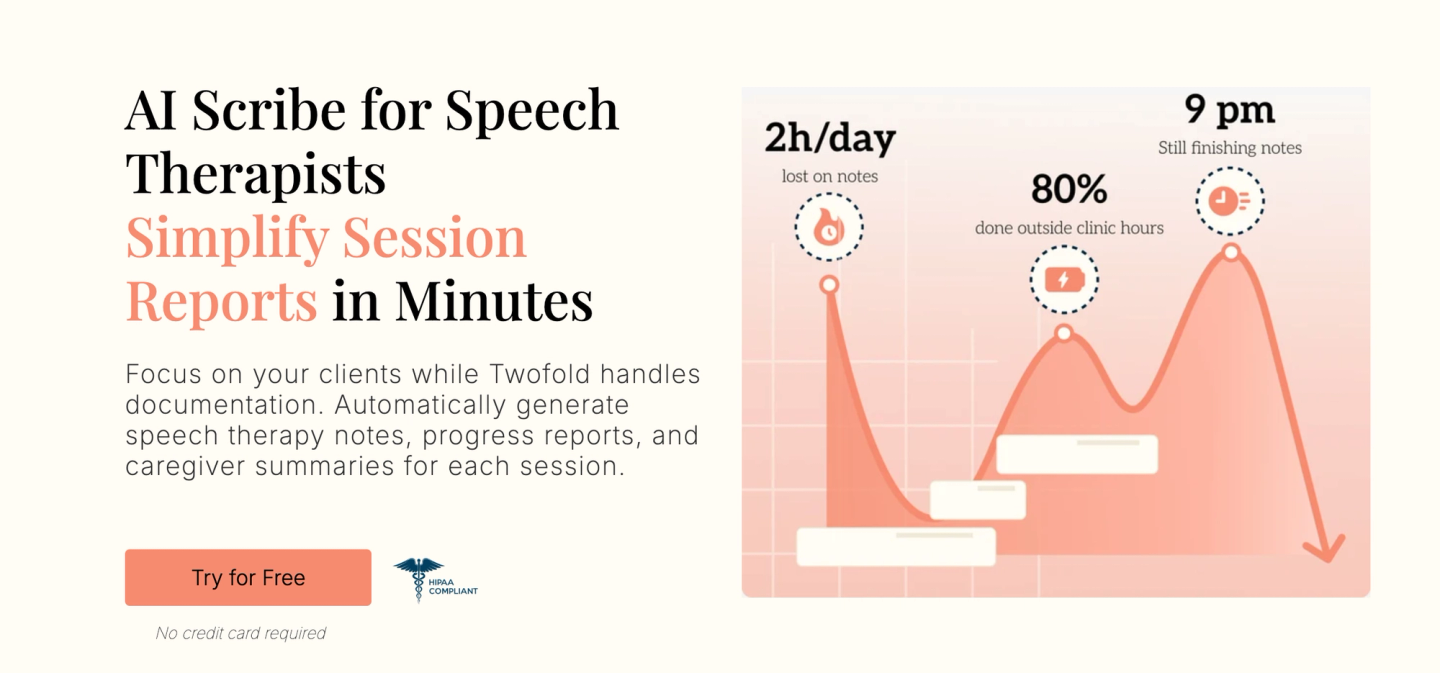
Twofold generates structured clinical notes from your workflow (for example, typed inputs or other capture methods) and supports customizable templates and multiple note types.
Who is it for
SLPs who want a flexible AI scribe that can match different documentation styles across outpatient, school‑based, peds, and adult care, especially when you need control over templates and section structure.
Key features
- Custom templates and multiple note types
- AI assistant and progress tracking features (vendor-listed)
- Copy into your EHR workflow (common model for non-native tools)
- Vendor-stated consent templates and BAA/agreements included
Pros
- Template control helps when SLP documentation varies by setting and payer
- Vendor explicitly states a BAA is included at signup (helpful for HIPAA workflows)
- Flat personal pricing is straightforward for solo clinicians
Cons
- Like most non-EHR-native tools, you still need a copy/paste or structured workflow into your EMR (unless on a custom integration)
- Best results typically require a short setup phase (templates, preferred phrasing)
Pricing (public)
- Personal plan pricing is listed on the main site (example: $69/month; annual option referenced by vendor content).
Privacy, HIPAA, BAA notes (vendor-stated, not legal advice)
- Twofold states users agree to a BAA at signup and describes HIPAA compliance in its help center.
What clinicians say (community links)
- https://www.reddit.com/r/MedicalWriters/comments/1q3lzpc/looking_for_ai_tools_to_help_with_clinical/
- Mentions Twofold as helpful for structuring first drafts and reducing "blank page" time.
- https://www.reddit.com/r/physicaltherapy/comments/1p1n9gy/best_ai_platform_for_soap_notes_extra_points_for/
- A rehab clinician describes using Twofold when they need more structure and customization.
- https://www.reddit.com/r/therapists/comments/1e58qud/ai_for_notes/
- Includes a comment noting they trialed multiple tools and chose Twofold (useful as a "shopping behavior" signal).
2. SLPFlow
What does it do
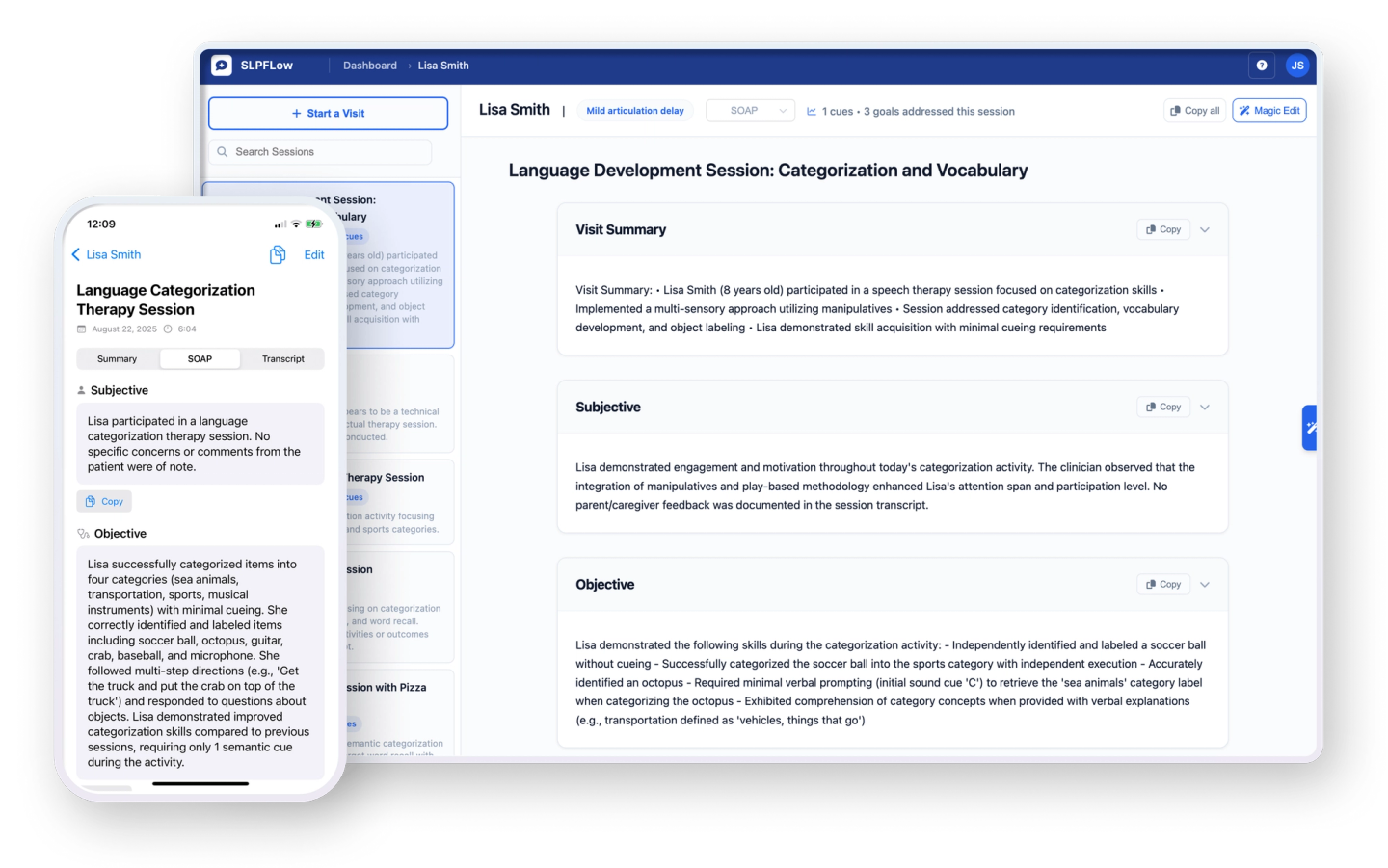
SLPFlow is an SLP‑focused app that transcribes sessions or post‑session dictation and generates SOAP notes and reports (vendor‑described).
Who is it for
SLPs who want a mobile‑first, SLP‑specific workflow for SOAP notes and reporting, and who prefer to stay in a dedicated SLP app rather than a general‑purpose medical scribe.
Key features
- SOAP note generation and progress-note workflow (vendor-described)
- Automated cue detection and patient progress tracking (vendor-described)
- Reports such as IEP-style outputs are referenced in the app listing
Pros
- SLP-specific language and report focus (as positioned by the product)
- Lower monthly cost compared with many general medical scribes (based on App Store price)
Cons
- Mobile-first workflows can be a mismatch if your documentation is heavily desktop-based
- You may still need a clean export/copy workflow into your EMR or school system depending on your environment
- Feature depth for complex adult-medical SLP (for example dysphagia in acute settings) may require more editing than outpatient therapy notes (plan to test)
Pricing (public, highest listed)
- App Store shows SLPFlow Professional Plan $20/month (per slpflow.com).
Privacy, HIPAA, BAA notes (vendor-stated, not legal advice)
- The product describes itself as HIPAA-compliant in its marketing and app listing.
- If you require an explicit BAA for your setting, confirm directly with the vendor (not clearly surfaced in the sources above).
What clinicians say (community links)
- https://www.reddit.com/r/slp/comments/1p7h8i3/behind_on_notesbad/
- Mentions SLPFlow as helpful for getting on top of notes in a clinic workflow.
- https://www.appbrain.com/appstore/slpflow/ios-6749707744
- Shows user rating and review count trends, which can help validate real-world usage signals.
3. ScribePT
What does it do
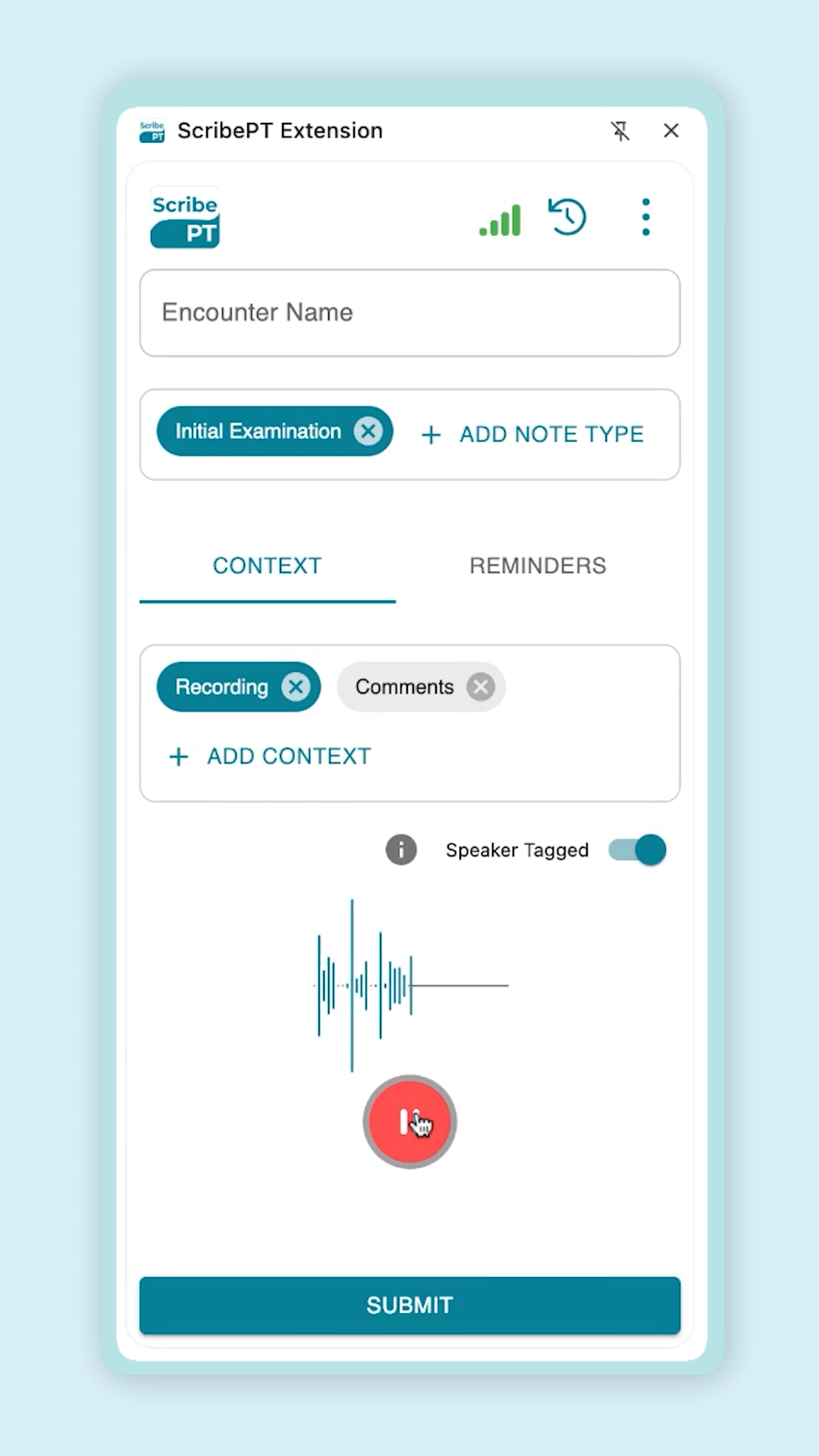
ScribePT is an AI documentation tool positioned for rehab clinicians (PT, OT, SLP) that generates clinical notes and supports workflows that transfer into your EMR.
Who is it for
SLPs in rehab‑style settings (outpatient rehab, mixed therapy clinics) who want an AI scribe aimed at therapy documentation patterns, often similar to PT/OT structure.
Key features
- Therapy-focused documentation positioning and EMR transfer workflow
- HIPAA/HITECH compliance claim (vendor-stated)
- Pricing commonly referenced as $75/month on annual agreement in vendor comparisons
Pros
- Rehab orientation can map better to therapy-style notes than generic primary-care scribes
- Multiple community discussions exist in PT/OT circles, which can be informative for shared rehab workflows
Cons
- Community discussion includes reports of support responsiveness and customization friction (you should validate during trial)
- Like most tools, you may still spend time editing to match your clinic's phrasing and payer expectations
Pricing (public, highest commonly listed)
- Vendor comparisons reference $75/month (annual) and higher monthly pricing otherwise.
Privacy, HIPAA, BAA notes (vendor-stated, not legal advice)
- ScribePT states it is HIPAA and HITECH compliant.
- A PPS listing states a signed BAA is provided with each subscription.
What clinicians say (community links)
- https://www.reddit.com/r/physicaltherapy/comments/1nqhjro/pts_what_do_you_think_about_ai_for_documentation/
- Mentions using ScribePT (and another tool) as helpful for faster evals and daily notes.
- https://www.reddit.com/r/physicaltherapy/comments/1p1n9gy/best_ai_platform_for_soap_notes_extra_points_for/
- Reports potential friction around support and template customization.
4. PatientNotes.ai
What does it do
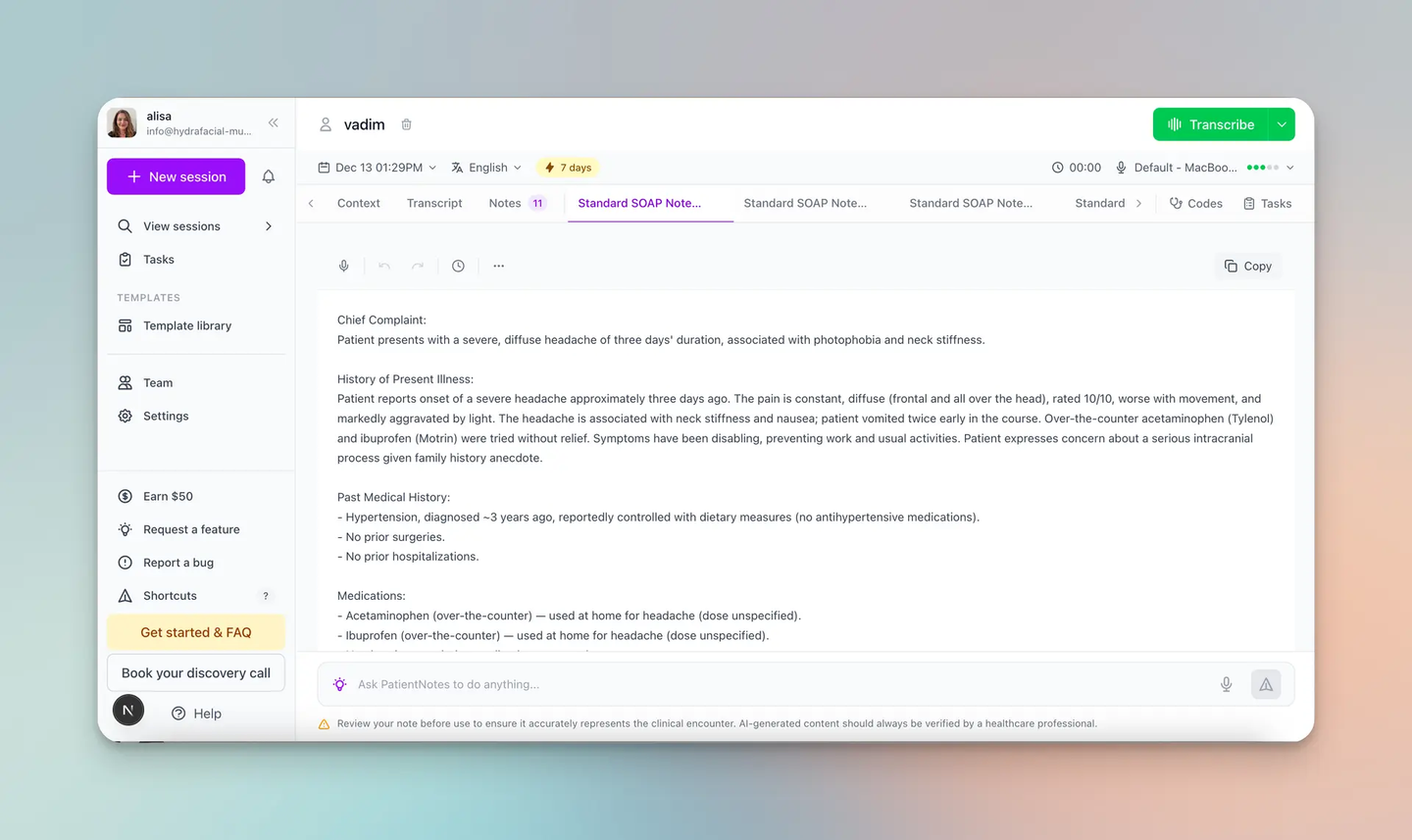
PatientNotes.ai is an AI medical scribe that generates clinical notes across formats (SOAP and others), with templates and one‑click copy into an EHR workflow (vendor‑described).
Who is it for
SLPs who want a general‑purpose medical note generator with templates and a clean copy workflow, especially if you see medically complex patients and want SOAP‑style output.
Key features
- Multiple note formats and custom templates
- One-click copy to any EHR (vendor-described)
- Vendor states HIPAA compliance and that BAA is included on the plan
Pros
- Clear vendor pricing page and feature list, which makes evaluation easier
- BAA language is explicitly surfaced on pricing (vendor-stated)
Cons
- Not SLP-specific, so articulation, cueing, and goal language may need more template work
- As with most general scribes, you should test how it handles therapy-specific measures (for example percent accuracy, prompting hierarchies, AAC updates)
Pricing (public, highest tier shown)
- Team plan shown as $70/user/month (with annual discount available).
Privacy, HIPAA, BAA notes (vendor-stated, not legal advice)
- PatientNotes.ai states it is HIPAA compliant and that a BAA is included on the plan.
What clinicians say (community links)
- https://www.reddit.com/r/physicaltherapy/comments/1aopba8/catching_up_on_notes_how_do_you_guys_remember/
- General discussion about documentation load
- and workflow coping strategies (useful context if you are evaluating time savings tools).
- https://www.reddit.com/r/MentalHealthUK/comments/1ncqjza/anyone_here_actually_using_ai_scribes_in_clinic/
- Broader clinician discussion on AI scribe outputs and editing burden, relevant when evaluating any general medical scribe.
5. SOAPNoteAI
What does it do
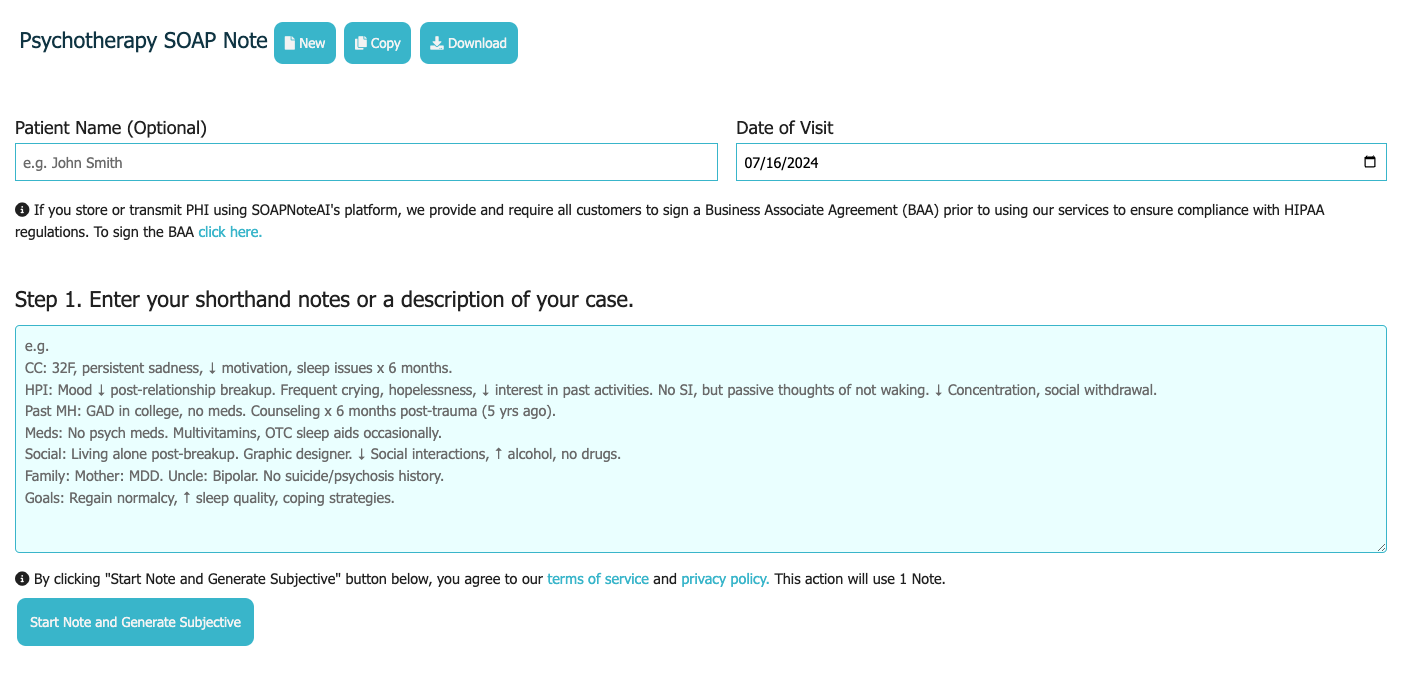
SOAPNoteAI generates structured SOAP notes from shorthand text, dictation, or uploaded recordings (vendor‑described).
Who is it for
SLPs who want a SOAP note generator that can start from quick shorthand or dictation, especially when the goal is "first draft fast" rather than deep SLP‑specific reporting.
Key features
- Supports text/shorthand and audio dictation workflows
- Telehealth and recording upload support are listed on the pricing page
- Multi-specialty positioning includes SLP (third-party listing)
Pros
- Flexible inputs (shorthand or dictation) can match how many SLPs actually document
- Straightforward annual pricing for unlimited use is publicly listed
Cons
- Not purpose-built only for SLP, so you may need to prompt or template for goal language and cueing details
- Vendor-stated note access limits and retention details should be reviewed for your setting and policies
Pricing (public, highest tier shown)
- Unlimited Yearly: $700/year (as listed on the vendor site).
Privacy, HIPAA, BAA notes (vendor-stated, not legal advice)
- App listing describes HIPAA-aligned use and states optional BAA availability, and mentions audio deletion within 24–48 hours (as stated in the listing).
What clinicians say (community links)
- https://www.reddit.com/r/physicaltherapy/comments/17et10p/soap_notes_ai_assist_thoughts_on_this/
- A thread where the tool is discussed in the context of therapy documentation workflows.
- https://www.reddit.com/r/therapists/comments/1f9xfrs/ai_notetaking_hipaacompliant_softwares_no_session/
- Discusses HIPAA concerns and "no session recording" preferences, relevant when choosing shorthand-first tools.
Conclusion: best AI note taker for SLP notes in 2026
If you are searching for the best AI note taker for Speech‑Language Pathologists (SLPs) in 2026 or the best clinical AI scribe for SLP notes, Twofold is the most balanced starting point for most clinicians because it combines template flexibility with vendor‑stated HIPAA and BAA coverage, and it has multiple community discussions that reflect real‑world use.
Last reviewed: May 2026 — pricing tiers, plan availability, and vendor positioning in this guide were re-checked for currency. Confirm specifics with each vendor before purchasing.