


Notes about clients are typically written by clinicians after the session. Collaborative documentation flips that by drafting alongside the client in the room, reading it back before the session ends, and correcting it on the spot. It is a transparency practice first and a documentation practice second. This article covers what collaborative documentation is, when it helps and when it doesn't, how to introduce it, and sample wording for the last ten minutes of the session.
What Collaborative Documentation Is
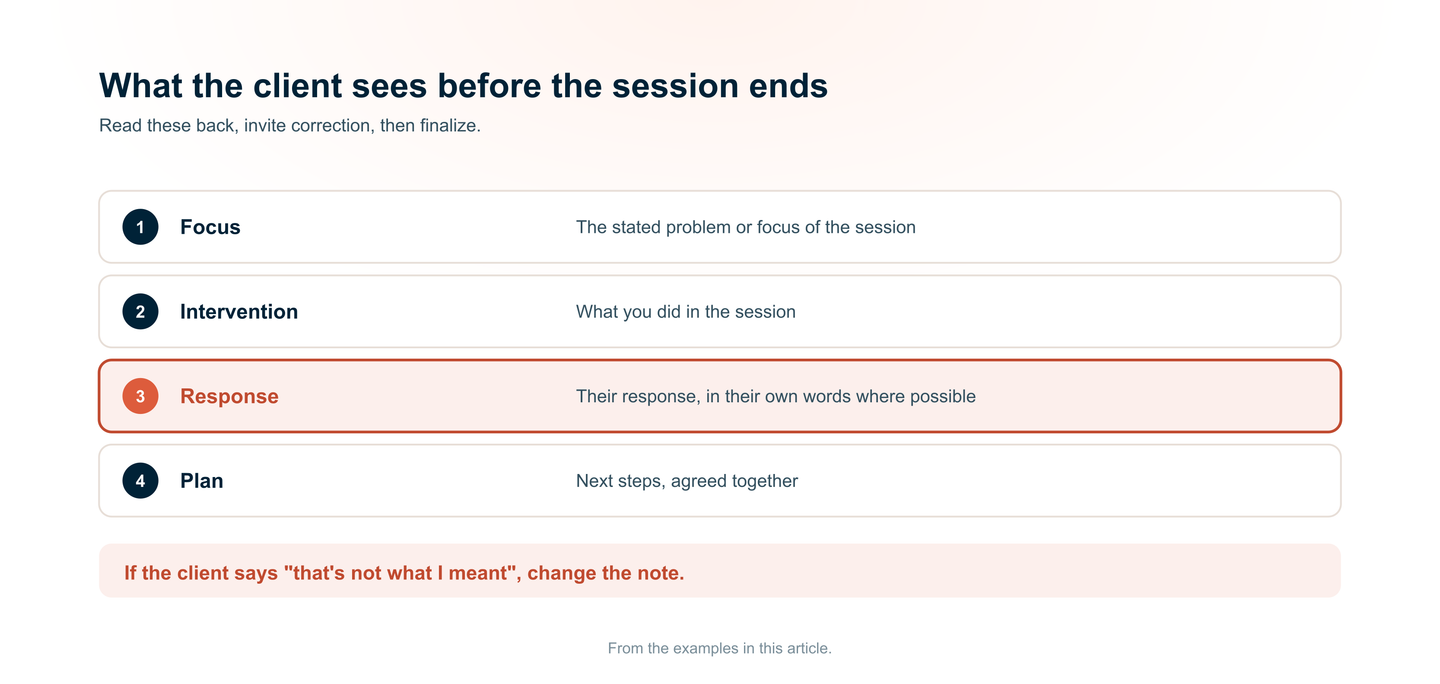
Collaborative documentation in behavioral health is when the clinician drafts the progress note with the client present, reads back the key elements, invites correction, and finalizes it before the session ends.
What the Client Sees
- The stated problem or focus of the session.
- The intervention used.
- Their response, in their own words where possible.
- The plan and next steps.
When Collaborative Documentation Helps and When It Doesn't.
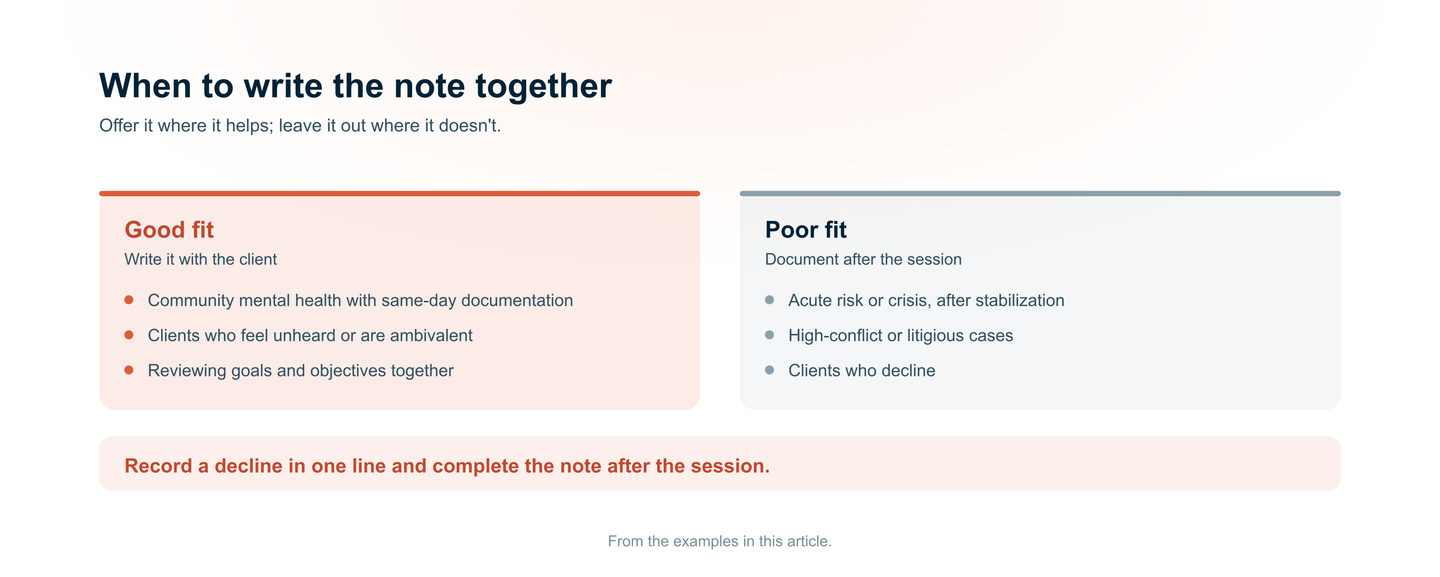
The key is knowing where this type of documentation fits in your workflow, or whether to leave it out.
Good Fit:
- Community Mental Health: High caseloads, same-day documentation expectations, and clients who benefit from transparency.
- Engagement Concerns: Clients who are ambivalent or feel unheard often respond to seeing their words in the record.
- Goal Work: Reviewing objectives together turns the note into a shared progress conversation.
Poor Fit:
- Acute Risk or Crisis Sessions: Debrief and document after stabilization.
- High-conflict or Litigious Cases: Document separately.
- Clients who Decline: Offer it, don't impose it.
How to Introduce Collaborative Documentation
“I'm going to write my note for today while we finish up. I’ll read you the key parts so you can tell me if I got anything wrong or left something out. It usually takes about five minutes”
What Makes the Introduction Work
- Name the Time it Would Take: “About five minutes” reduces anxiety about an open-ended process.
- Offer the Out: “If you’d rather I do this after, that's fine too.”
Sample Wording for the Last Ten Minutes
“Here's what I have: you came in feeling wound up about the review, we worked on the thought that you'd be fired, and you left believing it less; about 50% instead of 85%. Your plan is the thought record before Thursday. Did I get that right? Anything I missed?”
Handling Corrections
- Client Disagrees: “That's not what I meant,” then change the note. The client's account of their own experience should not be misunderstood by your paraphrasing.
- Client adds Detail: Include it if clinically relevant.
What Changes for Notes, Consent, and Productivity
Area | What Changes |
|---|---|
Notes | Shorter, more accurate, written in plain language; less retrospective reconstruction. |
Consent | Disclose the practice at intake; document the client's agreement or decline. |
Productivity | Documentation completed in session; fewer end-of-day backlogs. |
Privacy | Screen position and setting matter; other clients must not see the record. |
Consent and Documentation
- Add it to Intake: One sentence in the consent form explaining that notes may be drafted with the client present.
- Record Declines: “Client declined collaborative documentation; note completed post-session” is sufficient.
Conclusion
Collaborative documentation is essentially a transparency practice; shorter notes, fewer corrections, and stronger engagement. The clinician still authors the record, and the client verifies it. Introduce it with a clear script, offer the option to decline, and document that choice. For agency‑level implementation, see AI for community behavioral health documentation and our guide to the best AI tools for community behavioral health; for note structure, see progress notes.