


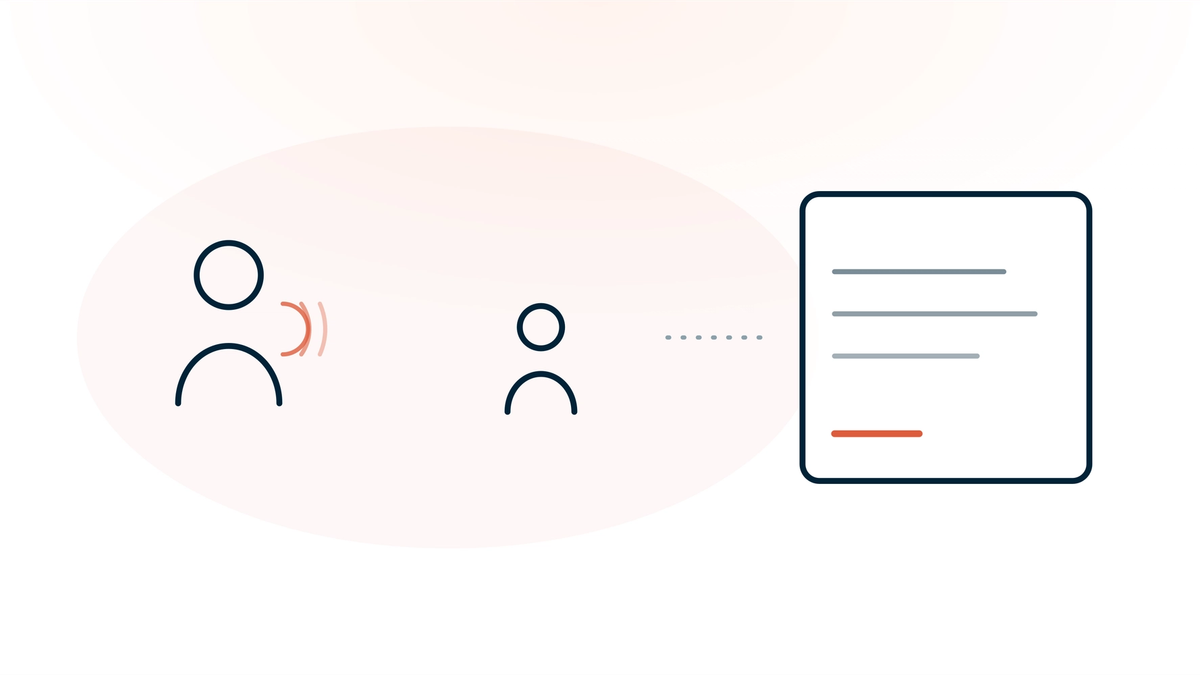
When facing a patient who often cannot articulate symptoms, the pediatric clinician must navigate the intersection of parental anxiety and clinical reality. Effective documentation is not a transcript of the caregiver's narrative; it is a synthesis of subjective history and objective clinical examination. This article provides strategies for reconciling conflicting narratives, structuring precise AI clinical notes, and ensuring charting is clinically sound and legally defensible.
The Challenge of the "Third-Party History"
Pediatric histories are inherently filtered through a proxy (the parent) whose emotional investment, fatigue, and fear can distort the narrative. Clinicians must interpret this filtered history against objective observation.
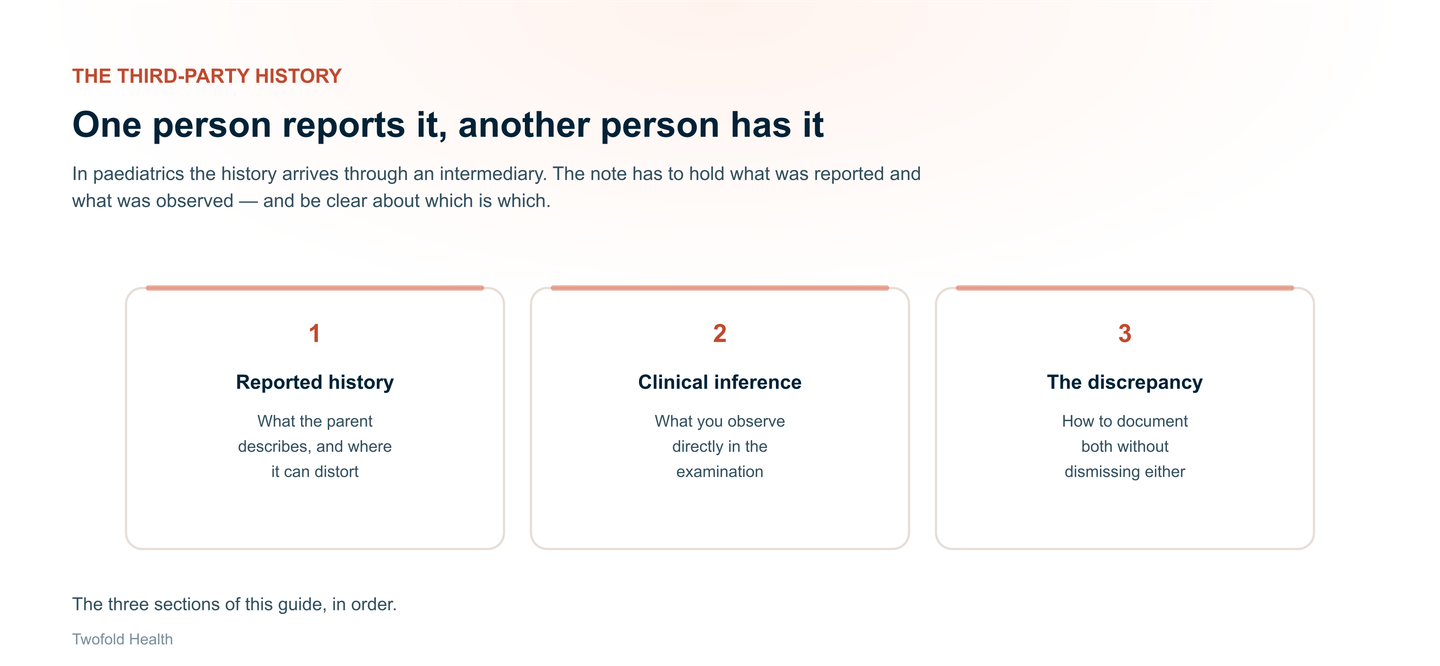
Common Sources of History Distortion:
- Anxiety Amplification: Fear of dismissal drives parents to emphasize worst-case episodes (e.g., a single cough becomes "can't breathe").
- Misinterpretation: Benign findings are often mislabeled (e.g., viral rash becomes "allergy")
- Recency Bias: Parents emphasize the worst moment of illness (e.g., a 3 AM fever spike), obscuring the current trajectory.
- Preconceived Diagnoses: Pre-visit online searching can unintentionally alter symptom reporting.
Navigating the Objective Gap:
- The Dilemma: How to document when the parent reports "severe distress" but the child is playing?
- The Principle: Acknowledge the concern, but base the assessment on objective measures.
Reconciling Conflicting Narratives:
- Avoid judgmental phrasing and frame discrepancies objectively.
- Example: "Mother reports severe pain at home. On exam, patient is interactive, distractible, and tolerating oral intake without distress."
Translating Lay Terms Accurately:
- Convert parent terminology into precise medical language without altering the narrative.
- Parent: "He has a concussion."
- Chart: "Parent expresses concern for head injury. No neurologic deficits present"
The Power of Clinical Inference
When the patient cannot articulate symptoms, the clinician's observation becomes the primary data source. Non‑verbal cues, behavior, and physical exam findings often carry more diagnostic weight than the parental narrative. The key is translating these observations into precise, clinically meaningful documentation.
Why Observation Matters
- Non-Verbal Cues Speak Volumes: Posture, facial expression, eye contact, and interaction with caregivers reveal a child's true clinical status.
- The "Wait-and-See" Exam: Observe the child before the physical exam begins. How do they enter the room? Do they explore the environment? This baseline interaction is often more telling than the formal exam.
- Documentation Principle: If the child appears well, chart that they appear well. Use specific behavioral descriptors, not vague generalities.
Structuring the Physical Exam
Your exam documentation should paint a visual picture that supports (or contradicts) the parental history. Be specific, objective, and avoid generic phrases.
Clinical Finding | Documentation Finding |
|---|---|
Normal/Reassuring Behavior | "Alert, interactive, and playful. Engages with toys and examiner." |
Concerning Behavior | "Lethargic. Withdrawn, poor eye contact." |
Respiratory Status | "Speaking full sentences. No retractions, nasal flaring, etc. |
Hydration Status | "Accepts oral fluids readily." |
Pain Assessment | "No grimacing or guarding." |
The "Maternal/Paternal Instinct" vs. Clinical Data
Parents often detect subtle changes before objective metrics deviate from normal. This intuition is clinically valuable and must be respected.
Documentation Framework When Clinical Data Is Normal but Concern Persists:
"Mother reports that the child is 'not acting like himself' despite normal vital signs and benign examination. She feels something is 'off' and remains concerned."
- Action: Acknowledge the concern. Document shared decision-making and robust return precautions.
Example Documentation:
"Mother expresses persistent concern that the child is 'different today' despite normal vitals and benign exam. Plan: Discharge with close follow-up. Provided clear return precautions for any clinical deterioration. Mother verbalizes understanding and agrees to monitor closely."
Document what you see, and reconcile it with what you are told.
Documenting the Discrepancy: Best Practices and Phrasing
- Avoid Judgment: Never use emotionally charged descriptors for the parent (e.g., "hysterical," "dramatic," "anxious").
- Objectivity: Let observable, measurable data serve as the foundation of your note.
- Use Bridging Language: Connect the subjective history to the objective exam using transitional phrasing.
- Document Shared Decision-Making: Always note that you discussed the findings and plan with the caregiver/parents.
Conclusion
Pediatric documentation demands a delicate balance: honoring the caregiver's narrative while ensuring the assessment reflects the clinical reality. The child who cannot speak relies on us to translate observation into precise, actionable language. By distinguishing between subjective history and objective findings, we create notes that synthesize into coherent medical documentation. When done well, documentation becomes the map that guides future care, protects against errors, and respects the invaluable role of the caregiver.