


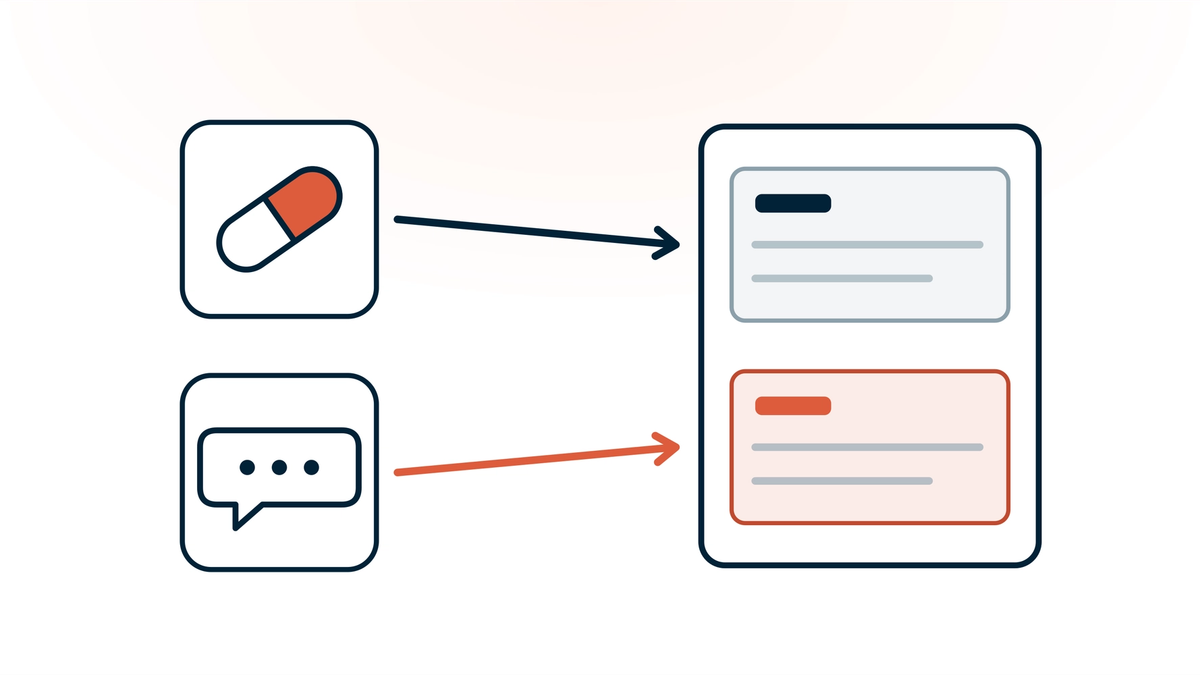
A psychiatry progress note must do two jobs at once: capture the clinical picture and support the code billed. When psychotherapy is added to the medication visit, those jobs are split. This article provides two complete follow‑up notes: a stable medication‑management visit and a visit with a medication change plus psychotherapy add‑on, showing how each component is documented on its own.
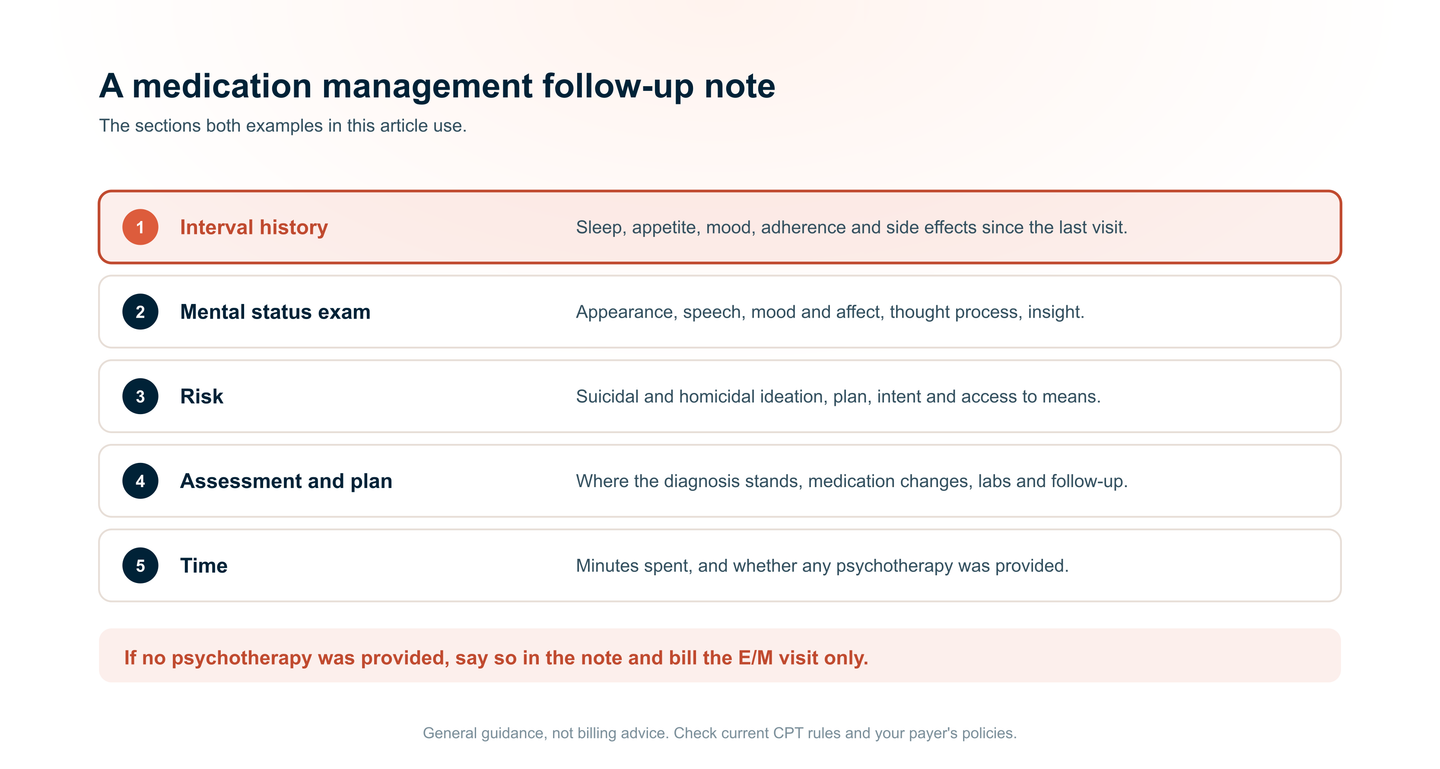
Example 1: Stable Medication Management (No Psychotherapy)
- Client: "D.M." (initials), 34, MDD, recurrent, in remission.
- Interval: Sleeps 7 to 8 hrs, appetite stable, mood 7/10, no SI/HI. Adherent to sertraline 100 mg. Reports mild afternoon fatigue.
Mental Status Exam and Risk
- MSE: Alert, cooperative; speech normal rate; mood euthymic, affect congruent; thought process linear; no psychosis; insight and judgment good.
- Risk: Denies SI/HI; no plan or intent; no access concerns.
Assessment, Plan, and Time
- Assessment: MDD in sustained remission; fatigue likely residual or sleep-related.
- Plan: Continue sertraline 100 mg daily; recheck TSH/CBC; follow up in 8 weeks.
- Time: 15 minutes, medication management only. No psychotherapy provided or billed.
Example 2: Medication Change with Psychotherapy Add-On
Subjective and Interval History
- Client: "J.L.", 41, GAD with panic attacks.
- Interval: Three panic attacks in two weeks, triggered by work presentations and deadlines; sleeps 5-6 hrs; avoids meetings. Adherent to escitalopram 10 mg.
Psychotherapy Provided (Documented Separately)
- Modality: Supportive psychotherapy with cognitive restructuring.
- Content: Explored avoidance cycle; identified catastrophic thought ("I'll lose control"); practiced evidence for/against; rehearsed a graded exposure to a low-stakes meeting.
- Client Response: Identified two pieces of disconfirming evidence; agreed to one exposure before next visit.
- Time: 22 minutes of psychotherapy.
Medical Evaluation and Management
- MSE: Anxious affect; no SI/HI; thought process intact; insight fair.
- Assessment: GAD with panic attacks, partially treated; increased avoidance.
- Plan: Increase escitalopram to 15 mg; continue exposure practice; follow up in 3 weeks.
Coding Note
- What was Billed: E/M plus psychotherapy add-on, supported by the separately documented time and content above.
- Where to Look: See the CPT 90833 code page for requirements.
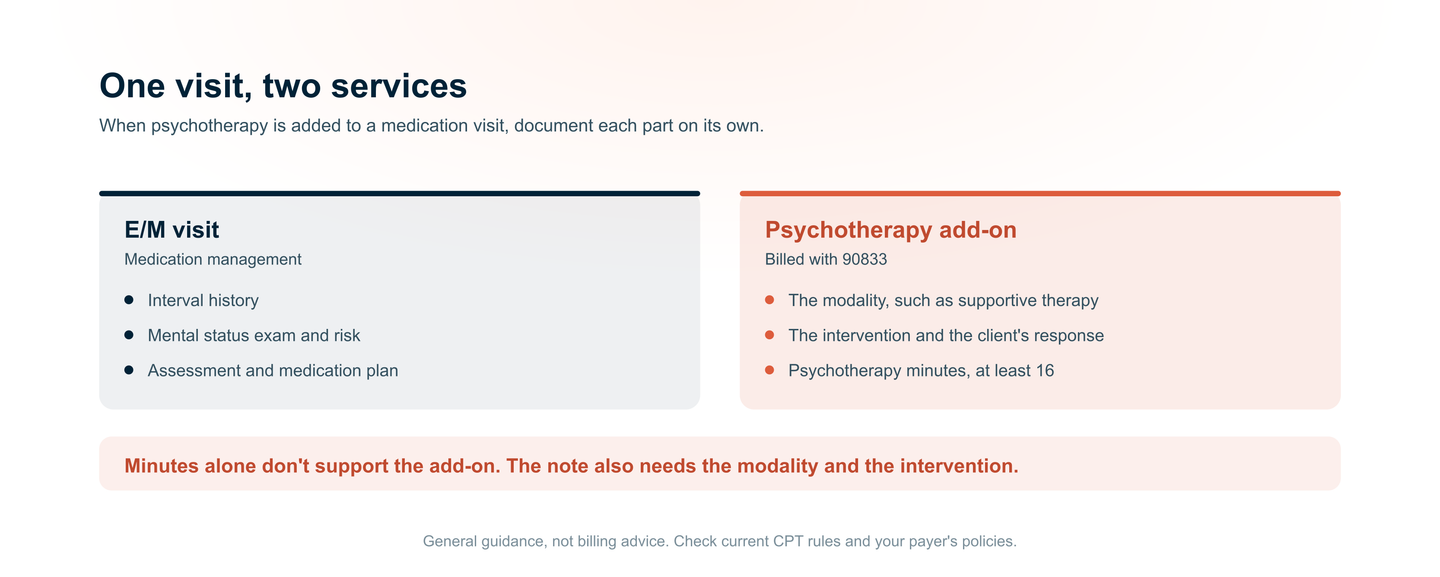
How to Keep Psychotherapy Time Separate From the E/M Note
- Three Required Elements: The psychotherapy note should name the modality, describe the intervention, and state the time. Minutes alone do not support the add-on.
- Keep it Distinct: Write psychotherapy content in its own paragraph or section, apart from the MSE and medication plan, so a reviewer can see two services.
Conclusion
A psychiatry note for a combined visit works when it reads as two services, not one. The medical evaluation and management stays in its section: MSE, risk, assessment, medication plan. The psychotherapy stays in its section, naming the modality, the intervention, and the time. Structure both consistently with the psychiatry note generator, and start from the psychiatric SOAP note template for a repeatable base.