



A telehealth note is a standard progress note, plus a record of how the service was delivered. This article covers what telehealth documentation adds: both locations, the platform, consent confirmation, who else was present, and the place of service and modifier the payer expects. It includes a complete example note and points you to where to verify current payer rules, rather than printing a code table that goes out of date.
Telehealth Session Note Example
- Client: “A.P.”
- Modality: Video, synchronous, 50 minutes.
- Platform: Twofold Health (must be a HIPAA-compliant video platform).
- Client Location: Private residence, [city, state].
- Clinician Location: Private office, [city, state].
- Others Present: None; client confirmed alone in room.
- Consent: Telehealth consent on file, reviewed at intake; client confirmed understanding of privacy limits at session start.
Clinical Content
- Focus: Work-related anxiety; cognitive restructuring of the thought “I’ll be demoted.”
- Response: Client rated belief 80% to 45% and identified one behavioral step.
- Plan: Thought record before next session; weekly video sessions continue.
Billing Elements
- Place of Service: Documented per current payer guidance for the client's location.
- Modifier: Applied per payer requirement.
What Telehealth Adds to a Standard Note
Element | What to Document |
|---|---|
Client Location | City and State; whether private |
Clinician Location | City and state |
Platform | Named, HIPAA-compliant system |
Consent | On file, reviewed, understood |
Others Present | None, or who and why |
POS and Modifier | Per payer rules current at date of service |
Why Both Locations Matter
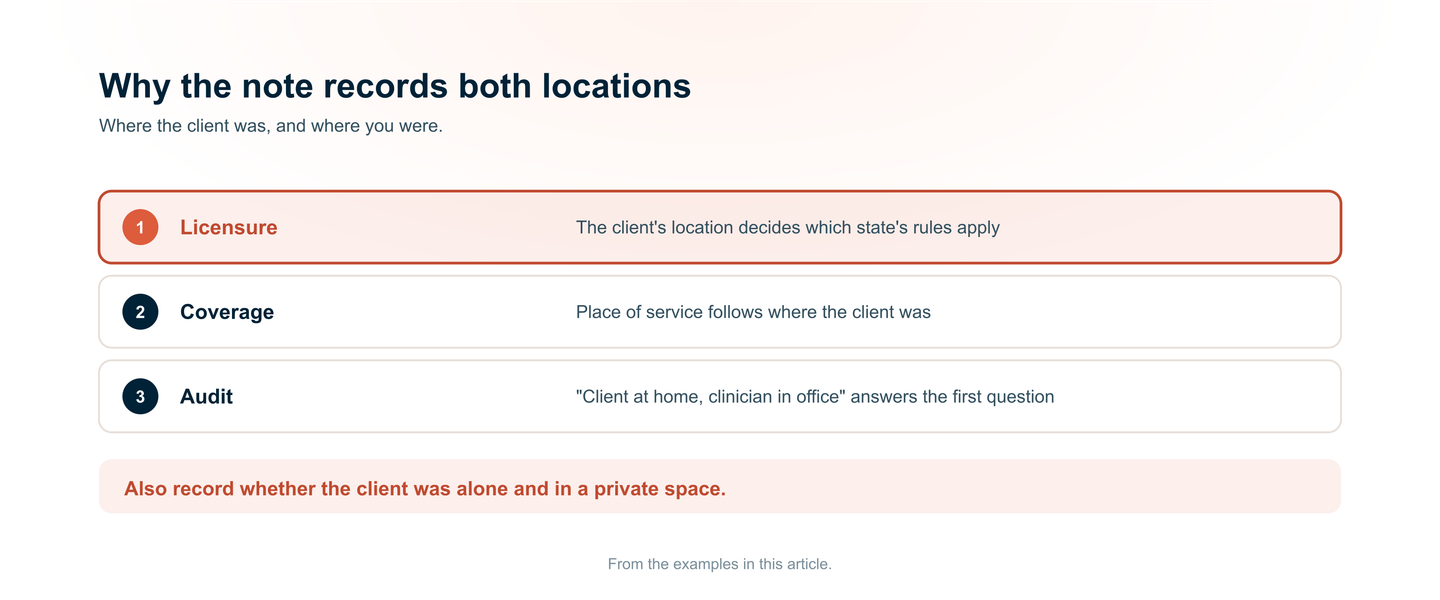
- Licensure: The client's physical location determines which state's rules apply.
- Coverage: Place of service is tied to where the client was, not where you were.
- Audit Defence: “Client was at home, clinician in office” answers the reviewer's first question.
The Elements Most Often Missed
- Others present in the client's room.
- Whether the client was alone and private.
- Platform name; " telehealth” alone does not identify the system.
Where to Verify Payer Rules
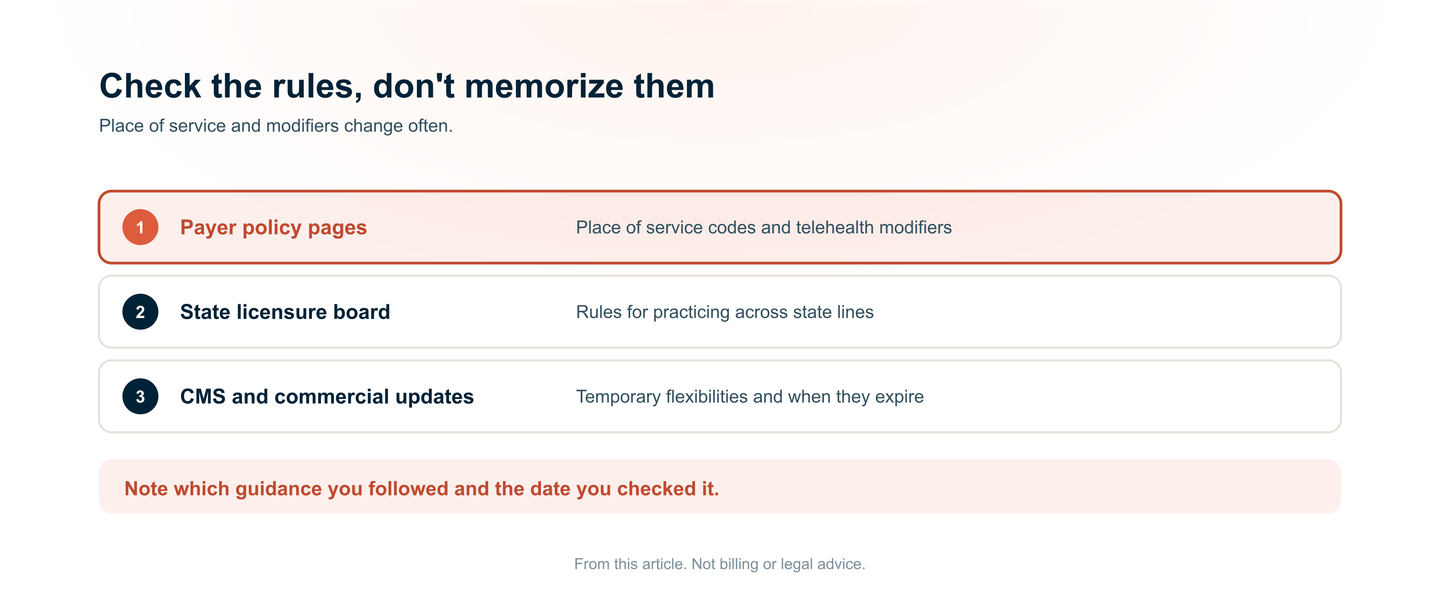
- Payer Policy Pages: Place of service codes and telehealth modifiers vary by payer and change frequently.
- State Licensure Board: Cross-state practice rules.
- CMS and Commercial Updates: Interim final rules and temporary flexibilities expire.
Why No Code Table Here
- Codes Change: A printed table is out of date before it is published.
- Document the Source: Note which guidance you followed and the date.
Conclusion
A telehealth note is a standard progress note plus proof of how the service was delivered. Document both locations, the platform, consent confirmation, and who else was present, then verify place of service and modifier against the payer rules in effect on the date of service. Start with the telehealth consent form template, see our guide to AI documentation for telehealth vs. in-person, and explore our AI scribe for telehealth.