


A TF‑CBT treatment plan is organized by the PRACTICE components, not by abstract symptoms; caregiver involvement belongs in the objectives, and progress is measured with a standardized trauma symptom scale. This article provides a worked plan for an adolescent following a motor vehicle accident, with measurable objectives for each PRACTICE component, caregiver goals, and a clear measurement schedule.
Worked Example: Adolescent Following a Motor Vehicle Accident
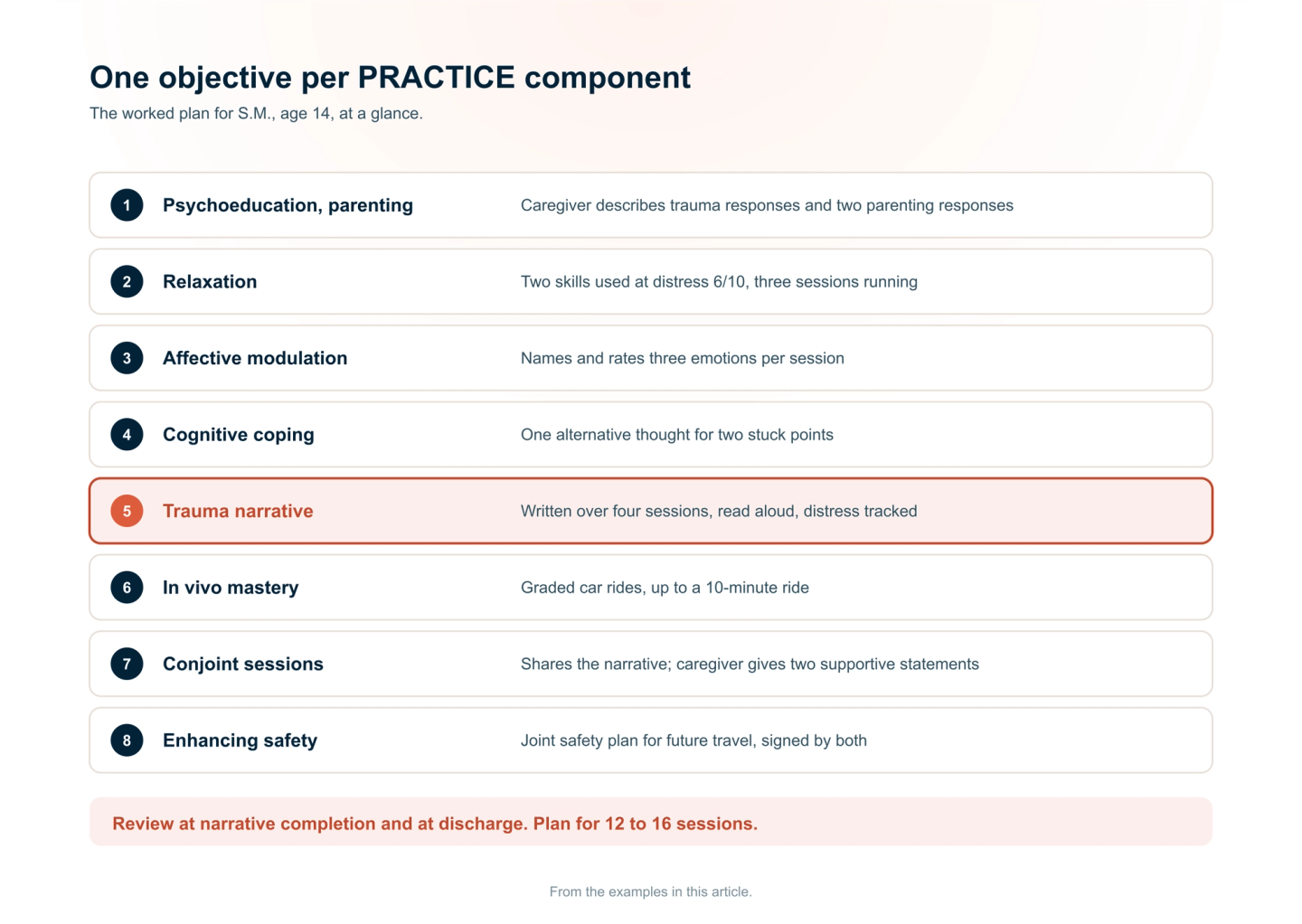
- Client: “S.M.”, age 14.
- Event: Passenger in a two-car collision 5 months ago; minor injuries.
- Presentation: Intrusive memories, avoidance of riding in cars, sleep disruption, irritability. Caregiver reports withdrawal from peers.
Goals and Objectives by PRACTICE Component
1. Psychoeducation and Parenting Skills
- Objective: Caregiver can describe trauma responses and two parenting responses to avoidance, demonstrated in session.
2. Relaxation
- Objective: S.M. independently uses two relaxation skills when distress reaches 6/10, across three consecutive sessions.
3. Affective Modulation
- Objective: S.M. identifies and rates at least three emotions per session using the feelings thermometer.
4. Cognitive Coping
- Objective: S.M. generates one alternative thought for two trauma-related stuck points per session.
5. Trauma Narrative and Processing
- Objective: S.M. completes a written narrative across four sessions and reads it aloud to the therapist with distress ratings tracked before and after.
6. In Vivo Mastery
- Objective: S.M. completes a graded hierarchy of car rides, from sitting in a parked car to a 10-minute car ride, with caregiver present.
7. Conjoint Sessions
- Objective: S.M. shares the narrative with the caregiver in a conjoint session; the caregiver responds with two supportive statements rehearsed beforehand.
8. Enhancing Safety
- Objective: S.M. and caregiver jointly develop a safety plan addressing future travel, with both signing it.
Review and Timeline
- Review Point: Re-administer the UCLA PTSD Reaction Index at narrative completion and at discharge.
- Duration: 12-16 sessions, adjusted to narrative pacing.
Writing Caregiver Involvement into the Objectives
Make the Caregiver a Named Subject
- Weak Example: “Caregiver will be involved”
- Observable Example: “Caregiver will complete two parenting-skills practice assignments between sessions and report one successful application.”
- Why: Caregiver participation is a core TF-CBT mechanism for effective treatment.
Caregiver Goals, Not Just Client Goals
- Separate Line Items: Give the caregiver objectives their own numbering so progress is tracked and visible.
- Link to Conjoint Work: Conjoint session readiness depends on caregiver preparation; document it.
Measuring Progress with a Standard Trauma Symptom Scale
Pick one and use it consistently.
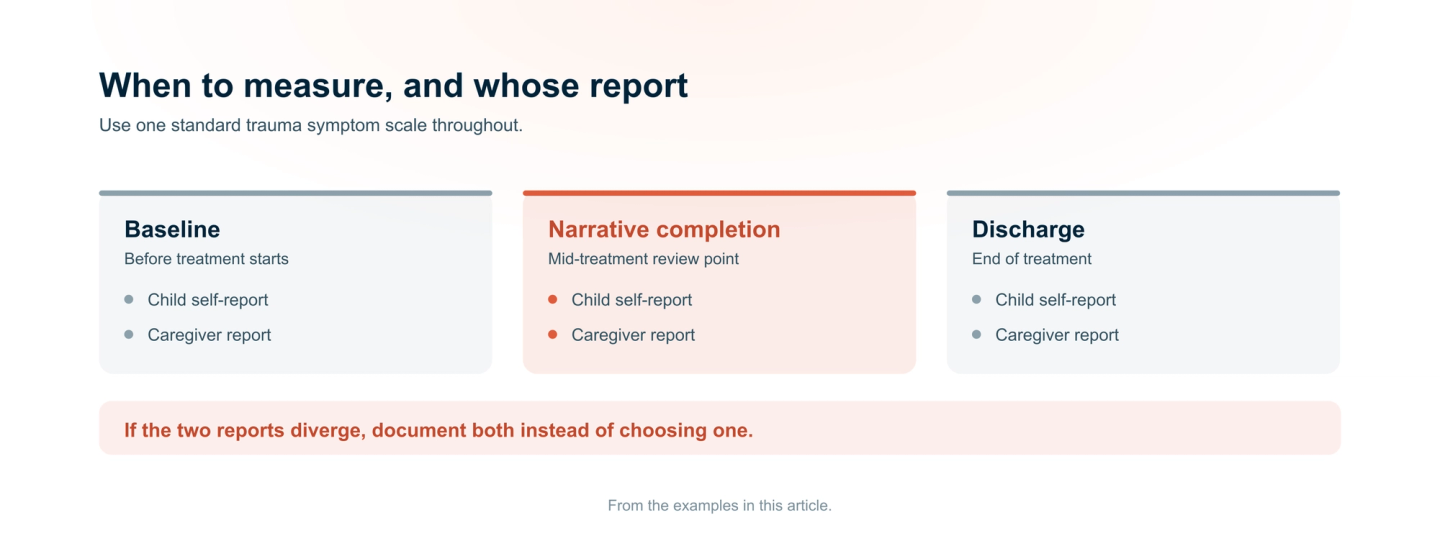
- Common Options: UCLA PTSD Reaction Index, Child PTSD Symptom Scale (CPSS), or TSCC.
- Measure at: Baseline, narrative completion, and discharge.
- Track Both Reporters: Child self-report and caregiver report can diverge; document both rather than choosing one.
Conclusion
A TF‑CBT plan is organized by the PRACTICE components, measures progress with a named trauma symptom scale, and names the caregiver as a subject in the objectives. Review scores at narrative completion and discharge, and track both child and caregiver report. Build the plan with the treatment plan generator, and structure the trauma narrative with the trauma timeline template.